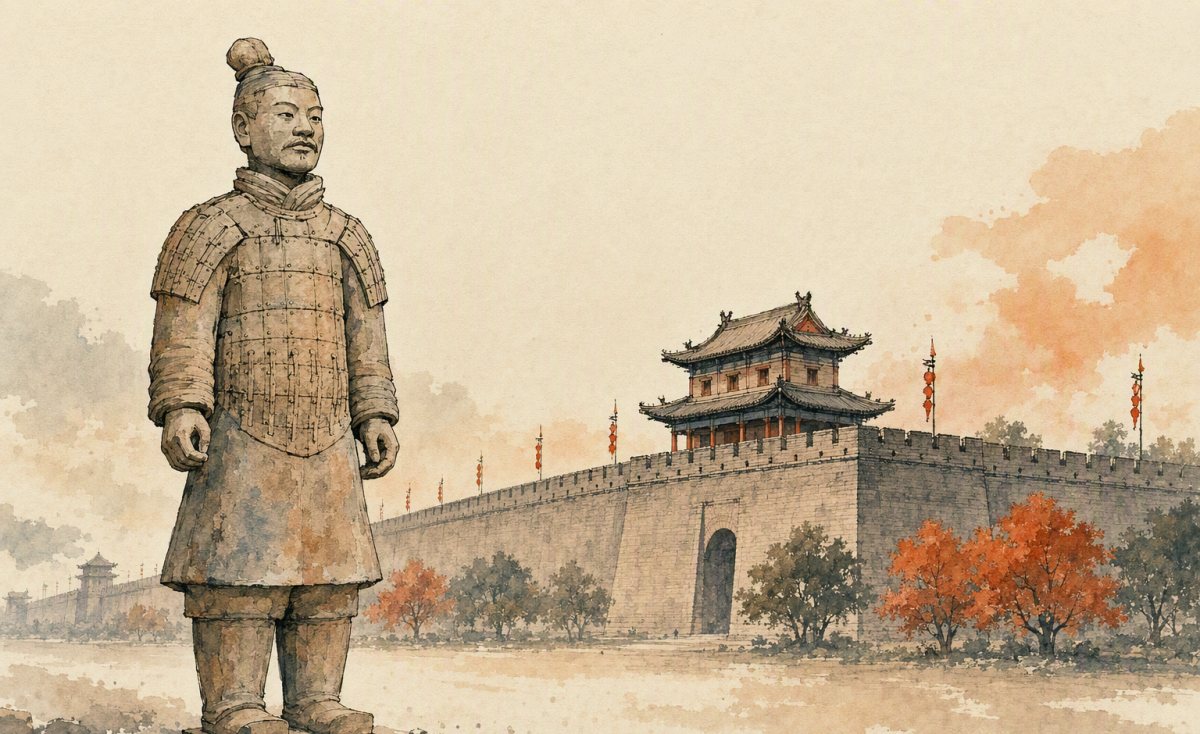
Xi’an served as the capital of China for more than a thousand years and sat at the eastern end of the Silk Road, which is why the city holds more excavated history per square kilometre than most countries manage in total. For a visitor, that translates into three things: the Terracotta Army, a complete Ming-era city wall you can ride around, and a food culture that many Chinese travellers rate as the country’s best. This guide covers what to see, how to move between the sights, when to come, and what to check before you book anything.
The Terracotta Warriors: planning the visit properly
The site sits roughly an hour east of the city, outside the metro network, so the trip needs planning rather than improvisation. Arrive for opening if you can — the halls fill quickly from mid-morning, and Pit 1, the largest and most photographed, is best seen before the tour groups arrive in force. The usual order is Pit 1, then Pit 3, then Pit 2, finishing at the bronze chariots, but any sequence works if you start early.
Hire a guide or use an audio guide. Without context the pits read as rows of clay figures; with it, you get the individual faces, the excavation history, the bronze chariots, and the story of the farmers who found the site in 1974 while digging a well. Opening hours, ticket prices and any seasonal closures change, so check the official site before you travel and look specifically for the current ticket release window — tickets are often sold in advance slots and can sell out on public holidays. For dates to avoid, see our guide to China public holidays 2026.
The city wall and the Muslim Quarter
The Ming wall is complete, roughly 14 kilometres around, and the South Gate is the main access point for bike rental. Sunset is the most comfortable time to ride: the light is good, the heat has gone, and the wall is lit afterwards. Rental terms, deposits and closing times vary by gate and season, so confirm on arrival rather than assuming a late finish.
The Muslim Quarter, centred on Beiyuanmen Street near the Drum Tower, is the city’s densest eating district — lamb skewers, roujiamo, biangbiang noodles, cold liangpi and pomegranate juice, all cooked in front of you. It is busy, touristy and genuinely worth it. Go hungry, carry small change or a working payment app, and expect to eat standing up. Our Xi’an street food guide covers 18 specific dishes and where to find them.
Other essentials worth your time
The Big Wild Goose Pagoda’s north square hosts a fountain and music show, typically around midday and again in the evening — timings shift with season, so check locally. The Shaanxi History Museum holds the Tang gold and Silk Road material that gives the city its context; entry is free but requires advance booking through the official reservation channel, and slots disappear fast in peak season.
Tang Dynasty dinner shows pair a meal with court music and dance. They are staged and touristic, but they are also a straightforward way to see Tang-era performance without hunting for it. Book through your hotel or a reputable operator and confirm what the ticket actually includes before paying.
Getting around and getting there
The metro reaches the wall, the pagoda, the museum and the main food streets, and it is the simplest way to move around the centre. Fares are low and machines accept English; our China metro guide explains how to buy and use tickets.
The Terracotta Warriors are the exception. Public buses run from the main railway station area, and private cars or guided transfers remove the guesswork for an early start. If you are arriving by rail, read our China train travel guide for booking and passport rules — Xi’an is well connected to Beijing, Shanghai, Chengdu and Luoyang on high-speed lines.
When to go and what to sort in advance
March to May and September to November give the most comfortable temperatures. Summer is hot and crowded; winter is cold but quiet, and the Warriors site is far more pleasant without queues. Book the Warriors ticket, the Shaanxi History Museum slot and any dinner show before you arrive, especially around national holidays.
Set up a payment app before you fly. Mobile payment is near-universal, and a foreign card linked to the major apps usually works, but you should verify your specific card and app combination before relying on it — see our cashless travel guide. Carry a small amount of cash as backup.
Frequently asked questions
How many days do I need in Xi’an?
Two full days covers the Warriors, the wall and the Muslim Quarter without rushing. Three days lets you add the Shaanxi History Museum, the pagoda and a slower food crawl.
Can I visit the Terracotta Warriors independently?
Yes. Public buses and taxis both work. A guide adds a great deal, though, because the site’s value is in the detail rather than the visuals.
Is the Muslim Quarter suitable for vegetarians?
Options exist — liangpi, some noodle dishes and vegetable skewers — but the district is built around lamb and beef. Check ingredients rather than assuming.
Do I need to book the Shaanxi History Museum?
Yes, in practice. Entry is free but reserved in advance through the official channel, and popular slots fill quickly. Confirm the current booking process before your trip, as it changes.
Xi’an rewards preparation more than most Chinese cities: the headline sights are spread out, the best food is eaten standing in a crowd, and the tickets that matter are released in advance. Sort the Warriors slot, the museum booking and your payment setup before you arrive, then give the rest of the trip to the wall at sunset and the noodle stalls after dark.