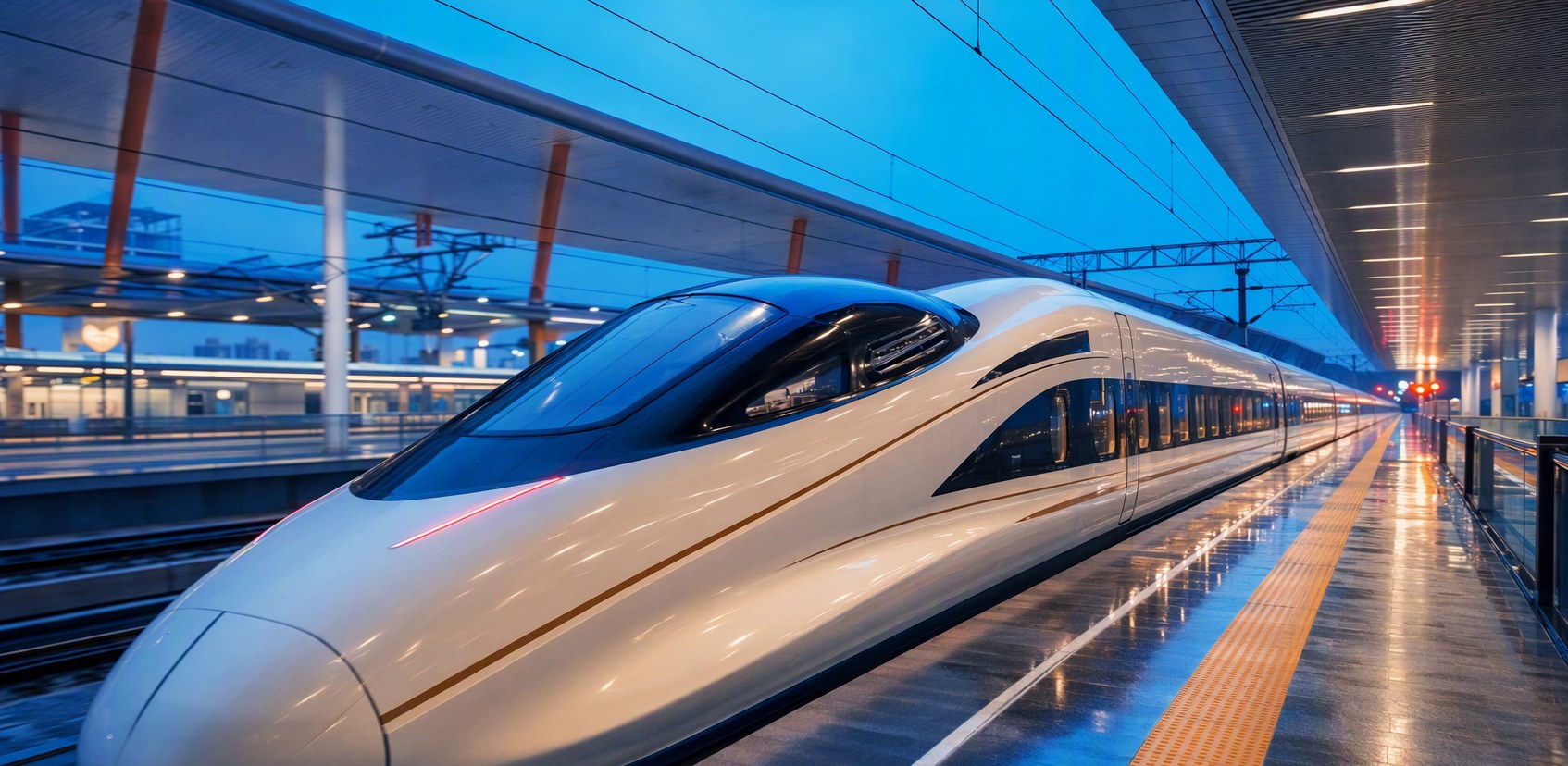
China’s high-speed rail network is the most practical way to move between major cities, and for foreign visitors the process has become simpler than most expect. Since full real-name ticket digitisation, your passport effectively is your ticket at most stations: you book with the passport number, and at the gate you use the manual-check lane where staff scan the document before you board. There is usually no paper collection step. What still trips people up is not the train itself but the surrounding details — which station in a multi-station city, how far ahead to book, and which booking channel actually works with a foreign passport. This guide covers those points in order, and flags where you should verify current details yourself rather than rely on any fixed figure.
How passport-as-ticket entry works
When you book, the ticket is tied to the passport number you enter. At the station, follow signage for the manual or staffed verification lane rather than the automated gates, which are built around Chinese ID cards. Staff scan your passport, confirm the booking, and you proceed to the platform. Keep the physical passport on you for the whole journey — it is checked at the station entrance, sometimes again at the gate, and occasionally on board.
Two practical points. First, arrive with buffer time: security screening and station walking distances are longer than many visitors expect, and gates close before departure. Second, if you booked through a third party, make sure the passport number on the booking matches the document you are carrying exactly, including middle names and spacing. Mismatches are the most common cause of being turned away at the gate.
Booking channels compared
There are three realistic options, and the right one depends on your tolerance for Chinese-language interfaces and how much hand-holding you want.
Third-party English platforms. These are the easiest for most foreign travellers: English interface, foreign card payment, and support that understands passport bookings. They typically add a small service fee per ticket. The trade-off is that you are booking through an intermediary, so changes and refunds go through them.
The official 12306 app. The national railway’s own channel, now considerably more passport-friendly than it once was, but the interface is primarily Chinese. If you are comfortable with that, it is the most direct route and avoids intermediary fees. Our step-by-step 12306 booking guide walks through the registration and passport verification process, which is the part most people get stuck on.
Booking through a tour operator. If you are on an organised itinerary, rail tickets and station transfers are typically arranged for you, which removes the friction entirely. This is worth weighing if your trip involves several legs or tight connections.
Whichever channel you use, verify the current fee structure and payment options on that platform’s own pages before you commit, as these change.
Mistakes that cost travellers
The single most expensive error is booking the wrong station. Large Chinese cities have multiple rail stations, and they can be a long metro ride apart. Beijing, Shanghai and Guangzhou all have several. Always check the exact station name on your booking, not just the city, and confirm which one it is before you leave your hotel.
Other common problems:
Trusting resellers who advertise “guaranteed tickets” during peak periods — no third party can guarantee inventory that the railway has not released.
Cutting it fine on arrival. Gates close before departure, so treat the station like an airport rather than a metro stop.
Overpacking. Bullet trains have no checked baggage service; you carry everything yourself, and there are limits on what you can bring aboard. If you are travelling with heavy or bulky luggage, plan how you will manage it, and consider whether a luggage-forwarding service suits your route.
Assuming seat classes are all the same. They are not, and the difference matters on longer legs. Our guide to high-speed rail seat classes and onboard food explains what you actually get at each level.
Popular routes and how to plan them
The classic corridors are well established. Beijing to Shanghai and Beijing to Xi’an are both comfortable half-day journeys by high speed rail, while shorter hops such as Shanghai to Hangzhou and Guangzhou to Hong Kong take well under an hour. Fares vary by class, time of day and how far ahead you book, so rather than quote a number, check the live fare on your chosen booking channel for your specific date — the price you see is the price that applies.
Timing matters more than most travellers expect. In high season and around public holidays, popular routes sell out well in advance, so book as early as your plans allow rather than assuming you can decide the day before. Outside peak periods, a few days’ notice is often enough.
For a broader view of how rail fits with other transport, see the high-speed rail guide, and if you are combining rail with city metro connections, the metro guide covers ticketing and payment.
Arriving, transferring and onward travel
Most major stations connect directly to the city metro, which is usually the fastest way onward unless you have significant luggage. Taxi ranks at stations are signed and metered, but queues can be long at peak times. If you have arranged a station pickup, confirm the meeting point in advance — large stations have multiple exits and it is easy to miss each other.
If your rail leg is part of a longer journey involving flights, check how your visa status covers the whole trip. Our 240-hour visa-free transit checklist sets out what to confirm before you rely on transit entry.
Frequently asked questions
Do I need to collect a paper ticket?
At most stations, no. Your passport serves as the ticket and staff scan it at the manual lane. A small number of stations or specific situations may still require collection, so check the instructions shown on your booking confirmation and allow extra time if collection is mentioned.
Can I book with a foreign passport on 12306?
Yes, the official app supports foreign passport registration, though the interface is mainly in Chinese and the verification step can take time. Complete registration and identity verification well before you need to travel, not on the day.
How far in advance should I book?
For peak periods and public holidays, as early as your plans allow. At quieter times, several days ahead is often sufficient. Ticket release windows and availability change, so check the booking platform for your specific date rather than relying on a general rule.
What happens if I miss my train?
Policies on changes and refunds depend on the channel you booked through and how close to departure you are. Contact your booking platform immediately. If you booked through a third party, they handle the change, not the station.
Is there food on board?
Trolley service and a dining car exist on many longer services, but the range is limited. Bringing your own food and water is common practice and often the better option on shorter legs.
Rail travel in China rewards a little preparation: book through a channel that handles foreign passports properly, confirm the exact station, arrive with time to spare, and check live fares and rules on the operator’s own pages rather than trusting any fixed figure you read elsewhere.