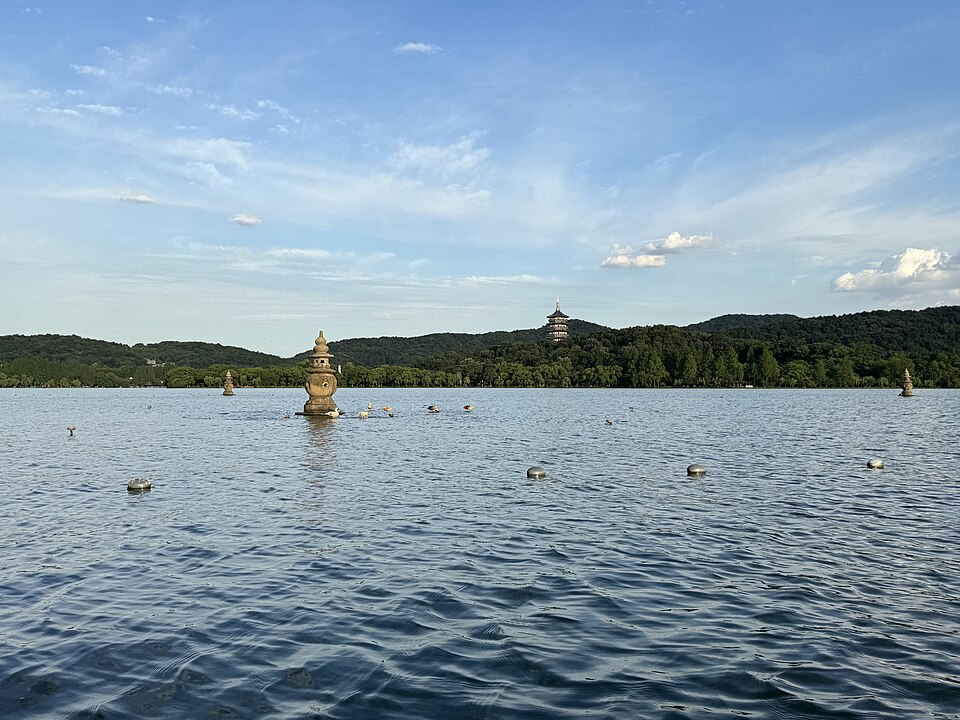
Hangzhou has drawn travellers for a thousand years on the strength of one lake and one leaf. West Lake is the water the Song dynasty poets wrote about; Longjing, the green tea the emperors demanded as tribute. Today the same city hosts parts of China’s technology sector, which makes for an odd but genuinely interesting mix of classical gardens and glass office towers. This guide covers how to see the lake properly, when to visit the tea terraces, what lies beyond the water, and how to check the practical details yourself rather than trusting a printed schedule.
West Lake: It Is Not One View
The lake is usually described through ten classical scenes, named centuries ago and still used on signage and tickets. They include Dawn on the Su Causeway in Spring, Moon over the Three Pools Mirroring the Moon, and Evening Bell at Nanping Hill. You will not see all ten in a day, and trying to is the fastest way to enjoy none of them.
A workable pattern: start at dawn on the Su Causeway, when local residents are doing tai chi and mist sits on the water; take a boat out to the small islands, including the one with the three stone pagodas that give the moon-viewing scene its name; finish at Leifeng Pagoda for sunset over the southern shore. The full ring road around the lake runs roughly 15km, and shared bikes are a reasonable way to cover it — check the rental app’s map and unlock rules on the day, as operating companies and zones change.
Boats come in several types, from large ferries to small rowed craft, with different piers and prices. Fares and last departures are posted at each pier; read the board rather than relying on any figure you have seen online. For getting around the city more broadly, our China metro guide explains how ticketing and gates work.
The Longjing Tea Pilgrimage
Longjing village sits in the hills southwest of the lake, surrounded by terraced tea bushes. The most prized harvest is picked before the Qingming festival, usually late March into early April, and the exact window shifts each year with the weather. If tea is your reason for coming, aim for that period and confirm the current picking status locally — guesthouses and tea shops will know.
You can walk the terraces on marked paths, watch leaves being roasted by hand in a hot wok, and taste several grades side by side. Prices vary enormously by grade, harvest date and vendor, so taste before buying and ask which picking period a batch comes from. Meijiawu, a short distance away, is quieter and better suited to an unhurried afternoon. For what to eat around the city, see our Hangzhou street food guide.
Beyond the Lake
Lingyin Temple, founded well over a thousand years ago, sits in a wooded valley with the Feilai Peak carvings — hundreds of Buddhist figures cut into the limestone — on the approach. Tickets are separate for the scenic area and the temple itself, and both are sold on site; check the boards at the entrance for current prices and closing times.
Other options within reach: Xixi Wetland, a maze of waterways best seen by boat; Hefang Street, where craft workshops and old-style shops cluster; and Qiandao Lake, a reservoir dotted with over a thousand islands, which works as a long day trip or an overnight. In the finance district, the Song-inspired architecture is worth an hour if you are curious how contemporary Hangzhou references its past. If you are continuing elsewhere, our China train travel guide covers booking and boarding.
When to Go
March and April bring the tea harvest, blossom and misty mornings. September to November brings osmanthus, whose scent fills much of the city, along with the last lotus on the lake. Summer is hot and humid; if you visit then, keep to early mornings and evenings. Winter is quiet and often grey, but the lake in low light has its own appeal.
Two to three days suits most visitors. Hangzhou pairs naturally with Shanghai by high-speed rail, a journey of well under an hour on the fastest services, though you should check current timetables and seat availability when booking. Public holidays fill hotels and trains quickly, so check the calendar before fixing dates; our China public holidays guide lists the main dates.
The Poetry Angle
Hangzhou rewards knowing a single line. Su Dongpo, poet and governor of the city, compared West Lake to Xizi, a famous beauty of antiquity: lovely in any dress, meaning beautiful in any weather. It is the most quoted description of the lake, and it explains why locals will tell you rain is a good time to visit. Reading a little of the poetry before you arrive changes what you notice on the causeways and in the pavilions, most of which carry inscriptions the average signboard does not translate.
Practical Notes
Mobile payment dominates everyday transactions in China. Whether a given foreign card works with a given wallet depends on your bank, the app version and the merchant, so test a small payment early and keep a modest cash backup. Our cashless travel guide walks through setup and verification.
Entry rules, transit permissions and permitted stay lengths change, and they depend on your nationality and route. Check the current requirements on your nearest Chinese embassy or consulate page and on the official immigration service site before booking anything non-refundable.
Frequently asked questions
How many days do I need in Hangzhou?
Two full days covers West Lake and Longjing comfortably; three lets you add Lingyin Temple, Xixi Wetland or a day trip without rushing. If you only have one day, pick either the lake circuit or the tea village rather than both.
Is West Lake free to visit?
The lake and its causeways are open to the public at no charge. Individual sites around it — pagodas, temples, boats and some gardens — charge their own admission. Prices and opening hours are posted at each entrance and change periodically, so check on arrival rather than relying on older listings.
When is the best time to see the Longjing tea harvest?
The most valued picking happens before the Qingming festival, typically late March to early April, but the exact dates move with the weather each year. Confirm the current status with a local guesthouse or tea shop before planning around it.
Can I visit Hangzhou as a day trip from Shanghai?
Yes. High-speed trains link the two cities in well under an hour, making a day trip feasible, though it is a long day if you want both the lake and the tea hills. Check current departure times and buy tickets in advance through the official rail app or a ticket office.
Do I need cash in Hangzhou?
Most payments are made by phone, but foreign cards do not always link successfully with every wallet. Test a small transaction soon after arrival and carry some cash as a backup. See our cashless guide for how to check your setup before you travel.
Hangzhou rewards a slower pace than most Chinese cities on a first itinerary. Pick two or three things, check the current details for each on the operator’s own page, and leave room for the lake at an hour when it is quiet.