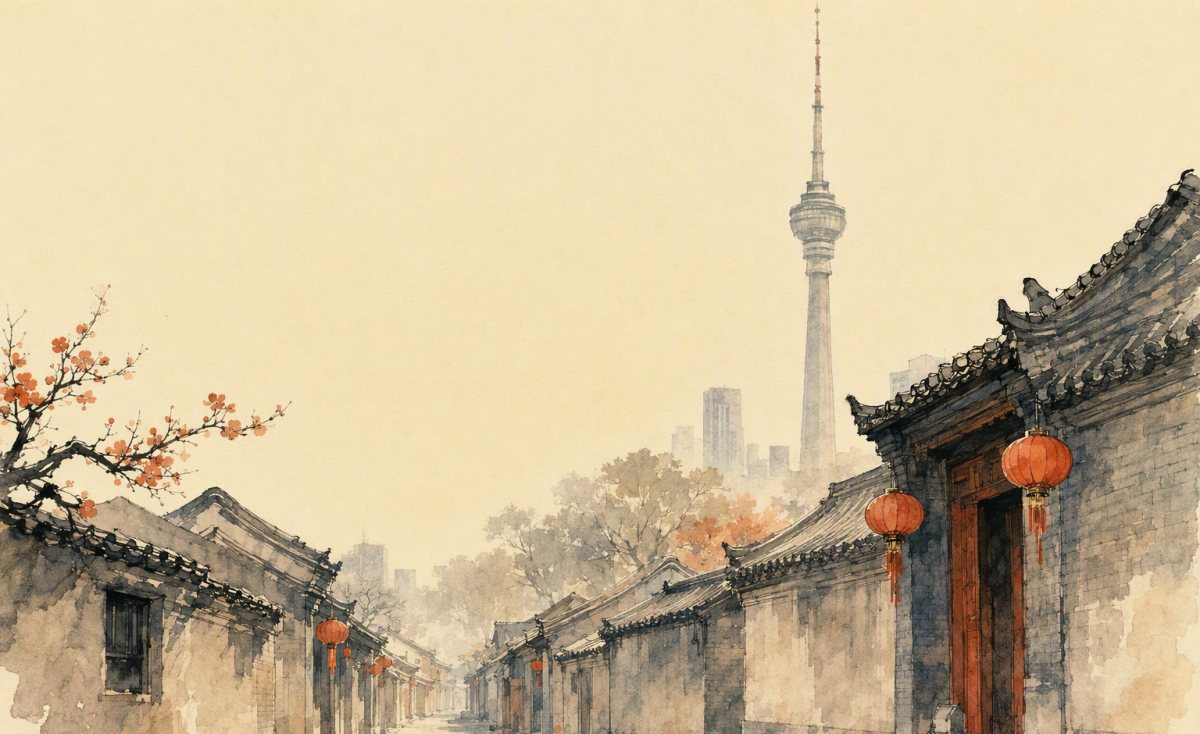
If you have already ticked off the Forbidden City and a Great Wall section, Beijing rewards a second visit far more than most capitals. This guide covers the city regulars return to: the north-south spine that became a UNESCO World Heritage Site in 2024, courtyard lanes where people still live rather than perform, and a museum scene that can absorb whole days. It also covers the practical side — payments, passports, airport transfers and how to check the details that change.
The Central Axis: Beijing’s New UNESCO Listing
Beijing’s Central Axis is the north-south line running from Yongdingmen in the south to the Bell and Drum Towers in the north. It was inscribed on the UNESCO World Heritage List in 2024, which surprised few residents but changed how the city talks about its own geography. The listing covers a sequence of gates, squares, bridges, temples and palace complexes rather than a single monument, so the sensible approach is to walk or ride it in stages.
A south-to-north route takes in Yongdingmen, then Qianmen with its restored archways and tram street, then Tiananmen Square, the Forbidden City, Jingshan Park for the view back down the line, and finally the Houhai lakes and the Drum Tower, where a drum performance is usually staged in the late afternoon. Check the Drum Tower’s official channels for current performance times and last admission, since these are adjusted seasonally.
Two notes for planning. Tiananmen Square and the Forbidden City require advance reservation and passport registration, and the square is sometimes closed at short notice for state events. Jingshan is the best single vantage point on the axis and needs no reservation beyond a normal park ticket. If you are building a longer route around the city’s sights, the metro is the most predictable way to move along the axis; see this China Metro Guide 2026 for ticketing and security-check basics.
Hutong Beijing: Where to Stay and What to Do
The lanes around Nanluoguxiang and Baochao Hutong remain the most convenient base for a courtyard hotel, though the trade-off is noise and narrow access for cars. Mornings are the reward: older residents walk caged birds, play chess on pavement tables and queue at breakfast counters. The same lanes now hold specialty coffee bars, small vinyl shops and dumpling counters with four seats, so a single street can cover both the old and new versions of the city.
Wudaoying Hutong near the Lama Temple and Yangmeizhu Xiejie south of Qianmen are the current favourites among people who live here, largely because they have kept a mix of residents and businesses. When choosing a courtyard hotel, ask directly about heating in winter, whether the room has a private bathroom, and how far a car can actually get to the door. Many courtyard properties are conversions with thin walls; reviews that mention noise are worth reading closely.
Museums Worth Flying For
The National Museum of China sits on the east side of Tiananmen Square and is free to enter, but requires a timed reservation made in advance with your passport. It is enormous; the ancient bronze galleries alone can take two hours, so pick two or three sections rather than attempting the whole building.
The Capital Museum, in the west of the city, is the better choice if you want a coherent narrative of Beijing’s own history, and it is generally quieter than the National Museum. UCCA in the 798 district anchors the contemporary art scene in decommissioned factory buildings, and 798 as a whole is worth half a day even if you skip the paid exhibitions. Opening days vary by venue and exhibitions change, so confirm current hours and any Monday closures on each institution’s own site before travelling across the city.
Getting In, Getting Around and Paying
Beijing Daxing International Airport’s terminal serves a large share of international routes, and the airport express links it to the city rail network. Beijing Capital Airport remains the main hub for many other carriers, so check which airport your flight uses before booking a hotel — they are on opposite sides of the city. For transfers generally, this China Airport Transfers guide covers taxis, metro links and eSIM setup.
Mobile payment is the default for almost everything, including small dumpling stalls. Foreign-issued cards can usually be linked to Alipay and WeChat Pay, but acceptance depends on your card issuer and the app’s current verification rules, so set it up and test it before you fly rather than at a till. The step-by-step process is covered in this China Cashless Travel Guide. Carry a small amount of cash as a backup.
Passports are still required for Forbidden City and Great Wall tickets, and your passport number must match the one used for the reservation. Visa and transit rules change; check the current requirements on the official Chinese embassy or consulate site for your nationality and confirm the wording of any transit exemption rather than relying on a summary.
Seasons and Timing
October brings ginkgo avenues and the most comfortable walking weather of the year. Winter freezes Houhai, where skate rental is available on the ice, and the crowds thin everywhere. Spring brings cherry blossom at Yuyuantan Park, usually late March into April, and early summer suits the ancient observatory and the temple courtyards. Air quality has improved markedly since 2017, though it still varies day to day; check a live air quality index during your stay and plan heavy walking days accordingly. Public holidays distort everything — book transport and major sights well ahead around those dates.
Frequently asked questions
Do I need to book the Forbidden City in advance?
Yes. Entry is by timed reservation made online with your passport, and tickets are released on a set schedule ahead of the visit date. Confirm the current release time and booking channel on the palace museum’s official site, and bring the same passport you used to book.
Is the Central Axis walkable in one day?
It is roughly 7.5 km end to end and technically walkable, but the Forbidden City crossing alone takes hours. Most people split it into a southern section around Qianmen and a northern section around Jingshan and the Drum Tower, using the metro to link them.
Can I use Alipay or WeChat Pay with a foreign card?
Usually yes, but support depends on your card issuer and the app’s verification requirements at the time. Set up and test both apps before departure, keep a physical card and some cash as backup, and check the app’s own help pages for the current limits.
Which airport should I fly into?
Both work. Daxing handles many international routes and has a fast rail link to the city; Capital Airport is closer to the north-east and the hutong areas. Check your flight’s actual airport before booking accommodation, as the transfer times differ significantly.
When is the best time to visit for weather?
Late September to October is generally the most comfortable, with clear skies and autumn foliage. Spring is pleasant but windy and dusty. Summer is hot and humid, and winter is cold but quiet, with ice skating on Houhai when conditions allow.
Treat this as a framework rather than a fixed plan: confirm reservations, opening days and payment settings on the relevant official pages close to your travel dates, then leave room in the schedule for the parts of Beijing that only reveal themselves on foot.