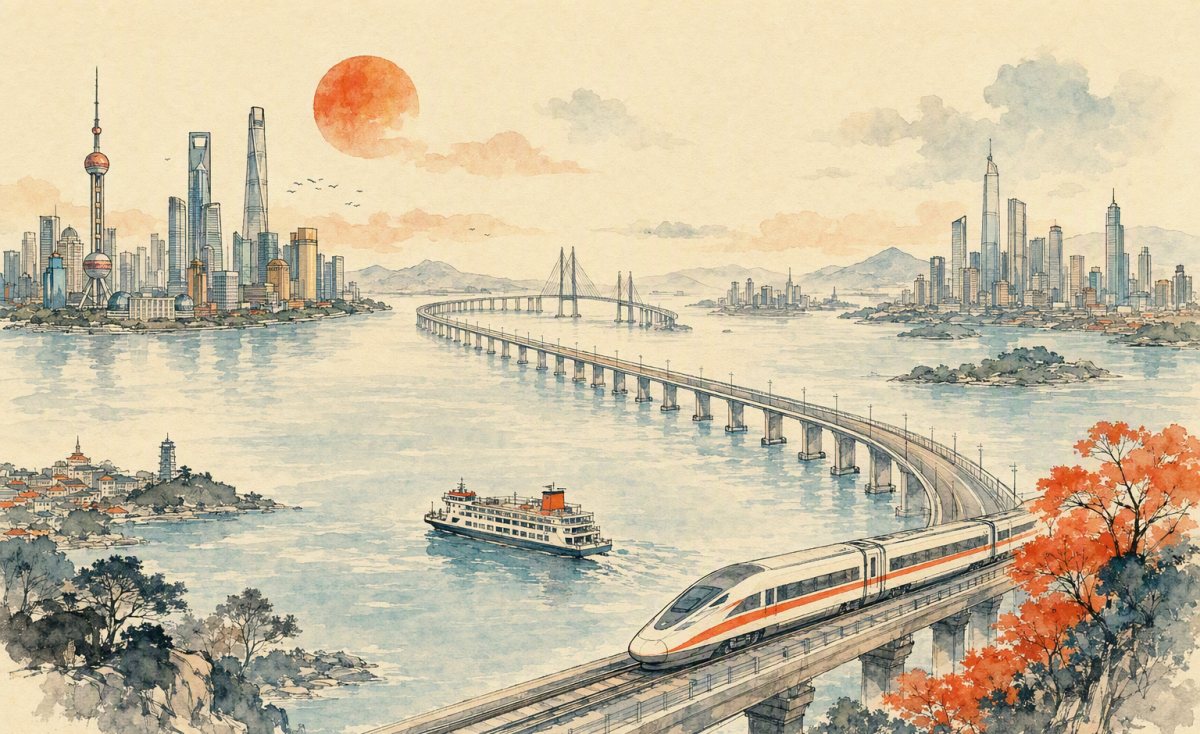
Five cities, three customs regimes, two currencies and the world’s longest sea bridge linking them: the Greater Bay Area loop packs Shenzhen, Hong Kong, Macau, Zhuhai and Guangzhou into a single week. It is one of the most efficient multi-city trips in China, but it is also one of the few where the logistics, not the sightseeing, decide whether the week goes smoothly. This guide covers the shape of the route, the border practicalities, and what to verify before you commit.
The shape of the route
The conventional order runs Shenzhen, Hong Kong, Macau, Zhuhai, Guangzhou. It works because each hop is short and the final leg puts you near two major airports. You can reverse it, or drop Guangzhou if your flight home leaves from Hong Kong or Shenzhen, but the sequence above keeps border crossings to a minimum and avoids backtracking.
Two nights in Shenzhen, two in Hong Kong, one in Macau and one in Zhuhai is the standard allocation. Guangzhou then becomes either a final morning or an extra night. Note that Hong Kong and Macau are separate immigration jurisdictions from the mainland, so you effectively enter and exit China each time you cross. Check your own visa or visa-free entitlement for every leg, including re-entry to the mainland, on the official immigration or consulate page for your nationality rather than assuming a single entry covers the loop. Our overview of China visa rules explains the categories to look for.
Shenzhen: days 1–2
Shenzhen is the mainland half of the loop and the easiest place to start, with direct metro links from Bao’an airport and high-speed rail from Futian and Shenzhen North. Base yourself in Futian for transport or Nanshan for a quieter, more residential feel.
The Ping An Finance Centre observation deck, the OCT-LOFT art district and Dafen painting village fill a comfortable first day. Dameisha beach and the Dongmen street-food lanes work better on day two. Observation decks and timed attractions in China increasingly require advance reservation through a mini-program or official channel, so confirm the booking method and current opening arrangements on the venue’s own page before you travel; our guide to attraction reservations for foreigners covers how these systems usually work.
Hong Kong: days 3–4
High-speed rail connects Shenzhen North and Futian to Hong Kong West Kowloon in a very short hop, and it is the least stressful crossing because immigration for both sides is handled at West Kowloon station. Book through the official 12306 channel or a reputable agent, and allow extra time at the station for the dual clearance. Our 12306 booking walkthrough covers the passport details you will need.
Once in the city, the Peak, the Star Ferry and a dim sum lunch are the reliable core. Dragon’s Back is the best half-day hike if the weather holds, and Temple Street is the obvious evening. Buy an Octopus card on arrival for the MTR, ferries and convenience stores. Check current fares, opening times and any ticketing requirements on the operator’s own site rather than relying on older blogs.
Macau and Zhuhai: days 5–6
Macau is reachable by ferry from Hong Kong or by road across the HZM Bridge. The ferry terminals and bridge shuttle arrangements change periodically, so verify sailing times, luggage rules and booking channels on the operator’s page before you commit to a departure. In Macau, the UNESCO-listed old town, the Ruins of St Paul’s and the Taipa food streets are the priorities, with one Cotai show in the evening if it appeals. Egg tarts on Coloane are worth the detour.
From Macau, cross to Zhuhai via the HZM Bridge. The bridge crossing itself is quick; the time goes on border formalities at each end, which vary with the hour. In Zhuhai, Lovers Road is a straightforward coastal ride and the Fisher Girl statue is the standard photo stop. Chimelong Ocean Kingdom suits families and needs a full day, so treat it as an alternative to the city rather than an addition.
Guangzhou and getting home
Intercity rail links Zhuhai and Guangzhou in a short run, putting you in the city for morning tea, Canton Tower and Shamian Island before an evening flight. Depart from Guangzhou Baiyun or return to Shenzhen Bao’an, depending on fares and timings. Guangzhou rewards a full day rather than a rushed morning, particularly if food is the point; see our Guangzhou street food guide for where to spend it.
Borders, money and timing
Plan your entries around the fact that Hong Kong and Macau sit outside mainland immigration. Keep your passport and any entry documents accessible rather than packed, and check the latest requirements for each jurisdiction separately.
Hong Kong dollars circulate in Hong Kong and Macau; renminbi is used on the mainland. Mobile payment coverage varies by merchant and by your card’s eligibility, so carry a physical card and some cash as backup and confirm what your wallet supports before departure. Our cashless travel guide sets out how WeChat Pay and Alipay typically behave for foreign visitors.
October to December gives the most comfortable conditions across all five cities. July to September is typhoon season, which can disrupt ferries and bridge crossings at short notice, so build slack into any tight connection. November is a particularly good window; see China in November for what to expect.
Frequently asked questions
Do I need separate visas for Hong Kong and Macau?
They are separate immigration jurisdictions from mainland China, and entry rules differ by nationality. Check the official immigration department pages for Hong Kong and Macau, plus the mainland requirements for your nationality, and confirm how many mainland entries your visa or visa-free arrangement allows before booking.
What is the easiest way to cross between the cities?
High-speed rail covers Shenzhen to Hong Kong and Zhuhai to Guangzhou well. Ferries and the HZM Bridge shuttle serve the Hong Kong–Macau and Macau–Zhuhai legs. For each, verify current timetables, luggage limits and booking channels on the operator’s own page, since these change.
Can I use one payment method across all five cities?
Mobile wallets are widely accepted on the mainland and increasingly in Hong Kong and Macau, but coverage is not universal. Carry a physical card and some local cash, and test your wallet setup before you fly rather than at a till.
How many days do I actually need?
Seven days covers the loop at a brisk pace with one night in Macau and one in Zhuhai. If you want time in Guangzhou beyond a morning, add a night. Adding a day to Hong Kong or Shenzhen is usually more rewarding than squeezing in a sixth city.
When should I avoid this route?
Typhoon season, roughly July to September, brings the highest risk of ferry cancellations and bridge closures. October to December is the most reliable window for outdoor sights and coastal sections.
Treat the itinerary above as a framework rather than a fixed schedule, and verify every transport time, ticket rule and entry requirement on the relevant operator’s or government’s own page close to your departure date. The loop rewards a little preparation more than most trips, and the payoff is five distinct cities in a single week.
[…] The full seven-day bay loop […]