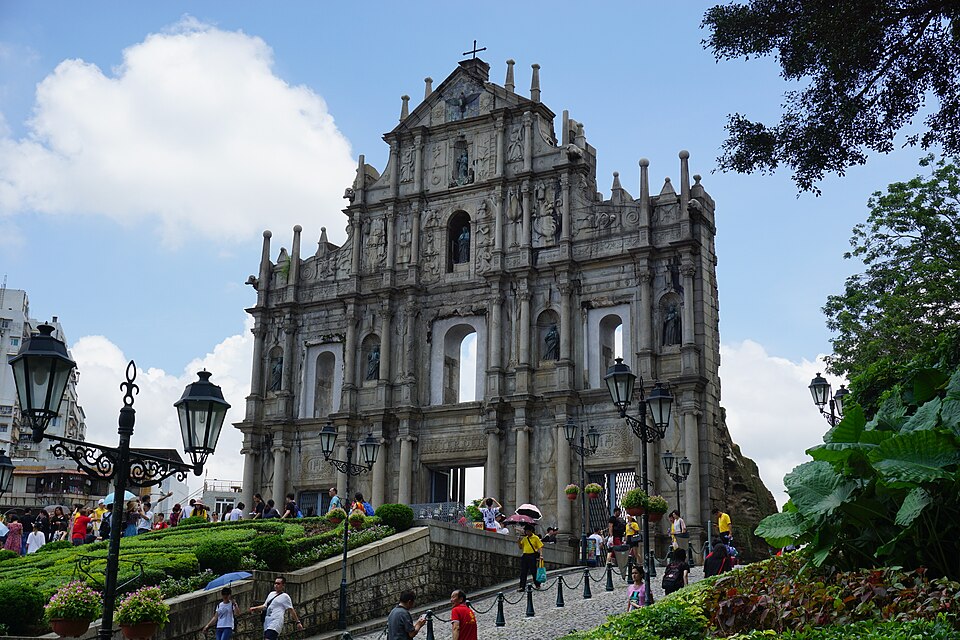
Macau packs a Portuguese old town, Cantonese street food and casino resorts into a single peninsula and two islands joined by bridges. It is small enough to cover properly in two days, and distinctive enough that it does not feel like anywhere else in the region. What follows is a workable structure: one day on the Macau peninsula for the heritage core, one day across the water for Taipa Village and Cotai, with eating treated as a main activity rather than an afterthought.
Before you go: entry, currency and connectivity
Macau has its own immigration and visa rules, separate from mainland China. Whether you need a visa, and for how long you may stay, depends on your nationality, so check the current requirements on the Macau SAR government’s immigration pages rather than relying on a blog. If you are combining Macau with a mainland trip, note that crossing into Zhuhai means entering mainland China and its own entry rules apply; our China visa rules guide covers the mainland side.
The currency is the pataca, but Hong Kong dollars circulate widely and are usually accepted at or near par. Change is often given in patacas, so keep small notes. Cards and mobile payment are common in hotels and larger restaurants; smaller food shops may prefer cash. Mobile data works normally for most visitors, but roaming rates vary by home operator, so compare a local prepaid SIM against an eSIM before you fly — our SIM and eSIM comparison explains the trade-offs.
The UNESCO heritage walk on the peninsula
Begin at Senado Square, where the wave-patterned mosaic paving sets the tone, and follow the signposted historic centre route uphill. The Ruins of St Paul’s — the surviving facade of a 17th-century church — is the obvious focal point, and it is worth approaching from the side streets rather than the main crush. Continue to Monte Fort, whose cannons and small museum sit directly above the ruins, then walk down into the St Lazarus district, where pastel colonial houses now hold studios and cafés.
The whole route is walkable in a few hours at an unhurried pace. Several of the buildings along it are working churches, museums or government offices, so opening days vary and some close on particular weekdays. Check each site’s own listing before you set out rather than assuming everything is open; our notes on attraction reservations explain how to verify opening arrangements for ticketed sites.
Taipa Village and the Cotai Strip
Cross to Taipa for the second day. Taipa Village is a compact grid of lanes around Rua do Cunha, lined with shops selling almond cookies, pork chop buns and dried meat — buy small quantities as you go rather than committing to one shop. The A-Ma temple, from which Macau takes its name, sits on the peninsula’s southern tip rather than in Taipa, so plan it as a separate stop if it matters to you.
Immediately beside Taipa, Cotai is the resort strip: large integrated complexes with shopping malls, canals, gondolas and resident shows. These are privately run, and performance schedules, dark days and prices change frequently. If a specific show or attraction is the reason for your visit, check the operator’s own website for the current calendar and ticket terms before booking anything.
What to eat, and how to plan it
Macanese cooking is the result of centuries of Portuguese, Cantonese, African and Southeast Asian exchange. Look for Portuguese egg tarts, African chicken, salted cod dishes and minchi, and try the snack stalls around the old town and Taipa Village. Book one proper Portuguese dinner in advance — the better tables fill up, particularly at weekends.
If you keep halal, vegetarian or otherwise restricted diets, the picture is manageable but requires planning, since many classic dishes use pork, lard or shellfish. Our halal and vegetarian food guide covers how to ask and what to look for. Tipping is not expected in the way it is in North America; the etiquette guide sets out the norms.
Getting there and getting around
Macau is reachable from Hong Kong by ferry or via the HZM Bridge, and from Zhuhai on foot at the border crossing. Schedules, fares and bridge shuttle arrangements change, so confirm times and prices with the ferry operator or bridge shuttle service directly. Within Macau, casino shuttle buses are a well-known free option between the ferry terminal, border and Cotai, though routes and eligibility rules are set by each operator. Public buses and taxis cover the rest; taxis are metered but demand can spike at peak times.
October to March is the most comfortable season for walking. Summer is hot and wet, and typhoon season can disrupt ferries and flights, so build slack into any tight connection. If you are extending into the mainland afterwards, our ferry travel guide covers the wider network.
Combining Macau with the wider region
Two days in Macau slots neatly into a Greater Bay Area route: Zhuhai across the border, Hong Kong an hour or so away by sea or bridge, and Guangzhou a short high-speed rail hop beyond that. Multi-city planning is where an itinerary tool helps most, provided it does not invent opening hours — see our notes on using AI for a China itinerary for how to sanity-check what it produces.
Frequently asked questions
How many days do I need in Macau?
Two full days cover the peninsula heritage route and Taipa plus Cotai at a reasonable pace. One day is enough only if you stick to the historic centre and skip the islands.
Can I visit Macau without a Chinese visa?
Macau operates its own immigration regime, so mainland Chinese visa rules do not automatically apply. Check your nationality’s requirements on the Macau SAR government immigration website before booking, and check separately if you plan to cross into Zhuhai.
Is Macau expensive?
It spans a wide range: street food and public buses are inexpensive, while resort dining, shows and five-star hotels are not. Set a budget by deciding in advance whether you want the casino-resort experience or the old-town one.
Do I need cash?
Carry some patacas or Hong Kong dollars for small food shops and taxis, and use cards or mobile payment where accepted. Smaller vendors are the likeliest to be cash-only.
How do I get from Hong Kong to Macau?
By ferry from several Hong Kong piers, or by road over the HZM Bridge. Timetables and fares change, so confirm current details with the operator you intend to use.
Treat the two days as a framework rather than a fixed schedule: verify opening days and any ticketed show directly with the operator, keep some cash for small vendors, and leave room for an unplanned stop at a bakery counter, which is often the part people remember.
[…] Two days in Macau […]