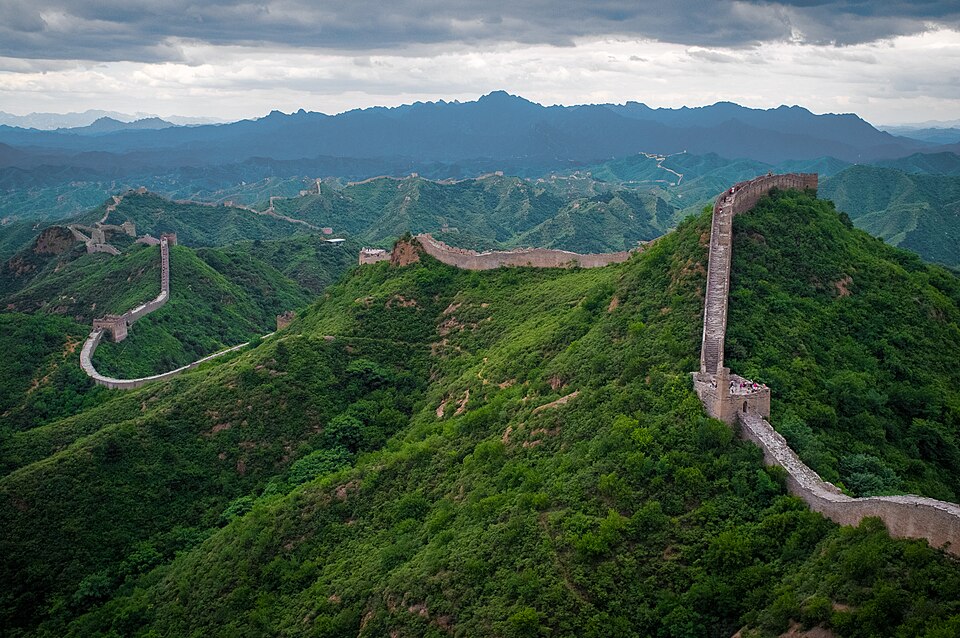
Which part of the Great Wall should you actually visit? For most first-timers on a China travel itinerary the answer is Mutianyu: beautifully restored, about 1.5 hours by road from Beijing, cable car up, toboggan down, and far less packed than Badaling. Pick Badaling only if you have a half day and no car, Jinshanling if you want to walk several kilometres of near-empty wall, and Simatai for the only night-time illumination. Plan three to five hours on the wall, go on a weekday outside Chinese public holidays, and pre-arrange transport: the sections are scattered across more than 100 km of mountain ridges, local buses are slow, and no shuttle links one section to another.
A Section for Every Kind of Traveller
The Great Wall is not one wall but a network built across several dynasties, and the open sections near Beijing differ sharply in restoration, crowds, effort and access. Choosing badly can cost you a day in a queue.
- First-timers and families: Mutianyu.
- No car, short on time: Badaling.
- Hikers and photographers: Jinshanling, ideally toward Simatai West.
- Night views: Simatai.
- Avoiding everyone: Huangyaguan, Gubeikou or wild Jiankou.
Where the Sections Sit Relative to Beijing
Distances are approximate from the city centre; allow 30 to 60 extra minutes in peak traffic.
- Juyongguan ~50 km / ~1 h road
- Badaling ~60 km / ~1-1.5 h road or rail
- Jiankou ~65 km / ~1.5 h road
- Mutianyu ~73 km / ~1.25-1.75 h road
- Huangyaguan ~110 km / ~2 h road
- Jinshanling ~120 km / ~2-2.5 h road
- Simatai ~120 km / ~2-2.5 h road
- Gubeikou ~140 km / ~2.5 h road
Pick one section per day. Combining two is realistic only with a private vehicle and a fast pace.
Mutianyu: The Best All-Round Choice
Mutianyu runs along a wooded ridge with 20-plus restored watchtowers and a visitor cap that keeps it roomy. The standard loop is cable car up near tower 14 or 20, walk the western crest for 40 to 60 minutes, return, then head east to descend by enclosed chairlift or the toboggan that slides down the hillside. Two to three hours covers it comfortably. Steps are steady rather than brutal, and toilets and food stalls sit at the base plaza.
Badaling: Iconic, Easy, Endlessly Queued
Badaling is the oldest-opened and busiest section. Its scale is real, it has a cableway and ground inclinator, and it is the only wall you can reach efficiently by train – which is exactly why tour groups converge there. Go at opening or in the final two hours, never on a holiday weekday. Badaling applies daily entry caps and reservation windows in peak season, so confirm current booking rules with the official section channels shortly before you travel.
Jinshanling and Simatai: The Walkers’ Sections
Jinshanling holds the longest stretch of original, stable, unrestored wall near Beijing: roughly 5 km tower to tower with a gentle net climb, few railings and miles of ridge view. The classic multi-hour route heads east toward Simatai West, but the connecting stretch has opened and closed over the years – ask your driver to verify that morning whether the through-route is open. Simatai is steep, dramatic and the only section with an organised evening light show.
Quieter Alternatives: Huangyaguan, Jiankou, Gubeikou, Juyongguan
Huangyaguan pairs restored wall with a riverside approach and a steep staircase, reduced by a cableway; the drive filters out casual traffic. Jiankou is wild wall – no ticket gate, no shops, crumbling steps and exposed drops at the famous Shouyingtou staircase. Not for beginners; go with an experienced guide. Gubeikou links unrestored wall to the longer Jinshanling traverse, with minimal services. Juyongguan is close to the rail line with a pleasant circular walk, but heavily reconstructed.
Great Wall Sections Compared
| Section | Drive | Best for | Getting up | Effort | Crowds | Time |
|---|---|---|---|---|---|---|
| Mutianyu | ~1.5 h | First-timers, families | Cable car, chairlift, toboggan | Moderate | Low-med | 3-5 h |
| Badaling | ~1-1.5 h | No-car, half days | Cableway, inclinator, steps | Mod-high | Very high | 2-3 h |
| Jinshanling | ~2-2.5 h | Hikers, photographers | On foot, internal shuttle | Easy per km | Low | 4-6 h |
| Simatai | ~2-2.5 h | Night visits | Cable car or steps | Mod-high | Low-med | 3-4 h |
| Huangyaguan | ~2 h | Quiet day trip | Cableway or staircases | High on foot | Low | 4-5 h |
| Jiankou | ~1.5 h | Wild-wall hikers | Trailheads only | High, exposed | Very low | 5-8 h |
| Juyongguan | ~1 h | Quick rail stop | Steps or cable car | Moderate | Medium | 2-3 h |
Getting There: Four Options
Private car with driver is what we recommend for most visitors: leave at 8am, walk when the light is good, skip shuttle queues, stop for lunch on the way back. It is also the only way Mutianyu, Huangyaguan, Jinshanling and Simatai become genuinely easy – see charter car and private driver.
Rail works best for Badaling, served by high-speed trains and a suburban commuter line. Schedules, stations and the walk from platform to gate change seasonally, so verify current timings on the official railway booking platform. Trains are the cheapest option, not the fastest once city transfers are added.
Tourist shuttle buses run one morning out and one afternoon back from Beijing to Mutianyu and occasionally elsewhere. The fixed return is the whole trade-off: two hours on the wall, no flexibility for weather.
Organised group tours are cheap and efficient but set your pace at Badaling or Mutianyu.
A Realistic Day Trip from Beijing
- 07:30 Leave the hotel.
- 09:15 Arrive Mutianyu; collect tickets, cable car up.
- 09:45-12:15 Western crest for tower views, then the eastern descent.
- 12:30 Lunch at the valley restaurants or a farmhouse stop.
- 15:30 Back in the city before the evening peak.
Put the wall on day two or three of a Beijing schedule, once jet lag has cleared: the things to do in Beijing guide shows how it fits alongside the city’s must-sees.
Tickets, Lifts and What the Day Costs
Entry, cableway, chairlift, toboggan and internal shuttles are priced separately and bundled differently at each section. Rather than quote figures that go stale, treat any price you see online as a typical range and confirm at the time of booking. Two realities matter more than sticker price: budget for at least one mechanical lift if you want the best towers within a few hours, and expect transport beyond Badaling to cost more than the ticket. Card acceptance is patchy at mountain stalls, so set up mobile payment first – our Alipay and WeChat Pay guide for foreigners takes about twenty minutes.
Best Time to Visit the Wall
April to early June and September to November bring clear air and comfortable climbing. Winter is beautiful and nearly empty, but frozen steps need grip soles. Summer is green, hazy and hot on exposed stretches, with afternoon thunderstorms that can end a ridge walk. The bigger variable is the Chinese holiday calendar: during Golden Week, Labour Day and summer school holidays, even quiet sections lose their quiet. The best time to visit China guide covers those windows in detail.
Rules and Safety on the Wall
Stay on open, restored sections; climbing closed or unprotected stretches is restricted, and removing bricks or adding graffiti carries real penalties. Do not leave the walking area, do not sit on unrailed edges, and keep children close on steps that are high, uneven and occasionally slippery. Wear grippy shoes, carry more water than expected because towers rarely have sellers, and start down earlier than feels natural.
Skip the Logistics on a Short China Trip
The wall is easy to love and fiddly to arrange: driver, ticket bundle, a section matching your fitness, and timing that dodges crowds and weather. We build that day into custom routes – see China tours for multi-city itineraries or premium customisation for fixed dates and specific constraints. Sanity-check your whole route with the trip planner, get a China travel eSIM so maps work the moment you land, and read more in our China travel guides.
FAQ
Which section of the Great Wall is closest to Beijing?
Juyongguan and Badaling, at roughly 50 to 60 km from the centre, and both are reachable by rail as well as road. Closest is not the same as best: because they are easiest, they are also the most crowded, and sections 40 minutes further often feel far more peaceful.
Is the Great Wall suitable for older travellers or small children?
Yes, with the right section. Mutianyu is the most forgiving because lifts do the climbing and the main walkway between towers is restored and railed. Badaling also has mechanical lifts and a ramped viewpoint route. Skip unrestored sections entirely, where steps can be knee-high, broken and unfenced.
Do I need to book Great Wall tickets in advance?
It depends on the section and the calendar. Badaling in particular applies daily caps and reservation windows in peak season, while several other sections sell comfortably on arrival. Check the requirements published by the specific section and Beijing’s tourism authorities in the days before you go rather than relying on a guide written for another season.
Can I visit the Great Wall as a day trip from Beijing?
That is how most people do it. A private car makes any nearby section a comfortable day trip with about three hours on the wall; public transport points to Badaling. Hiking Jinshanling toward Simatai in one day works too, but needs a vehicle prearranged for pickup since the ends are not looped by shuttle.
How much time should I allow at the wall itself?
Three hours is the minimum for a single loop using a lift, four to five gives you a fuller experience including lunch, and six or more suits hiking original stretches. Under two hours means you have only seen the platform nearest the entrance, the most common regret visitors report.