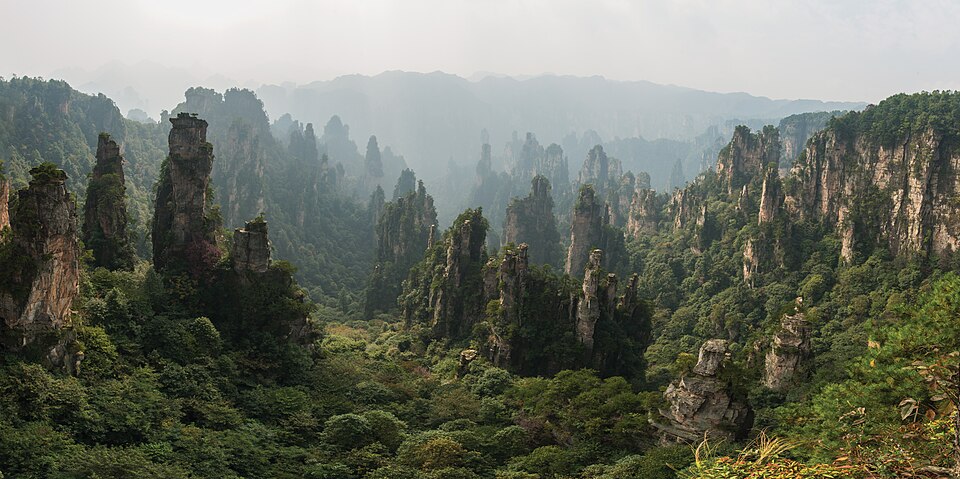
The Zhangjiajie Glass Bridge is a 430-metre, transparent pedestrian bridge suspended roughly 300 metres above the Yunmeng Grand Canyon in Zhangjiajie, Hunan, China. Visitors cross a glass section within a larger canyon walk of about 1.5 to 3 hours, on a timed-entry ticket booked in advance. Open year-round except during storms, ice or maintenance closures, it is one of the most photographed stops on any China travel itinerary that includes Zhangjiajie National Forest Park, the Avatar Mountains or Tianmen. This guide covers how to book, how to get there, what the crossing actually feels like, and how to combine the bridge with the rest of your Zhangjiajie trip.
What the Zhangjiajie Glass Bridge Actually Is
The bridge links two cliff edges across the Yunmeng Grand Canyon near the small town of Luoguta, about 40 to 60 minutes by road from the main Zhangjiajie National Forest Park entrances. It is not a viewing platform: you walk from one side of a gorge to the other on a glass deck, then return via a lower canyon trail or the elevator-and-cable-car loop, depending on your ticket route. For most travellers it is a 20-minute thrill framed by a scenic 2-hour canyon walk.
Where It Is and How Far from Zhangjiajie City
The bridge sits inside the Yunmeng Grand Canyon area, on the south-west side of the wider Zhangjiajie cluster. Typical road distances:
| From | Approx. Distance | Typical Travel Time |
|---|---|---|
| Zhangjiajie Hehua Airport / city centre | 40-50 km | 60-90 min |
| Wulingyuan (Forest Park south gate) | 30-40 km | 45-70 min |
| Tianmen Mountain (cable car base) | 45-55 km | 70-100 min |
| Zhangjiajie West Railway Station | 60-70 km | 90-120 min |
Allow extra time during National Day and Labour Day holidays.
Tickets, Time Slots and Booking Rules
The bridge uses timed entry: only a limited number of visitors are allowed onto the deck in each half-hour window, so the ticket is tied to a specific 30-minute start time, not just a day. Same-day tickets sell out on weekends and during school holidays, especially in July-August and Golden Week. Most independent travellers book one to three days ahead through the scenic area’s official channel or a licensed local operator; a private-driver or small-group package can hold a slot on your behalf. Prices follow a typical range that varies by season and bundle (canyon walk only versus canyon walk plus bridge crossing). Because ticketing policy changes and bundles are adjusted, always confirm the current fare and time-slot rules at booking rather than relying on any figure you have seen quoted online. Bring your passport: Chinese scenic areas commonly require ID matching the ticket, and foreigners are turned away when the booking name does not match the document.
Getting to the Bridge: Transport Options
Public transport to Yunmeng Grand Canyon is thin. Most China travel itineraries choose one of three options. A private driver or chartered car is the most flexible and the only one that comfortably pairs the bridge with another major site in a tight schedule; see our China charter-travel page and the private driver in China guide. A scheduled tourist bus departs Zhangjiajie central bus station at fixed times, cheap but rigid. A guided day tour usually combines the bridge with Baofeng Lake or a Miao village. Our trip planner can slot the crossing against arrival times, and our premium customization service arranges drivers, guides and pre-booked tickets in one package.
What the Crossing Feels Like
The deck is roughly 430 metres long, of which the see-through glass section is a shorter central span. Below is a genuine gorge, not a staged floor. Visitors describe three phases: hesitation on the first panel, adaptation within 30 seconds, then a strong urge to stop, crouch or lie down for photos once the fear passes. Staff ask you to keep moving in the busiest windows, so target a shoulder slot if photography matters. Shoes are fitted with soft cloth overshoes to protect the glass; the sensation underfoot is slightly grippier than usual.
Should You Do the Glass Bridge?
Skip it if you have a serious fear of heights, are travelling with a toddler who panics in crowds, or dislike being pushed along at a fixed pace. Do the crossing if you enjoy photo-forward experiences or a mild adrenaline hit; it fits well as a second or third-day add-on in a 4-day Zhangjiajie itinerary. Travellers who want the same scenery without a transparent floor can stay on the canyon hiking path below the bridge, included in most combo tickets.
Best Time of Day and Best Season
Two constraints shape when to go. Ticket windows: earlier slots (08:00-09:30) are the least crowded and give you the calmest crossing. Weather: spring and autumn mornings are usually clearer, while midday haze and summer thunderstorms reduce visibility. In winter the deck may close briefly for ice. For a season-by-season view of the region, see our best time to visit China guide and the wider Zhangjiajie guide.
Combining the Bridge with Tianmen or Yuanjiajie
A single day is enough for the bridge plus one other major site, but not both.
| Combination | Feasibility |
|---|---|
| Bridge + Tianmen Mountain | Yes, using Tianmen’s early cable-car slot; both have glass elements, but Tianmen’s is a cliff walkway, not a span. |
| Bridge + Yuanjiajie (Avatar Mountains) | Tight; Yuanjiajie needs half a day and the canyon walk another half. |
| Bridge + Baofeng Lake | Comfortable, a popular day-tour combination. |
| Bridge + Forest Park (any gate) | Split across two days; the canyon is a separate ticketed zone. |
What to Bring and Camera Tips
Bring a small bag only; large backpacks must be left in entrance lockers. Use a phone or compact camera with a wrist strap – dropping a device through a grille gap is a real risk. Sunglasses reduce glare off the panels, and a light layer helps on the shaded canyon side even in summer. Tripods are usually restricted during peak slots. For on-the-ground connectivity while coordinating with drivers, check our China eSIM guide before you fly; signal inside the gorge dips away from the ridge, but the entrance plaza is well covered.
Weather Closures, Safety and Refunds
The operator closes the deck for lightning, heavy rain, high winds, ice or scheduled inspections. Closures are common enough in the wet season that a same-day plan B is worth having. Refund and rebooking rules depend on the ticket channel and reason for closure; because policies change periodically, check the scenic area’s current terms at booking, and read the fine print of any third-party tour that promises a refund. Structurally, the bridge is engineered to a large load rating and inspected on a rolling schedule.
Realistic Budget for a Glass Bridge Day
All-in, a bridge day is the sum of four items: the timed ticket, transport in and out, one meal, and any locker or photo package. Ticket prices vary by season and bundle, and chartered-car prices depend on vehicle and pickup point. Our China charter-car price guide shows typical ranges for the region, but confirm the number you actually pay at booking, because fuel surcharges and holiday premiums shift. For a week-long framework, cross-check our China trip cost article.
Alternatives If the Bridge Is Sold Out
Three good substitutions sit near Zhangjiajie. Tianmen’s glass cliff walkway delivers the height thrill along a solid rock ledge. The Yuanjiajie first-plateau walk offers the same sandstone pillars without a transparent floor. Huangshizhai provides a similar postcard view via a shorter boardwalk inside the forest park. Each is reachable using the same private-driver base, so a sold-out morning rarely has to derail a China travel day.
Sample Half-Day Glass Bridge Itinerary
A clean template: pickup at 07:00 from Wulingyuan, arrival at the canyon entrance by 08:00, security and overshoe fitting by 08:30, crossing in the 08:30-09:00 slot, canyon trail descent 09:15-11:00, elevator back to the plaza 11:15, quick lunch, then departure at 12:30. This is the pattern our China tour package designers use for a one-day Zhangjiajie add-on, and it fits cleanly into a broader China travel guide stack.
FAQ
How long is the Zhangjiajie Glass Bridge?
The overall bridge is roughly 430 metres long and about 6 metres wide, with a glass deck section at the central span and a solid approach at each end. It crosses a gorge approximately 300 metres deep.
Is the Zhangjiajie Glass Bridge dangerous?
The bridge is engineered for a large simultaneous visitor load, inspected on a scheduled basis, and closed for severe weather. The main risks are slips, dropped phones and the emotional intensity of the height rather than any structural concern. Follow staff flow rules, wear the provided shoe covers, and keep small items secured.
Do I need to book Zhangjiajie Glass Bridge tickets in advance?
Strongly yes on weekends, school holidays and July-August. Timed entry means a specific 30-minute window per visitor, and same-day stock sells out. Independent travellers book through the scenic area’s official channel; travellers on a private-driver or package tour usually have the slot reserved by the operator. Confirm current booking windows and cancellation terms at purchase, as these change seasonally.
Can I bring my bag, phone or a tripod onto the bridge?
Small shoulder bags and phones are fine. Large backpacks and luggage go into lockers at the entrance. Tripods and monopods are commonly restricted during peak slots for crowd-flow reasons. Rules are set by the on-site team and can shift with demand.
What happens if the glass bridge is closed when I arrive?
Closures for weather or maintenance are usually announced at the entrance, and the operator follows a documented refund or reschedule policy. Third-party tour packages may differ from direct bookings, so read those terms before you buy. If closure risk matters, plan an alternative such as Tianmen’s cliff walkway.