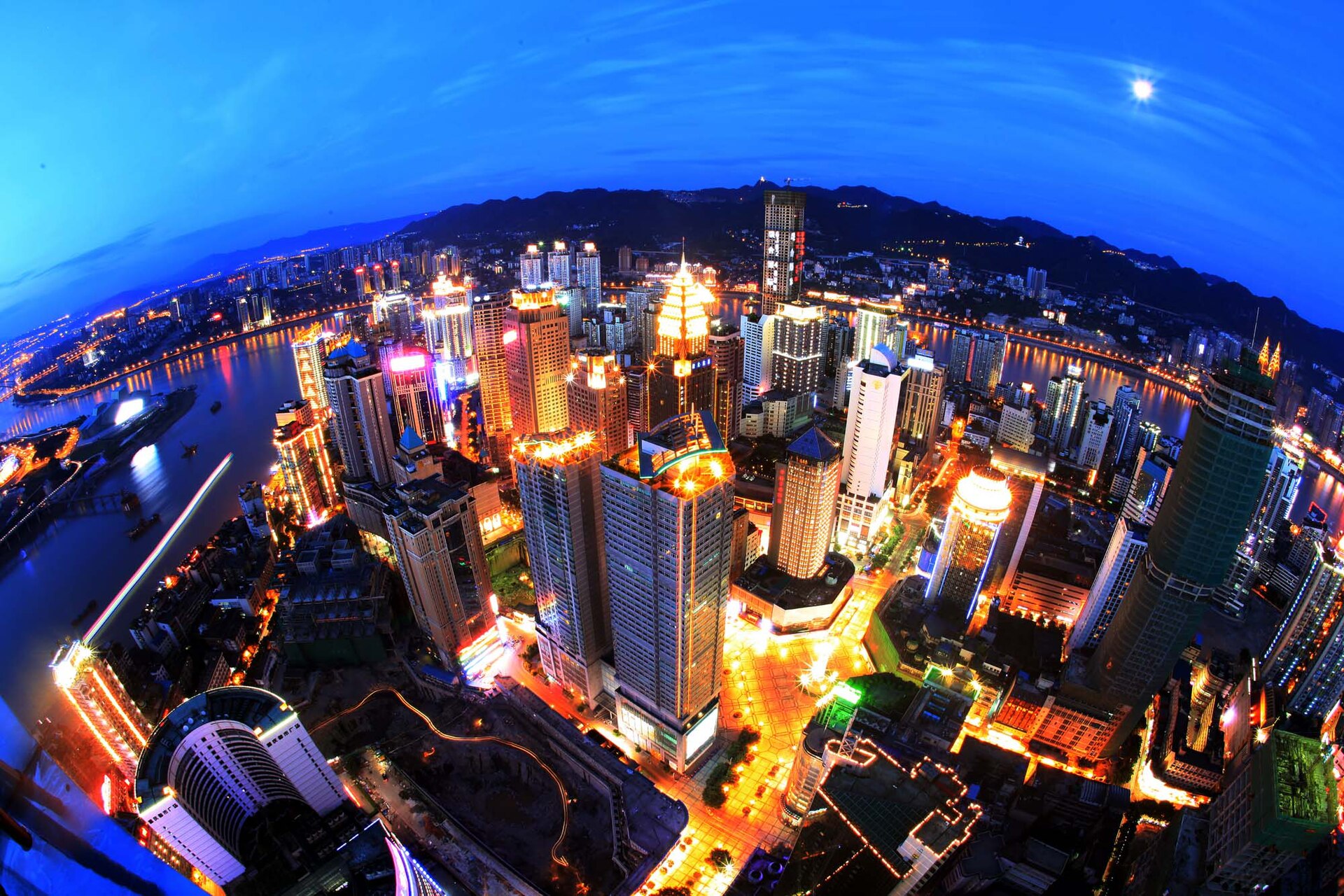
Why Chongqing in 2026?
Chongqing isn’t just China’s largest municipality by population (32 million) — it’s a kinetic, three-dimensional metropolis carved into the Yangtze and Jialing river gorges. In 2026, it’s more accessible than ever: eligible nationalities (including US, UK, Canada, Australia, France, Germany, Japan, South Korea, and Singapore) can enter visa-free for up to 240 hours (10 days) via direct international flights to Chongqing Jiangbei International Airport (CKG). No pre-approval needed — just present your onward ticket and passport at immigration. That window makes Chongqing an ideal standalone destination or a high-energy pivot between Shanghai, Chengdu, or even Vietnam-bound trips.
Forget flat-city assumptions. Here, elevators double as public transport (the Liziba Station monorail slicing through a residential tower), rivers are highways, and ‘street level’ is a relative term. With its UNESCO-listed Dazu Rock Carvings just 90 minutes away, thriving indie art districts like Eling Park, and the world’s densest metro network (8 lines, 400+ km, fully English-signed), Chongqing rewards curiosity — if you know how to navigate it.
Your 4-Day Chongqing Itinerary (2026 Edition)
This route balances iconic sights, local rhythm, and logistical realism — no backtracking, no 7 a.m. bus waits, and zero reliance on unmarked taxis. All times reflect 2026 operating hours (verified with Chongqing Metro and municipal tourism bureau updates).
- Day 1: Liberation Monument → Eighteen Stairs → Hongya Cave (night lights + hotpot)
- Day 2: Ciqikou Ancient Town → Chongqing Art Gallery → Jiefangbei night food crawl
- Day 3: Dazu Rock Carvings (half-day guided tour) → Wulong Karst National Park (optional add-on)
- Day 4: Three Gorges Museum → Eling Park street art → Yangtze River Cable Car sunset ride
Pro tip: Buy a Chongqing Tongka card (¥25, reloadable) at any metro station — works on buses, ferries, and even some hotpot restaurants for contactless payment. No Alipay/WeChat Pay registration required for this card, making it perfect for first-time visitors.
Transit That Actually Works (No Google Maps Needed)
Chongqing’s metro isn’t just functional — it’s essential. Line 6 (purple) links CKG Airport to downtown in 42 minutes (¥7, runs 6:30 a.m.–11:30 p.m.). From Jiaochangkou Station (Line 1/2/6 interchange), you’re 5 minutes from Liberation Monument — and yes, escalators here move at 0.65 m/s (faster than Beijing’s) to handle steep inclines. Real-time train arrivals display in English and Mandarin on platform screens, updated every 8 seconds.
For hills? Use the city’s 13 public outdoor escalators — free, open 24/7, and climate-controlled. The most famous: the 12-story, 100m-long escalator connecting Xinhua Road to Linjiangmen (near Hongya Cave). Don’t walk up — ride it, then backtrack via the parallel stairwell for photos.
Rideshares (Didi) work reliably but require Chinese phone number verification. Instead, book a WingPhoenix charter car for airport transfers or Dazu day trips — drivers speak English, carry portable Wi-Fi, and accept international cards. Bonus: our AI trip planner auto-adjusts pickup windows based on real-time CKG flight arrival data and traffic patterns — no more guessing when your 3 p.m. flight will clear customs.
Eating Like a Local (Without the Burnout)
Yes, Chongqing hotpot is famously spicy — but 2026 menus now standardize heat levels: Mild (just numbing), Medium (balanced chilies), Chongqing (‘I dare you’ tier). At Qiaotou Laozhen Hotpot (Jiefangbei branch), order the ‘Four Treasures’ combo (duck intestine, goose intestine, beef tripe, and handmade meatballs) — all cleaned and blanched tableside. Pair it with bingfen (jelly-like sweet potato starch dessert) to reset your palate.
Vegetarian? Try Huashan Vegetarian Restaurant near Ciqikou — their ‘mapo tofu’ uses fermented soybean paste and wood ear mushrooms for authentic umami. And don’t skip breakfast: xiao mian (spicy dan dan noodles) from street stalls near Shapingba Station cost ¥12–15 and come with chili oil, preserved mustard greens, and minced pork — ready in 90 seconds.
For caffeine: Wu Er Coffee in Eling Park roasts beans from Yunnan’s Baoshan region and serves them with Sichuan peppercorn foam. Their ‘Fog City Latte’ (named for Chongqing’s 120+ foggy days/year) is a must.
Smart Logistics Table: What You Need to Know in 2026
| Item | 2026 Detail | Opmerkingen |
|---|---|---|
| 240h Visa-Free Transit | Valid at CKG for 46 nationalities; requires onward ticket to third country within 10 days | No hotel pre-booking needed — but keep address handy. Immigration may ask. |
| eSIM Coverage | China Unicom 5G active in 100% of metro stations, 92% of tourist zones | WingPhoenix eSIM activates instantly at CKG Arrivals — no physical SIM tray required. |
| Hotpot Etiquette | Double-boil broth (oil layer on top, soup below); dip raw meat 10–15 sec only | Never reuse used chopsticks to grab raw meat — use serving utensils. |
| Metro Last Train | Line 1/6: 11:30 p.m.; Line 3/10: 11:45 p.m. (all lines extend 15 min on weekends) | Cable car closes at 9:30 p.m., but night views from Nanbin Road are free and spectacular. |
Beyond the Brochure: Hidden Layers
Chongqing’s charm hides in friction. Ride the Yangtze River Ferry (¥2, departs every 20 min from Chaotianmen Wharf) — not for the view alone, but to watch locals board with live chickens, plastic bags of laundry, and folded stools. Or wander Tongyuanju Alley, a 400-year-old stone path where elders play xiangqi (Chinese chess) under persimmon trees — no signs, no crowds, just slow time.
Art lovers: Yuz Museum (on reclaimed industrial land) hosts rotating exhibitions — in October 2026, it features ‘Rivers of Memory’, a multimedia installation using real Yangtze sediment samples. Entry is ¥60, but free for under-18s and over-65s (ID required).
Finally, respect the terrain. Wear grippy shoes — sidewalks tilt up to 18°. Carry a compact umbrella (rain falls 170 days/year), and download the official Chongqing Metro app (iOS/Android), which includes offline maps and voice-guided transfers — far more reliable than third-party apps in hilly zones.
WingPhoenix’s AI trip planner helps you layer these nuances: it cross-references your dietary preferences, mobility needs, and even preferred photo-light conditions (e.g., ‘golden hour at Hongya Cave’) to sequence your days — all synced to live metro alerts and weather forecasts. No more choosing between hotpot and history.
Chongqing doesn’t soften its edges for visitors. It invites you to adapt — to ride the escalator, taste the burn, read the mist, and feel the city rise beneath you. In 2026, that’s not just travel. It’s calibration.
Plan your Chongqing itinerary with AI precision — start now.
Feature photo of Chongqing: Jonipoon · Wikimedia Commons · CC BY 3.0