
Posted on — Leave a comment

15 China Tourist Traps to Avoid (And What to Do Instead)

“Tourist trap” is a broad term, and in China it covers everything from a genuinely aggressive commission scheme to a mildly overpriced souvenir stall. This guide separates the two. It covers the specific setups that cost foreign visitors real money, how each one actually works, and the practical alternative in each case. It is written for independent travellers and for people booking guided trips, and it deliberately avoids quoting prices or opening hours, because those change and the only reliable source is the operator or venue itself.

Shopping-stop tour buses

The classic scheme is a cheap or free day tour that advertises three sights and delivers four shopping venues: a “silk factory”, a “jade museum”, a “tea ceremony” and a pearl or lacquerware outlet. The guide and driver earn commission on what you buy, which is why the stops are long and the actual sight is rushed. The tell is the price. If a full-day tour with transport and a guide costs less than a decent lunch, the money is coming from somewhere else.

Before booking anything, read the itinerary line by line and count the words “factory”, “museum”, “centre” and “ceremony”. Ask in writing whether there are shopping stops and whether the guide is paid commission. A legitimate operator will answer plainly. If you are already on the bus, you are not obliged to buy anything, and staying on the coach during a stop is a perfectly reasonable response.

Tea house scams and fake “art students”

Both rely on the same mechanic: a friendly, fluent English speaker approaches you first. Near major tourist streets, a pair of well-dressed young people may explain that they are art students and invite you to a small exhibition nearby. You arrive, admire some prints, and are then pressured to buy them at inflated prices, sometimes with a group of staff blocking the exit. The tea house version is more expensive: a charming stranger suggests a traditional tea ceremony, you are served several rounds, and the bill arrives with a figure in the hundreds.

The defence is simple and does not require rudeness. Decline the invitation, keep walking, and never enter an unmarked venue suggested by someone who approached you on the street. Real tea culture is easy to find legitimately: established tea houses with published menus, and village visits in tea-growing areas arranged through a known operator. If you are unsure how to extract yourself from a persistent approach, some basic phrases help, and our guide to translation apps and essential phrases covers the useful ones.

Transport traps: airport taxis and unlicensed drivers

At arrivals halls, men will approach you asking “taxi?” before you reach the official rank. These are unlicensed drivers. The fare is negotiated rather than metered, and the figure usually rises en route. Walk past them to the official taxi queue, or better, arrange a chartered car in advance with meet and greet, where the driver tracks your flight and waits if you are delayed.

If you would rather use public transport, the metro is often the fastest option into the city and is well signposted in English. Our airport transfers guide sets out the taxi, metro and pre-booked options side by side. For rail travel between cities, buy through official channels and check the current rules on the operator’s own site; our 12306 booking walkthrough explains the steps and what to verify before you pay.

Restaurant menu switching and currency kiosks

On heavily touristed streets, some restaurants keep two menus: a Chinese-language one with local prices and an English one with higher ones. The gap can be substantial. You can reduce the risk by choosing places a short walk off the main drag, checking that the price list is the same document other diners are handed, and asking for the Chinese menu if you can read enough to order. Street food areas are usually more transparent, since prices are displayed and the same queue serves everyone.

Airport currency exchange counters are convenient and consistently poor value. ATMs and mobile payment apps generally give a better rate. Which apps work for a foreign card, and how to set them up before you fly, is worth checking in advance — see our cashless travel guide for the current options and the verification steps. Keep a small amount of cash for stalls and small vendors regardless.

What the real version looks like

The alternative to the trap circuit is not obscure or difficult. It is hutong breakfast stalls at seven in the morning, night markets that locals actually use, the Great Wall outside peak season, tea villages where the leaves are processed on site, and wet markets at dawn. None of these require special access. They require timing, a willingness to eat where the queue is local, and a guide who is paid by you rather than by a shop.

Two habits carry most of the weight. First, agree the commercial terms of any tour in writing before you pay, including shopping stops. Second, treat unsolicited English-language approaches in tourist areas as a sales pitch until proven otherwise. That is not cynicism; it is the same caution you would apply in any major city.

Frequently asked questions

Are all cheap tours in China shopping tours?

No, but the correlation is strong. A tour priced well below the cost of transport and a guide’s time has to be funded somehow, and commission stops are the usual answer. Read the itinerary for factory, museum and ceremony stops, and ask the operator directly whether commission is involved. If the answer is evasive, book elsewhere.

Is it safe to just walk away from a tea house or gallery approach?

Yes. In the overwhelming majority of cases the approach ends when you decline and keep moving. Do not follow anyone to a second location, and do not enter an unmarked building. If you feel pressured inside a venue, ask for the bill, pay only what you agreed, and leave; if you believe you are being defrauded, contact the local police.

How do I know a taxi at the airport is official?

Official taxis wait at the marked rank outside arrivals and use a meter. Anyone approaching you inside the hall and offering a ride is not part of that system. If you want certainty, pre-book a chartered car with flight tracking and a meet-and-greet meeting point, and confirm the driver’s details before departure.

Should I exchange cash at the airport?

It is usually the worst rate you will be offered on the trip. Compare against an ATM withdrawal and against mobile payment linked to your own card, and check any fees your bank applies. Verify current limits and supported card networks on your bank’s and the app’s own pages rather than relying on older advice.

Do I need a guide to avoid these problems?

No. Most traps are avoidable with the habits above. A guide helps mainly with language, timing and access to places that are hard to reach independently. If you do book one, the important question is who pays them: you, or the shops on the route.

If you would like a second opinion on an itinerary, or want to check whether a specific tour or venue is worth your time, ask before you book rather than after. Details change, prices change, and the operator’s own page is always the final word.

Posted on — Leave a comment

China High-Speed Rail for Foreigners: Booking, Seats & Luggage Guide

China’s high-speed rail network is the part of the trip most foreign visitors worry about beforehand and enjoy most once they are on it. The trains are fast, punctual and straightforward once you understand three things: how to book with a passport, how station procedures differ from an airport, and which class is worth paying for on your route. This guide covers each of those in turn, and flags the points where you should confirm current details with the operator rather than rely on any article, including this one.

What the high-speed network actually covers

The high-speed network (branded G-series for the fastest trains, D-series for slightly slower ones) links most major tourist cities. Typical journeys include Beijing to Shanghai, Beijing to Xi’an, Shanghai to Hangzhou, and Guangzhou to Hong Kong, all of which are measured in hours rather than days. City-centre to city-centre, rail usually beats flying once you count the time spent getting to a remote airport and clearing security twice.

Speeds on the flagship lines reach the 300–350 km/h range. Trains run to a strict timetable and depart on time, so treat the printed departure time as final. For a fuller picture of routes and how rail fits alongside buses, ferries and metros, see this China High-Speed Rail Guide 2026.

Your passport is your ticket

There is no separate paper ticket for foreign passengers in most cases. You book against your passport number, and at the station you tap or present the passport itself at the gate. Staff may also ask to see the passport on board, so keep it accessible rather than buried in a suitcase.

Two booking routes dominate. The official 12306 platform is the railway’s own channel; it now supports foreign passports, though the interface and verification steps can be fiddly. Third-party English-language agents charge a small service fee for a smoother booking flow and English support. Whichever you use, check the exact name and passport number character by character — a mismatch can stop you boarding. A step-by-step walkthrough of the official channel is here: How to Book Train Tickets in China: 12306 Step by Step.

Seat classes and how to choose

On most high-speed trains you will see three main options. Second class is a 3+2 layout and is perfectly comfortable for journeys of a few hours. First class is 2+2 with more legroom and wider seats. Business class is the premium tier, with lie-flat or near-flat seating on some trains, and is priced accordingly.

Rather than quote fares here — they vary by route, train and how far ahead you book — check the live price on 12306 or your booking agent for your specific date. As a rule of thumb, first class costs noticeably more than second, and business class more again. All classes have power outlets, tray tables and toilets; the difference is space and, on some services, quieter carriages. Seat layouts and onboard food vary by train type, which is covered in this guide to China high-speed rail seat classes and onboard food.

Luggage, security and station timing

High-speed trains have a published luggage allowance per passenger, commonly cited around 20 kg, but in practice large bags are rarely weighed. Suitcases go either in overhead racks (on some carriages) or in luggage zones at the ends of each car. Arrive early enough to stow bags without rushing.

Stations have airport-style security: bags through a scanner, you through a metal detector, and liquids are generally fine (unlike at airports). The main time cost is the size of the station and the queue, not the screening itself. Confirm the recommended arrival buffer for your specific station on the day, as it varies with station size and time of day.

Finding your train in a very large station

Chinese rail stations are enormous, and this is where first-timers lose time. Your ticket or booking confirmation shows a waiting area or gate reference. Follow the green English signage to that area, then watch the departure boards for your train number and platform. Boarding gates typically open a short window before departure and close before the train leaves, so do not drift.

If you have booked a private transfer, a driver can meet you inside the arrivals hall with your name and train details — useful when you are arriving in an unfamiliar city late at night. If you are navigating independently, the metro is often the cheapest way onward; our China metro guide explains ticketing and payment.

Practical points before you travel

Book popular routes and holiday-period trains as early as the sales window allows; seats on key lines do sell out. Bring your passport, not a photocopy. Keep a screenshot of your booking in case mobile data is unreliable. If you are combining rail with a visa-free transit entry, check that your route and timing meet the rules on the official immigration page rather than assuming — the 240-hour visa-free transit guide explains the structure, but always verify current conditions with the authorities.

Frequently asked questions

Can I board a Chinese high-speed train with just my passport?

In most cases yes — the passport used at booking acts as your ticket at the gate. Carry the same passport you booked with, and be ready to show it on board if asked.

Is 12306 available in English for foreign passports?

The official platform has added support for foreign documents, but the experience changes over time. Check the current registration and verification steps on the official app or site before relying on it, and keep a backup booking option.

How much luggage can I take on a high-speed train?

There is a published allowance, often quoted around 20 kg per passenger, but enforcement is inconsistent. Check the current rule on the operator’s page and pack so you can lift your own bag onto a rack.

How early should I arrive at the station?

Allow extra time at large stations for security queues and finding your waiting area. The exact buffer varies by station and time of day, so check guidance for your specific departure rather than a fixed number.

Do I need to print my ticket?

Usually not, since the passport serves as the ticket. A screenshot of the booking reference is still useful if you need to show staff your train details.

High-speed rail is one of the easiest parts of travelling in China once the passport-as-ticket system clicks. Book early, arrive with buffer time, follow the English signage, and confirm anything time-sensitive — fares, allowances, boarding windows — on the official operator page before you travel.

Posted on — Leave a comment

WeChat Pay & Alipay for Foreigners: Setup Guide 2026

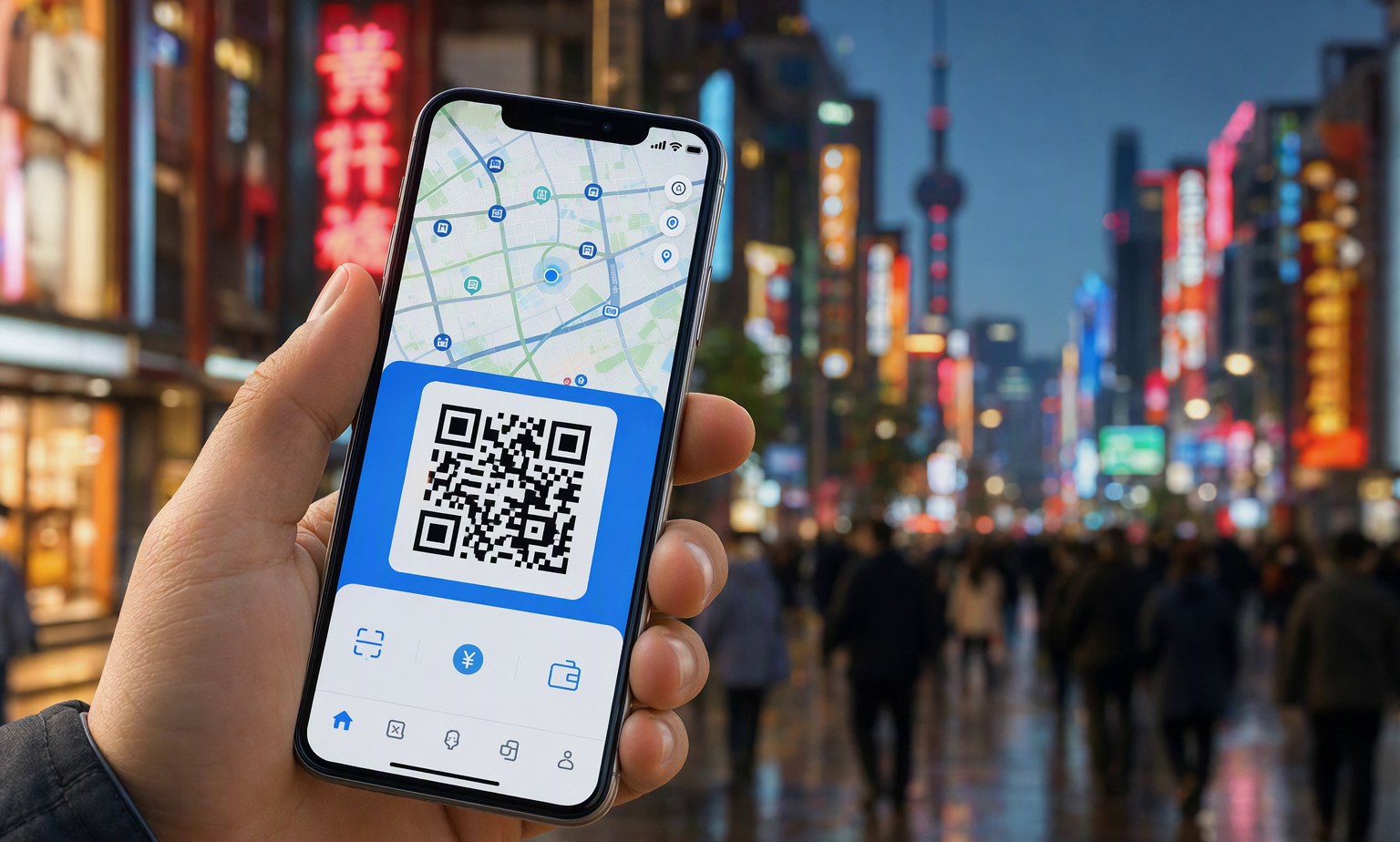
Paying for things in China as a foreign visitor is the single biggest practical hurdle you will face, and it is worth sorting before you fly rather than on your first afternoon. Almost everyone, from a noodle stall to a department store, expects a QR code scan rather than a card or notes. This guide explains how the two dominant apps work for foreign cards, what still needs cash, and how to check the details that change, such as fees and card support, on the operators’ own pages.

Why payment is the main friction point

China is close to cashless in daily life. Mobile QR payment is the default in shops, markets, taxis, metro ticket machines, chain restaurants and even temple donation boxes. Cash is still legal tender and will be accepted, but in practice it slows you down: staff may not keep enough change, and a foreigner visibly handling notes in a tourist area attracts unwanted attention from the rare opportunistic scam rather than genuine vendors.

Getting one working digital payment method removes most of the day-to-day difficulty of a China trip. It also unlocks things beyond paying: ride-hailing, bike hire, attraction bookings, restaurant menus and mini-programmes all sit inside the same two apps. If you are still at the planning stage, our first time in China checklist covers the other items to sort before you book.

Alipay for foreign visitors

Alipay is usually the easier of the two to set up. Download the app, register with your home mobile number, and add an international card. Card networks have been progressively widening foreign card support in both major wallets, but the exact list of accepted networks and card issuers changes, so check inside the app when you add the card rather than relying on a blog post. If your card is declined, the app will normally tell you at the point of adding it.

Once a card is linked, you scan a merchant’s QR code or show your own payment code to be scanned. Two things are worth verifying yourself before you rely on it: the transaction fee applied to foreign-card payments (this has changed more than once and is set by the operator, not by us), and any per-transaction or annual cap your own bank applies. Look for the fee schedule in the app’s help or payment settings, and check your card issuer’s terms for overseas and foreign-currency transactions.

WeChat Pay for foreign visitors

WeChat is the other wallet most visitors end up with, and it is worth having as a backup even if you prefer Alipay. Setup runs through the wallet section of your account, where you add a bank card in much the same way. The same caveats apply: confirm current foreign-card support and the fee in the app, and check your bank’s limits.

WeChat’s advantage is breadth. The same app handles messaging, restaurant ordering, mini-programmes for attractions and transport, and ride-hailing. If you plan to book rail travel yourself, it can also be a route into ticketing, though the official railway channel remains the reference point. Our guide to booking train tickets on 12306 explains the official process step by step.

Practical habits that prevent embarrassment

Set both apps up and test them before you leave home, ideally with a small purchase or a top-up, so you are not troubleshooting registration on airport Wi-Fi. Your payment QR code can usually be displayed without a live data connection, which helps in basements, on the metro and in rural areas, but the transaction itself needs connectivity to complete.

Keep one physical card for hotel deposits and incidentals, since some properties still prefer a card imprint or hold. For larger purchases, be aware that some cards cap a single transaction, so splitting a payment across two cards or two apps is normal and not a sign anything is wrong. If a merchant’s scanner rejects a foreign card, trying the other app is a reasonable first move before assuming your card is the problem.

Two smaller points: keep your phone charged, because a dead phone means no payment method at all, and carry a power bank. And if you are travelling with a group, decide in advance who pays and how you will settle up, since splitting a bill across several foreign cards at a till is slow and often fails.

Where cash still matters

Cash is needed far less than most first-timers expect, but it is not obsolete. Remote rural stalls, some temples and small religious sites, occasional small-town taxis and a few market vendors may prefer or only take notes. A modest float in small denominations is sensible as a backup rather than a primary method; the exact amount is a personal judgement, and we deliberately do not quote a figure because it depends on your route and how far off the standard tourist track you go.

Ask your bank for clean, recent notes where possible, since older or damaged notes can be refused. Tipping is not customary in most of mainland China, so do not carry cash on the assumption you will need it for service staff; our tipping and etiquette guide sets out where it is and is not expected.

Checking details that change

Payment rules in China move quickly: which foreign card networks are supported, what fee applies, and what limits exist are all set by the wallet operators and your own bank, and all have changed within the last few years. Treat any specific number you read online, including on this page, as a prompt to verify rather than a fact. The reliable sources are the in-app help and fee pages for Alipay and WeChat, your card issuer’s overseas transaction terms, and UnionPay’s own guidance if you hold a UnionPay card, which our UnionPay payment guide covers separately.

For a broader walkthrough of the two wallets side by side, see our China cashless travel guide.

Frequently asked questions

Can I use a foreign credit card directly in shops?

In some larger hotels, department stores and airports, yes, particularly Visa, Mastercard and UnionPay. Elsewhere, card terminals are often absent or not configured for foreign cards. Assume QR payment is the default and treat physical card acceptance as a bonus rather than a plan.

What fee applies to foreign-card QR payments?

A fee has applied historically, and the rate and who absorbs it have changed. Do not rely on a figure from any guide. Check the current fee schedule inside the Alipay or WeChat Pay help pages, and check your own card issuer for foreign transaction fees, which are separate.

Do I need both Alipay and WeChat Pay?

Not strictly, but having both is useful. If one app or one card fails at a till, the other is an immediate fallback. WeChat also carries functions beyond payment that many visitors find useful, such as mini-programmes for attractions and transport.

Will cash be refused?

Refusing renminbi cash is not generally permitted, but in practice some staff may struggle to give change or may ask you to pay by phone. Carry small notes to reduce friction, and treat cash as a backup rather than your main method.

What if my card is declined when adding it to the app?

Check that your bank has not blocked overseas or online transactions, confirm the card network is currently supported by the wallet, and try a second card. If it still fails, contact your card issuer first, as the block is usually on the bank’s side.

Set up one wallet properly, add a second as backup, carry a little cash for the edges of the map, and verify fees and card support yourself before you travel. That combination handles almost every payment situation a visitor encounters in China.

Posted on — Leave a comment

Is English Widely Spoken in China? Language Guide for Travelers

“Is English spoken in China?” is one of the first questions travellers ask us, and the honest answer is: sometimes, in some places, for some purposes. China is a vast country of over a billion people, and English proficiency varies enormously between a Shanghai hotel desk and a village noodle shop in Guizhou. This guide sets out what you can realistically expect, which tools and phrases close the gap, and how to plan a trip that doesn’t depend on luck.

Where English actually works

In major cities, you can usually get by without Chinese in specific situations. Hotel front-desk staff at international and mid-range city hotels often speak workable English. Younger people, especially students and office workers under 35, frequently have basic conversational English and are often willing to help. Staff at headline tourist sites, airport information desks and major train stations generally manage enough English to answer simple questions.

Outside those bubbles, expect limited or no English. Taxi drivers, market vendors, small restaurant staff and bus conductors usually speak none. Signage in cities is often dual-language, including metro systems, but menus frequently are not, and rural areas and western regions are a different world entirely. For a deeper look at how this plays out day to day, see our guide to the language barrier in China, translation apps and essential phrases.

Essential phrases worth memorising

You do not need to learn Chinese, but a handful of phrases changes how you are received. Learn the tones roughly, accept that you will get them wrong, and use them anyway.

Ni hao (hello). Xie xie (thank you). Duoshao qian? (how much?). Wo yao zhege (I want this one, usually said while pointing). Cesuo zai nar? (where is the toilet?). Zaijian (goodbye). Bu yao (I don’t want it) is useful in markets. Adding “bu hao yi si” (excuse me / sorry to bother you) before a question softens the approach.

Pronunciation matters less than effort. Showing that you have tried almost always produces patience rather than impatience, and often summons a nearby English speaker who wants to help.

Translation apps and offline preparation

A translation app with offline Chinese is the single most useful tool you will carry. Download the offline language pack before you fly, not after you land, because downloading it may depend on services that are unreliable or restricted on local networks. Check the current status of any app or service yourself before relying on it, and test the offline mode at home with mobile data switched off.

Camera translation, where you point your phone at a menu and read the overlay, is genuinely useful for restaurant menus and signage, though it struggles with handwriting and stylised fonts. Chat translation inside WeChat handles typed conversations. Voice translation works for short, simple exchanges but breaks down in noisy stations and with strong regional accents.

For longer trips, or if you will be negotiating, a dedicated pocket translator device can be more reliable than a phone in poor signal. Availability, rental terms and pricing change, so confirm details with the supplier directly. Our guide to internet access, Wi-Fi, eSIM and roaming in China explains how to keep your phone working once you arrive.

What to arrange in advance if you don’t speak Chinese

The realistic strategy is to remove the situations where language matters most. Book trains and attractions in advance rather than sorting them at a counter. Use metro systems where signage is dual-language and ticket machines accept English. Keep your hotel address written in Chinese characters to show drivers.

For anything involving negotiation, medical issues or rural travel, arrange an English-speaking guide or driver. This is not a luxury; it is the difference between a smooth day and a stressful one. If you are planning your first trip, our first time in China checklist covers the practical items to sort before booking. Travellers with dietary requirements should also read our guide to halal and vegetarian food in China, where explaining your needs clearly matters.

Where English is strongest, region by region

Shanghai is the most international city, with the widest English coverage in hotels, restaurants and transport. Beijing has strong tourist infrastructure around the main sites. Guangzhou and Shenzhen see plenty of business travellers, so English appears in commercial districts. Hong Kong and Macau are functionally English-friendly in most tourist contexts.

Beyond that, the picture narrows quickly. Smaller cities, rural areas, the west and Tibet require more preparation. In Tibet, permits and guided travel are part of the framework anyway, so an English-speaking guide is built into most itineraries. See our Tibet travel guide covering permits, altitude and Lhasa planning for how that works.

How our service bridges the gap

Every tour we arrange includes English-speaking guides. Charter drivers know key English phrases and have translation apps configured on their phones before pickup. Our support line answers in English throughout your trip, so if something goes wrong at a station or a hotel, you have someone to call who can speak to the other side in Chinese.

Contact details, response times and current service terms are listed on our site and confirmed at booking, so check the latest information there rather than relying on any figure quoted elsewhere. If you would rather plan independently, our AI travel assistant can answer questions in English instantly, and our guide to what an AI travel planner for China does well and where it breaks explains its limits honestly.

Frequently asked questions

Can I travel in China without speaking any Chinese?

Yes, in major cities and on well-trodden routes, provided you prepare. Book transport and attractions in advance, use metro systems with dual-language signage, carry a translation app with offline Chinese downloaded, and keep addresses written in Chinese. The further you go from big cities, the more you should arrange a guide or English-speaking driver in advance.

Is Google Translate available in China?

Access to Google services in mainland China has been restricted for years, and the situation can change. Rather than assuming anything, download the offline Chinese pack before departure and test it in airplane mode. Also install a second translation app as a backup, and check current functionality once you arrive.

Do taxi drivers in China speak English?

Generally no. Have your destination written in Chinese characters, or use a ride-hailing app with the address entered in Chinese. Showing a phone screen with the address is normal and widely accepted. In cities like Shanghai and Beijing, some drivers manage a few words, but do not plan around it.

Will hotel staff help with translation?

At international and larger city hotels, usually yes, and front desks can often write addresses or call ahead for you. At smaller guesthouses and rural accommodation, English may be minimal. If you need help, ask at reception before you go out rather than trying to solve it on the street.

Should I learn Chinese before my trip?

A few phrases are worth the effort and cost nothing. Beyond that, the return on study time is small for a short trip. Prioritise the phrases above, set up your translation tools properly, and spend your preparation time on bookings and logistics instead.

English in China is a spectrum, not a yes-or-no question, and the practical answer is to assume nothing and prepare for everything. Sort your apps and offline packs before you fly, carry addresses in Chinese, book the parts that matter in advance, and arrange a guide for the regions where English disappears. Do that, and the language gap becomes a minor logistical detail rather than the thing that defines your trip.

Posted on — Leave a comment

How to Get to Mutianyu Great Wall: Transport Options Compared

Mutianyu is the section of the Great Wall most first-time visitors to Beijing end up preferring, and the question of how to reach it has a genuinely practical answer. It sits roughly 70km northeast of central Beijing in Huairou district, about a 1.5-hour drive in normal traffic. The wall here is restored but retains a wilder feel than the fully rebuilt showpieces, and the classic hike runs between watchtowers 14 and 23. This guide sets out the three realistic ways to get there, what each one actually involves, and what to sort out before you go.

Where Mutianyu is and what the visit involves

The site occupies a mountain ridge with the wall running along it, and the car park, ticket office and cable car base sit below the wall itself. You do not simply step onto the wall from the road: you either walk up a steep path and steps, or you take the cable car, a chairlift, or a toboggan on the way down. The cable car and toboggan are separate paid services from the wall entry itself, and availability can be affected by weather, maintenance or season. Check the current position on the official Mutianyu ticketing channels or with whoever is booking for you before you commit to a plan that depends on a specific lift.

Watchtowers are numbered, and the numbering matters when people talk about the “best” walk. Towers 14 to 23 are the stretch most visitors aim for: a steady climb with long views and fewer crowds the further you go. It is not a flat promenade. Steps are uneven, some sections are steep, and the surface is worn. Grippy shoes matter more than any other item you bring.

Option 1: private car or chartered driver

This is the option most people with a fixed schedule end up choosing. A private car collects you from your hotel, drives you to the Mutianyu car park in around 75 minutes outside peak traffic, and the driver waits while you walk the wall. You set your own return time, which removes the single biggest stress of the public options: the last bus.

Costs vary with vehicle type, group size, pickup point and season, so treat any figure you see online as indicative only and confirm the inclusions in writing. When comparing quotes, ask specifically whether fuel, tolls, parking and waiting time are included, how long the driver will wait, and what happens if you overrun. A common and workable pattern is a morning at the Forbidden City followed by an afternoon at Mutianyu, though note that major Beijing attractions increasingly require advance timed reservations, which you can read about in this guide to booking attractions in China as a foreigner.

Option 2: public bus and local transfer

The cheapest route uses the 916 Express bus from Dongzhimen in northeast Beijing to Huairou, which takes roughly an hour, followed by a local transfer: the h23 or h24 minibus, or a taxi for the final leg, around 20 minutes. Total journey time is commonly 2.5 to 3 hours each way once you account for waiting, and it demands some Chinese-language navigation and comfort with local bus stops.

Fares are low, but do not rely on a number quoted in an old blog post. Bus routes, stopping points and timetables change, and the last return service is the thing that catches people out. Verify the current schedule locally or through the operator before you set out, and build in a buffer. If your Chinese is limited, the phrases and apps in this guide to translation apps and essential phrases will make the transfer considerably less stressful. You will also need a working payment method; see the cashless travel guide for how WeChat Pay and Alipay work for foreign cards.

Option 3: organised day tour

A day tour bundles transport, an English-speaking guide, entry and usually the cable car, and often lunch. The appeal is not only convenience: once you add up transport, tickets, the cable car and the time cost of navigating the public route, the gap between DIY and a tour narrows more than people expect. Prices depend on group size, inclusions and season, so ask for a written breakdown of exactly what is covered, whether the cable car is guaranteed or subject to weather, and whether the group stops at any shopping venues.

Tickets, timing and what to bring

Entry to the wall, the cable car and the toboggan are priced separately, and prices are revised from time to time. Rather than trusting a figure here, check the official ticketing page or ask your operator for the current rates, and confirm whether advance booking is required on your date. Weekends, Chinese public holidays and the autumn foliage period are busiest.

Arriving around opening time is the single most effective crowd-avoidance measure. Tour groups tend to arrive in waves from mid-morning, so an early start gives you the towers largely to yourself. Bring water, since on-wall prices are high, plus sun protection and a layer for the ridge wind. Allow three to four hours on site if you want to walk the 14–23 stretch properly.

Frequently asked questions

Is Mutianyu better than Badaling?

They suit different trips. Badaling is closer, easier to reach by public transport and heavily visited. Mutianyu is further out, generally quieter and offers a longer, more varied walk with the cable car and toboggan option. If your priority is a genuine hike rather than a quick photo, Mutianyu is usually the better fit.

Can I visit Mutianyu without a tour?

Yes. A private car or the public bus route both work independently, and you can buy entry and cable car tickets yourself. The trade-off is logistics: you handle navigation, timing and any language barrier, and you need to be confident about the last return transport.

How long should I allow for the visit?

Plan on three to four hours at the site if you intend to walk between towers 14 and 23, plus roughly 1.5 hours of driving each way from central Beijing. A half-day trip is tight; a full day is comfortable.

Do I need to book tickets in advance?

Often advisable, particularly at weekends and during Chinese holidays, and some periods require timed reservation. Check the official Mutianyu ticketing channel or ask your operator whether advance booking applies on your date, and whether the cable car is included or weather-dependent.

What should I wear?

Trainers or shoes with real grip. The steps are steep, uneven and often worn smooth. Avoid smooth-soled shoes, carry water, and take a light windproof layer, as the ridge is exposed.

Whichever option you choose, the deciding factors are time, budget and how much logistics you want to handle yourself. Sort your transport and tickets before you leave Beijing, confirm current prices and opening arrangements directly with the operator or official page, and start early. If you want help assembling the rest of your itinerary, the site’s other China travel guides cover transport, payments, connectivity and city-by-city planning in the same practical detail.

Posted on — 1 Comment

Do You Need a Visa for China? Entry Options & Visa-Free Rules 2026

Most travellers asking this question want a straight answer, not a brochure. The honest version is: it depends on your nationality, your purpose, how long you plan to stay, and whether you are passing through China or stopping in it. China has widened visa-free entry considerably in recent years, but the rules are set by nationality and by port of entry, and they change. This guide explains the main routes into the country, what we can prepare for you, and — importantly — how to check your own situation against the current official rule rather than a blog post written months ago.

Visa-free entry for short stays

China operates unilateral visa-free entry for citizens of a list of countries, allowing short leisure or business stays without a visa. The list has grown steadily and includes many European countries, Australia, New Zealand, Japan, South Korea and several Southeast Asian nations, among others. The permitted stay length and the list itself are policy decisions that get extended, adjusted or expanded, so treat any number you read — including on this page — as something to confirm.

To verify, go to the website of the Chinese embassy or consulate for your country and look for the section on visa-free entry or “unilateral visa exemption”. Check three things: whether your nationality is currently listed, the maximum permitted stay, and the stated validity period of the policy. If your nationality is not listed, or you plan to stay longer than the permitted window, you will need a visa.

Applying for a standard tourist visa

If you need a visa, the standard route is an L (tourist) visa applied for at the Chinese embassy or visa application centre responsible for your place of residence. Applications typically require a passport with sufficient remaining validity, a photograph, an itinerary, proof of accommodation, and often an invitation letter or confirmed bookings.

Fees, entry types (single, double, multiple) and processing times vary by nationality and by consulate, and they are not something to take from a third-party page. Confirm the current fee schedule, accepted payment methods, whether an appointment is required, and standard versus express processing directly on your local centre’s official page. Build in more time than you think you need, especially in peak travel seasons.

An invitation letter is often the fiddly part. We issue tour invitation letters for confirmed bookings, and the practical tip is to start the visa process only once your itinerary and accommodation are settled, because the documents need to match.

Transit without a visa

China allows visa-free transit through a number of major hubs for travellers continuing to a third country. The scheme has been expanded over time, and the permitted window and the list of eligible ports and nationalities are the details that matter. Transit means exactly that: you arrive from one country and depart to a different one, with a confirmed onward ticket.

The rules are specific about which ports qualify, which nationalities are eligible, and how the hours are counted. Before relying on this, read the official immigration or embassy guidance for your route, and cross-check our China Visa-Free Transit: 240-Hour Guide 2026 and the 240-hour transit checklist for how the process works in practice. If your plans involve leaving the transit area, staying overnight, or moving between cities, check carefully — those are the cases where travellers get caught out.

Regional schemes: Hainan and border areas

Hainan island operates its own visa-free arrangements for many nationalities, generally tied to booking through a registered travel agency, which supplies the required invitation or confirmation. This suits travellers who want a beach stay in Sanya without a full visa application. The eligible nationalities, permitted stay and agency requirement are set by policy, so confirm the current terms before booking flights.

Separately, some regions require additional permits regardless of your visa status. Tibet requires a Travel Permit arranged through a licensed operator, and certain border areas in Xinjiang and western Sichuan have their own permit requirements. These take time to process, so raise them early rather than at the booking stage. Our Tibet travel guide covers permits, altitude and Lhasa planning in detail.

What we prepare, and what you must do yourself

We handle the paperwork that sits with a tour operator: tour invitation letters for visa applications, Tibet Travel Permits, and permits for restricted border regions on the routes we run. We do not apply for your visa, and we cannot tell you what your nationality is entitled to — that is between you and your embassy.

The division of labour is simple. You confirm your nationality, entry type and dates against official sources, and submit the application yourself. We supply matching documentation for the itinerary you have booked. If your plans change after the letter is issued, tell us, because mismatched documents cause problems at the application stage.

Once entry is sorted, the practical side of the trip matters just as much. Two things worth reading before you fly: our guide to internet access, Wi-Fi and eSIMs, and the first-time visitor checklist covering payments, apps and bookings.

Frequently asked questions

Can I enter China without a visa right now?

Possibly, depending on your nationality and the purpose and length of your stay. China runs visa-free entry for a list of countries and separate transit and regional schemes. Check your nationality against the current list on your local Chinese embassy or consulate website, and confirm the permitted stay length and policy validity dates there. Do not rely on a figure from a third-party article.

How long does a tourist visa take to process?

Processing times vary by consulate, nationality and service level, and can change with seasonal demand. Your local visa application centre publishes current standard and express processing times. Check that page directly and apply earlier than the minimum, particularly in the months around major holidays.

Do I need an invitation letter?

Many applications require one, and requirements differ by consulate and by the type of trip. We issue tour invitation letters for confirmed bookings. Check your local centre’s document checklist first, then book so the letter matches your actual itinerary and accommodation.

Does visa-free transit let me leave the airport and sightsee?

Transit schemes are designed for onward travel to a third country and have conditions about eligible ports, nationalities and time limits. Whether you may leave the transit area depends on those conditions. Confirm with the official immigration guidance for your specific route before planning any sightseeing.

What about Tibet and border regions?

These need permits arranged through a licensed operator, separately from your visa. Tibet permits in particular require lead time and a fixed itinerary. Raise this when you enquire so the paperwork can be started early.

Treat everything above as a map of the process rather than a substitute for the official rule. Confirm your nationality’s current entitlement with your embassy or consulate, confirm fees and processing times with your visa application centre, and confirm transit eligibility with immigration guidance for your route. Do that, and the rest of the trip — trains, hotels, payments, permits — is straightforward to arrange.

Posted on — Leave a comment

How Much Does a Trip to China Cost? 2026 Budget Breakdown

What a China trip costs depends less on the country than on how you move through it. Two travellers can visit the same cities in the same week and spend very different amounts, because the biggest variables are transport style, hotel category and whether you join group excursions or travel privately. This guide sets out the categories that drive the total, the ranges we see most often on privately arranged trips, and the places where money quietly disappears. Treat every figure here as a planning range rather than a quote: hotel rates, rail fares, entrance tickets and guide day rates all change with season, city and availability, so confirm current numbers on the operator’s or official booking page before you commit.

What drives the daily cost

Five items make up almost the whole budget: accommodation, ground transport, guiding, food and entrance tickets. Accommodation and transport together usually account for more than half of a mid-range day. Transport is the one people misjudge, because a private vehicle with driver is priced per vehicle, not per person, so a group of four or six splits a fixed cost and often ends up cheaper per head than a mix of taxis, metro fares and intercity trains. Guiding is priced per day and is optional on days when you are comfortable navigating alone.

Food and tickets are the flexible parts. Eating where locals eat rather than at hotel restaurants or attractions can cut the food line substantially without any loss of quality. Entrance tickets vary enormously by site, and some major attractions now require advance reservation with a passport, which affects both planning and price. See our guide to booking attractions in China for what actually needs reserving.

Planning ranges by travel style

For a comfortable mid-range trip using four-star hotels, a private car and driver, a licensed English-speaking guide, restaurant meals and entrance tickets, plan on a per-person daily range in the low hundreds of US dollars. Budget travel using hostels or simple guesthouses, public transport and street food sits far lower. Premium private touring with five-star properties, the best guides and more driving sits higher again. These are bands, not fixed prices, and they move with the season and the city.

Rather than quoting a single number, work out your own figure: pick your hotel category, decide how many days you want a private vehicle, count the guided days, then add a daily allowance for food and tickets. That exercise takes ten minutes and produces a more honest number than any published average.

How to build a realistic budget

Start with the fixed costs you can verify. Hotel rates are visible on booking platforms for your exact dates, and you can filter for properties that accept foreign guests, which is a real constraint in some cities. Intercity transport is the next fixed cost: high-speed rail fares are published and searchable, and seat class changes the price noticeably. Read our guides to high-speed rail seat classes and booking train tickets on 12306 to see how class and booking timing affect what you pay.

Then add the variable lines: guide days, private vehicle days, meals and tickets. Keep a contingency of roughly ten per cent for the things that always appear on the ground — a taxi when it rains, an extra museum, a bag you did not plan to buy.

Sample trip shapes

A short city stay of three or four days in one place is the cheapest way to see China, because you avoid intercity transport entirely and can walk or use the metro. A classic multi-city route combining Beijing, Xi’an and Shanghai over roughly nine days adds two rail legs and more hotel nights, and the total rises accordingly. A regional loop such as Yunnan, or a route through Guilin and Yangshuo, sits between the two depending on how much internal transport you use. For a worked example across ten days, see what a 10-day trip to China actually costs.

Where travellers overspend

The most common leaks are avoidable. Booking airport transfers and day cars through a hotel concierge typically costs more than arranging them directly. Group coach excursions that include shopping stops consume half a day you have already paid for. Exchanging currency at the airport gives a poor rate; ATMs and mobile payment apps are usually better, and you should check current acceptance for your card before relying on any single method — our guide to paying in China with a foreign card explains how to verify what works. Finally, booking peak-season hotels late is the single largest avoidable cost on most itineraries.

How to reduce the total without cutting quality

Travel in shoulder season where your itinerary allows; spring and late autumn usually bring lower room rates and thinner crowds, though you should check for public holidays. Bundle multi-day arrangements so vehicle, guide and hotel are priced together. Travel as a group of four to six in one vehicle, which frequently beats the per-person cost of trains plus taxis on the same route. Choose hotel locations near metro lines so you need fewer paid transfers. Eat one meal a day away from tourist districts.

Frequently asked questions

Is a private car and driver worth it compared with trains and taxis?

It depends on group size and itinerary. For two people moving between cities, high-speed rail plus local metro and taxis is usually cheaper. For four to six people doing day trips to outlying sites, one vehicle split several ways is often both cheaper per person and considerably faster, because you are not waiting for pickups or changing modes.

How much should I allow per day for food?

Food is one of the easiest lines to control. Street food and neighbourhood restaurants cost a fraction of hotel dining, and quality is frequently better. Set a daily allowance based on how many meals you expect to eat out, and check current prices on the ground rather than relying on older published figures.

Do I need a guide every day?

No. Most travellers use a guide for sites where context matters — major historical attractions, complex transport hubs, or days involving reservation logistics — and self-navigate on simpler days. Cutting two guided days from a week noticeably reduces the total.

When is the cheapest time to visit?

Outside public holidays and peak summer, room rates and transport availability are generally better. Shoulder months are popular for good reason, but exact dates and holiday periods shift each year, so check the official calendar for your travel year before booking.

How do I verify a quoted price is fair?

Compare against published sources: hotel rates on booking platforms for your dates, rail fares on the official ticketing site, and entrance ticket prices on the attraction’s own page. If a quote bundles several items, ask for the inclusions in writing so you can compare like with like.

Build your budget from verifiable parts — hotel, transport, tickets — then add guiding and food as flexible lines, and keep a small contingency. Confirm every rate on the operator’s or official page close to your travel dates, since prices and reservation requirements both change.

Posted on — Leave a comment

Is China Safe for Tourists? 2026 Safety Guide by a Local Operator

Is China safe for tourists? The short answer is yes, and the longer answer is more useful. China records very low rates of violent crime against visitors, and most people who travel here independently report feeling comfortable, including at night and including solo female travellers. The realistic risks are mundane: traffic, petty theft in crowded places, a handful of well-worn tourist scams, and the practical friction of a country where you may not read the language or use your usual apps. This guide covers each of those honestly, tells you what to verify before you rely on it, and points to the deeper guides we have already published on payments, internet access, healthcare and transport.

Crime and personal safety

Violent crime directed at foreign tourists is rare. The incidents that do occur tend to be opportunistic theft rather than confrontation: a phone lifted from a pocket in a dense night market, a bag left unattended on a station bench. Cities are heavily monitored and well lit, metro systems are staffed and screened, and walking after dark in central districts is normal for locals and visitors alike.

The sensible habits are the same ones that work anywhere. Keep your phone in a front pocket or zipped bag in crowds. Do not leave luggage unattended. Carry a photo of your passport and entry stamp separately from the passport itself. If something is stolen, a police report is what your insurer will ask for, and it is easier to obtain at a station than retrospectively.

Scams aimed at visitors

The classic scams are invitations rather than thefts. A friendly stranger practising English suggests a tea ceremony, an art student exhibition, or a visit to a family shop. The tea house version ends with an inflated bill; the art version ends with pressure to buy. They cluster around the obvious tourist streets in Shanghai, Beijing and Xi’an. The reliable defence is simple: decline unsolicited invitations from strangers, and if you do want tea, choose the venue yourself.

Other patterns to recognise: unlicensed taxi touts at airport arrivals halls, drivers who claim the meter is broken, and “closed today” stories that redirect you to a shop. Book airport transfers in advance or use the official taxi rank and ride-hailing apps. Licensed guides remove most of this friction because the itinerary, the vehicles and the stops are fixed before you arrive.

Traffic, food and water

Traffic is the risk that deserves the most respect. Electric scooters are silent, fast and frequently on pavements and crossings, and they do not always stop. Cross with a group where you can, look both ways twice, and treat a green pedestrian signal as permission to check rather than permission to walk. Right-turn-on-red is common for vehicles, so a green man does not guarantee an empty road.

Food safety is better than its reputation. Busy stalls with high turnover are generally the safer choice because ingredients move quickly. Be cautious with anything that has been sitting out, with unpeeled raw vegetables, and with ice in drinks from uncertain sources. Tap water is not drinking water; bottled water is sold everywhere and hotels provide kettles. If you have dietary requirements, our guide to halal and vegetarian food in China explains how to communicate them.

Payments, connectivity and digital safety

Two practical points cause more stress than any crime statistic. First, payments: mobile payment dominates, and foreign cards can be linked to the main wallet apps, but support and limits change. Set this up and test it before you fly, and carry a physical card and some cash as a fallback. Our cashless travel guide walks through the setup, and the UnionPay option is covered separately.

Second, connectivity. Many Western services are not reliably reachable from mainland networks, so if you depend on particular apps, arrange your access before arrival rather than after. Check current guidance from your own provider and from the app itself, since availability changes. Our internet access guide covers Wi-Fi, eSIM and roaming, and an eSIM installed before departure is often the least disruptive option.

Keep a screenshot of your hotel name and address in Chinese characters, plus a offline map pin. That single habit solves most taxi and directions problems, and it works when your data does not.

Health, hospitals and emergencies

Emergency numbers are 120 for an ambulance and 110 for police; 119 is the fire service. Major cities have hospitals with international departments and English-speaking staff, typically in Beijing, Shanghai, Guangzhou and Chengdu, but not everywhere you might travel. Pharmacies are common and staff can often help with minor issues, though brand names differ from home.

Travel insurance is worth arranging, and check that it covers the activities you actually plan. For a fuller picture of clinics, pharmacies and how insurance claims work in practice, see our healthcare guide for travellers. If you are heading to high altitude, altitude illness is a genuine risk and itineraries should build in acclimatisation rather than rush it.

What to verify before you rely on it

Rules, app behaviour and entitlements change. Before departure, confirm your visa or visa-free eligibility on the official immigration or embassy page for your nationality, checking the specific entry category and permitted area rather than a summary. Confirm payment app support for your card issuer inside the app itself. Confirm your insurance policy’s exclusions in the policy document. Confirm train and attraction bookings on the official platform or operator page, since reservation requirements for popular sites are common and change seasonally. Where a figure matters, get it from the operator, not from a blog.

Frequently asked questions

Is China safe for solo female travellers?

Generally yes. Street harassment is uncommon by the standards of many countries, and public transport at night is well used. The usual precautions apply: avoid unlit areas, use licensed taxis or ride-hailing, and be wary of unsolicited invitations from strangers, which are more often commercial than romantic.

Can I drink the tap water?

No. Tap water is not intended for drinking. Bottled water is widely available, hotels provide kettles, and restaurants serve boiled water or tea. Use bottled or boiled water for brushing your teeth if you are sensitive.

Do I need a VPN, and can I install one after arrival?

If you rely on services that may be unreachable from mainland networks, arrange access before you travel. Installing after arrival can be difficult precisely because the relevant sites may not load. Verify current options with your provider and check our internet access guide.

What should I do in a medical emergency?

Call 120 for an ambulance or 110 for police. For non-emergencies, go to a hospital with an international department where one exists, and contact your insurer’s assistance line as early as possible, since they often direct you to a specific facility.

Are tourist scams dangerous?

They are financial rather than violent. The main cost is money and time, not safety. Declining unsolicited invitations, agreeing prices before a ride, and booking transfers and guides in advance removes most of the exposure.

China is a low-risk destination for the ordinary traveller, and the risks that remain are largely manageable with preparation rather than caution alone: set up payments and connectivity before you fly, keep your hotel address in Chinese, respect the traffic, and know the emergency numbers. If you would rather not manage those details yourself, a licensed guide and a pre-arranged itinerary remove most of the guesswork, and you can start from our China travel tips or our beginner’s guide before you decide.

Posted on — Leave a comment

Can Foreigners Drive in China? License Rules & Alternatives Explained

China does not recognise the International Driving Permit or a foreign driving licence for short-term visitors, and this single fact shapes almost every transport decision a traveller makes here. The question of whether foreigners can drive in China comes up constantly, and the honest answer is that most visitors cannot legally get behind the wheel on a self-drive basis. That does not mean you are stuck. It means the sensible route is a chauffeured car, and the rest of this guide explains why, what the exceptions are, and how to plan around them.

The short answer on driving in China as a foreigner

An IDP is not a valid document in mainland China, and neither is your home licence on its own. To drive legally you need a Chinese licence, or a temporary Chinese driving permit issued under specific conditions. Those conditions generally involve holding a residence permit, or being part of an approved rally or organised motoring event. A tourist on a standard entry stamp does not qualify.

Entry rules themselves change, so check the current position on the official immigration or embassy page for your nationality rather than relying on any summary, including this one. For the paperwork side of arrival, see the China Visa Rules 2026: Quick Entry Guide.

Temporary licences and who can actually get one

Long-term residents who hold a valid Chinese visa and residence permit can convert a foreign licence. The process normally involves a medical check and a written theory test, which is available in English in many cities but not guaranteed everywhere. You will need to confirm the current requirements, documents and test availability with your local vehicle management office, because these vary by city and are updated periodically.

Short-term tourists cannot obtain a temporary permit simply by asking. If you have read otherwise, the claim is usually about residents, not visitors. Verify any specific requirement directly with the issuing authority before you build a plan around it.

What rental counters at airports really mean

You will see rental brands at arrivals halls advertising to foreigners, and this creates a common misunderstanding. In practice, what is legally available to a visitor is a vehicle with a driver, not a self-drive rental. If a counter offers you keys without a driver, ask directly which licence they expect you to hold and who is insured. Get the answer in writing if you are unsure.

The same caution applies to ride-hailing. Apps such as Didi are widely used, but whether they work smoothly for you depends on your payment setup and phone number. Rather than assume, test the app before you rely on it. The China Cashless Travel Guide: WeChat Pay & Alipay 2026 explains how to get payment working, and the language barrier guide covers what to do when the interface is in Chinese.

Why a car with driver is the standard choice

This is how business travellers and most tourists actually move between cities and around regions. You book a vehicle and a professional driver, and fuel, tolls, parking and insurance are typically bundled into the arrangement. The driver handles the highway network, the toll gates, the parking searches and the navigation apps that run in Chinese. You get a predictable day.

For a family or a small group, the cost is often comparable to renting and insuring a car in Europe or North America, without the licence problem. Ask the operator what is included and what is not before you confirm, and request the total in writing. Prices move with season, distance and vehicle size, so treat any figure you see online as indicative and confirm it for your dates.

Where a chauffeured car fits your itinerary

Chartered cars make most sense for day trips that public transport serves poorly, for airport and station transfers with luggage, and for multi-stop rural routes. For long intercity hops, high-speed rail is usually faster and cheaper, and you can arrange a car at each end. The China Train Travel Guide covers tickets and apps, and the airport transfers guide covers the first and last mile.

In cities, the metro is often the quickest option, so a car is not always the answer. Mix the two: metro for dense central sightseeing, car for anything outside the ring road or across a province.

Practical checks before you book

Confirm the driver’s licence and the vehicle’s insurance cover in writing. Ask whether the quoted rate includes tolls, parking, waiting time and the driver’s meals and accommodation on multi-day trips. Check whether an English-speaking driver is available if you need one, and expect to pay more if so. Keep the operator’s contact details offline in case your data connection fails.

If you need medical care or a pharmacy during a long drive, the healthcare guide is worth reading in advance. And if you are still shaping the route, the AI travel planner guide explains what such tools handle well and where they need checking.

Frequently asked questions

Can I use an International Driving Permit in China?

No. The IDP is not recognised in mainland China, and it does not convert into a valid permit for a short-term visitor. Do not rent a car on the assumption that it will.

Can I convert my foreign licence if I live in China?

Residents holding a valid visa and residence permit can usually apply to convert, which typically involves a medical check and a theory test. Requirements vary by city, so confirm the current process, documents and test language with your local vehicle management office.

Are self-drive rentals available to tourists?

Generally no. What is offered to foreign visitors is normally a car with a driver. If a rental company suggests otherwise, ask which licence they expect you to hold and confirm the insurance position before paying.

Is a car with driver expensive compared with renting?

For groups it is often comparable to renting and insuring a car abroad, once fuel, tolls and parking are counted. Rates vary by season, distance and vehicle type, so ask for a written total for your specific dates rather than relying on published examples.

Do I need a car at all?

Often not. High-speed rail covers long distances well and metro systems handle city centres efficiently. A chartered car is most useful for rural routes, day trips and luggage-heavy transfers.

Treat the licence question as settled: assume you will not be driving yourself, then plan transport around rail, metro and a chauffeured car where it earns its place. Confirm every price, inclusion and requirement with the operator or the relevant official page before you commit, and keep copies of the confirmation with you.

Posted on — Leave a comment

Hong Kong-Shenzhen-Guangzhou 5-Day Itinerary: Complete Guide with Prices & Booking

Five days across Hong Kong, Shenzhen and Guangzhou is a tight but workable route, provided you accept one honest constraint: three cities in five days means roughly one anchor sight per half-day, not a full checklist. The three cities sit within a short high-speed rail corridor, so the travel itself is quick. The time goes on border formalities, station transfers and the simple fact that each city is large. This guide sets out a realistic day-by-day shape, the logistics that decide whether the trip feels smooth or rushed, and what to verify before you book anything.

Day-by-day outline

Day 1 — Hong Kong. Victoria Peak and the Star Ferry make a sensible first day because they sit close together and need no advance planning beyond timing. Go up to the Peak earlier than you think necessary; queues build through late morning. The Star Ferry crossing between Central and Tsim Sha Tsui is short, cheap and one of the few genuinely unmissable Hong Kong experiences. Keep the evening loose for Kowloon or a harbourfront walk.

Day 2 — Shenzhen. Shenzhen rewards a clear theme. Choose either the tech and design side (museum and gallery districts) or the coastal side (beaches and seaside parks), not both. The city is spread out and traffic between districts eats time.

Day 3 — Guangzhou. Dim sum in the morning, then the Canton Tower area and the riverside in the afternoon or evening. Guangzhou is the Cantonese capital in food terms as much as anything else, so build the day around eating rather than around monuments.

Day 4 — rail connections. The Hong Kong–Shenzhen–Guangzhou corridor is served by frequent high-speed trains with short journey times between the main stations. Treat this as a travel day with a light sightseeing anchor at each end rather than a full programme.

Day 5 — flexible. Keep this day unbooked. Use it for shopping, a spa, a return to whatever you liked most, or simply an easier departure. A buffer day is what stops a five-day trip feeling like a forced march.

Border crossing and rail logistics

The Hong Kong–mainland border is the single biggest variable in this itinerary. Crossing points have different opening hours, different transport connections and very different queue patterns depending on the day and time. Check the official immigration or transport operator page for the crossing you intend to use, and look specifically at opening hours, last-entry times and whether the crossing connects to rail or only to road transport.

For the rail legs, book through the official China Railway booking channel or a reputable agent, and check two things on the operator’s page: whether your passport type can be used for online collection, and whether the station you are departing from is the one you think it is. Guangzhou and Shenzhen each have multiple stations serving different lines. Our guide to buying China train tickets with a foreign passport covers the collection and ID steps, and the high-speed rail guide explains how station choice affects your day.

If you are entering mainland China on a visa-free transit arrangement rather than a full visa, the eligible ports, the permitted travel area and the length of stay all matter, and they change. Verify your specific case on the official immigration source before booking flights, and use the 240-hour visa-free transit checklist to work through the conditions in order.

Pacing that actually works

One anchor sight per half-day is the sweet spot. That gives you a morning and an afternoon block, with meals and transit filling the gaps. Two major sights in a half-day is possible in Hong Kong if they are adjacent; it is usually a mistake in Shenzhen or Guangzhou, where distances are longer.

Build in slack around every station transfer. Arriving at a large rail station 45–60 minutes before departure is not excessive once you account for security, ticket checks and finding the right waiting area.

Private car and driver arrangements remove navigation and parking stress, and a driver who knows the site can time arrival ahead of the largest tour groups. That is a real advantage at popular attractions, but it does not override opening hours or ticketing rules. Confirm any timed-entry requirement on the attraction’s own page before assuming a car gets you in earlier.

When to go

Spring (March to May) and autumn (September to November) generally give the best balance of weather and crowd levels across all three cities. Summer is hot and humid with heavy rain risk, and winter is mild in this part of China but can be grey.

Avoid Chinese national holidays. Golden Week in early October and the Labour Day period in early May see domestic travel surge, which affects train availability, hotel rates and queue times at every major sight. Exact dates shift with the official holiday calendar, so confirm the current year’s arrangement rather than relying on last year’s dates. Our month-by-month festival and weather calendar is a useful cross-check when picking dates.

Practical preparation

Sort mobile data before you fly. A travel eSIM that works across Hong Kong and the mainland avoids the awkward gap at the border, but check the plan’s coverage terms carefully, since Hong Kong and mainland China are often treated as separate regions. Payment apps are the other thing to set up in advance; linking an international card to WeChat Pay or Alipay before departure is far easier than doing it while standing in a shop. The cashless travel guide walks through the setup.

Carry your passport at all times. It is required for rail travel, hotel check-in and border crossing, and a photograph on your phone is not a substitute.

Frequently asked questions

Is five days enough for Hong Kong, Shenzhen and Guangzhou?

It is enough to see one strong highlight in each city, but not enough to cover any of them properly. If you want depth, drop one city and give the remaining two more time. If you want a taste of all three, five days works provided you keep the schedule light and accept that Day 4 is largely a travel day.

Do I need a visa for this route?

That depends on your nationality and on whether you are entering mainland China on a visa or under a visa-free transit arrangement. Rules and eligible ports change, so check the official immigration source for your specific passport and entry point rather than relying on a general summary. Hong Kong and the mainland have separate immigration regimes, which is why the border crossing matters even on a short trip.

Should I book trains in advance?

Book as early as the official channel allows, particularly around weekends and public holidays. Seats on the Hong Kong–Shenzhen–Guangzhou corridor are frequent but not unlimited, and popular departure times sell out. Confirm the collection method for foreign passports on the operator’s page at the time of booking.

Is a private car worth it here?

It helps most in Shenzhen and Guangzhou, where attractions are spread out and public transport requires changes. In Hong Kong, the metro and ferry network is dense enough that a car is often slower. Decide per city rather than buying one arrangement for the whole trip.

What should I verify before paying a deposit?

Check the current opening hours and any closure days for each attraction on its own official page, confirm the border crossing hours you plan to use, confirm your visa or visa-free eligibility, and confirm the exact station names for your rail legs. Prices and inclusions should be stated in writing on the booking page; if a figure is not shown there, ask rather than assume.

Treat this itinerary as a frame rather than a script. The three cities are close enough that the route works, but the details that decide whether it runs smoothly — border timing, station choice, entry eligibility and attraction hours — are all things to confirm on official sources in the week before you travel.