Posted on — Leave a comment

Shenzhen Travel Guide 2026: The Tech Capital of China

China’s Silicon Valley rose from fishing village to megacity in 40 years — skyscrapers, theme parks, beaches and the Hong Kong border. The complete English guide.

Why Visit Shenzhen

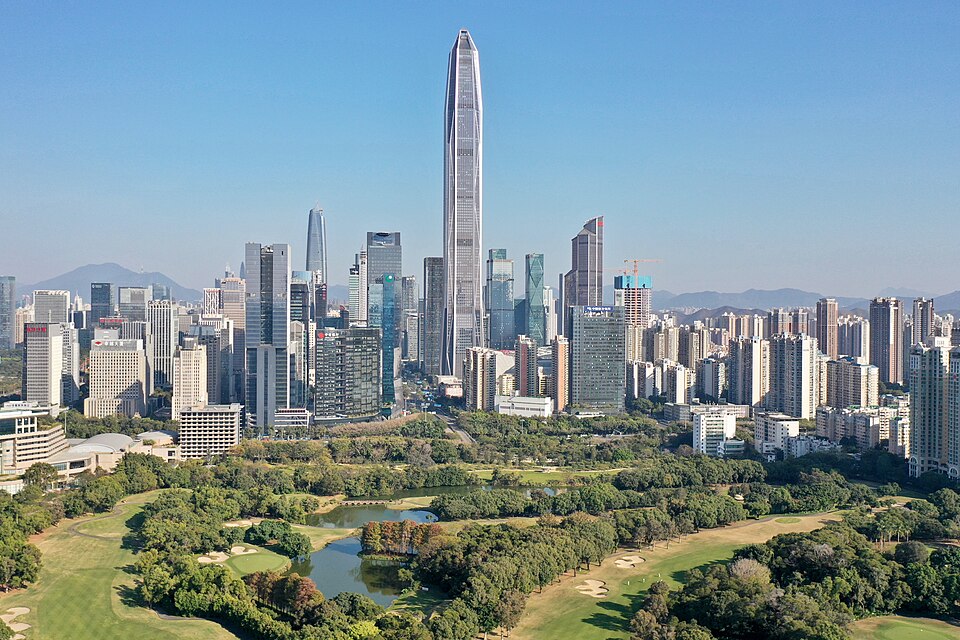
Few tourists stop here — that’s the mistake. Shenzhen offers: the world’s fastest urban transformation story, OCT-Loft’s creative districts, Dameisha beaches, the planet’s best electronics markets (Huaqiangbei), and 14-minute rail access to Hong Kong. Business travelers already know; leisure travelers are catching on.

Top Things to Do

Ping An Finance Centre observation deck (116th floor) · OCT-Loft galleries and indie cafes · Dameisha/Xiaomeisha beaches · Window of the World & Splendid China parks · Shenzhen Bay Park sunsets · Nantou Ancient City’s renovated alleys · Dafen Oil Painting Village (artists paint your portrait in 30 min).

Day Trips from Shenzhen

Hong Kong (14 min by high-speed rail from Futian — day trip, no visa needed if HK-covered) · Guangzhou (30 min rail for dim sum origins) · Macau (1h+ via Zhuhai border). Our charter cars handle all border-crossing logistics.

Best Time & How Long

Oct-Dec is perfect (25°C, dry); May-Sep is hot and typhoon-prone. 2-3 days ideal for the city; add 1-2 for HK/Macau combos. See our Greater Bay Area itinerary.

Practical Tips

English is better than most Chinese cities (tech-industry workforce). Alipay works everywhere. The metro is world-class. For Huaqiangbei electronics: our guides know which stalls sell real vs ‘sample-grade’ gear.

Plan Your Shenzhen Trip

Build a custom itinerary with our AI planner (free, instant) or WhatsApp our travel designer: +86 180 3801 6100. Full guide library: all China travel guides.

Posted on — Leave a comment

China Weekend Trips: 10 Ideas You Can Do in 2–3 Days (2026)

A China weekend trip is a short getaway — usually 48 to 72 hours — built around one destination you can reach fast from a major hub. The trick is picking somewhere with enough to see for two days but close enough that you are not spending the whole weekend on a train. This guide covers the best China weekend trips by base city, how to get there, and what actually fits before Sunday night.

How to choose a China weekend trip

Three rules keep a short trip from turning into a travel ordeal. First, cap one-way travel at about three hours — high-speed rail is the backbone of almost every good weekend route. Second, pick a place with two or three anchor sights, not ten. Third, book the return train before you go; weekend seats sell out. If you want a private car for the more rural stops below, our charter travel page covers fixed-price options.

Best China weekend trips at a glance

Base city Weekend destination Best for One-way travel Private car?
Beijing Mutianyu / Jinshanling Great Wall Iconic hiking, photos 1–2.5 h Recommended
Beijing Chengde Mountain Resort Imperial gardens 1 h by rail No
Shanghai Zhujiake / Wuzhen water towns Canals, lanterns 40–90 min Helpful
Shanghai Suzhou gardens Classical gardens, silk 30 min by rail No
Shanghai Hangzhou & West Lake Lakes, tea, temples 1 h by rail No
Chengdu Leshan Giant Buddha Ancient scale, food 1 h by rail No
Chengdu Mount Emei Sunrise, monkeys, temples 2 h Recommended
Guilin Yangshuo Karst peaks, rafting 1.5 h Helpful
Xi’an Huashan (Mt.华山) Dramatic peaks 30 min by rail No
Guangzhou Shamian Island & Canton food Food, colonial streets In city No

From Beijing

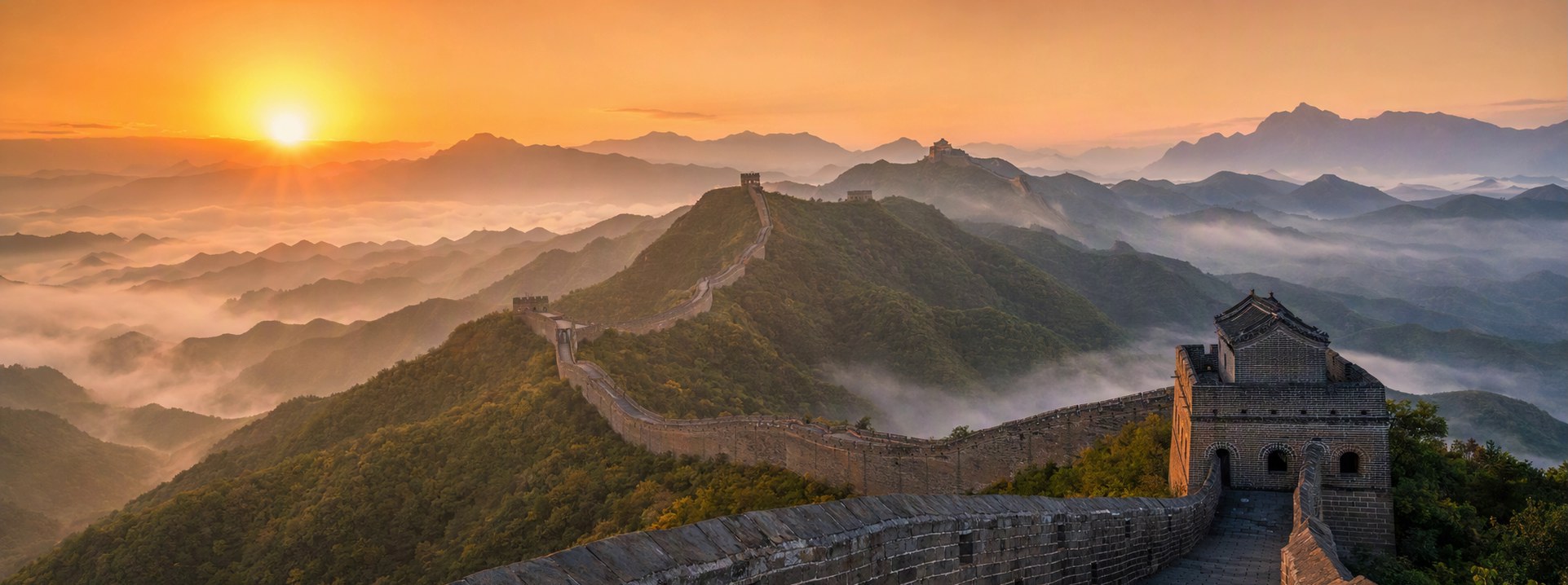
The Great Wall is the obvious China weekend escape, and Mutianyu is the best choice for a short trip — restored, cable-car up, toboggan down, and far less crowded than Badaling. For something different, Chengde’s Mountain Resort is an easy hour by rail and gives you imperial gardens without the Beijing crowds.

From Shanghai

The Jiangnan water towns are made for a weekend. Suzhou (30 minutes away) pairs classical gardens with a old-town canal walk; Hangzhou’s West Lake is an hour off and worth a full two days of tea houses and causeways. If you only have one day, pick a single water town like Zhujiajia over cramming three.

From Chengdu

Chengdu makes an easy base for a Leshan Giant Buddha day — take the early train, walk the cliff path, then eat qiaojiao beef before heading back. Add a night on Mount Emei if you have a full weekend and want the sunrise above the clouds.

Weekend trip planning tips

  • Travel with a China eSIM so maps and train apps work the moment you arrive.
  • Buy high-speed rail tickets in advance — weekend departures fill fast.
  • Check-in luggage at your base hotel, not on the train; go light for a weekend.
  • Ask a custom trip designer to bundle the train, a driver and one good hotel if you would rather not wire it yourself.

FAQ

What is the easiest China weekend trip from Shanghai?

Suzhou or Hangzhou — both are under an hour by high-speed rail and give you a full day of sights without long transfers.

Is 2 days enough for Yangshuo?

Yes for the highlights: a Li River or Yulong raft, Silver Cave, and an evening on West Street. Base yourself in Yangshuo, not Guilin, to save transfer time.

Do I need a private car for a weekend trip?

Not for city or rail-served stops. A car helps for the Great Wall sections, Mount Emei, and rural water towns where buses are slow.

How far in advance should I book a China weekend trip?

Train seats and popular hotels should be booked a few days ahead; during public holidays, two to three weeks.

Posted on — Leave a comment

17 Best China Souvenirs: What to Buy, Prices & Fake-Avoidance Guide

Ranked by ‘will actually survive the flight home’ + ‘people genuinely want these’ – with price anchors and fake-spotting notes. Save it for your trip.

The Gift List Everyone Asks For

Ranked by ‘will actually survive the flight home’ + ‘people genuinely want these’ – with price anchors and fake-spotting notes. Save it for your trip.

Under $20 (Stocking Stuffers)

Fridge magnets of every landmark · Great Wall bookmarks · tea sampler tins · panda plush (the official base ones) · chopstick sets · paper-cut art (framed = instant gift) · phone charms from temple fairs.

$20-80 (Real Gifts)

Longjing gift tin (spring harvest) · mini pu-erh cakes (they AGE – the gift that improves) · silk scarves (Suzhou’s real ones – burn-test a thread: real silk smells like hair) · cloisonné boxes · jade bracelet (buy with our guide, not tourist shops) · tea sets · seal with your name carved.

$80+ (The Heirlooms)

Hand-knotted silk carpets (we source from workshops, not tourist mills) · bronze Shang-dynasty replicas (foundry-certified) · Yixing teapot from the master potters · embroidery panels · calligraphy by a working artist.

Fakes Cheat-Sheet

‘Jade’ that’s warm to touch + scratches with steel = glass. ‘Silk’ that stretches and stays = polyester. ‘Antique’ anything from a tourist street = replica (fine if priced as one – our souvenirs shop says so honestly).

Turn Inspiration Into a Trip

Everything above is bookable or plannable: free AI itinerary planner · WhatsApp travel designer +86 180 3801 6100 · full guide library.

Posted on — Leave a comment

China on a Budget: How to Travel for $50 a Day (Honestly)

Yes, China on $50/day is genuinely doable in 2026 – here’s the honest breakdown (and where NOT to cut corners). Bookmark for the group chat.

The Real Budget Math

Yes, China on $50/day is genuinely doable in 2026 – here’s the honest breakdown (and where NOT to cut corners). Bookmark for the group chat.

Where $50 Goes

Hostels ¥80-150 ($12-20) · street/local food ¥30-60/day ($5-8) · metro everywhere ¥10-20/day ($2-3) · one paid attraction/day ¥60-120 ($8-16) · bullet train legs $10-40 each. Total: ~$40-55/day before splurges.

Budget Hacks That Work

Eat where queues form (turnover = freshness + local prices) · hostels with kitchens in expensive cities · museum days (state museums are FREE – book ahead) · night trains for long routes (save a hotel night) · student/senior discounts at most sights (bring ID) · university districts for cheap eats.

Where to Splurge Instead

Three splurges that transform budget trips: (1) one private Great Wall morning ($100) – worth ten metro rides, (2) a real Peking duck banquet ($25 vs $6 street dinner), (3) a day with a private guide in one city ($100) – unlocks everything else.

Our Budget-Conscious Services

Seat-in-coach day tours ($40-80) + shared transfers + free AI itinerary planning = private-tour quality at backpacker-adjacent prices where it counts.

Turn Inspiration Into a Trip

Everything above is bookable or plannable: free AI itinerary planner · WhatsApp travel designer +86 180 3801 6100 · full guide library.

Posted on — Leave a comment

10 China Travel Myths That Are Completely Wrong (2026 Edition)

These myths stop amazing trips from happening. Each one debunked with on-the-ground reality – perfect conversation-starters for your travel group.

Myth-Busting, Shareable Truths

These myths stop amazing trips from happening. Each one debunked with on-the-ground reality – perfect conversation-starters for your travel group.

Myths 1-5: Safety & Comfort

Myth: ‘China is dangerous’ – reality: among the safest travel destinations, violent crime against tourists is vanishingly rare. Myth: ‘everyone’s watching you’ – cameras yes, interest in you no. Myth: ‘food will make you sick’ – busy street stalls are generally safer than your home salad bar. Myth: ‘no English anywhere’ – apps + our guides bridge everything. Myth: ‘communist bloc bleakness’ – Shanghai and Shenzhen would like a word.

Myths 6-10: Logistics

Myth: ‘you can’t access anything online’ – VPNs + preparation solve it (our guide). Myth: ‘cash only’ – China is MORE cashless than the West. Myth: ‘trains are slow Soviet things’ – the world’s best high-speed network. Myth: ‘you need a month’ – the visa-free 144-hour transit covers a Golden Triangle express. Myth: ‘traveling independently is impossible’ – 10 million foreign visitors a year say otherwise (with a little help from services like ours).

The Grain of Truth

Where myths come from: 1990s travel stories, media distance, and old visa rules. Modern China (visa-free entries! QR payments in English!) is the most traveler-friendly it’s ever been.

Turn Inspiration Into a Trip

Everything above is bookable or plannable: free AI itinerary planner · WhatsApp travel designer +86 180 3801 6100 · full guide library.

Posted on — Leave a comment

One Week in China: 5 Perfect 7-Day Itineraries (For Every Traveler)

‘I have one week – what should I do?’ Five answers, five traveler types, all tested by our clients. Share with the group chat arguing about their trip.

The Most-Asked Question, Answered

‘I have one week – what should I do?’ Five answers, five traveler types, all tested by our clients. Share with the group chat arguing about their trip.

Classic First-Timer

Beijing (3 days: Wall, Forbidden City, hutongs) + high-speed rail + Xi’an (2 days: Warriors, wall biking, Muslim Quarter) + Shanghai (2 days: Bund, French Concession) = China’s greatest hits.

Nature Lover

Chengdu (pandas, 2 days) + Jiuzhaigou (2 days turquoise lakes) + Leshan Buddha (1 day) + teahouse recovery (2 days) – the southwest’s soft beauty.

Photographer’s Week

Beijing (Wall sunrise, 2 days) → Guilin (Li River, 2 days) → Yangshuo (cycling + sunrise, 2 days) → back through Shanghai (1 city day) – light-chasing logistics handled by charter.

Deep Culture

Xi’an (2) + Pingyao (1, Ming walled town) + Beijing (3) + Tianjin food finale (1) – dynasties deep, museums-forward. Or: the Jiangnan week (Shanghai-Hangzhou-Suzhou).

Which One Are You?

Take our AI planner: enter your week + interests, get a personalized version of any of these in 60 seconds.

Turn Inspiration Into a Trip

Everything above is bookable or plannable: free AI itinerary planner · WhatsApp travel designer +86 180 3801 6100 · full guide library.

Posted on — Leave a comment

China With Kids: The Perfect Family Trip (Ages 3-15 Guide)

One anchor activity per day · afternoon pool breaks · food-market dinners kids remember forever · zero 4 AM starts. This is how our family tours are paced – and this list

The Family Formula

One anchor activity per day · afternoon pool breaks · food-market dinners kids remember forever · zero 4 AM starts. This is how our family tours are paced – and this listicle is the shareable version.

By Age: 3-6

Pandas (Chengdu – the baby enclosure is toddler catnip) · Shanghai Disneyland (2 days beats 1) · aquarium + science museums on rotation · water towns by boat not foot.

By Age: 7-12

Great Wall toboggan down from Mutianyu (THE memory) · Xi’an warriors + noodle-making class · dumpling folding dinners · night markets with the ‘try one weird thing’ game · bullet train between cities (they’ll love the speed).

By Age: 13-15

Zhangjiajie (Avatar mountains – screen time credibility) · Beijing 798 street art · Shanghai’s urban energy · calligraphy class (surprisingly cool at this age) · e-bike Yangshuo countryside.

Parent Logistics Cheat Sheet

Child seats in every family charter · 7-seat MPV standard (16-seat for 3-gen) · hotels with pools (afternoon breaks) · western breakfast available everywhere · strollers work at 90% of sights.

Turn Inspiration Into a Trip

Everything above is bookable or plannable: free AI itinerary planner · WhatsApp travel designer +86 180 3801 6100 · full guide library.

Posted on — Leave a comment

China Month by Month: Where to Go Every Month of the Year

China is huge, so there is no single “best time” — the right month depends on where you are going. This calendar takes it month by month: what is in season, where to head, and which weeks to avoid because of weather or domestic-holiday crowds.

The short version

Spring (April–June) and autumn (September–October) are the safest bets almost everywhere. Summer is great for Yunnan, the far north and the coast, tough in central cities. Winter is best for Harbin’s ice festival, mild Sanya beaches, and empty, snow-dusted sights elsewhere.

China month by month

Month Go to Skip / watch out
Jan Harbin ice festival, Sanya beaches Cold north; pre-Spring-Festival travel rush
Feb Sanya, lantern festivals Spring Festival — everything crowded and pricey
Mar Nanjing, Wuhan blossoms, Yunnan North still chilly and dusty
Apr Guilin, Hangzhou, Longji planting Qingming holiday weekend
May Jiuzhaigou, Zhangjiajie, Tibet Labour Day — worst crowds of spring
Jun Inner Mongolia, Qinghai, Guizhou Plum-rain season in the east/south
Jul Qinghai Lake, Yunnan, coastal Qingdao Hot, humid central cities; school-holiday crowds
Aug Xinjiang, grasslands, Guizhou highlands Peak heat and domestic tourism
Sep Zhangjiajie, Huangshan, Guilin Mid-Autumn / early Golden Week
Oct Arsenal of autumn colour: Alxa, Kanas, Emei Golden Week (1–7 Oct) — avoid
Nov Guilin, Zhangjiajie foliage, Hong Kong Rain tapering in the south
Dec Sanya, Harbin prep, city breaks Cold north; short days

The crowds to avoid

Three windows wreck even the best-planned trip: Spring Festival (late Jan–Feb), Labour Day (early May), and National Day Golden Week (1–7 October). Domestic travel explodes and prices jump. If those are your only dates, book everything weeks ahead and expect queues.

FAQ

What is the best month to visit China overall?

April–May and September–October give the most reliably pleasant weather across the popular routes, with fewer crowds than summer.

Which months should I avoid in China?

The public-holiday weeks — Spring Festival, Labour Day, and National Day Golden Week — when trains, flights and attractions are jammed.

Is summer too hot for China travel?

Central and eastern cities are very hot and humid in July–August. Head north or up to the Yunnan and Qinghai highlands instead.

Can I visit China in winter?

Yes — Harbin’s ice festival is spectacular, Sanya stays warm, and the big sights are quiet and often snow-covered. Just pack for the cold in the north.

Posted on — Leave a comment

20 Chinese Foods You Must Try (That You Can’t Get at Home)

Forget your local takeaway – this is the real China in 20 dishes. Save this list, eat through it, thank us later. Each includes where to find the authentic version.

The Bucket List Menu

Forget your local takeaway – this is the real China in 20 dishes. Save this list, eat through it, thank us later. Each includes where to find the authentic version.

The Icons (1-8)

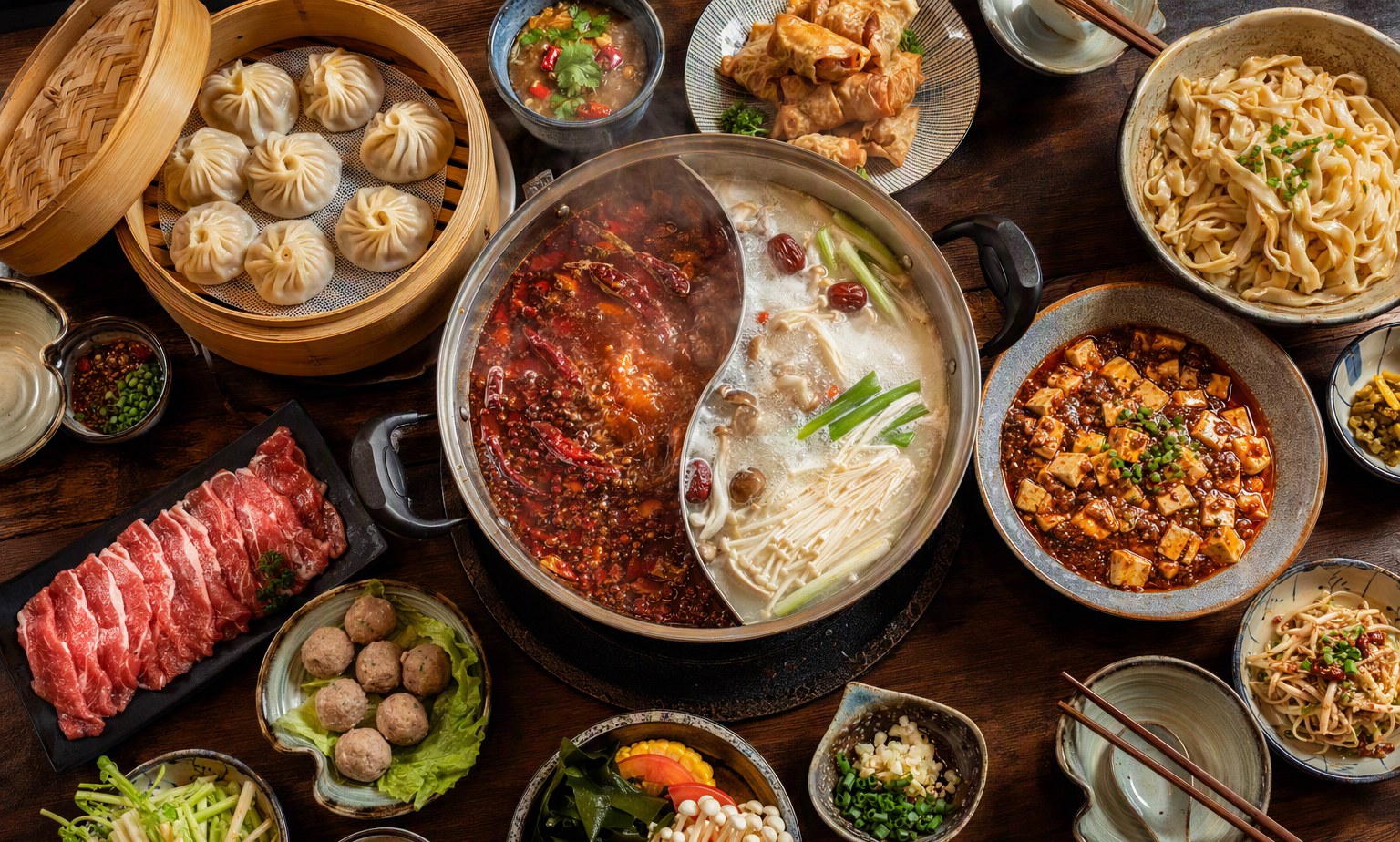
Peking duck (carved tableside, Beijing) · xiaolongbao soup dumplings (Shanghai) · Sichuan hotpot (numbing + spicy, Chengdu) · biangbiang noodles (Xi’an’s hand-pulled monsters) · dim sum morning feast (Guangzhou) · Lanzhou beef noodles (the nationwide religion) · crawfish in garlic (summer night markets) · jianbing breakfast crepes (street corners).

The Regional Legends (9-15)

Mapo tofu at the source (Chengdu) · hairy crab (Shanghai, Oct-Dec) · Buddha jumps over the wall (Fuzhou) · Yunnan mushroom hotpot (summer foraging season!) · crossing-the-bridge noodles (Kunming) · Xinjiang lamb skewers + naan (Uyghur mastery) · tea-smoked duck (Sichuan).

The Adventurous (16-20)

Stinky tofu (braver than it smells – Changsha’s best) · century egg with tofu (acquired, then addictive) · chicken feet (dim sum trial by fire) · sea cucumber (banquet texture) · mooncakes (Mid-Autumn only – the seasonal ritual).

Take the Flavors Home

Our food therapy collection + teas ship worldwide – the souvenir that keeps the trip alive.

Turn Inspiration Into a Trip

Everything above is bookable or plannable: free AI itinerary planner · WhatsApp travel designer +86 180 3801 6100 · full guide library.

Posted on — Leave a comment

China Packing List: What to Bring (And What to Leave Home)

Pin-this material: exactly what four seasons of China travel demand – curated by our guides who’ve seen every packing fail.

The Printable Checklist

Pin-this material: exactly what four seasons of China travel demand – curated by our guides who’ve seen every packing fail.

Always Pack

Passport + visa printout · universal adapter (Type A/C/I) · power bank (20,000mAh legal on flights) · VPN installed · Alipay setup · comfy walking shoes (China = steps) · layers · tissues + hand sanitizer (some restrooms) · your meds + doctor’s note.

Season-Specific

Summer (Jun-Aug): breathable everything, umbrella (sun AND rain), deodorant is scarce locally. Winter north (Nov-Mar): serious down jacket, thermal base, heat packs (buy there cheaply), ice-grip shoe covers for Harbin. Tibet year-round: sun protection x2, altitude meds discussed with doctor.

Smart to Have

Pocket tissues · small gifts from home (magic icebreakers) · offline maps downloaded · name card of every hotel in Chinese (we provide) · spare phone battery-case for photography days.

Leave at Home / Buy There

Hair dryer (hotels have) · towels (hotels) · too much cash (ATMs + Alipay) · heavy shampoo (stores everywhere) · formal wear (nobody checks). Buy locally: slippers, umbrellas, cold-weather gear at 1/3 prices.

Turn Inspiration Into a Trip

Everything above is bookable or plannable: free AI itinerary planner · WhatsApp travel designer +86 180 3801 6100 · full guide library.