Posted on — Leave a comment

Chongqing Itinerary: Hotpot, Skyscrapers & Mountain Magic

Why Chongqing Belongs on Your 2026 China Trip

Forget everything you thought you knew about Chinese cities. Chongqing isn’t just another metropolis — it’s a topographic anomaly: a megacity of 32 million built across steep hills, deep gorges, and layered overpasses where skyscrapers sprout from cliff faces and monorails glide through apartment blocks. In 2026, it’s more accessible than ever: eligible nationalities enjoy the 240-hour visa-free transit policy when entering via Chongqing airport (CKG) en route to a third country — meaning you can drop your bags, dive into hotpot, and explore one of Asia’s most thrilling urban landscapes without pre-arranged visas.

Chongqing also serves as the perfect gateway to the Yangtze River’s upper reaches — think Fengdu Ghost City, Shibaozhai Pagoda, and the lesser-visited but equally dramatic Wu Gorge — making it ideal for combining city energy with immersive river culture. And thanks to WingPhoenix’s AI trip planning tool, building a customized Chongqing itinerary — complete with real-time transport links, dietary preferences (vegetarian? spice-sensitive?), and language-supported bookings — takes under 90 seconds.

Your 4-Day Chongqing Itinerary (2026 Edition)

This balanced, walkable, and transit-optimized plan prioritizes authenticity over checklist tourism — no forced photo ops, no generic souvenir stalls. All timings assume arrival by morning flight on Day 1 and departure after lunch on Day 4. Public transport is efficient, but for hillside neighborhoods and late-night hotpot crawls, we strongly recommend booking a WingPhoenix charter car — drivers speak English, carry portable Wi-Fi, and know which alleyways hide the best chili oil.

Day 1: Urban Vertigo & Night Lights

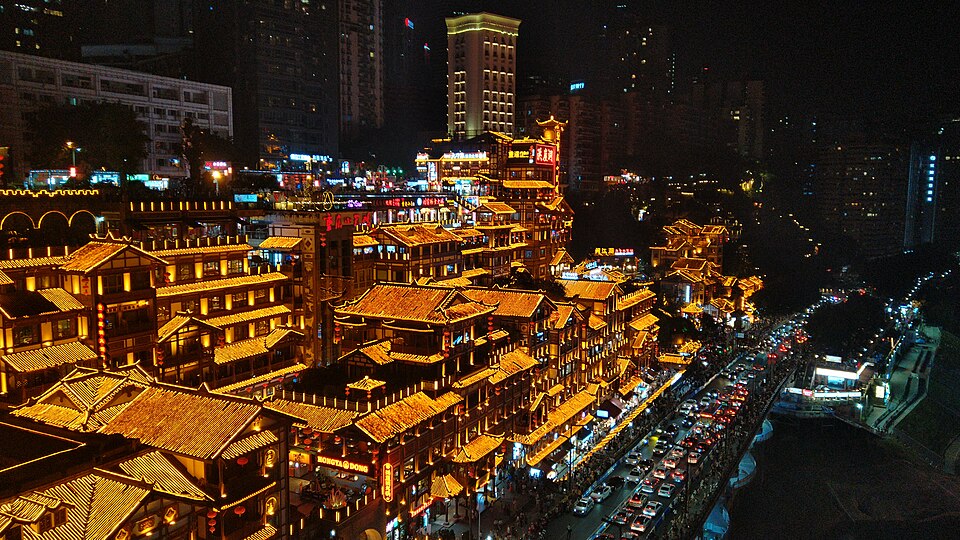
Start at Chaotianmen Square, where the Yangtze and Jialing rivers converge — snap your first skyline photo from the newly renovated observation deck (opened May 2026). Then ride the Chongqing Rail Transit Line 6 to Hongyadong: the iconic stilted buildings lit up at dusk (best viewed 7:30–9:00 PM). Skip the crowded ground-floor shops; head straight to Level 8 for unobstructed views and tea at Yun Ding Teahouse.

End with dinner at De Long Men Hotpot (Jiefangbei branch), a local favorite since 1998 — request ‘wei la’ (mild heat) if new to Sichuan spice, and order duck intestine, fresh tofu skin, and hand-pulled noodles cooked tableside. Pro tip: Use the WingPhoenix eSIM (pre-loaded with Baidu Maps offline mode) to navigate Hongya’s maze-like alleys post-dinner.

Day 2: History, Hills & Hidden Alleys

Morning begins at Ciqikou Ancient Town — but arrive before 9:00 AM to avoid tour buses. Wander narrow stone lanes past century-old soy sauce workshops and try ma la tang (spicy skewer soup) from stall #17 near the west gate. At 11:00 AM, take Bus 261 to Geleshan Revolutionary Memorial Park, not for ideology, but for panoramic city views and quiet forest trails — rarely visited by foreigners but beloved by Chongqing university students.

Afternoon: Head to Shapingba District for Three Gorges Museum (free entry, book online 24h ahead via WeChat mini-program ‘Chongqing Culture Pass’). Its 2026-updated ‘Yangtze Before the Dams’ exhibit uses AR to overlay historical flood levels onto modern river footage — a sobering, stunning experience. Cap the day with sunset drinks at Ultraviolet Bar (Liangjiang New Area), where cocktails come with synchronized light projections on the Yangtze-facing wall.

Day 3: Mountains, Monorails & Local Life

Take the Loop Line monorail to Jiaochangkou, then transfer to Bus 049 for Mount Emei’s Chongqing Satellite Trail — no, not *the* Emei, but the Chongqing Emei Trail, a 3.2 km forest path with bamboo groves, hidden temples, and zero crowds. Pack water and wear grippy shoes — the steps are slick year-round.

Return by 4:00 PM and dive into daily life at Yuzhong Farmers’ Market: bargain for dried Sichuan peppercorns, taste fermented tofu paste, and watch butchers cleave pork ribs mid-air. Dinner: Xiao Tian Fu Dumplings (Guangyu Road branch), serving hong you chao shou (spicy wontons in chili oil) since 1985 — ask for extra pickled mustard greens.

Logistics & 2026 Practicalities

Chongqing’s terrain demands smart prep. Below is your essential gear-and-guide reference:

Category 2026 Recommendation Notes
Transport Chongqing Rail Transit + WingPhoenix charter car Subway covers 90% of core areas; charter cars essential for Geleshan, mountain trails, and late-night returns. Book via app ≥3h ahead.
eSIM WingPhoenix 10GB/7-day eSIM Auto-activates at CKG airport. Includes Baidu Maps, WeChat Pay setup, and emergency translation widget.
Visa-Free Transit 240-hour window (10 days) Valid for arrivals at CKG with confirmed onward ticket to Vietnam, Thailand, South Korea, or Singapore. No extension possible.
Language Support WeChat Mini-Program ‘Chongqing EasyGo’ Real-time subway navigation, restaurant menus with audio pronunciation, and emergency police/medical hotline (110/120).

Hotels? Prioritize locations near Jiefangbei (central) or Yubei District (modern, quieter, near CKG airport shuttle). For true immersion, book a 3-night stay at Huayuan Hostel — a converted 1930s villa with rooftop hotpot nights and free WingPhoenix AI itinerary sync.

What to Skip (and Why)

Not all attractions earn their hype — especially in 2026, when locals have moved on. Avoid:

  • The ‘Staircase to Nowhere’ (Baiyun Temple stairs): heavily photoshopped online; now fenced off for renovation until Q1 2027.
  • ‘Authentic’ Kung Fu Shows: staged, overpriced, and culturally vague — instead, join a free 7:00 AM tai chi session at Zengjia Mountain Park (locals welcome observers).
  • Yangtze River ‘Cruise’ from Chongqing port: most 1-day trips are slow, air-conditioned ferries with canned commentary. Opt instead for a private 3-hour speedboat tour to Cuntan Port (book via WingPhoenix) — includes onboard Sichuan opera face-changing demo and riverbank photo stops.

Finally: Chongqing’s weather is humid subtropical — expect fog (especially Nov–Mar) and summer highs of 38°C (100°F). Pack quick-dry layers, waterproof shoes, and high-SPF sunscreen (yes, even in mist). Tap water is not drinkable — refill at hotel stations or use WingPhoenix’s partner network of 500+ filtered-water kiosks (map included in eSIM dashboard).

Chongqing rewards curiosity, not conformity. It’s a city that hums with motorbike engines, sizzles with chili oil, and reveals its soul only to those willing to climb one more stair, round one more bend, and taste one more bite. Whether you’re here for four days or forty, let your itinerary reflect your rhythm — not a brochure’s agenda.

Ready to build your personalized Chongqing journey — with real-time traffic updates, dietary filters, and local vendor bookings — in under two minutes? Start your AI-powered trip plan now.

Posted on — Leave a comment

Qingdao Travel Guide: Beer, Beaches & German Heritage

Why Visit Qingdao in 2026?

Perched on Shandong Peninsula’s southern coast, Qingdao blends maritime energy, German colonial history (1897–1914), and China’s most iconic beer culture into a uniquely relaxed, walkable city. Unlike megacities such as Beijing or Shanghai, Qingdao offers sea breezes, uncrowded boardwalks, and pastel-hued Jugendstil buildings — all within easy reach of Beijing, Shanghai, and Guangzhou via high-speed rail (3–5 hrs) or domestic flights (under 2 hrs). Crucially for foreign travelers in 2026, Qingdao is fully accessible under China’s expanded 240-hour visa-free transit policy: if you arrive at Qingdao Liuting International Airport (TAO) with a confirmed onward ticket to a third country within 10 days — or connect via Beijing Capital (PEK), Shanghai Pudong (PVG), or Guangzhou Baiyun (CAN) — you qualify automatically. No prior visa application needed.

Getting There & Around

Qingdao Liuting International Airport (TAO) handles over 20 direct international routes in 2026, including Seoul (ICN), Tokyo (NRT), Bangkok (BKK), and Singapore (SIN). From TAO, take the Line 8 metro (opened 2025) directly to downtown Qingdao Railway Station in 28 minutes — fare: ¥6. For stress-free transfers, book a WingPhoenix charter car with English-speaking drivers; vehicles are pre-vetted, GPS-tracked, and include child seats and luggage assistance upon request.

Within the city, Qingdao’s compact core is best explored on foot or by bike. The Qingdao Metro now spans 8 lines (2026), covering all key districts. Use the official Qingdao Metro App (available in English) or Alipay’s metro QR code function — no physical card required. Buses (e.g., Tourist Bus Line 1) connect Zhanqiao Pier, Badaguan, and Mount Lao with frequent service and real-time arrival tracking. Taxis accept WeChat Pay or Alipay; avoid unlicensed ‘black cars’ near stations.

Top Experiences & Neighborhoods

Zhanqiao Pier & Zhongshan Road: Start at this 1891 Qing Dynasty pier — rebuilt in German-era style — then stroll Zhongshan Road, lined with century-old European facades, artisan coffee roasters, and Tsingtao Beer Museum branches. Don’t miss the Beer Street Night Market (open daily 5–11 PM), where vendors serve draft Tsingtao straight from stainless-steel tanks alongside grilled squid and sweet osmanthus cakes.

Badaguan Scenic Area: Known as ‘Eight Great Passes’, this villa district features 200+ historic residences built between 1930–1940 in Russian, British, French, and German architectural styles. Rent a shared e-bike (via Hello Bike app) and cycle the tree-shaded avenues — especially Huayang Pass (maple-lined) and Jucai Pass (ocean-view). Entry is free; open 24/7.

Mount Lao (Lao Shan): A 1.5-hour bus ride (Tourist Bus Line 101) brings you to China’s only coastal Taoist mountain. In 2026, new cable car upgrades at Nanjiao and Taiqing sections cut wait times by 40%. Hike the Taiqing Trail (3.2 km, moderate) to ancient temples and sea cliffs, or opt for the scenic Beijiushui Stream Route, famed for its waterfalls and granite potholes. Pack light: summer temps average 22–28°C, but fog rolls in fast — bring a windbreaker even in July.

Shilaoren Beach & Olympic Sailing Center: This golden-sand beach hosts Qingdao’s annual International Yacht Regatta (September 2026). Rent windsurfing gear (¥120/hr) or join a sunset kayak tour (book via WingPhoenix’s local partner, OceanRide Qingdao). Nearby, the 2008 Olympic Sailing Center offers glass-bottom boat tours (¥98) and free public piers perfect for photography.

Food & Local Flavors

Qingdao cuisine is seafood-forward, lightly seasoned, and fermented with precision. Must-try dishes:

  • Sea cucumber braised with scallions — tender, gelatinous, served in clay pots at Chunhe Lou (est. 1923, Old Town)
  • Fresh clams in garlic-black vinegar sauce — order at Wanggezhuang Clam Market (open 6 AM–2 PM daily)
  • Grilled oysters with chili-lime butter — street food staple along May Fourth Square
  • Qingdao-style dumplings (jiaozi) — pork-and-kelp filling, boiled not pan-fried, at Xiaozheng Dumpling House

Pair everything with Tsingtao Beer — China’s oldest brewery (founded 1903). Skip the supermarket cans: visit the Tsingtao Beer Museum (¥60 entry, includes 3 tastings) or join the Brewery Afternoon Tour (Wed/Sat, 2:30 PM, ¥180, includes barrel sampling and souvenir glass).

Practical Info: 2026 Updates

Qingdao’s infrastructure has matured significantly since 2024. Here’s what’s new and verified for foreign visitors:

Category 2026 Status Notes
eSIM Coverage Excellent (China Unicom 5G) WingPhoenix eSIM activates instantly at TAO airport kiosks or via app — works in Mount Lao’s remote trails
Cashless Payments Universal WeChat Pay & Alipay accepted at 99% of restaurants, taxis, and temples. No ID verification needed for small transactions (<¥1,000)
Language Support High in tourist zones English signage at metro stations, museums, and ferry terminals. Free multilingual audio guides at Tsingtao Museum & Badaguan
Accessibility Improving Zhanqiao Pier, Olympic Sailing Center, and Qingdao Railway Station have step-free access. Mount Lao’s Taiqing cable car includes wheelchair boarding platforms

For trip planning, use WingPhoenix’s AI trip planner to auto-generate a personalized Qingdao itinerary — it factors in your flight arrival time, dietary preferences (e.g., ‘seafood-only’, ‘vegetarian-friendly’), mobility needs, and even beer-tasting pacing. The same AI can adjust plans in real time if rain delays your Mount Lao hike or a festival closes a street. And yes — it syncs with your WingPhoenix eSIM and charter car bookings, so your entire ground experience stays coordinated.

When to Go & How Long to Stay

The ideal window is May–June or September. Temperatures hover between 18–25°C, skies are clear, and crowds remain light outside Golden Week (Oct 1–7). Avoid July–August if you dislike humidity — though sea breezes keep coastal areas tolerable. A well-paced 3-day stay covers Zhanqiao, Badaguan, Mount Lao’s highlights, and one full beach day. Add a fourth day for a day trip to Weihai (2.5 hrs by train) or the island of Liu Gong (ferry from Xiaogang Port, 45 mins).

Whether you’re sipping lager beside the Yellow Sea, tracing German brickwork in a quiet villa lane, or watching Taoist monks chant at sunrise over the Pacific — Qingdao delivers authenticity without intensity. It’s China travel, reimagined: unhurried, deeply sensory, and quietly unforgettable.

Build your custom Qingdao itinerary in seconds with WingPhoenix AI trip planning →

Posted on — Leave a comment

China High-Speed Rail Guide 2026: Tickets, Apps & Tips

Why China’s High-Speed Rail Beats Flying (and Driving)

With over 45,000 km of operational high-speed rail (HSR) lines—the longest network in the world—China’s bullet trains are the smartest, safest, and most punctual way for foreign tourists to move between cities. In 2026, trains like the Fuxing (CR400 series) cruise at up to 350 km/h, linking Beijing to Shanghai in just 4h18m—and Shenzhen to Guangzhou in under 30 minutes. Unlike domestic flights, HSR avoids airport transfers, security bottlenecks, and weather delays. And unlike driving, it eliminates language barriers, tolls, and parking stress. For travelers on the 240-hour visa-free transit policy (available in 24 Chinese cities including Chengdu, Xi’an, Qingdao, and Dalian), HSR unlocks seamless multi-city itineraries without needing a full visa.

How to Book Tickets as a Foreigner in 2026

You can buy tickets at station counters—but queues, Mandarin-only interfaces, and ID verification hurdles make it inefficient. The best options are:

  • 12306.cn official app (with English toggle): Download the latest version (v7.3+, released March 2026). Requires real-name registration using your passport (scanned via OCR). Works offline for QR code boarding. Note: Credit cards aren’t accepted—use Alipay or WeChat Pay linked to an international card (Visa/Mastercard now fully supported as of Jan 2026).
  • WeChat Mini Program “12306 Official”: Faster than the app for last-minute bookings. Search ‘12306’ in WeChat > tap ‘Mini Programs’ > verify ID > book in under 90 seconds. Save your passport photo and travel dates in advance for one-tap rebooking.
  • WingPhoenix Trip Planner: Our AI trip builder auto-generates optimized HSR routes based on your dates, budget, and interests—then books confirmed e-tickets with seat selection and real-time delay alerts. No app switching, no translation fatigue.

Pro tip: Book 15–30 days ahead for popular routes (e.g., Beijing–Xi’an, Shanghai–Hangzhou) during holidays (Oct National Day, Spring Festival). Off-peak? Same-day tickets are widely available—even for first-class seats.

Station Navigation & Boarding Made Simple

Major stations (Beijing South, Shanghai Hongqiao, Guangzhou South, Chengdu East) are designed for efficiency—but signage varies. Here’s what to expect:

Step What to Do 2026 Update
Arrival Enter via main concourse; look for blue-and-white ‘G’ (high-speed) or ‘D’ (express) train signs All Tier-1 stations now have multilingual digital kiosks (English, French, Spanish, Japanese) with voice-guided navigation
ID Check Scan passport + QR code at automated gates (no paper ticket needed) Facial recognition gates now accept passport photos taken within last 6 months—no live selfie required
Boarding Find your carriage number (e.g., ‘05’), then seat letter/number (e.g., ‘12C’) LED platform displays show real-time carriage positions and door-opening side (left/right)—updated 90 sec before arrival

Carriages are climate-controlled, power-outlet equipped (Type A/B sockets), and offer free Wi-Fi (via China Telecom eSIM-authenticated login—more on that below). First-class seats include footrests, wider spacing, and complimentary bottled water. Business class adds hot towels and bento boxes (¥68–¥128, orderable via 12306 app).

eSIM + HSR: Your Seamless Connectivity Combo

Staying online on China’s HSR isn’t optional—it’s essential for real-time ticket scanning, navigation, translation, and ride-hailing. Physical SIMs require ID registration *at a store*, often taking 2+ hours. Pocket Wi-Fi devices risk battery drain and inconsistent coverage in tunnels (especially in mountainous routes like Xi’an–Chengdu). The 2026 solution? A China eSIM.

WingPhoenix offers plug-and-play eSIM plans (1GB–10GB/day) activated instantly via QR code—no physical swap, no store visit. Once installed, your eSIM works seamlessly inside HSR carriages, automatically connecting to China Telecom’s upgraded 5G+ network (coverage now extends to 99.7% of track length, per MIIT Q2 2026 report). Use it to:

  • Translate station announcements or conductor instructions in real time
  • Access Baidu Maps offline maps (download before boarding)
  • Pay for snacks at onboard trolleys (WeChat Pay/Alipay)
  • Check live train status via 12306 app—critical for tight connections

Pro note: If you’re arriving under the 240h visa-free transit policy, activate your eSIM *before landing*—it works the moment you step off the plane, so you can book your first HSR leg from the airport (e.g., Beijing Capital Airport → Beijing South Station via Airport Express + Metro Line 14, total transfer time: 52 min).

Top 5 HSR Routes for Tourists in 2026

These routes combine speed, scenery, cultural access, and visa-free transit eligibility:

  • Shanghai Hongqiao → Hangzhou East (45 min, ¥73): Perfect for a day trip from Shanghai—arrive by 8:30am, explore West Lake, tea fields in Meijiawu, and return by 8pm.
  • Xi’an North → Chengdu East (3h12m, ¥263): Cross the Qinling Mountains through 127 tunnels. Book window seat on left side for misty peaks and terraced fields.
  • Guangzhou South → Shenzhen North (28 min, ¥74.5): Ideal for Greater Bay Area hopping—connects Cantonese heritage, tech hubs, and Macau ferry terminals.
  • Beijing South → Tianjin West (30 min, ¥54.5): The world’s first commercial HSR line (2008), now upgraded with autonomous operation. Great for a colonial-port city break.
  • Nanjing South → Huangshan North (2h23m, ¥195): Terminates at the foot of Huangshan—skip the bus transfer and start hiking at Yun Gu Temple by noon.

Each route is served by ≥6 daily departures, with first trains starting at 6:10am and last trains departing by 10:40pm. All stations connect directly to metro or airport express lines—no taxi haggling required.

Final Tips: Etiquette, Delays & Emergency Help

Chinese HSR culture prioritizes quiet, cleanliness, and punctuality. Keep phone volume low, avoid strong-smelling food (instant noodles are frowned upon), and dispose of trash in designated bins (not under seats). Trains are rarely delayed—average on-time performance is 99.2% (2026 CRRC data)—but if your train is canceled or delayed >30 minutes, use the 12306 app to request automatic refund + rebooking (processed in ≤15 minutes). For urgent assistance, press the call button above your seat or dial 12306 (English hotline, open 24/7, staff trained in tourism scenarios since April 2026).

Planning your China rail journey shouldn’t mean juggling apps, translations, and timetables. Let WingPhoenix’s AI trip planner do the heavy lifting—input your dates, cities, and preferences, and get a polished, bookable itinerary with HSR tickets, eSIM activation, and local transport links—all in one click. Start building your seamless China rail adventure today.

Posted on — Leave a comment

Best SIM Card for China in 2026: eSIM vs Physical SIM vs Pocket Wi-Fi

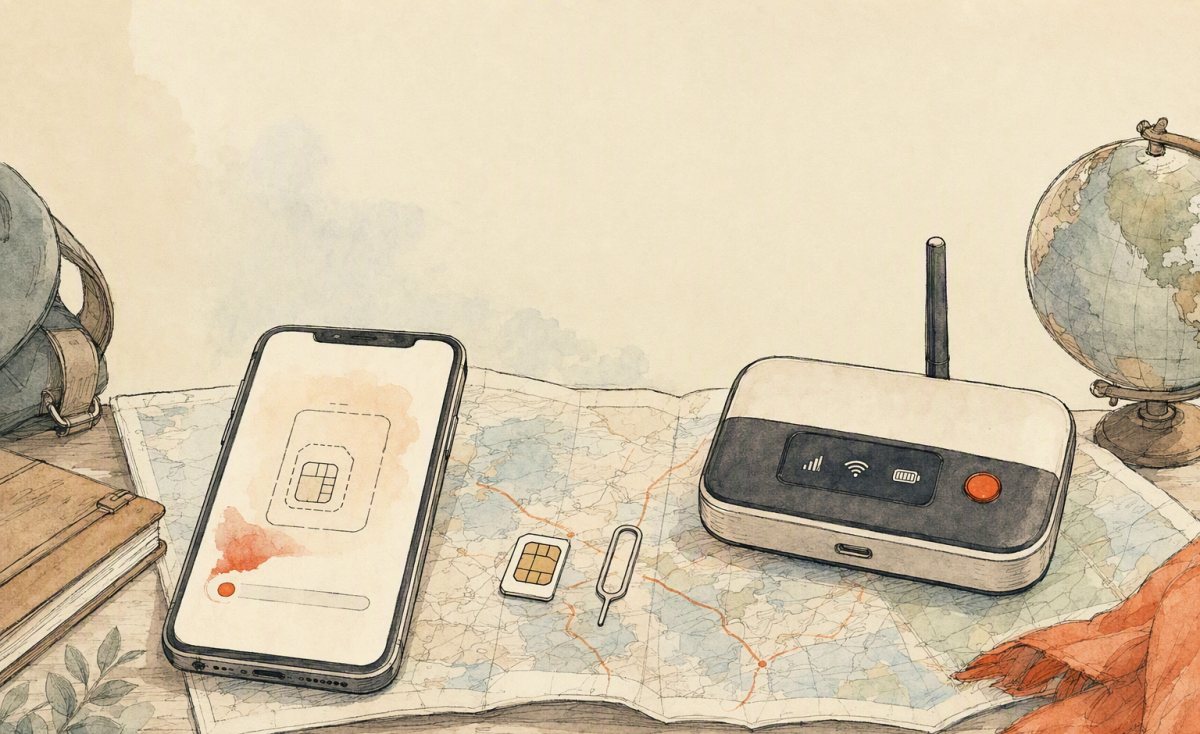
There are three ways to get online in China as a visitor: install an eSIM before you fly, buy a registered physical SIM at a carrier store, or carry a pocket Wi-Fi hotspot. Each is the right answer for a different traveller. This comparison gives you the honest trade-offs — including the paperwork most first-timers do not expect.

The three options in 30 seconds

Option Best for Main weakness Typical cost feel
Travel eSIM (data) Most visitors, 3–30 day trips No local voice number Low; from under $1/day tiers to ~$95 for heavy monthly data
Physical carrier SIM Travellers who need a Chinese number Passport registration in person Low–moderate, plus your time
Pocket Wi-Fi hotspot Families, groups, laptop users Another device to charge and carry Per-day rental; adds up on long trips

Option 1: the travel eSIM

An eSIM is a downloadable carrier profile. You buy a data plan online, receive a QR code by email, install it in three minutes on home Wi-Fi, and connect the moment you land. Your home SIM stays in the phone, so bank codes and calls from home keep working.

Why most people should stop here:

  • No queue, no forms, no English-signage treasure hunt at the airport.
  • Data-only plans for tourist use avoid the in-store passport registration that domestic SIMs require.
  • Plans can cover mainland China, Hong Kong and Macau together — useful on any trip that touches Shenzhen or a Hong Kong flight connection.
  • Nothing physical to lose, and you can top up before you run out.

Where it falls short: you do not get a local number. Hotels and drivers increasingly reach you on WeChat, so this rarely hurts — but if you plan to register for local services that demand a Chinese mobile number, or you prefer phoning places directly, plan around it.

Option 2: a physical SIM from a Chinese carrier

China Unicom, China Mobile and China Telecom all sell visitor packages, and airport counters are common in major gateways. The defining feature is real-name registration: Chinese law requires identity registration for SIMs, so you will present your passport, complete paperwork, and sometimes have a photo taken. Budget 20–40 minutes in a queue after a long-haul flight, and expect smoother service at large-city flagship stores than at small neighbourhood shops.

Choose this if you want a genuine local number for calls and SMS, plan to stay a month or longer, or need to register for apps that verify a domestic number.

Avoid it if your itinerary is short, you arrive late at night, or you would rather spend airport time getting to your hotel.

Option 3: pocket Wi-Fi

A rented hotspot is a small device that connects to the local network and shares it with several phones and laptops at once.

Choose this if you travel as a family or a group of four and everyone needs data, or if you must run a laptop for work all day. One device, many connections, no changes to anyone’s phone settings.

Consider the downsides: it is one more thing to charge, carry, keep cool and return; battery life collapses when several devices stream video; and pickup/return logistics at the airport eat time. For solo and couple travel, an eSIM is almost always cheaper and lighter.

Cost math: three realistic scenarios

Solo traveller, 7 days, city-heavy

A fixed-total data eSIM (for example 5 GB over 5 days, topped up if needed) costs less than a single museum ticket in Shanghai. Physical SIM saves nothing here and costs you an hour of registration. Pocket Wi-Fi is overkill.

Couple, 12 days, mainland + Hong Kong

Two daily-allowance eSIMs covering the region beat a shared hotspot on flexibility — you split up during the day without losing connection. Roughly $38 per person is a reasonable published tier for 3 GB a day across 12 days.

Family of four, 10 days, one laptop

One hotspot plus one eSIM for the parent who wanders off is a pragmatic hybrid. If the laptop stays in the hotel, four eSIMs are simpler and usually cheaper.

What about speed and coverage?

All three options ride the same underlying networks — so city speeds are excellent either way, and the same dead zones apply. Expect strong 5G/4G in megacities and along high-speed rail corridors; expect thin signal in mountain parks (Zhangjiajie, Jiuzhaigou, Yunnan’s Stone Forest) and on plateau routes. A hotspot has one advantage in weak-signal areas: its larger antenna can hold a connection slightly better than a phone in a pocket.

Remember that in China the constraint is rarely the network — it is which services are available. Download offline maps, cache your translation packs, and set up the apps you intend to use before you fly.

Decision guide

  • Trip under 30 days, phone-first traveller: eSIM. Buy today, install tonight, land connected.
  • You need a Chinese number for apps or work: physical SIM at a flagship store, or keep the eSIM for data and use WeChat for contact.
  • Group or heavy laptop use: pocket Wi-Fi, ideally paired with one eSIM so nobody is stranded when the group splits up.
  • Older or locked phone: check eSIM support first; if it fails, a physical SIM or hotspot is your route.

If you have decided on an eSIM, current mainland and Greater China data tiers are listed on our travel eSIM page. Pair it with the interactive map planner to see the real distances between your stops before you commit to an itinerary — knowing that two “nearby” cities are 400 km apart is the cheapest mistake to avoid.

Frequently asked questions

Which is cheaper overall, eSIM or a local SIM?

Per gigabyte, local carrier plans can look cheaper — but add the airport counter time and the passport registration, and a travel eSIM usually wins for short trips.

Can I keep my home number active at the same time?

Yes. Use dual-SIM: home line for calls and SMS, China eSIM set as the data line with data roaming on.

Is pocket Wi-Fi faster?

No — same networks. It just shares one connection across many devices.

Do I need a Chinese SIM for Didi or Meituan?

Registration can require a local number; many visitors use WeChat’s mini-program ride services instead, which work fine on a data-only connection.

What about your home carrier’s roaming pass?

Many travellers assume a daily roaming pass from their home carrier is the easy option. It is genuinely easy — and usually the most expensive way to get online in China. Daily passes commonly cost more than an entire two-week travel eSIM allowance, and they often throttle speeds or cap tethering. The one thing a home pass does better is keeping your existing number fully native for calls and SMS, so if you must take business calls on your regular number, a hybrid works: home pass off, eSIM for data, calls routed through WeChat or FaceTime Audio.

Setup differences worth knowing by device

  • iPhone: you can store several profiles but only one line can be the data line at a time. Label lines clearly and set your home SIM as the voice/SMS default so bank codes keep arriving.
  • Recent US-model iPhones: these are eSIM-only, which is an advantage here — you can add a China profile without removing anything.
  • Android dual-SIM: menu wording varies heavily by maker. Search settings for “eSIM” rather than hunting through Network menus, and check whether your model supports two active SIMs plus an eSIM simultaneously.
  • Older or locked handsets: if eSIM is unavailable or the phone is carrier-locked, a physical SIM or hotspot is the fallback — decide before you fly, not at the gate.

The security argument nobody mentions

Your own cellular data connection is more private than any public network. On an eSIM or local SIM, your traffic goes through the carrier rather than an unauthenticated café hotspot where anyone can watch the traffic. That matters more than most travellers think, because a China trip involves logging into payment apps. If you must use public Wi-Fi, keep it to browsing and avoid entering card details; do anything sensitive on mobile data instead.

A quick decision flow

  1. Do you need a Chinese voice number for work or local registrations? Yes → physical SIM. No → continue.
  2. Will more than two devices, or a laptop, need internet all day? Yes → pocket Wi-Fi, ideally plus one eSIM. No → continue.
  3. Is your phone unlocked and eSIM-capable? Yes → travel eSIM. No → physical SIM or hotspot.

That flow sends the large majority of visitors to the eSIM option, which is why it has become the default recommendation rather than the exotic one.

Posted on — Leave a comment

How to Plan a China Trip Itinerary: A Step-by-Step Framework for First-Timers

China rewards planning more than most destinations. The distances are continental, the transport options multiply fast, and the difference between a good first trip and an exhausting one is almost always route design — not which sights you chose.

Here is the framework we use with travellers, in order. Follow it top to bottom and you will end up with an itinerary that is realistic rather than aspirational.

Step 1: Fix the length of your trip, not the list of cities

Almost every overloaded China itinerary starts the same way: ten days, five cities, plus a water town and the mountains. The fix is to decide the number of days first and let that decide everything else.

A useful default: two days per city minimum, plus a full day for every inter-city transfer. That is the same rule our map tool uses when it suggests a duration — five stops realistically needs ten days of ground time before you count arrival and departure.

If you have seven to ten days, pick one region. If you have two weeks, one region plus a second anchor city. Three weeks or more is where the classic Beijing–Xi’an–Chengdu–Shanghai arc becomes comfortable.

Step 2: Choose the season, then choose the region that suits it

China’s scale means the calendar question is really a geography question:

  • Spring (Apr–May): the safest all-rounder. Flower country in the southwest, mild in the north, comfortable on the Yangtze.
  • Summer (Jun–Aug): hot and humid across the east and centre. Go high or north — plateau towns, mountain parks, Harbin, Inner Mongolia.
  • Autumn (Sep–Oct): the best season for most of the country, and the peak for Zhangjiajie, Jiuzhaigou and the Silk Road.
  • Winter (Dec–Feb): cold and grey in the north (unless you want ice festivals), mild and quiet in the south, cheapest for sightseeing almost everywhere.

Two calendar traps: avoid the National Day week in early October and the Spring Festival week (Jan/Feb, varies). Domestic travel crowds peak and hotel prices jump.

Step 3: Cluster stops by region, not by fame

The mistake is building a list of famous cities and then discovering the gaps. Instead, work in clusters that share a transport spine:

  • Classic north: Beijing, Pingyao, Datong, Xi’an — history-heavy, rail-connected, good for first-timers.
  • Yangtze & east: Shanghai, Suzhou, Hangzhou, Huangshan, Nanjing — easiest logistics, excellent high-speed rail.
  • Southwest: Chengdu, Dujiangyan, Leshan, Jiuzhaigou, then Kunming–Dali–Lijiang — food, pandas, mountains and minority towns.
  • Silk Road: Xi’an, Lanzhou, Zhangye, Jiayuguan, Dunhuang, Turpan — long drives, enormous payoff, best in autumn.
  • Guangdong & region: Guangzhou, Chaozhou, Shenzhen, Hong Kong, Macau — food and city energy, easy borders.

Within a cluster, distances collapse to two or three hours by rail or car, which is what makes the trip feel calm.

Step 4: Budget travel time honestly

This is the step most self-planned itineraries get wrong, and it is where an interactive map earns its keep. Plot your candidate stops and read the kilometres between each pair: two cities that look adjacent on a country map can be 400 km and four hours apart, and a mountain detour that adds 120 km might add five hours of switchbacks.

Rules of thumb that keep routes humane:

  • Under 200 km between stops: easy half-day transfer.
  • 200–400 km: a proper travel morning; plan something at the other end for the afternoon.
  • Over 400 km: fly or take high-speed rail, or accept that the day is a travel day.
  • Any mountain or plateau road: add 30–50% to the naive drive-time estimate.

Use the interactive China map planner to drop your stops, drag them into order, and read the distance labels on each segment — then let it draft the day-by-day version.

Step 5: Decide how you will actually move

Three options, and the right answer depends on your route:

  • High-speed rail for city-to-city on the main corridors — fast, comfortable, station-to-city-centre.
  • Charter car with driver-guide for mountain regions, photo stops, rural towns and any route with more than two stops in a day. It converts travel time into sightseeing time and removes the language friction of buying tickets.
  • Domestic flights for genuinely long hops (Shanghai to Lhasa, Chengdu to Kashgar) where rail eats a day.

Most strong first itineraries mix them: rail on the east, a car in the mountains, a flight to save a day.

Step 6: Build in slack, then protect it

Add one unscheduled half-day for every three days of sightseeing. It absorbs the late train, the museum closure you did not check, the market you did not want to leave. Slack is also where the best first-trip memories come from.

Step 7: Sort the boring layer early

The things that feel administrative decide how the trip feels: connectivity (install a data plan before you fly — see our travel eSIM page), payments (set up a QR wallet and carry some cash), entry rules for your nationality (check official government sources close to booking), and one or two key reservations that sell out — high-speed train seats on festival weekends, mountain park entry, popular restaurants.

A worked example: ten days, first trip, autumn

Beijing three days (Wall, palace, hutongs) → rail to Xi’an two days (Terracotta Army, city wall, Muslim quarter) → fly to Chengdu two days (pandas, teahouses, hotpot) → car to Leshan and back, or on to the Jiuzhaigou loop if you can spare two more days → Shanghai two days (Bund, old town, food) → fly out of Hong Kong with a night there on the way home. That is five anchors in ten days with realistic transfers — the tightest version of this trip that still breathes.

Frequently asked questions

How many cities is too many for ten days?

Four is comfortable, five is the maximum we would recommend, six means you are checking in rather than visiting.

Do I need a guide for a first trip?

Not for the big cities, where signage and rail are straightforward. A driver-guide earns its cost in rural, mountain and photography-heavy stretches.

Should I book everything in advance?

Book the transfers and the two or three things that sell out; leave the rest flexible so you can stay longer where you like it.

Is it worth hiring someone to plan it?

If the route involves mountains, more than four stops, or travellers with limited patience for logistics — yes. Our designers turn a plotted route into a day-by-day plan with pricing from $200.

Three skeletons you can adapt

Seven days: one region, done properly

Shanghai two days → high-speed rail to Hangzhou two days → Suzhou one day → back to Shanghai for two days of depth (museums, old water lanes, a day trip to Zhujiajiao). Total travel between stops: under 300 km. This is the version that leaves you relaxed rather than relocated.

Ten days: the classic first arc

Beijing three → Xi’an two (rail) → Chengdu three (flight) → day trip to Leshan or Dujiangyan by car → Shanghai two (flight) and fly out of Hong Kong or Seoul. Five anchors, three transfers, one long weekend feel at each stop.

Fourteen days: north plus southwest

Beijing three → Datong one (Yungang Grottoes, by rail) → Pingyao one → Xi’an two → Chengdu two → Jiuzhaigou loop two by car → Hong Kong one. Note that the mountain loop is where a driver earns their fee: three stops in two days by public transport is not a holiday.

Pacing rules that hold up

  • One “big thing” per day. A palace, a wall section, a mountain. Everything else is a walk, a meal or a market.
  • No two long transfers back to back. If Tuesday is a four-hour drive, Wednesday stays put.
  • Cluster by opening days. Several major museums and palaces close one weekday; check before you sequence a city.
  • Book the last afternoon of each stay as empty. It absorbs delays and becomes the best hour of the trip.

Where most itineraries actually fail

Not on sights — on logistics. The three recurring failures are: a mountain park that needs a full extra day, a festival weekend that triples hotel prices, and a “quick” border crossing that eats half a day in queues. Each is invisible in a notes-app list and obvious on a map with distance labels. That is the whole argument for planning visually before you book anything.

How long to spend — at a glance

Trip length What fits
5–7 days One region or the Golden Triangle condensed
10 days Beijing + Xi’an + Shanghai (classic first route)
2 weeks Add Guilin/Yangshuo or a scenic region like Yunnan
3 weeks+ Deep multi-region or Silk Road / Tibet routes

FAQ

How many days do I need for a first China trip?

Seven to ten days is the sweet spot for the classic Beijing–Xi’an–Shanghai route; add days for scenic regions.

What should I book before arriving in China?

Mobility and access first: a China eSIM, mobile payment set-up, and timed tickets for the Forbidden City and Terracotta Army.

Is it easier to plan myself or use a designer?

Self-planning works with a good framework; a custom trip designer saves time on trains, drivers and hard-to-book tickets.

What is the best route for first-timers?

The Golden Triangle — Beijing, Xi’an and Shanghai — linked by high-speed rail. See the 10-day Golden Triangle itinerary.

Posted on — Leave a comment

China eSIM for Tourists: The Complete 2026 Guide to Staying Connected

Nothing derails a first China trip faster than a phone that cannot load a map. You step off the plane in Shanghai, try to open your route, and stare at a spinning wheel. A China eSIM fixes that before you leave home: you install a data plan on the plane, scan a QR code, and the moment you land your phone has 4G/5G, working maps, translation and ride-hailing.

This guide covers what an eSIM actually is, whether your phone supports one, how China’s registration rules affect you, how much data a real trip burns, and the setup steps that take about three minutes.

What an eSIM is (and what it is not)

An eSIM is an embedded SIM — a programmable chip already soldered inside your phone. Instead of swapping a plastic card, you scan a QR code and the carrier profile downloads onto the device. For travellers this matters for three reasons:

  • You arrive connected. No queue at an airport kiosk, no passport control detour to a shop, no searching for a store with English signage.
  • Your home number stays active. A data eSIM runs alongside your physical SIM, so you still receive bank OTPs and calls from home.
  • Nothing to lose. There is no tiny card to eject with a paperclip on day three.

The catch worth understanding up front: most travel eSIMs sold for China are data-only. You get internet, and you make calls through WeChat, WhatsApp or FaceTime Audio rather than the cellular voice network. For a holiday that is usually exactly what you want — but if you plan to phone hotels and drivers directly on a local voice number, read the physical-SIM section below.

Does my phone support eSIM?

Generally yes if it is a flagship from the last five years:

  • iPhone: XS, XR and every model after (iPhone 11–17 series). Models sold in the United States from iPhone 14 onward are eSIM-only, which is fine.
  • Samsung: Galaxy S20 and newer flagships, Note 10/20, Z Fold/Flip lines.
  • Google Pixel: Pixel 3 and newer (some US Pixel 6/7 variants are eSIM-only).
  • Others: recent Huawei, Oppo, Vivo, Xiaomi and Motorola flagships.

Two checks before you buy. First, the phone must be carrier-unlocked — a handset still tied to an instalment plan in your home country may reject foreign profiles. Second, confirm eSIM support in Settings: on iPhone it is Settings → Cellular → Add eSIM; on Android, Settings → Network → SIM cards → Add mobile plan. If those options exist, you are good.

Older or budget phones, and any device you do not want to touch, are better served by a physical SIM or a pocket Wi-Fi unit instead.

Real-name registration: the rule that surprises people

China requires real-identity registration for SIM cards issued domestically. Buying a physical SIM as a visitor means presenting your passport, in person, at a carrier store — China Unicom, China Mobile or China Telecom — and completing a registration form. Airports have these counters, but expect 20–40 minutes in line after a long flight, and note that not every branch handles foreign passports smoothly.

Prepaid travel eSIM data plans sold online work differently: the plan is provisioned for tourist data use and delivered as a QR code before you travel, so there is no store visit and no paperwork. That convenience is the single biggest reason travellers now choose eSIM over a local card.

One honest caveat: because these profiles route through partner networks, a small percentage of apps that depend on a domestic phone number (some local sign-up flows, certain food-delivery or bike-share registrations) behave better with a real Chinese number. If those apps are central to your trip, a physical SIM — or a short WeChat-only setup — may complement your eSIM.

Coverage, speed and what “5G” means here

Tourist eSIMs for mainland China typically ride on the China Unicom network, which has the most traveller-friendly roaming agreements and strong 4G/5G presence in cities. Practical expectations:

  • Megacities (Beijing, Shanghai, Shenzhen, Guangzhou, Chengdu, Hangzhou, Xi’an): excellent 5G and 4G; video calls and map streaming are no problem.
  • High-speed rail corridors: good coverage with brief drops in tunnels — download offline maps before long journeys.
  • Mountain and plateau regions (Zhangjiajie peaks, Jiuzhaigou, Yunnan stone forest, Tibet, Gannan): signal thins out; plan for pockets of 3G/4G or nothing. This is where offline maps earn their keep.
  • Inside large malls, museums and the subway: coverage is usually strong; buildings with deep basements can throttle speeds.

Speeds on a 5G plan in a Chinese city are often faster than what most visitors have at home. The variable is not the network but the app: services that are restricted in China will not load regardless of signal strength, so plan your app stack before you fly (see our companion article on what works in China).

How much data you actually need

Rule of thumb for a phone that is your map, translator and camera-roll upload device:

  • Light (0.5 GB/day): maps, WeChat messages, occasional photos. Fine for a city stopover.
  • Standard (1–2 GB/day): navigation all day, translation, some short video, social posting. The comfortable default.
  • Heavy (3 GB/day+): video calls home, uploading travel clips, hotspotting a laptop. Choose a daily-allowance plan so a heavy day does not punish you later.

Fixed-total plans (for example 5 GB over 5 days) are cheaper per gigabyte if you are disciplined; daily-allowance plans (for example 3 GB per day for 12 days) cost more but never leave you offline on day seven. As a sense of scale, published tourist options currently run from under a dollar for a single 500 MB day to roughly $95 for 3 GB a day across a month.

Setup, step by step

  1. Buy before departure. Choose a plan matched to your arrival date and trip length. You should receive a QR code by email within minutes.
  2. Install while on Wi-Fi. Settings → Cellular → Add eSIM → scan the QR. Label the line “China Data” so you can find it later.
  3. Set the right defaults. Keep your home SIM as the line for calls and SMS; set Cellular Data to the China line; turn Data Roaming ON for that line — this is required for a travel eSIM to work.
  4. Do not activate early by accident. Most plans start counting days on first connection to a supported network. Install now, use on landing.
  5. On arrival: switch off “Airline mode”, give it 30 seconds, and check for the carrier name in the status bar.

Troubleshooting the four common failures

  • No signal after landing: toggle Airplane mode for 10 seconds; confirm Data Roaming is on for the eSIM line; restart once.
  • Bars but no internet: the plan may not be active yet, or the APN needs the provider’s value — set it under Cellular Data Options.
  • Hotspot does not work: some travel plans limit tethering; check the plan terms if you need to share to a laptop.
  • Accidentally deleted the profile: QR codes are usually single-use. Keep the email, and contact the seller — re-issue is normally quick.

Is an eSIM worth it for a China trip?

For the overwhelming majority of visitors: yes. The cost is a fraction of one museum ticket, the setup takes three minutes on your sofa, and it removes the single most common arrival-day failure. Buy it at the same time you book your transfer, not after you land.

You can compare current mainland-and-region data plans and check which allowance fits your dates on our travel eSIM page, then plot your route with the interactive China map planner so your itinerary and your connectivity are sorted in one sitting.

Frequently asked questions

Do I need a Chinese phone number for a tourist eSIM?

No. Data-only plans give you internet without a local number; you communicate through apps.

Will my hotel Wi-Fi be enough instead?

Hotel Wi-Fi is widely available but rarely reliable on the move — and you need data for maps, translation and ride-hailing between stops, not just at the desk.

Can I install an eSIM in two countries for one trip?

Yes. Phones typically store several profiles; a Greater China plan covering the mainland, Hong Kong and Macau saves you installing three.

Does an eSIM drain the battery?

Not meaningfully. Battery use comes from screen-on mapping, not from the eSIM itself.

eSIM vs the alternatives

Option Cost Setup Best for
China eSIM Low–mid Install before you fly, activates on landing Most travellers with an unlocked phone
Physical SIM Low Passport line at a store on arrival Long stays, local number needed
Pocket WiFi Mid Collect/return a device Groups sharing one device
Roaming High None Short trips, convenience only

FAQ

Will my phone work with a China eSIM?

If it is unlocked and eSIM-compatible (most iPhones from XS, recent Pixels, Samsung flagships), yes. Check your model before you fly.

Do I need a Chinese phone number?

No for data and maps. A local number helps for some registrations, but you can travel entirely on an eSIM data plan.

When should I install the eSIM?

Before you fly, on stable WiFi, so data works the moment you land.

Is a China eSIM cheaper than roaming?

Usually far cheaper for the same data, especially on multi-day trips.

Posted on — 1 Comment

Shenzhen Day Trips: Hong Kong, Guangzhou & the Bay Area

Shenzhen’s superpower is position: Hong Kong next door, Guangzhou 30 minutes west, Macau and Zhuhai a bridge away, and some of Guangdong’s best coastline east. Here are the day trips that actually work.

Hong Kong (15 minutes)

The West Kowloon HSR link makes HK a lunch trip: morning Peak tram, dim sum in Central, Star Ferry crossing, back for dinner in Shenzhen. Border alternatives: Futian and Luohu checkpoints for late returns.

Guangzhou (30 minutes)

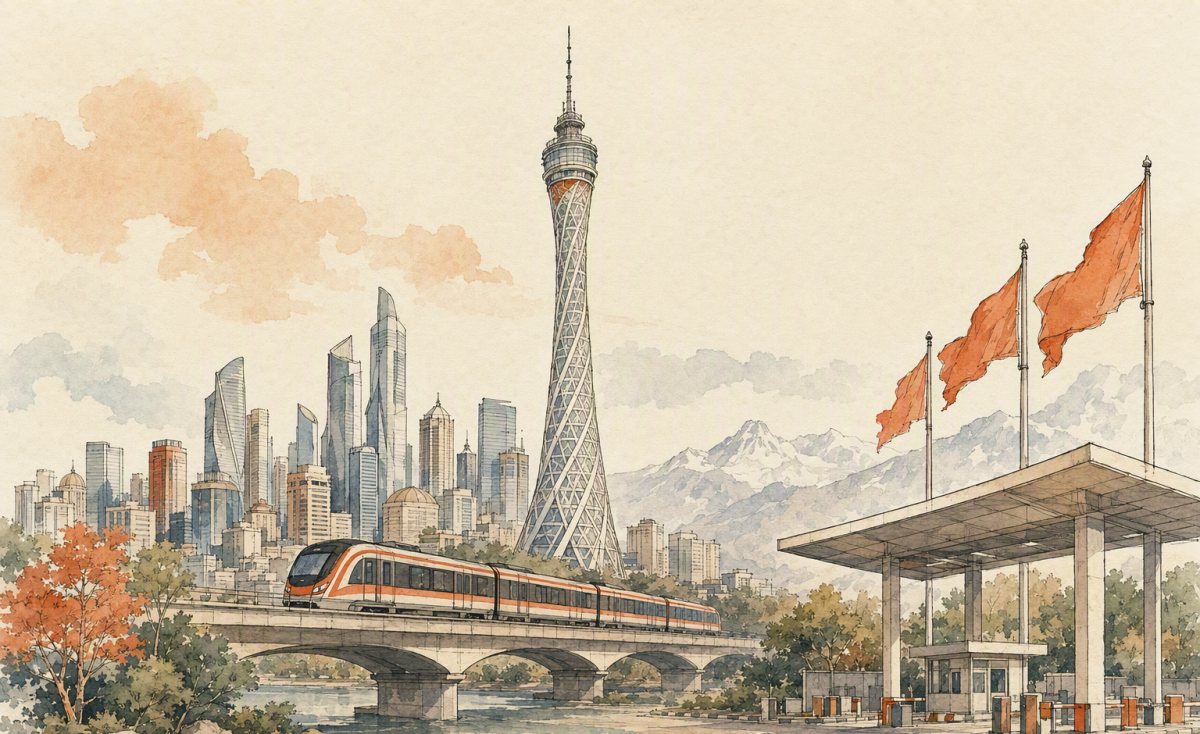
Morning tea at a grand teahouse, Chen Clan Ancestral Hall’s roof sculpture, Shamian Island’s colonial riverfront, Canton Tower after dark. Return on any of the 100+ daily trains.

Zhuhai & Macau (via the HZM Bridge)

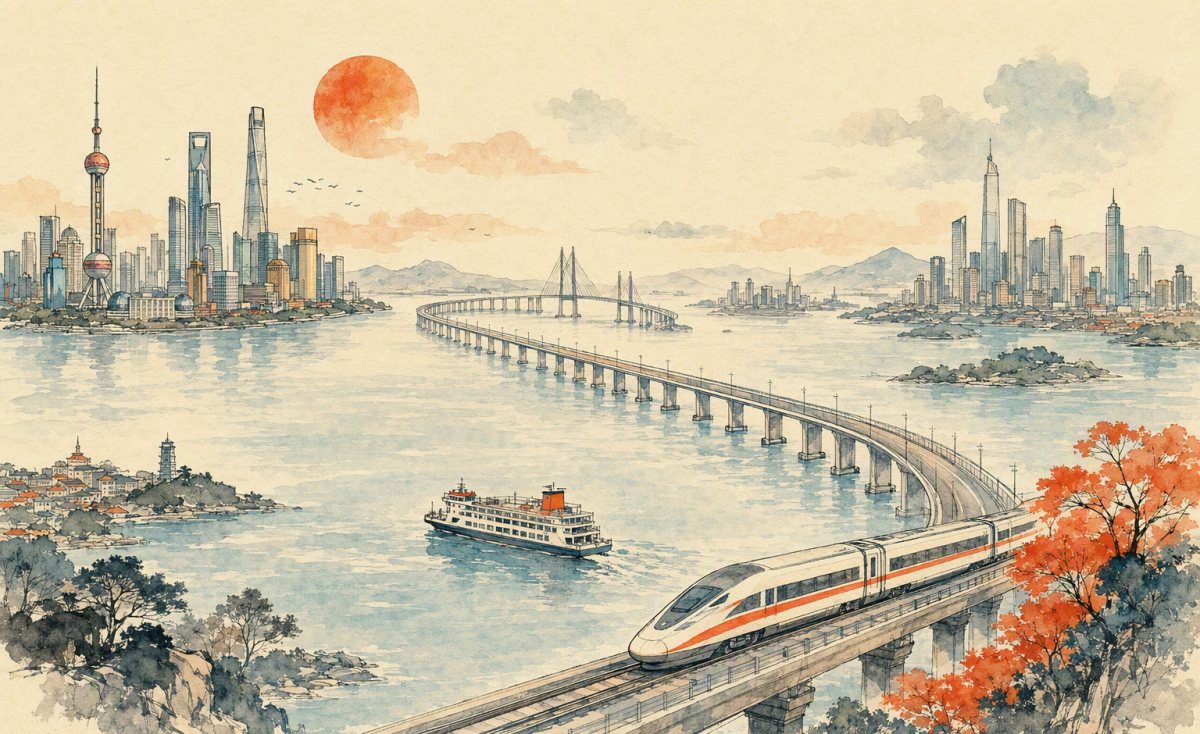
A private car across the 55km Hong Kong–Zhuhai–Macau Bridge is the spectacular way; direct coaches also run. Macau’s old town for egg tarts and the Ruins of St Paul’s, Zhuhai’s Lovers Road for the sunset leg home.

Dongguan & Humen (30 minutes)

The Opium War’s forts and museum at Humen — the history behind Hong Kong’s story — plus outlet shopping in China’s manufacturing heartland.

East Coast Beach Day

Judiaosha and Xichong beaches sit inside Dapeng Peninsula’s parkland an hour east; Xichong faces the surf, Judiaosha the calm. Combine with the ancient Dapeng Fortress.

Wutong Mountain

The city’s own 943m peak — a half-day forest hike with a Shenzhen-to-Hong Kong panorama from the top on clear days.

Plan the Loops

These trips combine into the classic 7-day Greater Bay Area route. Cross-border driving is where a private English-speaking driver earns their fee, and the AI trip planner prices any combination instantly.

Keep reading

Posted on — 1 Comment

Greater Bay Area Itinerary: Shenzhen–Hong Kong–Macau–Zhuhai in 7 Days

Five world-cities, three borders, two currency zones — and the world’s longest sea bridge linking them. The Greater Bay Area loop is China’s most efficient multi-city trip.

Day 1–2: Shenzhen

Ping An tower, OCT-LOFT art district, Dafen painting village, Dameisha beach, Dongmen street food. Base in Futian or Nanshan.

Day 3–4: Hong Kong

15-minute HSR from Shenzhen North/Futian. The Peak, Star Ferry, dim sum, Dragon’s Back hike, Temple Street nights. Octopus card on arrival.

Day 5: Macau

One-hour ferry from Hong Kong (or the HZM Bridge with a private car). UNESCO old town, Ruins of St Paul’s, Taipa food street, one Cotai show. Egg tarts on Coloane.

Day 6: Zhuhai

Walk or drive across the HZM Bridge’s 40 minutes to Zhuhai. Lovers Road coastal ride, Fisher Girl statue, Chimelong Ocean Kingdom if travelling with kids.

Day 7: Guangzhou (or home)

30-minute intercity to Guangzhou for morning tea, Canton Tower and Shamian Island before your flight home from Baiyun or Shenzhen Bao’an.

Border & Money Tips

  • Two visas/mainland entry points needed: HK and Macau are separate immigration from the mainland — plan entries accordingly.
  • Hong Kong dollars in HK/Macau; RMB on the mainland; Alipay/WeChat Pay work across all five cities now.
  • Best weather: October–December. Typhoon season is July–September.

Make It Effortless

Cross-border logistics are the one headache of this loop — solved by private car charter with English-speaking drivers. The AI trip planner prices the full 7-day Bay Area route, hotels and transfers included.

Keep reading

Posted on — Leave a comment

Hefei Travel Guide: Lakes, Science City & Anhui Gateway

Hefei is the quiet overachiever of Chinese cities — a “comprehensive national science centre” that also sits on one of China’s five great freshwater lakes, with an 2,000-year-old water town 40 minutes away. It is the perfect hinge between Huangshan’s mountains and Nanjing’s history.

What to Do

  • Chao Lake: China’s fifth-largest freshwater lake — lakeside boardwalks, Mu Shan island’s temple, and lake-fish banquets (the “big four fish” of Chao).
  • Sanhe Ancient Town: 2,500-year-old water town of stone bridges and Ming-Qing guild halls — genuinely ancient and far quieter than Suzhou’s satellites.
  • Science Island (Science & Technology Museum): the “artificial sun” fusion campus’s public face; the city’s quantum-computing fame explains the research-town buzz.
  • Lord Bao Memorial & Xiaoyaojin Park: the incorruptible Song judge’s shrine plus a classical garden on an ancient battlefield.
  • Emerald Lake & university district: tree-lined campuses and café culture.

Eat Anhui (Hui Cuisine)

Stinky mandarin fish (far tastier than it sounds), Li Hongzhang hotchpotch (the great man’s alleged invention), and Sanhe rice-pudding shrimp.

Why Hefei, Strategically

HSR puts Huangshan 1.5h south, Nanjing 1h east, Shanghai 2h east. The city is the rational base or waypoint for an Anhui loop: Huangshan – Hongcun – Hefei – Nanjing.

When

April–May and September–November; the lake is atmospheric in morning mist year-round.

Plan It

Ask the AI trip planner for an Anhui-loop itinerary with real prices; private car charter links lake, water town and mountains comfortably.

Keep reading

Posted on — Leave a comment

Suzhou Travel Guide 2026: Gardens, Silk & Water Towns

“Up above there is heaven; down below, Suzhou and Hangzhou.” For 1,000 years China’s aristocrats built retirement gardens here — and nine of them are now UNESCO-listed.

The Gardens: Which Ones?

  • Humble Administrator’s Garden: the biggest and most famous — lakes, bridges, borrowed scenery. Go at 7:30 opening.
  • Lingering Garden: the most architectural — famous for its corridor windows framing perfect views.
  • Master of the Nets: the smallest and most ingenious; the night garden performances (spring–autumn) are magic.
  • Lion Grove: the rockery labyrinth that delights children and puzzled Marco Polo’s successors.

Old Suzhou

Pingjiang Road: the canal lane on everyone’s camera — go early or late. Shantang Street: seven-li canal stretch, lantern-lit night cruises. Tiger Hill: the leaning pagoda where the first Suzhou garden was laid 2,500 years ago.

Silk & Museums

The Suzhou Museum (I.M. Pei’s modern-classical masterpiece) is worth the trip alone; the Silk Museum shows the whole caterpillar-to-kimono pipeline, and the No.1 Silk Factory runs live demonstrations.

Water Towns

Within an hour: Tongli (gardens plus canals), Zhouzhuang (the postcard, crowds included), Luzhi (the quiet one).

Practical

25 minutes by HSR from Shanghai — an easy day trip, better overnight. April’s blossoms and October’s gingko are peak; avoid Golden Week at all costs.

Plan It

Slot Suzhou into Shanghai–Hangzhou–Huangshan Jiangnan loops with the AI trip planner; book private car charter for the gardens-to-water-town day.

Keep reading