Posted on — Leave a comment

Hefei Travel Guide: Lakes, Science City & Anhui Gateway

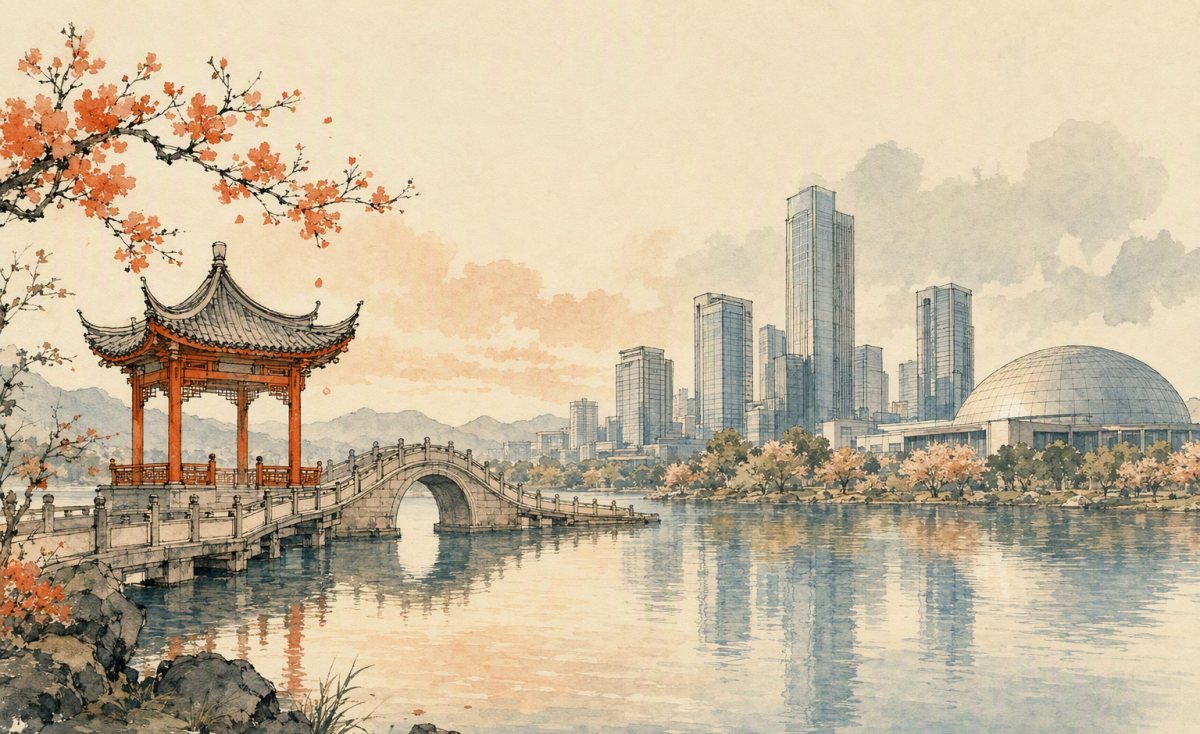
Hefei is the quiet overachiever of Chinese cities — a “comprehensive national science centre” that also sits on one of China’s five great freshwater lakes, with an 2,000-year-old water town 40 minutes away. It is the perfect hinge between Huangshan’s mountains and Nanjing’s history.

What to Do

  • Chao Lake: China’s fifth-largest freshwater lake — lakeside boardwalks, Mu Shan island’s temple, and lake-fish banquets (the “big four fish” of Chao).
  • Sanhe Ancient Town: 2,500-year-old water town of stone bridges and Ming-Qing guild halls — genuinely ancient and far quieter than Suzhou’s satellites.
  • Science Island (Science & Technology Museum): the “artificial sun” fusion campus’s public face; the city’s quantum-computing fame explains the research-town buzz.
  • Lord Bao Memorial & Xiaoyaojin Park: the incorruptible Song judge’s shrine plus a classical garden on an ancient battlefield.
  • Emerald Lake & university district: tree-lined campuses and café culture.

Eat Anhui (Hui Cuisine)

Stinky mandarin fish (far tastier than it sounds), Li Hongzhang hotchpotch (the great man’s alleged invention), and Sanhe rice-pudding shrimp.

Why Hefei, Strategically

HSR puts Huangshan 1.5h south, Nanjing 1h east, Shanghai 2h east. The city is the rational base or waypoint for an Anhui loop: Huangshan – Hongcun – Hefei – Nanjing.

When

April–May and September–November; the lake is atmospheric in morning mist year-round.

Plan It

Ask the AI trip planner for an Anhui-loop itinerary with real prices; private car charter links lake, water town and mountains comfortably.
Keep reading

Posted on — Leave a comment

Suzhou Travel Guide 2026: Gardens, Silk & Water Towns

“Up above there is heaven; down below, Suzhou and Hangzhou.” For 1,000 years China’s aristocrats built retirement gardens here — and nine of them are now UNESCO-listed.

The Gardens: Which Ones?

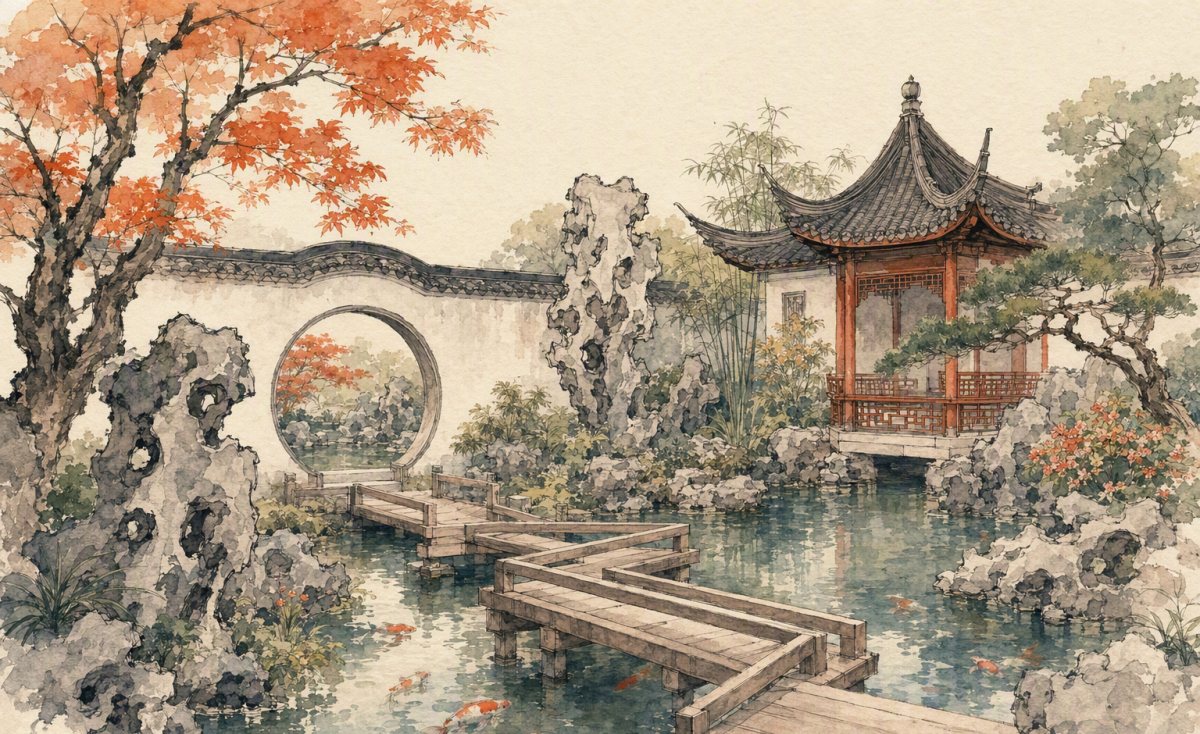
  • Humble Administrator’s Garden: the biggest and most famous — lakes, bridges, borrowed scenery. Go at 7:30 opening.
  • Lingering Garden: the most architectural — famous for its corridor windows framing perfect views.
  • Master of the Nets: the smallest and most ingenious; the night garden performances (spring–autumn) are magic.
  • Lion Grove: the rockery labyrinth that delights children and puzzled Marco Polo’s successors.

Old Suzhou

Pingjiang Road: the canal lane on everyone’s camera — go early or late. Shantang Street: seven-li canal stretch, lantern-lit night cruises. Tiger Hill: the leaning pagoda where the first Suzhou garden was laid 2,500 years ago.

Silk & Museums

The Suzhou Museum (I.M. Pei’s modern-classical masterpiece) is worth the trip alone; the Silk Museum shows the whole caterpillar-to-kimono pipeline, and the No.1 Silk Factory runs live demonstrations.

Water Towns

Within an hour: Tongli (gardens plus canals), Zhouzhuang (the postcard, crowds included), Luzhi (the quiet one).

Practical

25 minutes by HSR from Shanghai — an easy day trip, better overnight. April’s blossoms and October’s gingko are peak; avoid Golden Week at all costs.

Plan It

Slot Suzhou into Shanghai–Hangzhou–Huangshan Jiangnan loops with the AI trip planner; book private car charter for the gardens-to-water-town day.

Keep reading

Posted on — Leave a comment

Tianjin Weekend Guide: A Colonial Port City Break

Half an hour by bullet train from Beijing, Tianjin is China’s most unexpected weekend: concession-era mansions, a river of bridges, crosstalk comedy in every teahouse, and a food scene with strong opinions about dumplings.

The Five Great Avenues (Wudadao)

Two thousand European-style villas from the 1920s-30s, when nine nations ran concessions here. Rent a bike or take a horse-carriage; the lanes are the museum. Old residences of warlords and writers now hold cafés and small museums.

Riverside & Skyline

The Hai River strings Tianjin together: the Tientsin Eye Ferris wheel built on a bridge, the audaciousAstro-clock of the Binhai Library (the “Eye of Babel” book-terraces — one of the planet’s most photographed interiors), and Italian Style Town’s arcaded piazzas at lantern-hour.

Eat & Laugh

  • Goubuli baozi: the 160-year-old soup-dumpling brand — tourists go to the flagship, locals to the branches.
  • Jianbing guozi: the breakfast crêpe Tianjin invented for the world.
  • Erduoyan fried cake and Mahua (twisted dough sticks) from the Ancient Culture Street.
  • Crosstalk (xiangsheng): book a teahouse night — even without Chinese, the rhythm of the comedy is a show.

The Binhai Add-On

The library, the aircraft-carrier theme park and the seaside wetlands make a modern-counterpoint day trip.

When

April–May and September–October. Winter brings freezing river winds but powder-blue skies.

Plan It

Tianjin slots perfectly into a Beijing trip as a two-day branch. The AI trip planner prices combined routes; private car charter covers the avenues-and-library circuit.

Keep reading

Posted on — Leave a comment

Harbin Travel Guide 2026: Ice Festival & Russian Heritage

Every January, Harbin builds a city of ice the size of a theme park, lights it from inside, and invites the world. The rest of the year, Russia’s easternmost-looking Chinese city still charms with onion domes and bread ovens.

Ice & Snow World (冰雪大世界)

The headline event: hundreds of full-scale buildings carved from ice blocks pulled from the Songhua River, illuminated LED-bright from dusk. Opens around late December, peaks through Chinese New Year, melts by late February. Go at 3:30pm — daylight for the slides, then darkness for the glow. The giant ice slides are the joy of it: queue early, ride repeatedly.

More Winter

  • Sun Island snow-sculpture expo: the elegant counterpart to the neon — football-field-sized carvings in white.
  • Songhua River: walk on it, skate on it, ride the ice-sleds.
  • Siberian Tiger Park: safari-bus through the enclosure of the world’s largest cats.
  • Yabuli ski resort: 2.5h away for proper slopes.

The Russian City

St Sophia Cathedral‘s green domes and pigeon clouds; Central Avenue‘s cobblestones lined with Baroque storefronts — eat Madier ice cream outdoors at -20°C like a local; the Old Market (Laodaowai) Chinese-Baroque blocks; Russian restaurants with borscht, red sausage and kvass.

Cold-Weather Kit

-20°C demands: layered down, thermal base, hat/gloves/scarf, warm boots with grip, phone-battery insulation (powerbanks die fast in the cold), and hand-warmers for the ice slides’ queues.

When

Ice season: late December–February. Summer alternative: 22°C cool-city escape, Euro-flavoured beer gardens.

Plan It

Pair Harbin with a Beijing start on HSR (5h) or fly direct. The AI trip planner builds winter Harbin routes; private heated car charter with an English-speaking driver is gold at -20°C.

Keep reading

Posted on — Leave a comment

Changsha Travel Guide: Food, Nightlife & Orange Isle

Changsha is China’s most underrated food city — the birthplace of stinky tofu, the home of Hunan chilli, and possessor of a river-island skyline show that costs nothing.

Eat Changsha

  • Stinky tofu (chou doufu): black-skinned, crisp, doused in chilli — the original at Huogongdian in the old fire-palace building.
  • Changsha crayfish: the summer obsession; whole streets turn red after dark.
  • Rice-noodle breakfasts: soup or dry-fried, with shredded pork and pickles, at corner shops from 6am.
  • Chayan Yuese & Wenheyou: the milk-tea and retro-street brands that went nationwide — both better at the source.

See Changsha

  • Orange Isle (Juzizhou): the 5km river island with the young-Mao statue and weekend firework shows over the river (check schedules).
  • Yuelu Mountain & Academy: thousand-year-old university in a forest; autumn gingko and maple on the summit paths.
  • Hunan Provincial Museum: the 2,100-year-old Mawangdui mummies and silk — one of China’s great museums, free.
  • Taiping Old Street & IFS: Qing-era lane street food colliding with the Kaws-topped luxury mall.
  • Wuyi Square nights: the neon heart of the city’s famously late nightlife.

Practical

Spring and autumn are mildest; summers are famously fiery (the chilli matches). HSR links Changsha to Zhangjiajie (3h), Guangzhou (2.5h) and Wuhan (1.5h) — the city is the natural hub for a Hunan loop.

Plan It

Combine Changsha with Zhangjiajie and Fenghuang on the classic Hunan route. The AI trip planner prices it; private car charter covers the mountain and museum circuit.

Keep reading

Posted on — Leave a comment

Guilin to Yangshuo: Li River Cruise Complete Guide

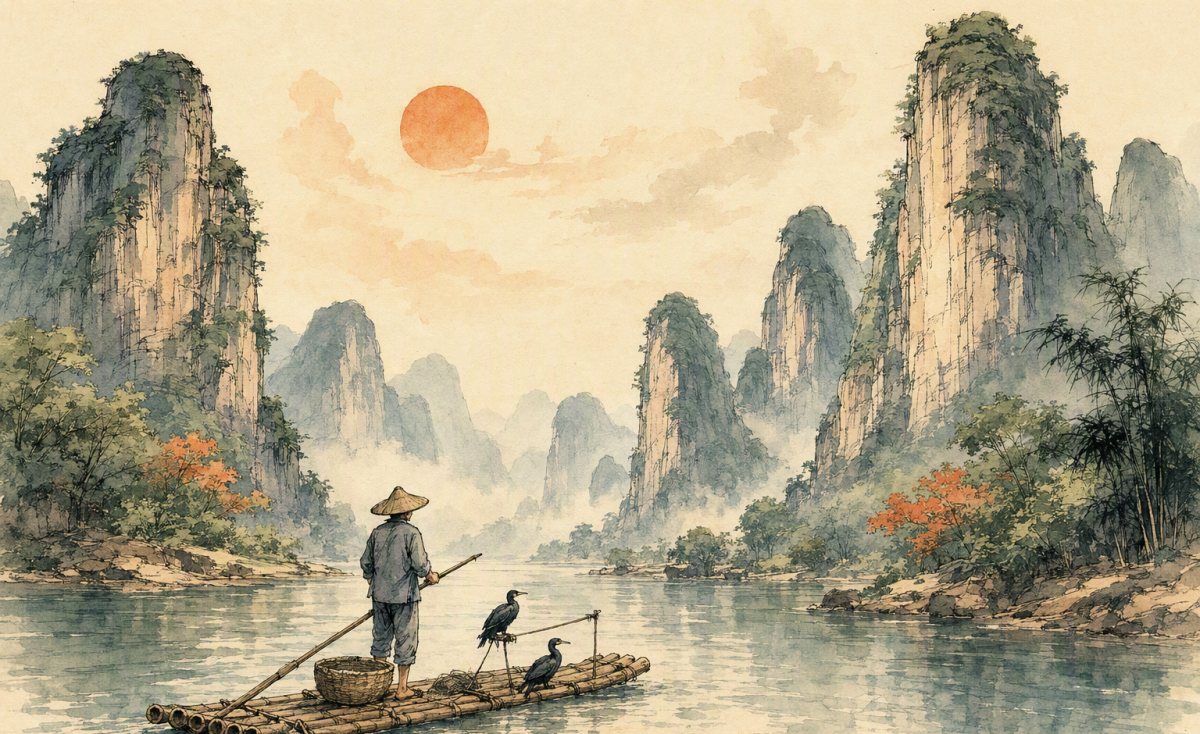
The 83-kilometre Li River between Guilin and Yangshuo is the most photographed waterway on earth. Getting the most out of it comes down to choosing the right boat and the right hours.

Option 1: The Full Cruise (4–4.5h)

Depart Zhujiang Wharf around 9–9:30am; arrive Yangshou by early afternoon. You’ll pass all the signature sights — Nine Horses Fresco Hill, Yellow Cloth Shoal (the ¥20-note view at Xingping) — with lunch on board. Best for comfort and coverage. Downside: midday light is flat for photos.

Option 2: The Bamboo Raft (1.5h)

Raft the Yangdi–Xingping core section — the highest-density scenery of the full cruise. Four-seater motorised bamboo rafts leave on demand; combine with time in Xingping old town. This is the photographer’s and time-poor traveller’s choice.

The Real Photo Spots

  • Xianggong Mountain: above Xingping — 20 minutes up, sunrise above the river’s great bend. Go before 7am.
  • Xingping old town: Ming streets minus Yangshuo’s crowds; the river bank here is the ¥20-note view.
  • Yulong River: pole-propelled rafts through the gentle karst countryside south of Yangshuo.

Practical

Book cruises a day ahead in high season; rafts run 8am–5pm weather permitting. December–February is low, quiet, and occasionally misty-beautiful. Bring a wide-angle and a telephoto — mist layers between peaks are made for compression.

Extend It

Pair the river with Longji terraces and a Yangshuo cycling day. The AI trip planner prices the full Guilin module; private drivers handle Xianggong’s dawn run.

Keep reading

Posted on — Leave a comment

Huangshan Hiking Guide: Routes, Cable Cars & Where to Stay

You don’t need to be a mountaineer for Huangshan — every path is stone-stepped and railed — but route choice decides whether your legs survive day two.

Up: Cable Car or Steps?

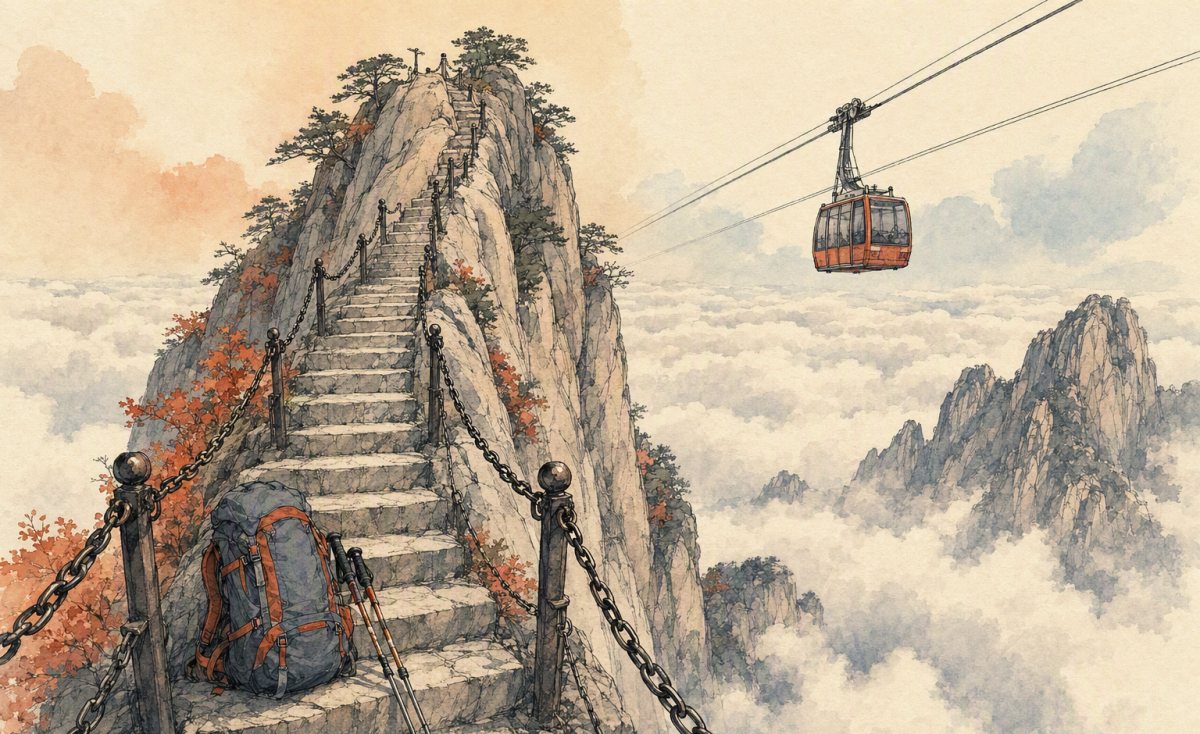
  • Yungu (east) cableway: the standard ascent, 8 minutes to White Goose Ridge near the summit hotels.
  • Jade Screen cableway: lands beside the Guest-Greeting Pine — best for one-day visitors exiting this side.
  • Walking up the east steps: 3 hours, 6km of stairs; only for the proud.

The Two-Day Route (Recommended)

Up by Yungu → Begin-to-Believe Peak → summit hotel check-in → West Sea Grand Canyon (the spectacular slot between the pillars; 2–3h; a sightseeing monorail climbs out of the first section if needed) → sunset from丹xia峰 or Bright Summit. Day 2: sunrise → Flying-Over Rock → Bright Summit → Guest-Greeting Pine → down by Jade Screen.

The One-Day Squeeze

Yungu up, Begin-to-Believe, shuttle across the ridge to Bright Summit, down via Jade Screen past the famous pine. You’ll see the essence, miss the sunrise, and sleep well.

Training & Packing

Walk stairs with a daypack for two weeks before. Pack: layers (summit is 5–8°C colder), headlamp for sunrise, gloves for the chains, snacks (mountain food is expensive — portage is real), and cash-free cards; Alipay works everywhere.

Where to Stay

Summit (Beihai/Shilin/Xihai hotels): basic, pricey, and worth it for sunrise zero-commute. Tangkou: budget base at the gates. Hongcun: the atmospheric village option for before/after.

Plan With Us

Combine the hike with Hongcun and Qiandao Lake — the AI trip planner handles it, and private MPV charter solves the luggage-and-station puzzle.

Before you climb: summit beds and the Tangkou shuttle fill up in peak season — compare private car and driver pricing across China, and read the China SIM and eSIM guide so maps and translation work on the mountain.

Posted on — 1 Comment

Huangshan Travel Guide: Sunrise, Sea of Clouds & Villages

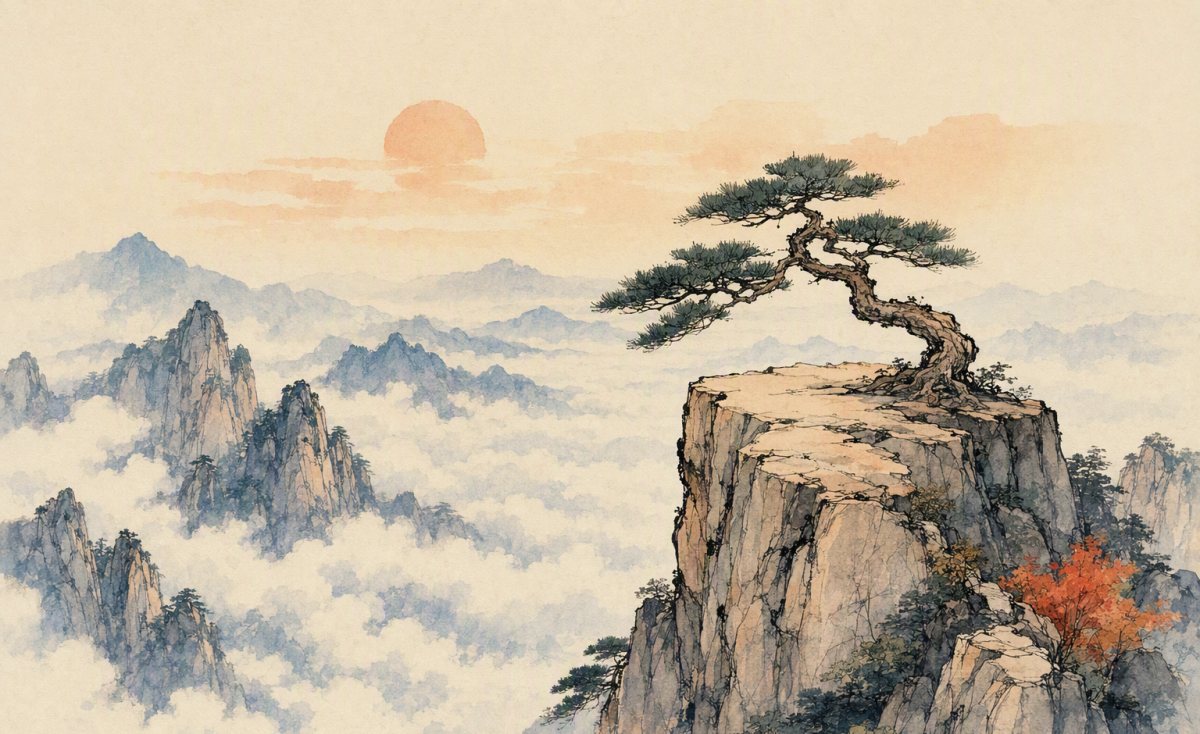
Huangshan is the mountain that defines “Chinese mountain” in a thousand ink paintings — granite spires, weather-beaten pines and seas of cloud. One overnight on the summit is the classic move.

The Classic Route

Day 1: cable car up from Yungu (east) station; hike the Begin-to-Believe Peak and West Sea canyon rim; overnight at a summit hotel (Beihai or Xihai). Day 2: sunrise at Refresh-Fresh/Lion Peak, then Guangmingding (“Bright Summit”), the Flying-Over Rock, and descend via the Jade Screen cable car past the Guest-Greeting Pine.

Sunrise & Cloud Sea

Sunrise from the summit (roughly 5am summer, 6:45am winter — hotels post times). The cloud sea needs recent rain plus clear morning air: June and the days after September fronts are statistically best. Winter brings ice-covered pines and near-solitude.

Logistics

  • Tickets: entry + mandatory cable car (Yungu or Jade Screen). Book with passport.
  • Luggage: leave big bags at Tangkou town; porters deliver to summit hotels.
  • Stay: summit hotels are basic but booked out in peak season; reserve early.
  • Difficulty: stone steps throughout; the West Sea Grand Canyon loop is the demanding highlight.

Add the Villages

Hongcun (the “Crouching Tiger” village with its moon pond) and Xidi — UNESCO-listed Ming/Qing villages an hour’s drive away. Tachuan’s autumn colours are the photographers’ secret next door.

Getting There

HSR to Huangshan North from Shanghai (2.5h) or Hangzhou (1.5h). A private driver links station, mountain and villages in one smooth arc. The AI trip planner prices mountain-plus-village routes instantly.

Keep reading

Posted on — Leave a comment

Zhangjiajie Travel Guide: Glass Bridges & Tianmen Mountain

Zhangjiajie confuses first-timers: three headline attractions, some distance apart, all with “glass” in the marketing. Here’s how they actually compare.

1. National Forest Park (Wulingyuan)

The reason you come. 3,000 sandstone pillars, ticket valid 4 days. The Avatar-scenery loop is Yuanjiajie–Tianzi Mountain via shuttle buses; Golden Whip Stream is the valley-floor walk. This needs two full days minimum.

2. Tianmen Mountain (in the city)

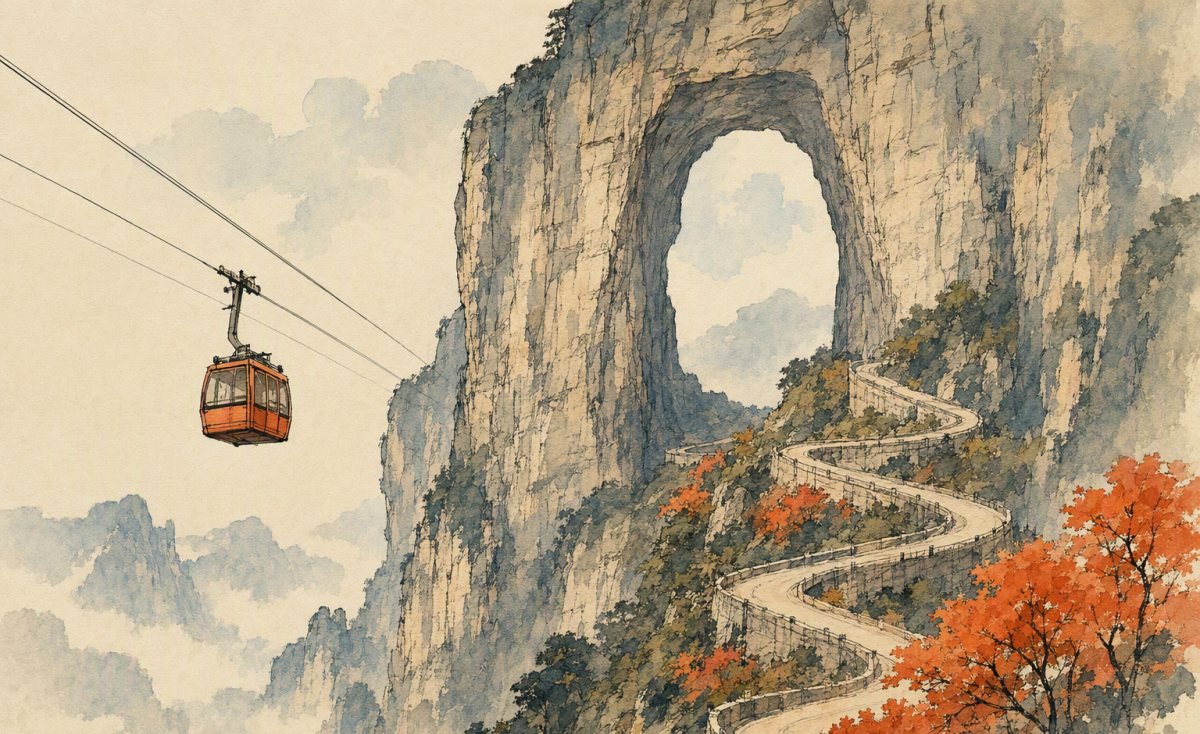
The adrenaline day. World’s longest cableway (7,455m) straight from downtown, cliff walkways bolted to the rock, the 999-step Tianmen Cave arch, and 99 hairpin bends below. One very full day; start when the cable car opens.

3. Grand Canyon & Glass Bridge

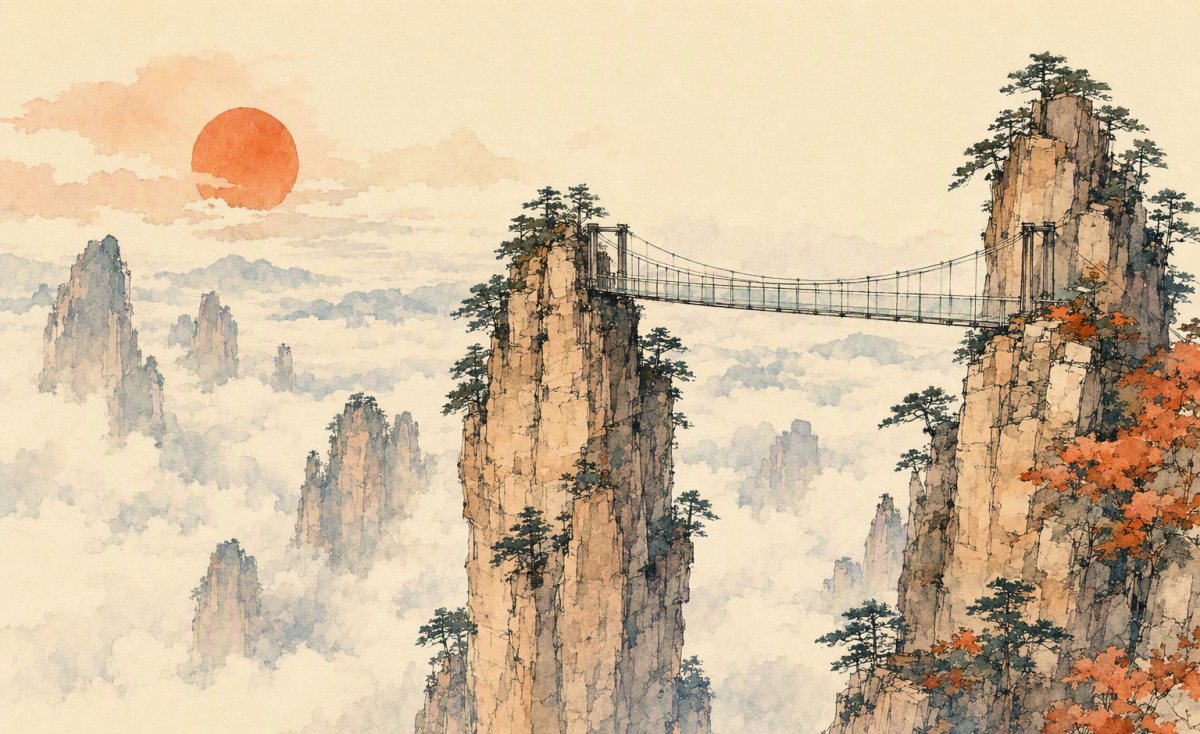
The photo-op. A 430m transparent span 300m above the canyon — 15 minutes of nerves, then a canyon-floor walk with waterfalls. Half a day; combine with the park’s Baofeng Lake.

How Many Days Total?

Day 1–2 park, day 3 Tianmen, day 4 glass bridge/caves or Fenghuang = the perfect four.

Tips That Matter

  • Passport required for all real-name tickets; book peak-season slots days ahead.
  • Mountain-top weather changes fast — pack a layer even in summer.
  • Stay in Wulingyuan for the park, the city for Tianmen.
  • Mist after rain = the best photos; fog = whiteout. Check the webcam, be flexible.

Plan It

The AI trip planner builds Zhangjiajie routes with Chengdu or Guilin add-ons; private drivers make the Fenghuang overnight and park transfers painless.

Keep reading

Posted on — Leave a comment

Zhangjiajie 4-Day Itinerary: Avatar Mountains Complete Guide

Four days is the right number for Zhangjiajie: two in the national park, one for Tianmen Mountain, and one for the glass bridge or Fenghuang old town.

Day 1: Avatar Country

Enter at Wulingyuan gate; ride the Hundred Dragon Elevator (326m cliff lift) up to Yuanjiajie — the sandstone pillars that inspired Avatar’s floating mountains. Boardwalk circuit, then shuttle to Tianzi Mountain for the west-sea stone forest. Overnight Wulingyuan town.

Day 2: Canyons & Streams

Morning: Golden Whip Stream — a flat 2.5-hour riverside walk beneath the towers, monkeys included. Afternoon: Ten-Mile Gallery’s scenic tram, or Baofeng Lake’s quiet boat. If it rained overnight, skip both and re-climb Yuanjiajie for the cloud sea.

Day 3: Tianmen Mountain

The 7,455m cable car from the city, the 99-bend road below, the cliff-hung walkways, and the giant Tianmen Cave arch up 999 steps. The glass skywalk section is optional but unforgettable. Descend in late afternoon light.

Day 4: Glass Bridge or Fenghuang

Option A: the 430m Grand Canyon glass bridge. Option B: Fenghuang Ancient Town, 2.5h away — Tuojiang river lanterns and stilt houses. Option C: Huanglong cave’s vast chambers.

Tickets & Timing

Park entry (4-day pass) excludes lifts/cable cars — budget extra. Real-name booking with passport. April–June and September–November bring the best mist-to-view ratio; winter offers snow-dusted pillars and no queues.

Getting There & Around

Fly to Zhangjiajie or take HSR to Zhangjiajie West. Inside the park, shuttle buses connect everything — but a private MPV with driver transforms the Fenghuang and cave days. The AI trip planner prices 4-day Zhangjiajie routes instantly.

Keep reading