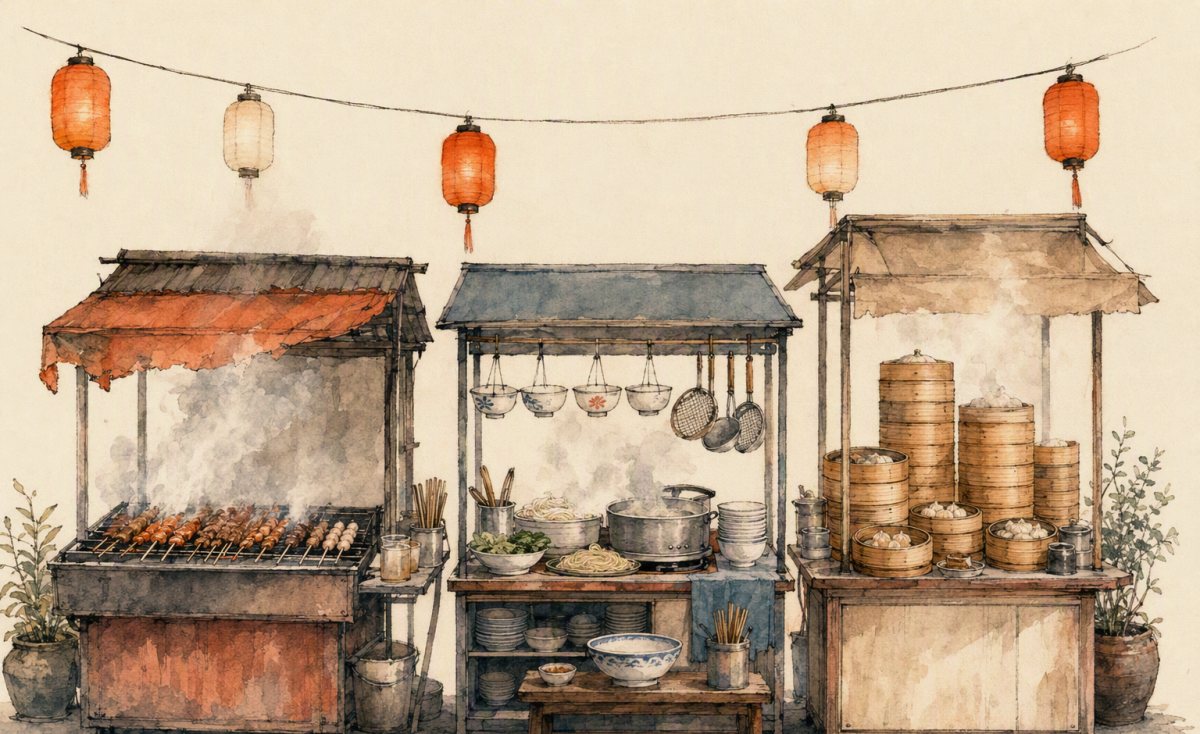
Most first trips to China treat food as a side dish to the sights. A food-focused trip inverts that: the cities are chosen because of what is cooked in them, and the day is built around markets, mealtimes and kitchens rather than around monuments. Three cities carry most of the weight. Chengdu, recognised by UNESCO as a city of gastronomy, is the capital of Sichuan pepper and chilli heat. Xi’an is where Silk Road wheat traditions produced some of the country’s most distinctive noodles and breads. Guangzhou is the birthplace of the Cantonese morning tea ritual, dim sum included. This guide covers what each city is actually known for, how to shape a short itinerary, how to judge a street stall, and what to verify before you commit money.
What each city is actually known for
Chengdu’s reputation rests on a specific flavour profile rather than on heat alone: the numbing quality of Sichuan peppercorn working alongside chilli. Hotpot, mapo tofu and dan dan noodles are the obvious entry points, but the wider point is the city’s density of small, specialist kitchens and its long-standing formal recognition as a gastronomic centre. If you want the food context alongside the rest of the city, our Chengdu city guide sets out the practical layout.
Xi’an sits at the eastern end of the old Silk Road, and its food reflects centuries of wheat rather than rice: hand-pulled and belt-width noodles, stuffed flatbreads, and lamb dishes from the city’s Muslim Quarter. The Xi’an city guide covers how the Muslim Quarter fits into a wider visit. Guangzhou is the reference point for Cantonese cooking, and its morning tea houses are institutions rather than tourist attractions; dim sum here is a breakfast habit, not a dinner show.
Three itinerary shapes
These are structures, not fixed packages. Treat the day counts as minimums and add time for travel between cities.
Chengdu, three days. One day for a cooking class that begins with a market visit, so you learn what the ingredients look like before you cook them. One day for a spice market and a slow walk through an older neighbourhood. One evening for a hotpot meal, ideally with someone who can order for you. If pandas are on your list, the realistic day at the Panda Base explains why that trip needs its own morning.
Xi’an, two days. One day in the Muslim Quarter, eating in small portions across many stalls rather than committing to one large meal. One half-day for a noodle-making session, which is the most transferable skill you can take home from the city.
Guangzhou, two days. One morning for morning tea, taken slowly and properly. One day for an old-town food walk that moves between snack-sized stops. Our Guangzhou street food guide lists specific bites to look for.
How to judge a street stall
The useful signals are operational, not decorative. A queue that keeps moving suggests turnover, and turnover suggests food that has not been sitting. Watch the cooking happen in front of you rather than accepting something pre-plated from a tray. Look at whether locals are eating standing up and leaving quickly; that is a working stall, not a staged one. Stalls that have survived decades in the same spot usually have a reason, and it is rarely marketing.
Communication is the other half. “Not too spicy” and “no MSG” are simple requests, but they only work if the person taking them understands what you actually want. Learn the two or three phrases you need, or travel with someone who can order on your behalf. Neither approach is wrong.
Cooking classes and what to take home
A half-day class that includes market shopping and four dishes is the most durable souvenir available in China: you keep using it after the trip ends. Chengdu and Shanghai both have well-established options, and classes can usually be arranged as part of a food-themed itinerary. Verify what is included before booking — specifically whether market shopping, ingredients, and transport to the class are covered, and whether the class is taught in a language you follow.
Practical verification before you book
Prices, class schedules, tour inclusions and restaurant opening hours change. Rather than relying on any figure you read online, check the operator’s own booking page and look for the specific line items: what the fee covers, the cancellation terms, the meeting point, and the language of instruction. For restaurants, check the current listing on a map app shortly before you go.
Two broader planning points matter for a food trip. First, payment: many stalls and small restaurants work on QR payment rather than cash or foreign cards, so read our cashless travel guide before you fly. Second, transport between cities: high-speed rail makes a Chengdu–Xi’an–Guangzhou sequence feasible, and the train travel guide covers ticketing with a foreign passport. Visa eligibility depends on your nationality and route, so confirm current rules on an official government source rather than a blog.
Frequently asked questions
How many days do I need for a food-focused trip to China?
Two days per city is a workable minimum for Chengdu, Xi’an or Guangzhou, but that assumes you are already there and not spending a day in transit. A three-city trip with travel days realistically needs eight to ten days. Adding a fourth city usually means cutting depth rather than adding it.
Do I need to speak Chinese to eat well?
No, but you need a strategy. Picture menus, translation apps and pointing at what someone else is eating cover most situations. For anything involving dietary restrictions or specific requests, having a written phrase in Chinese, or a guide who can order, removes most of the risk.
Are cooking classes worth it?
If you cook at home, yes — a class that starts in a market teaches you what to buy as well as how to cook it. Check the class size, the language, and whether ingredients and market time are included before you pay.
Is street food safe to eat?
Judgement matters more than blanket rules. Busy stalls with visible cooking and fast turnover are the safer bet. Avoid anything that has clearly been sitting out, and be cautious with raw items in warm weather.
When is the best time to go?
Spring and autumn are the most comfortable for walking between stalls and markets. Summer heat in Chengdu and Guangzhou makes long food walks harder, and major public holidays affect which stalls are open. Check a festival and weather calendar for your specific dates.
Build the trip around two or three cities rather than five, verify every price and schedule on the operator’s own page, and leave room for a meal you did not plan. That is the difference between eating in China and travelling for its food.