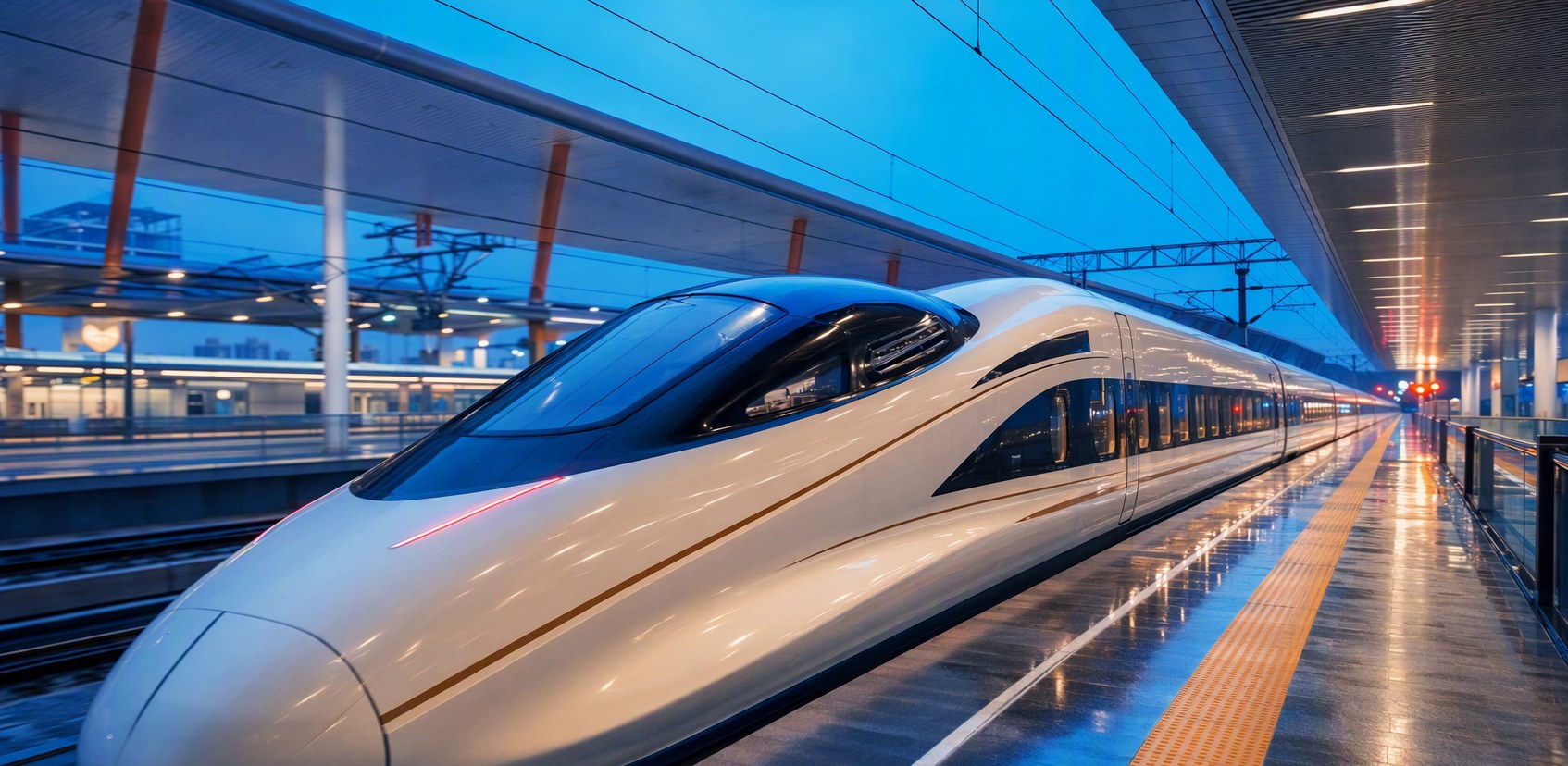
China’s high-speed rail network is the part of the trip most foreign visitors worry about beforehand and enjoy most once they are on it. The trains are fast, punctual and straightforward once you understand three things: how to book with a passport, how station procedures differ from an airport, and which class is worth paying for on your route. This guide covers each of those in turn, and flags the points where you should confirm current details with the operator rather than rely on any article, including this one.
What the high-speed network actually covers
The high-speed network (branded G-series for the fastest trains, D-series for slightly slower ones) links most major tourist cities. Typical journeys include Beijing to Shanghai, Beijing to Xi’an, Shanghai to Hangzhou, and Guangzhou to Hong Kong, all of which are measured in hours rather than days. City-centre to city-centre, rail usually beats flying once you count the time spent getting to a remote airport and clearing security twice.
Speeds on the flagship lines reach the 300–350 km/h range. Trains run to a strict timetable and depart on time, so treat the printed departure time as final. For a fuller picture of routes and how rail fits alongside buses, ferries and metros, see this China High-Speed Rail Guide 2026.
Your passport is your ticket
There is no separate paper ticket for foreign passengers in most cases. You book against your passport number, and at the station you tap or present the passport itself at the gate. Staff may also ask to see the passport on board, so keep it accessible rather than buried in a suitcase.
Two booking routes dominate. The official 12306 platform is the railway’s own channel; it now supports foreign passports, though the interface and verification steps can be fiddly. Third-party English-language agents charge a small service fee for a smoother booking flow and English support. Whichever you use, check the exact name and passport number character by character — a mismatch can stop you boarding. A step-by-step walkthrough of the official channel is here: How to Book Train Tickets in China: 12306 Step by Step.
Seat classes and how to choose
On most high-speed trains you will see three main options. Second class is a 3+2 layout and is perfectly comfortable for journeys of a few hours. First class is 2+2 with more legroom and wider seats. Business class is the premium tier, with lie-flat or near-flat seating on some trains, and is priced accordingly.
Rather than quote fares here — they vary by route, train and how far ahead you book — check the live price on 12306 or your booking agent for your specific date. As a rule of thumb, first class costs noticeably more than second, and business class more again. All classes have power outlets, tray tables and toilets; the difference is space and, on some services, quieter carriages. Seat layouts and onboard food vary by train type, which is covered in this guide to China high-speed rail seat classes and onboard food.
Luggage, security and station timing
High-speed trains have a published luggage allowance per passenger, commonly cited around 20 kg, but in practice large bags are rarely weighed. Suitcases go either in overhead racks (on some carriages) or in luggage zones at the ends of each car. Arrive early enough to stow bags without rushing.
Stations have airport-style security: bags through a scanner, you through a metal detector, and liquids are generally fine (unlike at airports). The main time cost is the size of the station and the queue, not the screening itself. Confirm the recommended arrival buffer for your specific station on the day, as it varies with station size and time of day.
Finding your train in a very large station
Chinese rail stations are enormous, and this is where first-timers lose time. Your ticket or booking confirmation shows a waiting area or gate reference. Follow the green English signage to that area, then watch the departure boards for your train number and platform. Boarding gates typically open a short window before departure and close before the train leaves, so do not drift.
If you have booked a private transfer, a driver can meet you inside the arrivals hall with your name and train details — useful when you are arriving in an unfamiliar city late at night. If you are navigating independently, the metro is often the cheapest way onward; our China metro guide explains ticketing and payment.
Practical points before you travel
Book popular routes and holiday-period trains as early as the sales window allows; seats on key lines do sell out. Bring your passport, not a photocopy. Keep a screenshot of your booking in case mobile data is unreliable. If you are combining rail with a visa-free transit entry, check that your route and timing meet the rules on the official immigration page rather than assuming — the 240-hour visa-free transit guide explains the structure, but always verify current conditions with the authorities.
Frequently asked questions
Can I board a Chinese high-speed train with just my passport?
In most cases yes — the passport used at booking acts as your ticket at the gate. Carry the same passport you booked with, and be ready to show it on board if asked.
Is 12306 available in English for foreign passports?
The official platform has added support for foreign documents, but the experience changes over time. Check the current registration and verification steps on the official app or site before relying on it, and keep a backup booking option.
How much luggage can I take on a high-speed train?
There is a published allowance, often quoted around 20 kg per passenger, but enforcement is inconsistent. Check the current rule on the operator’s page and pack so you can lift your own bag onto a rack.
How early should I arrive at the station?
Allow extra time at large stations for security queues and finding your waiting area. The exact buffer varies by station and time of day, so check guidance for your specific departure rather than a fixed number.
Do I need to print my ticket?
Usually not, since the passport serves as the ticket. A screenshot of the booking reference is still useful if you need to show staff your train details.
High-speed rail is one of the easiest parts of travelling in China once the passport-as-ticket system clicks. Book early, arrive with buffer time, follow the English signage, and confirm anything time-sensitive — fares, allowances, boarding windows — on the official operator page before you travel.