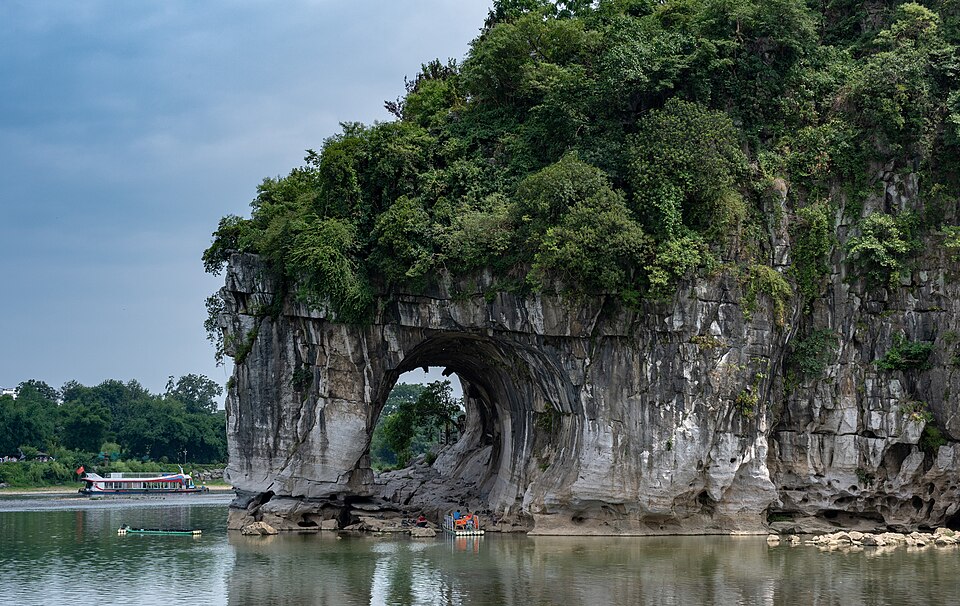
Guilin and Zhangjiajie are both UNESCO-listed karst landscapes in southern China, and travellers routinely treat them as interchangeable. They are not. Guilin and Yangshuo offer a horizontal landscape: a slow river winding between rounded limestone peaks, with villages, rice fields and flat cycling routes between them. Zhangjiajie offers a vertical one: sandstone pillars rising hundreds of metres from the valley floor, seen from cable cars, cliff-edge walkways and long staircases. The rock is different, the geology is different, and the trip you actually take is different. This guide sets out how to choose, and how to do both if you have the time.
What each place actually is
Guilin is a mid-sized city and the gateway to the Li River, which runs south to Yangshuo. The classic experience is the river itself: a cruise or a smaller bamboo raft through the most photographed stretch, then a few days based in Yangshuo, where the terrain is flat enough to cycle between villages, and where climbing, cooking classes and riverside cafés fill the evenings. The landscape is green, humid and agricultural. You are rarely far from a road or a village.
Zhangjiajie is a prefecture in Hunan province built around Zhangjiajie National Forest Park, part of the wider Wulingyuan scenic area. The signature sight is the dense forest of narrow quartz-sandstone pillars, viewed from viewing platforms, cable cars and the cliff-hugging walkways. It is a hiking destination with a large internal shuttle network and several separate entrances. Distances inside the park are long, and vertical gain is constant. For the river experience itself, see our Li River Cruise: A Complete Guide.
Which one suits you
Choose Guilin and Yangshuo if you want a relaxed pace, photography that does not require climbing, river time, and easy access to food and cafés. It works well for families with small children, for anyone with limited mobility, and for travellers who prefer two or three bases rather than a single large park.
Choose Zhangjiajie if you want full days of walking, dramatic vertical views, cable cars and the slightly unnerving sensation of standing on a glass platform above a gorge. It suits teenagers, hikers and anyone who does not mind queuing for shuttle buses and cable cars in high season.
Both are genuinely busy in Chinese public holidays. If your dates are flexible, check the Chinese public holiday calendar before committing, and read our notes on booking attractions in China, because several sites in both regions now use timed or advance reservations.
Terrain, effort and time needed
Guilin and Yangshuo reward two to three days. A typical shape is one day for the river, one day cycling and one day for a side trip or a cooking class. You can see a great deal without ever climbing anything steep.
Zhangjiajie needs three to four full days to be worth the trip. The park is spread across multiple areas, each reached by shuttle, and the walking is genuinely strenuous: thousands of steps, steep descents and long days on your feet. Build in a rest day or a lighter day if you are not a regular hiker. Attempting Zhangjiajie in two days means spending much of it in transit queues.
Getting there and getting around
Both regions have their own airports and high-speed rail stations, and both are reachable from major hubs. Guilin’s terrain is flat and its towns are compact, so taxis, ride-hailing and bicycles cover most needs. Yangshuo is small enough to walk, and bike hire is widely available.
Zhangjiajie’s logistics are heavier. Expect multiple park gates, an internal shuttle system, separate cable cars and lifts, and a need to plan which entrance you use each morning. Verify current gate arrangements, shuttle routes, cable car operating status and ticket validity on the park’s official channels before you travel, as these change with maintenance and season. For rail booking, our step-by-step 12306 guide covers the official app and passport registration.
Combining both in one trip
Guilin and Zhangjiajie combine well because they sit in the same broad southern band and are linked by high-speed rail and by short flights. A workable shape is six to seven days: two to three days in Guilin and Yangshuo, a travel day, then three to four days in Zhangjiajie. Doing it in the reverse order works equally well.
Check current timetables and journey times on the official rail booking channel rather than relying on older schedules, and confirm whether a direct service or a connection via a larger hub suits your dates. If you are building the route yourself, our piece on using AI for a China itinerary explains how to sanity-check a plan without trusting invented opening hours.
Practical notes before you go
Both regions are humid and wet for much of the year. Rain is common, paths and steps get slippery, and cloud can hide the views entirely at Zhangjiajie. Pack accordingly and treat any summit view as weather-dependent rather than guaranteed.
Mobile payment is the norm in both places; carry a working payment setup and a small amount of cash as backup. Read our cashless travel guide before you fly. If you are travelling on a visa-free transit arrangement, check the current conditions on the official immigration channels rather than assuming eligibility, and confirm your arrival and departure routing carefully.
Frequently asked questions
Can I visit both Guilin and Zhangjiajie in one week?
Yes, in a compressed way. Six to seven days allows roughly two to three days in Guilin and Yangshuo and three to four in Zhangjiajie, with one travel day between them. It is a full schedule rather than a relaxed one, and any delay in the park will eat into your time.
Is Zhangjiajie suitable for young children or older travellers?
It is harder than Guilin. The park involves long shuttle rides, many steps and steep sections, and queues for cable cars. Guilin and Yangshuo are far more forgiving, with flat cycling, boat trips and short walks. If mobility is a concern, base yourself in Guilin or Yangshuo.
Do I need to book tickets in advance?
Increasingly, yes, particularly for major sites and for travel during Chinese public holidays. Reservation requirements, entry slots and passport rules change, so check the official site or the park’s own booking channel for the specific dates you plan to visit rather than relying on a third-party summary.
How do I get between Guilin and Zhangjiajie?
By high-speed rail or by short flight. Timetables and journey times change with the season and with network upgrades, so confirm current options and departure times on the official rail booking app or with the airline directly before fixing your itinerary.
Which is better in the rain?
Guilin handles wet weather more gracefully. River trips may be affected by water levels, but the towns, cafés and cycling routes still function. In Zhangjiajie, heavy cloud can obscure the pillars completely, and wet stone steps make the walking genuinely hazardous. Build flexibility into any Zhangjiajie plan.
Treat Guilin and Zhangjiajie as two different trips that happen to share a rock type. Pick the one that matches your energy level and the number of days you actually have, and if you want both, give the route enough time to breathe rather than squeezing it into a long weekend.