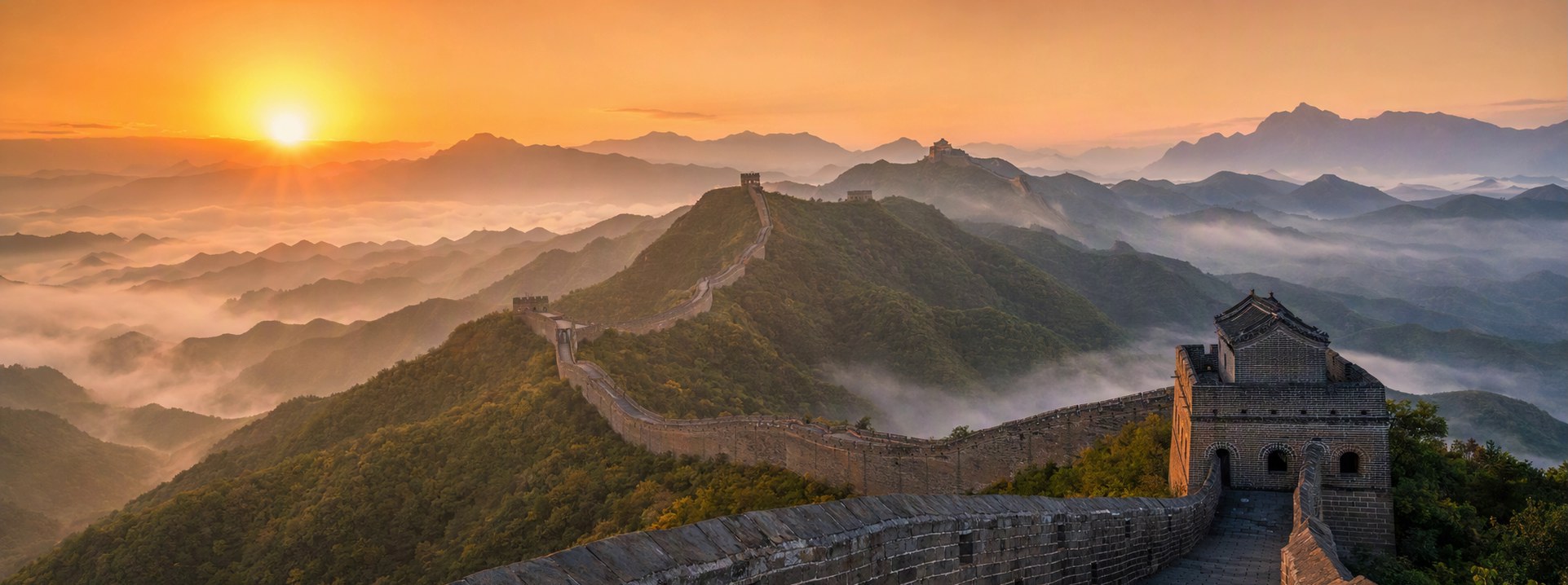
Social media has changed how people choose where to go in China. A single image of mist on the Li River or lanterns in a water town can decide an entire itinerary. This page keeps the same idea as the original list — a saveable, shareable set of China’s most photographed spots — but adds what a list of names cannot give you: where the shot is actually taken from, when the light tends to work, and what to verify before you build a trip around it. Treat the locations below as starting points, not fixed itineraries. Conditions, access and opening arrangements change, so confirm each one on the official site or operator page before you travel.
How to use this list
Each entry names a place and the kind of image people travel for. What it does not do is promise a result. Weather, season, crowd levels and site rules all shape what you get, and no list can guarantee a sea of clouds or a clear sunrise. Before committing, check three things: whether the site needs a reservation, whether photography is restricted anywhere on site, and whether the viewpoint you want is open on your dates. Many major attractions in China now use timed online booking, and some sell out days ahead — our guide to attraction reservations for foreigners explains which ones genuinely require it and how the passport-based booking works.
The classic ten
The Great Wall at Mutianyu, the Li River at Xingping (the view printed on the 20-yuan note), Zhangjiajie after rain, the Shanghai Bund at blue hour, the Longji terraces, the Potala Palace reflected in its pond, bamboo rafts on the Yulong River, Five Flower Lake in Jiuzhaigou, Harbin’s ice structures at night, and West Lake at dawn. These are the images most people arrive with. Two practical notes: the Potala Palace sits in Lhasa and requires permits for foreign visitors, so read our Tibet travel guide before assuming you can simply turn up. For the Li River, the classic scenery is best understood through how the cruise and the Xingping section actually work — see the Li River cruise guide.
Spots eleven to twenty
The Xi’an City Wall by bicycle in late afternoon, the Tianmen steps seen from above, the replica caves at Mogao, the Yuanyang terraces at sunset, the panda nursery in Chengdu, Gulangyu’s piano pier in Xiamen, Chongqing’s neon skyline from the monorail, Wuzhen’s lanterns after dark, the Kaiping diaolou towers, and the Shenzhen skyline from Talent Park. Several of these depend on timing rather than luck. Panda births cluster in late summer and early autumn, and the base is busiest in the morning — our Chengdu panda base guide sets out a realistic day. For Chongqing, the metro itself is part of the shot; the Chongqing city guide covers which lines and stations give you the angles.
The less-obvious ten
Rafting through the tea cliffs at Wuyishan, the wild wall at Jianshanling in the morning, doorways in Kashgar’s old city, lantern-lit lanes in Pingyao, the drum towers of Zhaoxing, autumn birch at Kanas, the mirror surface at Chaka Salt Lake, the red soil of Dongchuan, the lanes of Xidi, and the prayer-wheel corridor at Labrang. These reward slower travel and often need a car and driver, since public transport to the exact viewpoint is limited. Distances are long and daylight is finite, so plan fewer stops than you think you need.
Timing, light and season
Most of the shots above are light-dependent. Mist, reflections and golden hours happen in specific windows, and the wrong month gives you a flat, hazy result. Rather than quoting hours that change with the season, check sunrise and sunset times for your exact dates and location, then work backwards to travel and entry time. Season matters more than most people expect: autumn colour, spring terrace flooding and winter ice all follow their own calendars. Our October and November guides show how much conditions shift from one month to the next.
Getting between the spots
These locations are spread across the country, so the practical question is transport, not inspiration. High-speed rail covers the major cities well; the last stretch to a viewpoint is usually a car, a shuttle or a walk. Book rail seats through the official 12306 channel or an agent, and check seat classes before you assume a layout — our high-speed rail seat class guide explains the difference. For booking itself, the 12306 step-by-step guide covers passport registration and collection. Where rail does not reach, a chartered car with a driver who knows the area is often the only realistic option for a sunrise start.
Frequently asked questions
Do I need to book these attractions in advance?
Some do, and the requirement changes. Major sites such as the Forbidden City and several popular scenic areas use timed online reservation, sometimes released on a set schedule and capped per day. Check the official site or the site’s own booking channel for your date, and note whether foreign passports can book online or need an in-person counter. Our reservations guide covers which attractions actually need it.
Can I photograph everywhere on these sites?
Not always. Some halls, museums and religious sites restrict photography or ban tripods and drones. Rules are posted at entrances and enforced by staff. Check the site’s official notice before you plan a shoot around a specific interior, and never assume a shot you have seen online is currently permitted.
What is the best time of day for these shots?
It depends on the location and the season, so there is no single answer. Sunrise and the hour before sunset usually give the most useful light, while mist and reflections need specific weather. Look up sunrise and sunset for your exact dates, then confirm when the site opens and when the last entry is.
How do I pay for tickets and transport once I am there?
Mobile payment dominates in China, and foreign cards can often be linked to the main apps, though success varies by bank and card type. Carry a small amount of cash as a backup and check your card’s status before you fly. Our cashless travel guide walks through the setup.
Do I need a visa or permit for all of these?
Entry rules depend on your nationality and route, and some regions need extra permits on top of a visa. Tibet in particular requires organised arrangements for foreign visitors. Check the current rules on an official source and confirm any regional permit before booking, rather than relying on a list.
Use this page to shortlist, then verify each place against its official channel and build in slack for weather and travel time. A photo trip works best when the plan is flexible and the bookings are confirmed.
hello