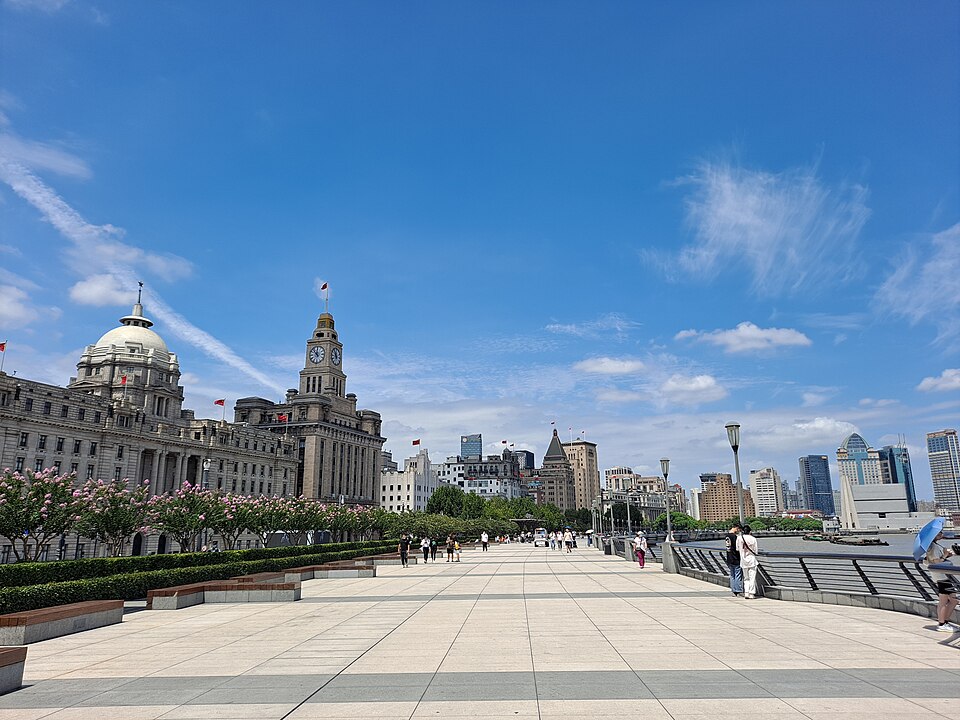
Three days in Shanghai is enough to see the headline sights without spending the whole trip in transit, provided you accept one truth: the city is large, and crossing it takes longer than the map suggests. This itinerary keeps one anchor sight per half-day, groups districts sensibly, and leaves room for meals that are worth the detour rather than whatever is nearest the exit gate. It suits first-time visitors, short stopovers on a visa-free transit, and anyone building a longer China route who wants a workable Shanghai core.
Day 1: The Bund, the River and the French Concession
Start on the Bund in the morning, when the promenade is walkable and the light on the Pudong skyline is still soft. The colonial waterfront buildings face the towers across the Huangpu, and the contrast is the point. Walk the full stretch rather than stopping at the first photo spot.
In the afternoon, move inland to the former French Concession. This is plane-tree territory: quiet avenues, art-deco villas, small galleries and cafés. It rewards wandering rather than ticking off addresses. If you want specific food stops, our Shanghai street food guide covers what to eat and where the locals actually queue.
Finish with a Huangpu night cruise. Sailings run from several piers and the experience varies by operator, so check the departure pier, duration and whether the ticket includes an upper deck before booking. Verify current schedules and prices on the operator’s own page — these change seasonally.
Day 2: Yu Garden, the Old Town and Zhujiajiao
Yu Garden and the surrounding Old Town bazaar work best at opening time. The Ming-era rock garden is compact, and by mid-morning the lanes outside fill up. Buy garden entry on the official ticketing channel and check the day’s opening hours there, as they differ by season.
After lunch, head to Zhujiajiao, a canal water town roughly an hour from central Shanghai. The boat ride is the reason to go; the lanes themselves are commercial but pleasant. Confirm boat operating times and any combined ticket on the site’s official page rather than a reseller listing, and check the last return transport of the day before you commit to a late afternoon.
If you would rather not manage the return leg yourself, a private car removes the guesswork. Otherwise, Shanghai’s metro reaches the outer districts efficiently — see our China metro guide for how ticketing and transfers work.
Day 3: Pudong, the Observation Deck and a Proper Dinner
Give the morning to Pudong. Shanghai Tower’s observation deck is the headline, but Lujiazui has several towers with viewing floors, and the best choice depends on what you want to see — the Bund from above, or the towers themselves. Check each tower’s official site for current opening hours, last admission and whether timed entry applies. Do not rely on third-party listings for this.
Spend the afternoon on whatever you skipped: the Shanghai Museum, a riverside walk, or simply slower neighbourhood time. End with xiaolongbao. Soup dumplings are the city’s signature dish, and the well-known institutions are busy — go early or expect a wait.
Pacing and Getting Around
One anchor sight per half-day is the sweet spot. Two major sights plus a cross-city transfer is where three-day trips start to feel like a job. Group by district: Bund and French Concession together, Old Town and a water town together, Pudong on its own day.
The metro is fast and cheap but involves walking and stairs. Taxis and ride-hailing are easier for door-to-door trips, though peak-hour traffic in the tunnels is real. A private car with a driver makes sense if your group is three or more, or if you are combining Shanghai with a wider route. For airport arrivals and transfers, see our China airport transfers guide.
Before you fly, sort the practical layer: payments, mobile data and any visa or transit paperwork. Our first-time in China checklist covers the items that cause the most trouble at the airport.
When to Go
Spring (March to May) and autumn (September to November) give the best balance of weather and crowds. Summer is hot and humid; winter is cold and grey but quiet and cheap.
Avoid Chinese national holidays, when domestic travel surges and transport and hotels tighten sharply. Check the exact dates for the year you travel, as the lunar calendar shifts the Spring Festival period annually. Our month-by-month festival and weather calendar is a useful cross-check before you fix dates.
Booking and Customising
If you want this itinerary handled end to end, ready-made multi-day packages bundle hotels, guides and tickets, and can work out cheaper than booking each piece separately. If you prefer to build your own, an AI planner is useful for sequencing and rough timing but unreliable on opening hours and ticket rules — treat its output as a draft and verify anything time-critical on the official page. We explain where that breaks down in our guide to using AI for a China itinerary without invented opening hours.
Frequently asked questions
Is three days enough for Shanghai?
Yes, for the core sights: the Bund, the French Concession, Yu Garden, one water town and Pudong. It is not enough to add Hangzhou or Suzhou comfortably as day trips without cutting something. If you have four or five days, add one of those instead of squeezing it into three.
Do I need to book attractions in advance?
For the major observation decks and popular gardens, booking ahead is sensible in peak season, and some venues use timed entry. Check the official ticketing page for the specific site, since rules and release windows change. Do not assume a reseller listing reflects current policy.
Can I visit Shanghai on a visa-free transit?
Shanghai is one of the entry points covered by China’s transit visa-free arrangements, but eligibility depends on your nationality, your onward destination and your route. Verify your specific case against the current official rules before booking anything non-refundable — our 240-hour visa-free transit checklist walks through what to confirm.
How do I pay for things in Shanghai?
Mobile payment dominates. Foreign cards can often be linked to the main payment apps, but setup and limits vary, so test before you rely on it and carry a backup card and some cash. Our cashless travel guide explains the setup steps.
Should I take the metro or a private car?
Metro for straightforward cross-city hops and for avoiding traffic; private car for door-to-door convenience, groups, and days that combine a city sight with an out-of-town water town. Many travellers use both across three days.
Treat this as a framework rather than a fixed script. Pick your anchor sights, confirm the hours and ticket rules on each operator’s official page close to your travel date, and leave one afternoon loose — that is usually the part of a Shanghai trip people remember.