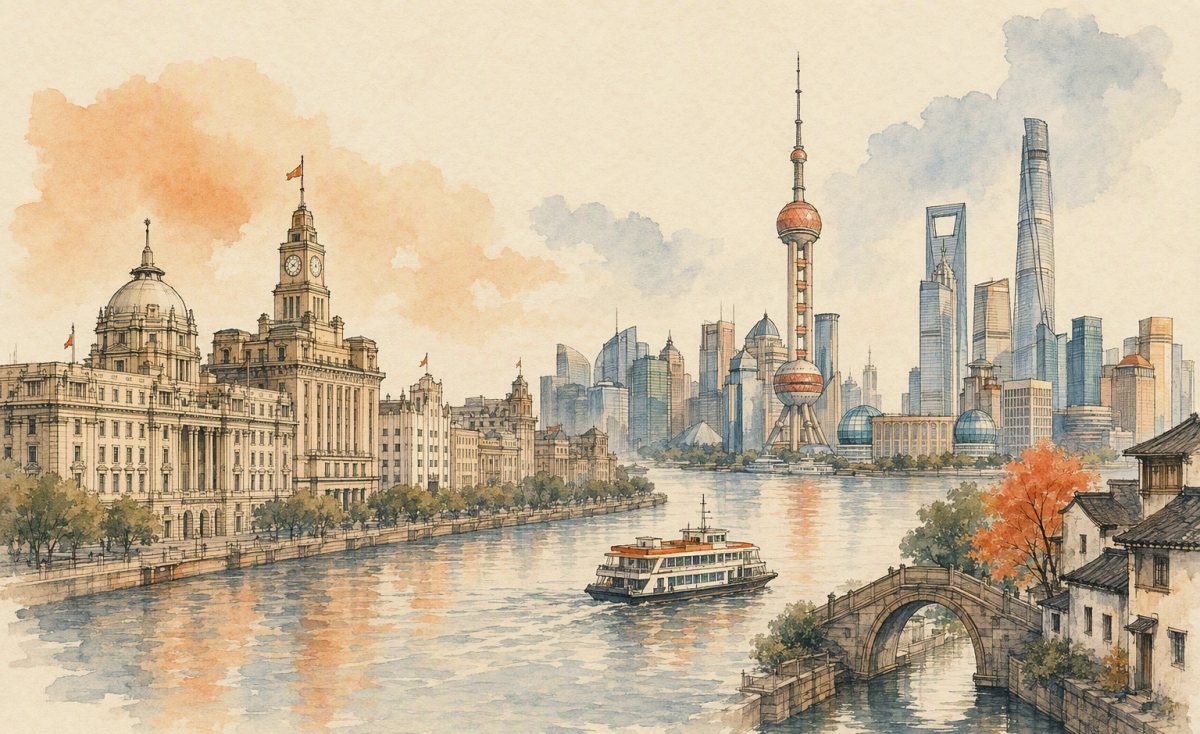
Four days is enough to see Shanghai properly and still reach beyond it. This itinerary keeps the same shape as the original plan — two days in the city, one in a canal water town, one in Suzhou — but adds the practical layer that decides whether the trip actually works: how to book transport, which attractions need advance reservations, how to pay, and what to check before you commit. Nothing here quotes prices or opening hours, because those change; where a figure matters, the guide tells you where to verify it.
Before you go: the four things that shape the trip
First, payment. Shanghai is close to cashless, and many visitors now link a foreign card to Alipay or WeChat Pay before arrival. Whether your specific card works with a specific wallet is something only the app can confirm, so test it with a small transaction before you rely on it. Our China cashless travel guide walks through the setup, and UnionPay’s own visitor scheme is covered separately in this guide to paying with a foreign card.
Second, connectivity. Maps, translation and ride-hailing all depend on data, and some services behave differently on a local network than on roaming or an eSIM. Check your own setup rather than assuming. For the options, see Internet access in China.
Third, reservations. Several major Shanghai attractions now use timed online booking, and some sell out days ahead in peak season. The rule is simple: check the official ticketing channel for each site a week before you travel and book what allows it. Our overview of attraction reservations for foreigners explains which categories typically need them.
Fourth, your hotel. Not every property in China is registered to accept foreign guests, and the ones that are tend to fill first in Shanghai. Confirm this before booking, not after.
Day 1: The Bund, Nanjing Road and the old city
Start with the classic loop. Yu Garden and the surrounding old-town bazaar work best in the morning, before the crowds thicken; the garden itself is a ticketed site with a booking system, so check the official channel for current entry arrangements. From there, walk or take the metro to Nanjing Road and follow it east towards the river.
Time the Bund for late afternoon into golden hour, when the Pudong skyline lights up across the water. For the evening, you have two good options: a Huangpu river cruise, or a rooftop bar with a view back towards Pudong. Cruises run from several piers with different durations and routes — compare the operator’s own page rather than a reseller listing.
Day 2: Pudong skyline and the French Concession
Give the morning to Pudong. Shanghai Tower’s observation deck is the headline, but the tower, the World Financial Center and Jin Mao all have viewing floors at different heights and prices. Check each operator’s official site for current hours, last admission and whether timed slots are required — observation decks close for weather and maintenance more often than you would expect.
After lunch, cross back to Puxi for the French Concession: plane-tree streets, 1920s villas, and the Tianzifang lanes for browsing. This is a walking day, so build in café stops. Finish with xiaolongbao — soup dumplings are a Shanghai speciality, and our Shanghai street food guide lists where to find them along with other local bites.
Day 3: Zhujiajiao water town
Zhujiajiao is the closest of the canal towns to Shanghai and the easiest as a day trip. A private car is the fastest and most flexible option; public transport costs less but takes considerably longer and involves at least one change. Either way, leave early — the canals, stone bridges and Ming-era lanes are far more pleasant before the tour groups arrive around mid-morning.
Once there, a short boat ride along the canals is worth the ticket, and lunch by the water is part of the experience. Confirm boat operating times on site, as they can pause in bad weather. Back in Shanghai for the evening, an acrobatics show is the standard pairing; book through the venue or a reputable agency and check the current programme, since shows rotate.
Day 4: Suzhou gardens by high-speed rail
Suzhou is a genuine high-speed rail hop from Shanghai, and the train is usually quicker and less stressful than driving. Book tickets in advance through the official 12306 channel or an authorised agent — our 12306 step-by-step guide covers the process for foreign passports, including what to do if your name does not fit the field.
In Suzhou, the Humble Administrator’s Garden and Tiger Hill are the two anchors, with Pingjiang Road’s canal lanes between them for walking and tea. The gardens use timed entry in busy periods, so check the official Suzhou garden ticketing page before you go. If you have energy left, a silk museum rounds out the day. Note that some Suzhou sites close on Mondays — verify each one individually rather than assuming a pattern.
Practical notes on transport and timing
Shanghai’s metro is fast, cheap and English-signed; a stored-value card or a QR code in your payment app covers most journeys. For airport arrivals, decide in advance between metro, taxi and pre-booked transfer, and know which terminal you land at.
On timing: this itinerary assumes you are not fighting a public holiday. Chinese national holidays transform transport and attraction crowds, and hotel rates move with them. Check the calendar before fixing dates.
Frequently asked questions
Is four days enough for Shanghai and Suzhou?
Yes, if you keep Shanghai to two days and treat Suzhou as a single focused day trip. It is tight but workable. If you want to add Hangzhou or Huangshan, extend to six or seven days rather than compressing this plan.
Should I book trains and attractions before arriving?
Book high-speed rail as soon as your dates are fixed, and check attraction booking pages about a week out. Some sites release slots on a rolling window, so the exact timing varies by venue — read the official page rather than a third-party summary.
Do I need cash in Shanghai?
Carry a small amount as backup, but expect to pay by phone almost everywhere. Test your card-to-wallet link before you fly, and keep a physical card as a fallback.
What if I do not speak Chinese?
Shanghai is manageable with a translation app and screenshots of addresses in Chinese characters. Our guide to the language barrier covers which apps work and the phrases worth memorising.
When is the best time of year for this itinerary?
Spring and autumn give the most comfortable walking weather. Summer is hot and humid, and winter is cold and damp. Check the holiday calendar too, since it affects both crowds and availability.
Treat this as a framework rather than a fixed script. Verify each booking on the operator’s own page, keep one day flexible for weather, and the four days will hold together well.