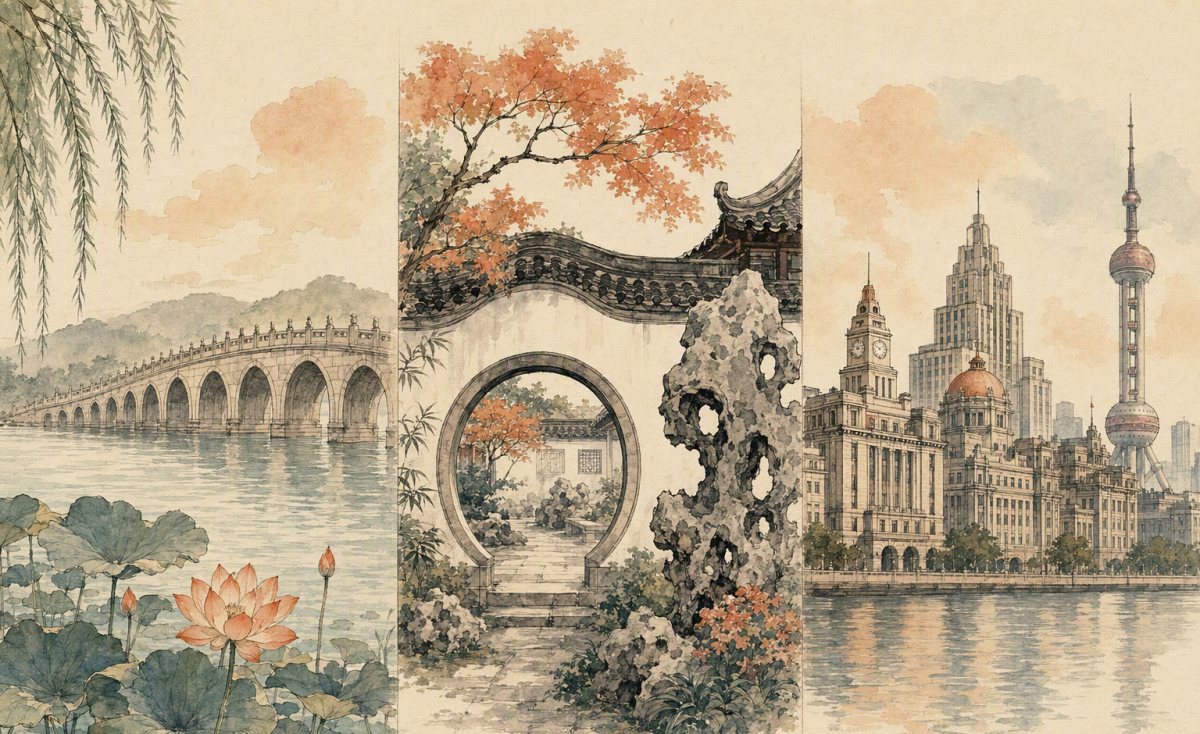
Jiangnan, the region south of the lower Yangtze, is the classical “land of fish and rice”: canal towns, garden walls, tea hills and a skyline that changes every year. Shanghai, Hangzhou and Suzhou sit close enough that a week can cover all three without exhausting anyone. The rail hops between them are short, which is exactly why the region works as a first China circuit or a gentle return visit. This guide covers the shape of a seven-day route, what a car adds, when to go, and how to check the details that matter before you commit.
Why Jiangnan Works as a Week
The three anchor cities do different jobs. Shanghai gives you the Bund, the former French Concession and the best food range in the country. Hangzhou slows the pace with West Lake, the Longjing tea hills and Lingyin Temple. Suzhou finishes with classical gardens and canal towns. Because the intercity legs are short, you spend your time in places rather than in transit, and a single week feels unhurried rather than crammed.
It also suits mixed groups. Anyone who wants museums and cocktails gets Shanghai; anyone who wants mist, tea and walking gets Hangzhou. If you are weighing up whether the country is worth the flight at all, our honest take on whether China is worth visiting sets expectations sensibly.
A Realistic Seven-Day Rhythm
Days 1–2, Shanghai. The Bund early, before the crowds, then the French Concession on foot. Use the metro rather than taxis at peak hours; our China metro guide explains ticketing and transfer basics.
Day 3, water town day trip. Zhujiajiao is the easiest from Shanghai because it sits at the end of a metro line. Arrive before mid-morning; the lanes empty out again after about 16:00.
Days 4–5, Hangzhou. West Lake on foot and by boat, the Longjing tea village behind the hills, and Lingyin Temple. Two days is enough for the highlights without rushing.
Days 6–7, Suzhou and departure. One or two classical gardens, then a canal town such as Tongli. If you fly home from Shanghai rather than Suzhou, keep the last night near the station or airport you actually leave from.
Treat the order as a template, not a rule. Some travellers reverse it to finish in Shanghai, which has the widest flight options.
What a Private Car Actually Adds
Rail handles the city-to-city legs well. The friction is at the edges: tea villages behind Hangzhou, gardens spread across Suzhou’s outskirts, canal towns that sit between stations rather than in city centres. A car strings those together without repeated station transfers, luggage handling and last-mile taxi hunting.
It is not automatically better. On congested city days, the metro is usually faster and always cheaper. The sensible pattern is rail between cities and a car for the scattered day trips. If you book a package that includes both, ask which specific legs are driven and which are by train, and whether station transfers are included or charged separately.
When to Go
Late March to April brings Longjing tea harvest and blossom, with changeable weather. October and November bring osmanthus, clear light and comfortable walking temperatures; our China in October guide covers what to expect across the country. Summer is hot and humid, though the lotus ponds peak. Winter is quiet, cold and often misty, which photographers tend to like and everyone else tolerates.
Public holidays matter more than the season. Domestic travel surges around Lunar New Year, the early-May holiday and the National Day week in early October. West Lake and Suzhou’s gardens become genuinely difficult to enjoy on those dates. Check the official public holiday calendar for the year you travel and avoid the peak days if you can.
Bookings, Tickets and Practical Checks
Several moving parts need verifying, and none of them should be taken on trust from any guide, including this one.
Trains. Schedules, seat classes and sale windows change. Check the official 12306 site or app, and read our step-by-step 12306 booking guide for passport registration and collection. Look for the exact departure station name, since cities have several.
Attractions. Some major sites require advance reservation with a passport, and rules differ by city and season. Verify on the attraction’s own official channel or a government tourism page, and check whether a passport number is needed at booking or only at entry. Our guide to attraction reservations for foreigners explains what to look for.
Entry rules. Visa and visa-free transit eligibility depend on your nationality, route and ports. Confirm on your nearest Chinese embassy or consulate site before booking flights.
Payments and connectivity. Set up a payment method and a data plan before you fly, then test both. Our cashless travel guide covers WeChat Pay and Alipay setup, and the internet access guide covers eSIM, Wi-Fi and roaming. Install and test at home, not at the airport.
Hotels. Not every property accepts foreign guests, particularly smaller guesthouses. Confirm directly before paying a deposit; our hotel booking guide explains how to check.
How to Plan or Book
Build the skeleton yourself first: pick your cities, decide the order, and block out the day trips. Then verify transport and reservations against official sources. If you would rather hand the logistics over, our Jiangnan tours cover the rail and car legs together, and a custom route can be drafted with the free AI trip planner. For questions about a specific itinerary, message the travel designer on WhatsApp at +86 180 3801 6100.
Frequently asked questions
How many days do I need for Shanghai, Hangzhou and Suzhou?
Seven days gives a comfortable pace with one water town and one tea village. Five days is possible if you drop a day trip and accept one-night stops, but the trip becomes mostly transit.
Do I need a car, or is rail enough?
Rail covers the city-to-city legs well. A car helps for scattered spots such as tea villages, outlying gardens and canal towns. Many travellers use rail between cities and a car only for day trips.
Which water town should I choose?
Zhujiajiao is the simplest from Shanghai by metro. Tongli and Zhouzhuang work well from Suzhou. All are busiest mid-morning to late afternoon, so go early or stay overnight.
When should I avoid Jiangnan?
Avoid the Lunar New Year period, the early-May holiday and the National Day week in early October if you can. Check the official public holiday calendar for your travel year, as dates shift annually.
Do I need to book train tickets and attractions in advance?
Often yes, especially for popular sites and holiday travel. Verify current reservation requirements on each attraction’s official channel and book trains through 12306 once the sale window opens for your date.
Jiangnan rewards a slow pace: two days in each city, one water town, one tea hill, and enough slack to sit by the lake when the light is good. Confirm every ticket, reservation and entry rule on the official source before you commit, and the route will run smoothly.