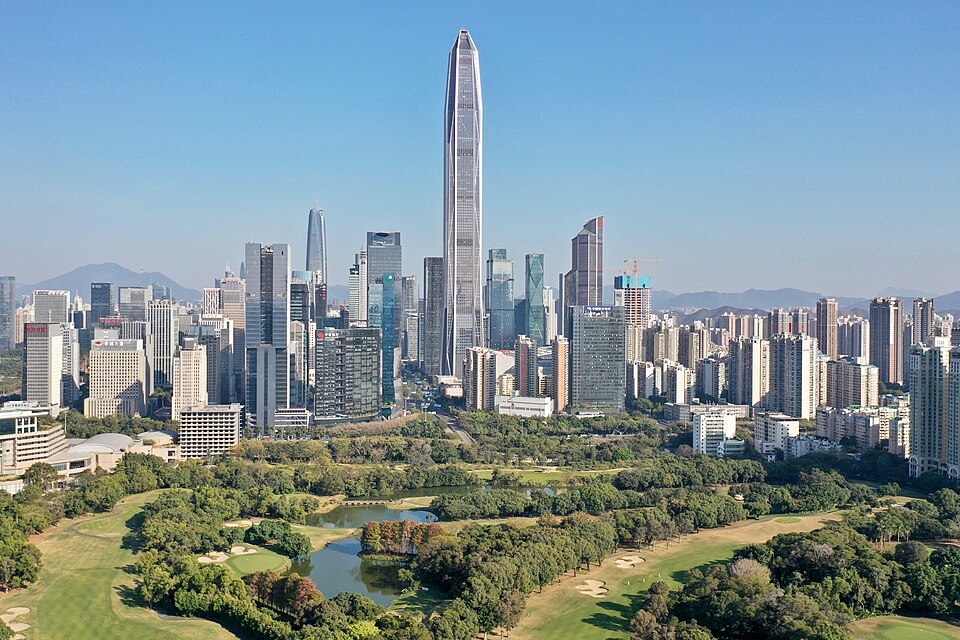
Shenzhen rewards a short trip, but only if you accept what it is: a long, linear city of districts rather than a compact old town. Three days is enough for one creative district, one coastal half-day, one skyline viewpoint and a border hop to Hong Kong — provided you group sights by geography and stop trying to cross the city twice a day. This guide sets out a workable structure, notes where pacing usually goes wrong, and explains how to confirm the details that change.
Day 1: OCT-Loft and the Nanshan tech corridor
Start in OCT-Loft, the converted factory zone in Nanshan where galleries, studios and cafes occupy former industrial buildings. It is a walking area, so give it a half-day rather than an hour, and go in the morning before the weekend crowds build. Note that individual galleries and shops keep their own hours and some close on Mondays — check the specific venue rather than assuming the district is uniformly open.
The afternoon pairs naturally with the Nanshan tech corridor, where the campuses of companies such as Tencent and DJI sit. Be clear about what this involves: these are working corporate sites, not attractions. Exterior views and the surrounding streets are what you get, and access to anything inside is by arrangement, not by turning up. If you want more than a drive-past, ask before you book. Two districts in one day is realistic; three is not.
Day 2: Dameisha beach and a Dongmen food crawl
Dameisha sits on the Dapeng coast and works as a half-day escape from the city. The trade-off is distance — it is a long ride from the central districts, so treat it as a morning or afternoon block, not a quick stop. Swimming conditions, seasonal closures and beach facilities vary through the year, so check locally before committing a full half-day to it in winter or during a typhoon period.
Dongmen, in Luohu, is the counterweight: a dense old commercial quarter with street food, snack stalls and cheap shopping. Evening is the right time. If you want a sense of how to approach a Chinese street-food crawl without over-ordering or missing the point, the Guangzhou street food guide is a useful model, since the Cantonese repertoire overlaps heavily.
Day 3: Ping An viewpoint and a Hong Kong day trip
The observation deck at Ping An Finance Centre gives the skyline-and-harbour view, and on a clear day you can see toward Hong Kong. Two practical points: visibility matters more than timing, so check the forecast rather than the clock, and observation decks in China commonly require timed or advance booking and sometimes close for maintenance or weather. Confirm on the operator’s own page before you build a day around it.
The Hong Kong day trip is the other half. High-speed rail connects Futian to Hong Kong West Kowloon quickly, but you should not rely on a remembered journey time or timetable. Check the current schedule and, more importantly, the immigration formalities on both sides — passport and visa or entry-permit requirements differ by nationality, and the process at West Kowloon is done at the station. Our China train travel guide covers how booking works with a foreign passport. If you hold a passport eligible for transit without a visa, read the rules carefully before assuming a same-day return qualifies — see the 240-hour visa-free transit checklist.
Pacing and getting around
One anchor sight per half-day is the right rhythm in Shenzhen. The city’s geography punishes ambitious plans: Nanshan, Futian, Luohu and the Dapeng coast are far apart, and a two-sight morning in opposite directions becomes a morning in traffic. Group by district and accept that you will see less than a map suggests.
The metro is fast, cheap and signed in English, and it is the default for most trips. Our China metro guide explains payment and entry. A private car with driver makes sense for the coast, for multi-stop days and for anyone travelling with luggage or children — it removes navigation and parking, which in Shenzhen is a genuine time cost. For payment on the ground, set up WeChat Pay or Alipay before you arrive; the cashless travel guide walks through it.
When to go
March to May and September to November give the best balance of heat, humidity and crowds. Summer is hot, wet and typhoon-affected; winter is mild but the coast is less appealing. Avoid the major national holidays, when domestic travel surges and transport and hotels tighten — Golden Week in early October and the Labour Day period in early May are the two to plan around. Exact dates shift with the lunar calendar, so confirm the current year’s public holiday schedule before booking.
Frequently asked questions
Is three days enough for Shenzhen?
Yes, for a district-level introduction: one creative area, one coastal half-day, one skyline viewpoint and, if your documents allow, a Hong Kong day trip. It is not enough to cover Shenzhen and the wider Pearl River Delta. If you want Shenzhen plus Guangzhou or Hong Kong properly, add days rather than compressing.
Do I need a visa for the Hong Kong day trip?
It depends entirely on your nationality and your current Chinese entry status. A same-day return to the mainland is a fresh entry, not an internal trip. Check your own passport’s requirements for Hong Kong and for re-entering mainland China, and confirm on official immigration sources rather than a blog.
Can I visit the Tencent or DJI campuses?
Not as a walk-in visitor. These are working offices. Exterior viewing and the surrounding area are what a normal itinerary delivers; anything beyond that requires a prior arrangement through a contact or an organised visit.
Should I book the Ping An observation deck in advance?
Assume you may need to. Timed-entry and advance booking are common at Chinese observation decks, and closures for weather or maintenance happen. Check the operator’s own booking page for current opening hours, last admission and any closure notice before you plan the day around it.
How do I pay for things in Shenzhen?
Mobile payment dominates. Set up WeChat Pay or Alipay and link an international card before you travel, and keep a small amount of cash as backup. Some smaller vendors and older stalls still prefer cash, and card acceptance at small businesses is inconsistent.
Shenzhen works best when you treat it as a set of districts rather than a checklist, and when you verify the moving parts — observation deck bookings, cross-border formalities, beach conditions and holiday dates — on the operator’s or official page before you commit. Build the structure first, confirm the details second, and the three days will hold together.