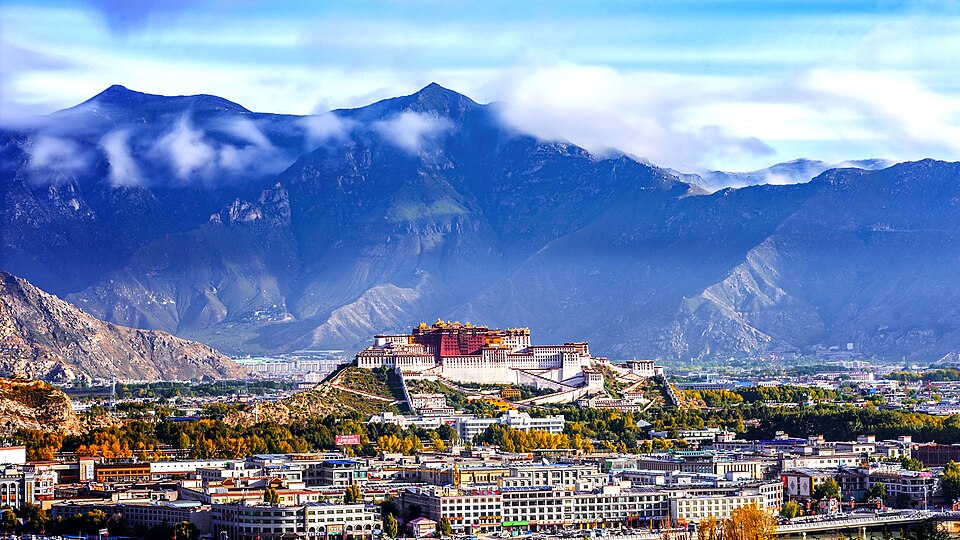
Tibet is not a destination you can improvise. Nine days is enough to cover Lhasa properly and add two or three of the big set pieces beyond it, but only if the pacing is sensible and the paperwork is settled well in advance. This guide sets out a workable nine-day shape, explains how transport and permits actually work, and flags the things that most often go wrong. For the underlying logistics — permits, altitude, when to travel — read our Tibet Travel Guide 2026: Permits, Altitude & Lhasa Planning first, then use this page to build the day-by-day plan.
The nine-day shape at a glance
Most nine-day trips split roughly into three Lhasa days, three days on the road to Yamdrok Lake and Everest Base Camp, one day for Namtso, and two flexible days. That ordering matters: Lhasa sits at around 3,650m, Everest Base Camp is far higher, and Namtso sits above 4,700m. Building upward gradually gives your body a chance to adjust rather than throwing you at the highest point on day two.
A common sequence:
- Days 1–3: Lhasa — Potala Palace, Jokhang Temple and the Barkhor circuit, Sera Monastery’s debate courtyard.
- Days 4–6: Yamdrok Lake, then the road toward Everest Base Camp on the north side.
- Day 7: Namtso Lake, or a rest day if altitude has hit you.
- Days 8–9: Flexible — revisit a favourite site, add a slower Lhasa day, or buffer for weather and road delays.
Treat those last two days as buffer rather than filler. Road closures, permit checks and weather on the Everest route are real possibilities, and having slack in the schedule is what keeps a nine-day trip from becoming a forced march.
Lhasa: what the first three days should look like
One anchor sight per half-day is the right rhythm in Lhasa. The Potala Palace involves a long climb and a timed entry slot, so pair it with something gentle afterwards rather than a second major site. The Jokhang and the Barkhor kora are best done slowly and on foot, ideally in the morning when pilgrims are circulating. Sera Monastery’s philosophical debates are usually an afternoon affair.
Entry to major sites in Tibet is not simply a matter of turning up. Reservations, passport checks and guide requirements apply, and the rules shift. Check the current position on the official Tibet tourism or Potala Palace booking channels, and confirm with your operator what is included, before you assume a slot is guaranteed. Our guide to attraction reservations for foreigners explains the general pattern of timed entry and passport-linked booking in China, which applies in Lhasa too.
Yamdrok, Everest and Namtso: the road days
The days outside Lhasa are long driving days on mountain roads. Yamdrok Lake sits at roughly 4,441m and is usually a viewpoint stop rather than an overnight. The Everest route involves multiple permit checkpoints, a significant altitude gain, and a night at or near base camp depending on your operator’s arrangements and the season. Namtso is a high-altitude lake with basic camp accommodation; many travellers find the overnight uncomfortable and prefer to visit as a long day or to skip it if altitude is already an issue.
Two practical points. First, the Everest region requires additional permits beyond the standard Tibet Travel Permit, and these are arranged through your operator — ask exactly which permits are included and which are extra. Second, do not assume any specific facility, camp or viewing platform is open; seasonal closures and access changes are common. Verify with your operator close to departure.
Transport, pacing and altitude
Independent travel in Tibet is heavily restricted for foreign visitors, and most people travel with an organised vehicle and guide. A private car with a driver removes the navigation and parking problems, and drivers who know the sites can time arrivals to avoid the worst of the coach groups. If you are coming from Chengdu, the train approach is covered in our Chengdu to Lhasa by train itinerary, which is also a gentler way to gain altitude than flying straight in.
On altitude: ascend gradually, drink more water than feels necessary, avoid alcohol for the first days, and treat headache with nausea as a signal to stop climbing rather than push on. Carry a basic medical kit and know where the nearest clinic is. Our guide to healthcare, pharmacies and clinics in China covers what to pack and how to find help. Travel insurance that explicitly covers high-altitude trekking is worth arranging before you go, and you should check the policy wording rather than assume cover.
When to go and what to book early
Shoulder seasons — roughly March to May and September to November — tend to offer the best balance of weather and crowds. Avoid Chinese national holidays, including the October Golden Week and the early-May Labour Day period, when domestic travel surges and transport and accommodation tighten sharply. Winter brings clear skies but cold and some closures; summer brings rain and cloud that can obscure the mountain views you came for.
Book permits, flights or trains, and accommodation as early as your operator allows. Tibet permits are not issued to individuals in the way ordinary Chinese travel bookings are, so the lead time is set by the operator and by the authorities, not by you. Ask what the current processing window is rather than relying on last year’s figure. For payment and connectivity practicalities, see our notes on cashless payment in China; mobile signal in remote Tibet is patchy regardless of your provider, so download offline maps and translation tools before you leave Lhasa.
Frequently asked questions
Can I travel to Tibet independently?
Foreign visitors generally cannot travel in Tibet without an organised arrangement and the required permits, and some areas need additional permits beyond the standard one. The exact rules and the list of restricted areas change, so confirm the current position with your operator and, where relevant, the official Tibet tourism authorities before booking anything non-refundable.
How fit do I need to be for Everest Base Camp?
The north-side base camp visit is largely a driving trip rather than a trek, but the altitude is the real challenge, not the walking. If you have heart or lung conditions, speak to a doctor before booking. Build in acclimatisation days in Lhasa and be prepared to change plans if you feel unwell.
Is nine days enough for Lhasa plus Everest and Namtso?
It is tight but workable if the road days go smoothly and you accept long drives. If you want a gentler trip, drop Namtso and keep the buffer days. Adding both Everest and Namtso to a nine-day window leaves very little slack for weather or permit delays.
What should I check before paying a deposit?
Confirm which permits are included and which cost extra, what happens if a permit is refused, the vehicle type and whether it is private, the standard of accommodation at each stop, and the cancellation terms. Ask for the current permit processing time in writing rather than a verbal estimate.
Do I need cash in Tibet?
Mobile payment is widespread in Lhasa but less reliable in remote areas, and some small businesses may not accept foreign-linked payment methods. Carry a modest amount of cash as backup and check your card or wallet works before you leave the city. Verify current acceptance with your bank rather than assuming.
Tibet rewards preparation more than spontaneity. Settle the permits, build altitude into the sequence, keep two days of slack, and verify every operational detail — opening arrangements, permit inclusions, transport — with your operator and the official sources close to departure. Do that, and the nine days will be about the places rather than the problems.