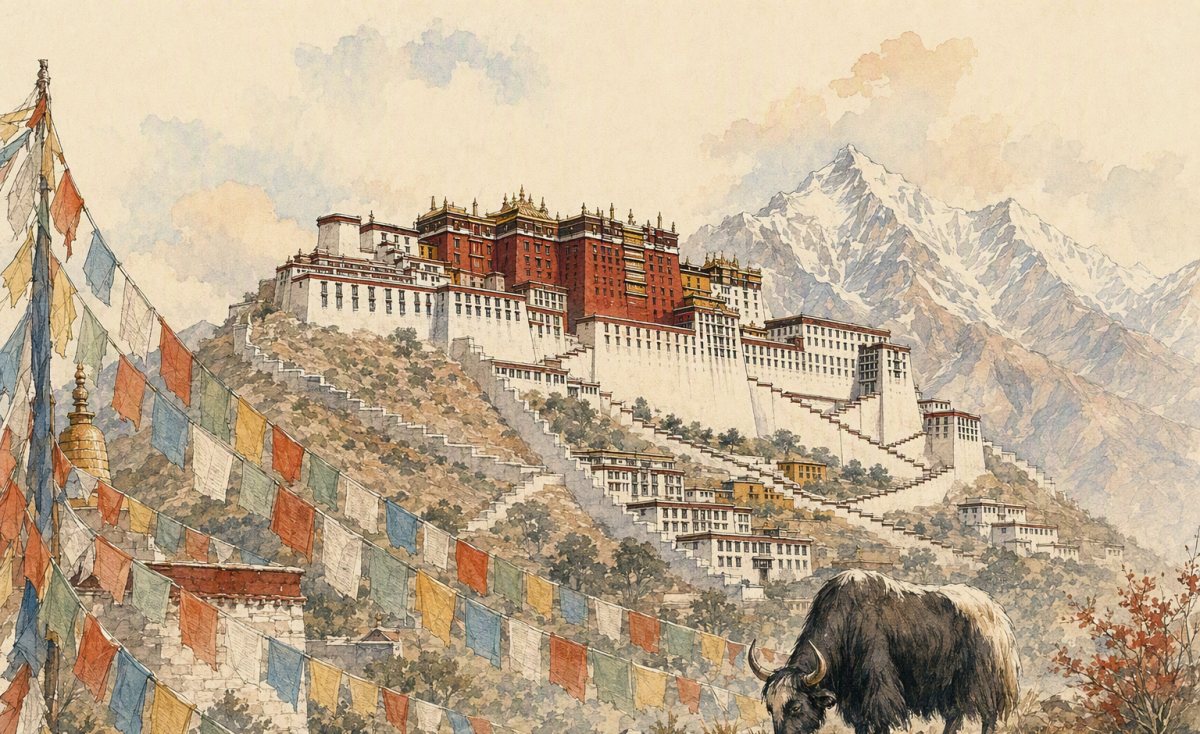
Tibet sits high on most China itineraries, but it is not a destination you can simply add to a route. Foreign travellers need a permit arranged in advance, entry is normally made as part of an organised tour with a guide, and the altitude demands a slower pace than the rest of the country. This guide explains how the paperwork works, when to go, which routes make sense for a first visit, and how to prepare for the thin air. It is written for independent travellers who want to understand the process before they hand over money.
Permits and paperwork for foreign travellers
The Tibet Travel Permit is the document that allows a foreign passport holder to enter the region. It is not something you apply for directly in most cases: a registered local travel agency submits the application on your behalf, and you cannot board a flight or train to Lhasa without it. Agencies typically ask for a passport copy and a confirmed itinerary well ahead of travel. The exact notice period, the current fee, and the list of nationalities affected change from time to time, so ask the agency to state these in writing and confirm them with the Tibet Tourism Bureau or your nearest Chinese embassy before you pay.
You also need a valid Chinese visa before any Tibet paperwork can proceed, unless you are entering under a visa-free arrangement that specifically covers your route. Rules for visa-free transit and visa-free entry are revised often, so check the current position rather than relying on older blog posts. Our overview of China visa rules explains what to verify and where.
Beyond the main permit, some areas require additional permits. The Everest region and parts of western Tibet need a further document, usually called an alien’s travel permit, issued locally once you are in Tibet. Your agency handles this, but it means your itinerary must be fixed and your guide must accompany you. Areas near the Indian and Nepali borders, and some monasteries, can be closed with little notice for administrative reasons. Build slack into your plans rather than treating any single site as guaranteed.
When to go, and what each season actually feels like
April to June and September to October are the most comfortable windows. Skies are usually clear, daytime temperatures are mild, and roads to higher passes are more reliably open. This is also peak season, so flights, trains and hotels book up earlier and cost more.
July and August bring the monsoon. Rain is most likely in the afternoons and evenings, cloud can obscure mountain views, and some dirt roads become difficult, but the valleys are at their greenest and the crowds thin out. November to March is cold, especially at night and at altitude, and some smaller guesthouses close. In exchange you get the clearest light of the year, the fewest visitors, and easier availability.
If you are fitting Tibet into a wider China trip, check how the seasons line up with the rest of your route. Our guides to China in October and China in November cover what to expect elsewhere in the country during those months.
Classic routes and how long they need
A first visit usually means Lhasa plus one excursion. Allow at least three nights in Lhasa for the Potala Palace, Jokhang Temple, Barkhor circuit and the great monasteries at Sera and Drepung, with a rest day built in. From there, the most popular extension is the overland route to Everest Base Camp, which adds several days of driving and at least one night at high altitude. A shorter alternative is Namtso Lake, a long day’s drive north of Lhasa with an overnight near the shore.
Longer itineraries push further west towards Shigatse and the Everest region, or east towards Nyingchi and the forested valleys near the Sichuan border. These need more days and more driving per day, and every extra region adds permit processing. A realistic minimum for a first trip is around eight days including arrival and departure; anything shorter tends to be rushed and increases the risk of altitude problems.
Many travellers arrive by train rather than flying, because the rail route from Chengdu or Xining climbs gradually and gives the body time to adjust. A detailed example is in our Chengdu to Lhasa by train itinerary. If you are weighing up whether to fly or ride the rails, our high-speed rail guide covers booking mechanics, seat classes and what the journey is actually like.
Altitude: what to expect and how to manage it
Lhasa sits at roughly 3,650 metres, and the passes on the Everest route go considerably higher. Altitude illness is not a question of fitness; it affects healthy, active people too. The standard advice is to take the first day very easy, drink more water than feels necessary, avoid alcohol and heavy meals for the first 48 hours, and resist the urge to climb stairs quickly.
Headache, poor sleep and breathlessness on exertion are common and usually settle. Breathlessness at rest, confusion, vomiting or a persistent cough are warning signs and mean descending and seeking medical help. Ask your doctor about altitude medication before you travel, and check that your travel insurance covers high-altitude trekking and any helicopter evacuation, because many standard policies exclude it.
Choose itineraries that ascend gradually, include rest days, and use vehicles carrying oxygen. Carry a basic medical kit and know where the nearest clinic is at each stop. Our guide to healthcare in China for travellers explains how pharmacies and clinics work if you need to buy supplies or see a doctor.
Practical preparation before you book
Sort out connectivity before you fly, since access to some services in mainland China differs from elsewhere and it is easier to arrange in advance than on arrival. Our guide to internet access in China covers Wi-Fi, eSIM and roaming, and explains how to verify what works on your own device.
Confirm that your hotel can register foreign guests, as not every property in China is licensed to do so. Tibet is more restrictive than the rest of the country, and your agency will normally book accommodation that is approved for foreign travellers. Payment is another thing to prepare: mobile payment dominates, and a foreign card may not work everywhere. Our guide to paying with a foreign card sets out the options and how to test them before you rely on them.
Finally, do not treat any agency’s summary as the final word on permits or closures. Ask for the current requirements in writing, check them against an official source, and keep copies of every document, physical and digital, with you throughout the trip.
Frequently asked questions
Can I travel to Tibet independently without a tour?
In practice, no. Foreign passport holders normally need a permit arranged through a registered local agency and must travel with an organised itinerary and guide. Rules can change, so confirm the current position with the Tibet Tourism Bureau or your nearest Chinese embassy before making commitments.
How far in advance should I apply?
Agencies commonly ask for passport details and a confirmed itinerary several weeks ahead, and longer in peak season. The exact notice period varies, so ask your agency to state it in writing and check it against official guidance rather than assuming a fixed number of days.
Do I need a Chinese visa first?
Yes in most cases, a valid Chinese visa is required before Tibet permit processing can begin. Visa-free entry and transit arrangements exist but change frequently and may not cover a Tibet itinerary. Verify your own situation on the official visa or embassy page before booking.
Is altitude sickness likely in Lhasa?
Many visitors feel some effects in the first day or two, most commonly headache and disturbed sleep. Serious illness is less common but possible. Ascend gradually, rest on arrival, and seek medical help and descend if symptoms are severe or worsening.
What should I check before paying a deposit?
Ask for the current permit requirements, the notice period, the cancellation terms, whether oxygen and a licensed guide are included, and what happens if a region closes. Confirm the answers against an official source, and keep written records of everything you are told.
Treat Tibet as a trip that rewards preparation rather than spontaneity: fix your dates, confirm the permit requirements directly with official sources, build in rest days, and leave room in the plan for a closure or a slow adjustment day. Get those basics right and the rest of the journey is mostly about looking out of the window.