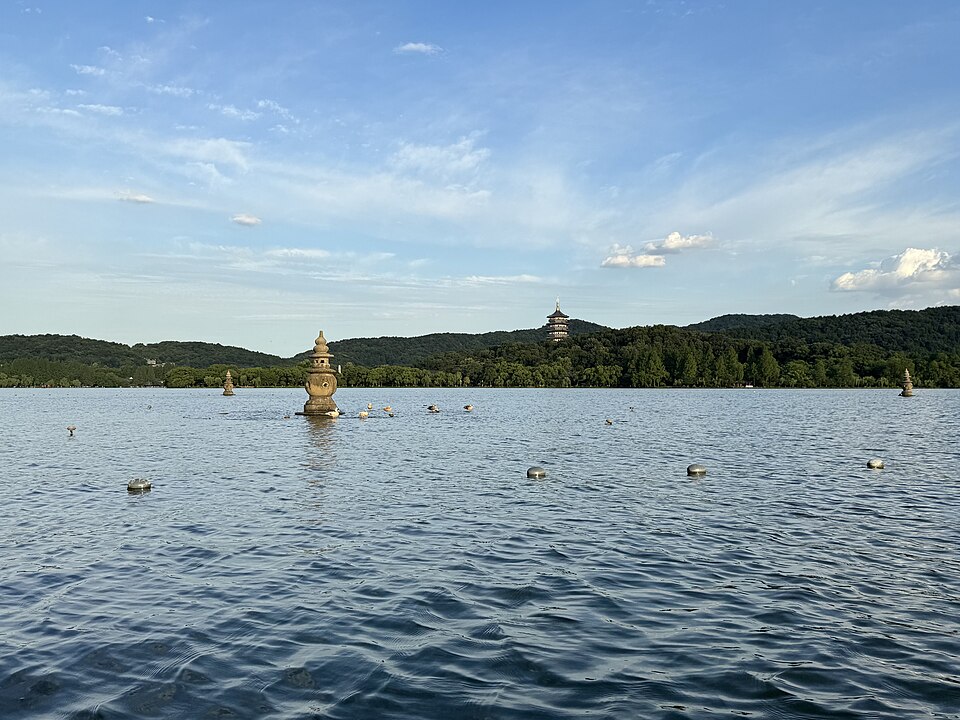
West Lake sits in central Hangzhou, and from most downtown hotels you can reach a shoreline in five to ten minutes by taxi or a short metro ride. The complication is not distance but choice: the lake has several distinct shores, and the one you want depends on the hour and what you plan to do. West Lake rewards meandering rather than racing, but arriving at the right shore for sunrise, or leaving enough time for the Longjing tea terraces, still takes a little planning. This guide compares the realistic transport options and explains how to check the details that change.
Where West Lake actually is, and why the shore matters
The lake is a roughly 15km loop of causeways, gardens and roads, with the city pressing in on the east side and hills rising to the west and south. That geography shapes everything. The east shore (near Longxiangqiao and the downtown core) is the most built-up and the easiest to reach on foot from hotels. The north shore holds the music fountain and the busiest evening crowds. The west and south shores, including Yanggong Causeway, are quieter and greener, backed by the hills that lead towards Longjing and Lingyin Temple.
Decide first whether you are visiting for a short walk, a full circuit, or a base for the tea villages. That answer determines your transport, not the other way around.
Option 1: Metro plus walking
Hangzhou’s metro is the simplest way to reach the lake without worrying about traffic or parking. Line 1 serves Longxiangqiao station on the east side, a short walk from the water. Other lines and stations ring the lake at different points, and new stations open over time, so check the current network map in your metro app before you travel rather than relying on an old list.
Once you are at the lake, walking is genuinely the best way to see the east and north shores. The full loop is about 15km and takes most of a day at a relaxed pace, with plenty of teahouses and viewpoints to break it up. For how fares, QR codes and gates work, see this China metro guide.
Option 2: Public bike share and taxis
Hangzhou’s public bike scheme has docks around the lake, and cycling the flat sections is one of the nicest ways to cover ground. The catch is demand: on weekends and public holidays, popular docks empty quickly and returning a bike near the busiest shores can be frustrating. Check the app for live dock availability before you set off, and treat a bike as a one-way tool rather than a guaranteed round trip.
Ride-hailing and metered taxis fill the gaps, but lakeside roads are congested at peak times and some sections restrict where cars can stop. Ask to be dropped at a named landmark or causeway entrance rather than “West Lake”, which is too vague to be useful.
Option 3: Private car for the wider loop
The lake alone is manageable on public transport. The surrounding sights are not. Longjing tea village, Lingyin Temple and the Meijiawu tea farms sit in the hills to the west and south, and stringing them together by bus involves long waits and steep walks. A private car turns a 25km hilly scatter of stops into one relaxed day, with pickup arranged at whichever shore you want for sunset.
This is the option that makes sense if your time in Hangzhou is short or you are travelling with people who cannot manage long climbs. You can compare how a car fits into a wider itinerary in this 5-day Hangzhou plan.
Timing the shores: sunrise, sunset and the fountain
Bai Causeway on the north side is the classic sunrise spot, and in summer that means arriving well before dawn. Yanggong Causeway on the west side is the sunset counterpart, quieter and framed by trees. If you have a driver, agree the pickup point and time in advance and build in a buffer, because the light does not wait and neither does the traffic.
The music fountain on the north shore draws large evening crowds. Arrive early if you want a clear view, and expect the surrounding roads to be slow afterwards. Fountain schedules change with season and maintenance, so confirm the current show times locally or through your hotel rather than trusting an old listing.
Practical tips and the tea village detour
Longjing village is roughly a 20-minute drive from the lake. Park at the upper lot if you are driving, walk down through the terraces, then finish with a tea tasting. Prices for tea vary enormously by grade and vendor, so taste before buying and agree the price per unit clearly.
Do not plan to drive yourself around the lake at weekends. Lakeside parking is scarce and often full by mid-morning. Carry a working payment method, since almost everything from metro fares to tea shop bills is settled by phone; this cashless travel guide explains how to set that up before you arrive. If you are combining Hangzhou with other cities, check rail options in this China train guide.
Frequently asked questions
How long does it take to get to West Lake from downtown Hangzhou?
From most central hotels it is a five to ten minute taxi ride or a short metro trip plus a walk. Allow more time at weekends and on public holidays, when lakeside roads slow considerably.
Can I walk the whole way around West Lake?
Yes. The full loop is about 15km and suits a full day at an easy pace. Many visitors walk only one or two shores and use a bike or taxi for the rest.
Is the metro the best way to reach the lake?
It is the most predictable option if you want to avoid traffic. Check the current network map and station names in your metro app, since lines and stations change over time.
Should I book a private car for West Lake?
For the lake alone, public transport and walking are usually enough. A car makes more sense if you want to combine the lake with Longjing, Meijiawu and Lingyin Temple in a single day.
When is the quietest time to visit?
Early mornings are consistently calmer, especially on the west and south shores. Weekends, public holidays and the hours around the evening fountain show are the busiest.
Whichever option you choose, verify current opening hours, fountain schedules, ticket requirements and transport details on the relevant official or operator page before you travel, as these change through the year. Plan the shore and the hour first, then pick the transport that gets you there on time.