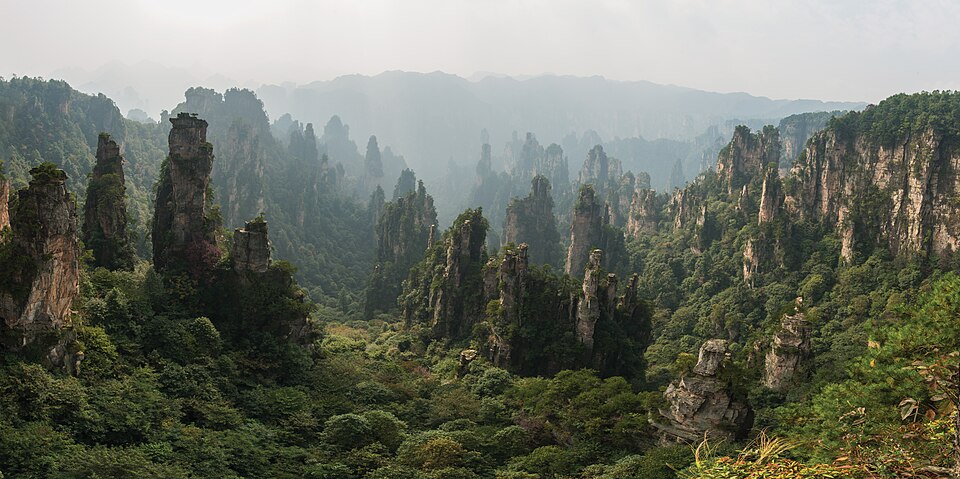
Zhangjiajie rewards planning more than most Chinese destinations. The scenery is spread across several separate ticket areas rather than one park gate, distances between them are longer than they look on a map, and weather can erase a view you travelled a long way to see. This five-day itinerary covers the essentials at a realistic pace: the Avatar-style pillars of Yuanjiajie, the peak-forest panoramas of Tianzi Mountain, the Golden Whip Stream walk, Tianmen Mountain, and the Grand Canyon glass bridge. It assumes you are basing yourself in Zhangjiajie and moving between areas by road, either with a private car and driver or by public shuttle and cable car.
Day 1: Yuanjiajie and Baofeng Lake
Start with Yuanjiajie, the area most people associate with the film Avatar. The Hallelujah-style pillars, the natural bridge and the glass skywalk are all here, and it is the busiest part of the core scenic area, so arriving early matters more than on any other day. Expect a combination of shuttle bus, lift or cable car, and walking. Which lifts and cable cars are running, and their hours, changes with season and maintenance schedules, so check the official Wulingyuan or Zhangjiajie scenic area channels before you travel and look specifically for lift operating hours and any closure notices.
In the afternoon, Baofeng Lake offers a quieter counterpoint: a short boat trip through a karst gorge, often with folk songs performed on board. It is a good low-effort half-day after a morning of stairs and crowds.
Day 2: Tianzi Mountain
Tianzi Mountain is where the classic sea-of-peaks photographs come from. The viewpoints sit at the top of the ridge, reached by cable car or by road, and the walking between them is gentler than in Yuanjiajie. Give this a full day if the forecast is clear, because this is the area most dependent on visibility. If cloud is forecast, consider swapping Day 2 and Day 3 so you spend the clear day above the clouds and the grey day in the valley.
Day 3: Golden Whip Stream
The Golden Whip Stream is a shaded canyon walk of roughly 7.5 km, mostly flat, following a stream between towering rock walls. It is the best low-intensity day in the park and a sensible recovery day after two days of stairs. The full walk takes several hours at an easy pace; you can also walk part of it and turn back. Wear shoes with grip, as the path is damp in places, and carry water, since options inside the valley are limited.
Day 4: Tianmen Mountain
Tianmen Mountain is a separate ticket area closer to Zhangjiajie city, not part of the Wulingyuan core. The long cable car up, the 999 steps to the Heaven’s Gate arch, and the cliff-edge skywalks are the main draws. This is a full day, and the cable car and shuttle arrangements are the part most likely to catch people out: queues build, and the route up and down may be run in different combinations depending on the day. Check the official Tianmen Mountain site for current ticket types, cable car hours and whether the steps or any walkway section is closed. If you have mobility concerns, ask specifically about lift access and how much walking is unavoidable.
Day 5: Grand Canyon glass bridge
The Zhangjiajie Grand Canyon glass bridge is a separate attraction from the national forest park and needs its own ticket. It is usually combined with a walk through the canyon below. Timed entry is common at busy periods, so book ahead and confirm your slot. If you are nervous about heights, note that the bridge and the canyon walk are separate experiences and you can do one without the other.
Pacing, transport and when to go
One anchor sight per half-day is the sweet spot. Trying to combine Yuanjiajie and Tianzi Mountain in one day is the most common mistake visitors make here. A private car with a driver removes the navigation and parking problems, and a driver who knows the area can time arrivals to beat the largest tour groups. For general logistics, our China train travel guide covers how to reach Zhangjiajie by rail, and the first-time in China checklist covers payments, SIM cards and the practicalities that trip up new arrivals.
Shoulder seasons, roughly March to May and September to November, generally offer the best balance of weather and crowds. Avoid Chinese national holidays, including the October Golden Week and the early-May Labour Day period, when domestic travel surges and both transport and hotels tighten up. Our China in October guide explains how the holiday dates shift demand. Mountain weather changes fast at any time of year, so build in a spare day if the views are the point of your trip.
Frequently asked questions
How many days do you need in Zhangjiajie?
Five days lets you cover Yuanjiajie, Tianzi Mountain, Golden Whip Stream, Tianmen Mountain and the Grand Canyon without rushing. Four days is workable if you drop one area. Three days means choosing between the national forest park and Tianmen Mountain.
Are the tickets separate for each area?
Yes. The national forest park (Wulingyuan), Tianmen Mountain and the Grand Canyon are separate ticketed attractions. Prices, multi-day park passes and entry rules change, so check each attraction’s official page for current pricing and validity rather than relying on older blog posts.
Do I need a private car?
Not strictly, but it removes a lot of friction. Public shuttles and cable cars connect the main areas, yet transfers between the park, Tianmen Mountain and the Grand Canyon are long and not always well signposted for non-Chinese speakers. A driver also helps you start earlier than the coach groups.
What should I pack for the mountains?
Layers, a waterproof shell, grippy shoes and a power bank. Temperatures at the top are noticeably cooler than in the town, and paths in the stream canyon stay damp. Check the forecast daily, since a clear morning can turn into cloud by noon.
Is the glass bridge suitable for children or nervous visitors?
It is a walk across a glass-floored bridge, and the canyon walk beneath is optional. Age and health restrictions, if any, are set by the operator, so confirm current rules on the official Grand Canyon page before booking.
Treat the day order above as a framework rather than a fixed schedule, and be ready to swap days for weather. Verify every ticket, opening time and transport detail on the relevant official page close to your travel date, and the trip will run far more smoothly than one built on stale information.