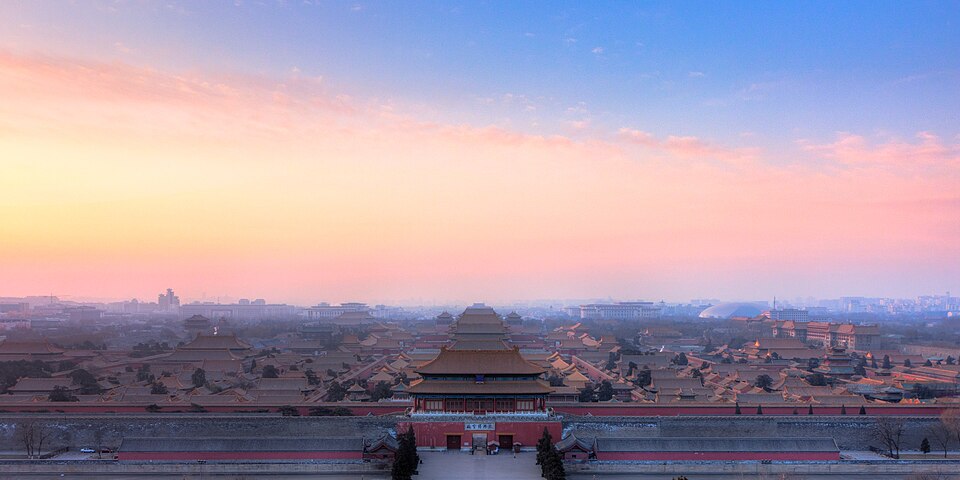
The China Golden Triangle is the classic first-time route linking Beijing, Xi’an and Shanghai — three cities that show three different faces of the country: imperial power, ancient civilisation and modern ambition. Ten days is the usual recommendation, because it gives each city room to breathe without long transit days. The three are connected by high-speed rail, so most of your time goes on sightseeing rather than travelling. What follows is a day-by-day plan with realistic transfer notes, plus the practical detail that decides whether the trip runs smoothly: tickets that need booking ahead, apps that need setting up before you fly, and the weeks worth avoiding.
Why the Golden Triangle suits a first trip
Each leg is a single high-speed rail hop, so you are never far from a station or a hotel. In one loop you cover the Great Wall and the Forbidden City, the Terracotta Army, and the Bund — the images most people picture before they arrive. It is also the route most group tours are built around, which means infrastructure is well developed: English signage on the metro, hotels used to foreign guests, and drivers who know the main sites.
It is easy to customise. You can add a day in each city, swap Shanghai’s day trip for a longer excursion, or extend south afterwards. If you are still deciding whether the country is worth the effort at all, this honest assessment is a reasonable starting point.
The 10-day route at a glance
Days 1–3: Beijing — Forbidden City, Great Wall at Mutianyu, Temple of Heaven, hutongs. Then rail to Xi’an (roughly six hours by high-speed train, or about two hours by air).
Days 4–6: Xi’an — Terracotta Army, City Wall, Muslim Quarter, Big Wild Goose Pagoda. Then rail to Shanghai (roughly six hours, or about two and a half hours by air).
Days 7–10: Shanghai — the Bund, Yu Garden, the former French Concession, and a day trip to Suzhou or a water town. Depart from Shanghai.
Treat the rail times as planning estimates only. Schedules change with each annual timetable, so check exact departure times and journey lengths when you book rather than relying on any figure quoted in a guide.
Days 1–3: Beijing
Land, settle near Wangfujing or inside the Second Ring, and keep the first afternoon light — jet lag is real and the city is large. Day two is the Great Wall. Mutianyu is the common choice for a first visit: a cable car up, a toboggan down, and a restored section that is walkable without mountaineering. A private car and driver for the round trip lets you leave early and reach the wall before the coach groups. Day three covers the Forbidden City and Jingshan Park for the view back over the roofs, then the Temple of Heaven in the afternoon.
Forbidden City tickets are passport-linked and released on a set advance window. They sell out in peak season, so check the official palace booking site for the current release time and buy as soon as your date opens. Metro travel around the city is straightforward once you have a payment method set up — see this metro guide for how entry gates and QR codes work in practice.
Days 4–6: Xi’an
Take a morning train or a short flight. The Terracotta Army is the anchor: give it half a day and arrive early, since the site is outside the city and the pits fill up by mid-morning. In the afternoon, cycle the top of the ancient City Wall — the full loop is long, so an hour’s rental on one section is plenty. In the evening, eat through the Muslim Quarter; this Xi’an food guide covers what to look for and what to skip.
With a third day, add the Big Wild Goose Pagoda and the Shaanxi History Museum. Museum entry is typically free but requires an advance reservation through the official channel, and slots go quickly — verify the current booking process before you travel.
Days 7–10: Shanghai
Shanghai is the modern finale. Walk the Bund at dusk when both banks light up, wander Yu Garden’s old bazaar, and spend an unhurried morning in the former French Concession. Use one day for a water town such as Zhujiajiao or for Suzhou’s classical gardens; both are reachable in under an hour by rail from central Shanghai, which makes them easy half- or full-day trips.
If you would rather head into the hills, Huangshan is a feasible add-on from Shanghai if you allow two nights — see this Huangshan guide for how the logistics work.
Getting around and practical preparation
High-speed rail is the spine of the route. Book through the official 12306 channel or a reputable agent, and remember that foreign passports need to be registered against the ticket — the process is explained in this guide to buying train tickets with a foreign passport. Second class is fine for value; first class is worth considering on the longer legs.
Before you fly, sort out connectivity and payments. A China eSIM means mapping, translation and payment apps work from the moment you land, and it avoids a queue at the airport. Compare plans carefully — coverage and whether the plan routes data in a way that reaches services you rely on both matter, and no single option is right for everyone.
Avoid the major domestic holiday weeks. Golden Week and Spring Festival produce the year’s heaviest domestic travel, with higher hotel rates and sold-out trains. The dates shift annually, so confirm the official public holiday calendar for your travel year rather than assuming last year’s pattern.
Frequently asked questions
How many days do I need for the China Golden Triangle?
Ten days is the standard answer: three in Beijing, three in Xi’an, and four in Shanghai including a day trip. Seven days is workable if you trim each city to its headline sights and accept a faster pace.
Should I take the train or fly between the cities?
Flying is quicker in the air but adds airport transfer and check-in time at both ends. High-speed rail runs city centre to city centre, which usually makes the total door-to-door difference smaller than the flight time suggests. Compare current fares and schedules for your dates and decide on that basis.
Do I need a guide for this route?
No. It is one of the more independent-traveller-friendly routes in China. The most useful paid upgrade is a driver for the Great Wall and Terracotta Army days, where sites sit outside the city and public transport eats into your time.
What does a 10-day Golden Triangle trip cost?
Costs depend on season, hotel standard and how much you travel privately, so any figure quoted in advance will be wrong for someone. Build a budget from current hotel and rail prices for your own dates, and check whether your nationality qualifies for any visa-free entry scheme on the official immigration channels before you book flights.
When is the worst time to go?
The major domestic holiday periods, when transport and hotels are busiest and most expensive. Shoulder seasons generally give better weather and calmer sites, though exact conditions vary by city and year.
Plan the route around confirmed train times and booked tickets rather than the other way round, set up your eSIM and payment apps before departure, and keep one flexible day in Shanghai for weather or a spontaneous detour. Do that and the Golden Triangle delivers exactly what it promises: three distinct versions of China in a single, manageable loop.