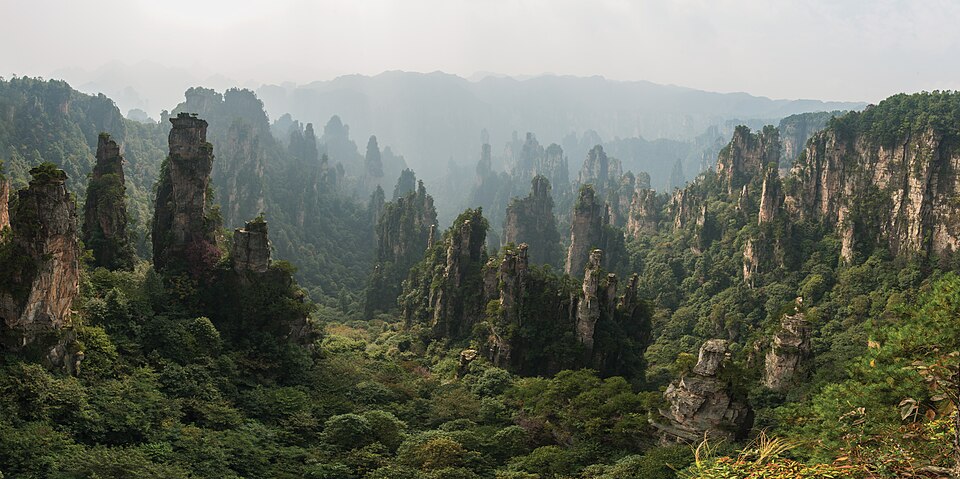
Zhangjiajie is a mountain tourism zone in northwest Hunan province, China, celebrated for thousands of towering quartz-sandstone pillars — the same formations that inspired the floating mountains in the film Avatar. A complete visit is not one attraction but four separately ticketed areas: Zhangjiajie National Forest Park (the Avatar pillars), Tianmen Mountain at the city’s edge, the Zhangjiajie Grand Canyon with its glass bridge, and Yellow Dragon Cave. Most travellers need three to four days. This guide explains what each area offers, when to go, how to arrive by air and high-speed rail, and the payment, connectivity, and weather details that make China travel here smooth rather than stressful.
What and Where Is Zhangjiajie?
Zhangjiajie sits in the Wulingyuan district of Hunan, roughly 450 km west of the provincial capital, Changsha. The name covers both the prefecture-level city and the surrounding national park, which can confuse visitors planning transport and lodging. The core landscape was China’s first designated national forest park and later earned UNESCO Global Geopark status for its pillar forests, deep valleys, and clear streams.
Many travellers pair Zhangjiajie with nearby highlights such as the ancient town of Fenghuang or the gateway city of Changsha. If you are building a wider Hunan route, our Changsha travel guide covers how the capital connects by rail and road to the mountains.
The Four Core Areas of Zhangjiajie
The single most useful fact about Zhangjiajie is that its headline sights are not contiguous — each has its own entrance, ticket, and travel time from the city. Matching areas to your available days prevents wasted transfers. Distances below are approximate; confirm current shuttle times when you book.
| Area | Known for | Time needed | From city | Best for |
|---|---|---|---|---|
| National Forest Park (Wulingyuan) | Avatar-style sandstone pillars, Yuanjiajie, Yangjiajie | 1.5–2 days | ~30–40 min by road | Scenic hiking, photography |
| Tianmen Mountain | Natural arch, long cable car, 999 steps, glass skywalk | Half to full day | At the city edge | Big views, acclimatisation |
| Zhangjiajie Grand Canyon | Glass bridge over a cliff, canyon boardwalk | Half day | ~40 min drive | Thrill seekers, families |
| Yellow Dragon Cave | Vast stalactite chambers, underground river | 2–3 hours | Wulingyuan gate | Rainy-day backup, add-on |
If you have only one day, the national park alone gives the iconic images. With three or four, you can add Tianmen and either the glass bridge or the cave without exhausting yourself.
Why It Is Called the Avatar Mountains
Fans of the film will find the marketing everywhere: one of the park’s most photographed pillars was officially renamed “Avatar Hallelujah Mountain.” The comparison is fair. In Yuanjiajie and Yangjiajie, needle-thin columns rise from misty ravines, and when low cloud fills the valleys the summits appear to float — the exact look the film borrowed. The Yuanjiajie viewing platforms, reached by the Bailong cliff elevator, are the classic spot, and morning fog after rain gives the most cinematic scenes.
Best Time to Visit Zhangjiajie
Spring (April to May) and autumn (September to October) are the most comfortable windows, with mild temperatures and frequent cloud layers that add drama without the summer crowds. Summer is lush but hot, rainy, and peak season on weekends and holidays. Winter is quiet, often cheaper, and dusts the pillars with snow for a striking look, though some upper walkways can close when icy. For a comparable cloud-sea experience further east, browse our China travel guides and the Huangshan hiking guide.
How Many Days You Need in Zhangjiajie
One day suits only a rushed highlight loop. Two days cover the national park properly. Three to four days are the sweet spot, adding Tianmen and either the Grand Canyon or Yellow Dragon Cave at a humane pace, while five or six open side trips to old towns. If you would rather not juggle transfers between four scattered areas, browse our China tours for pre-routed options.
Getting to Zhangjiajie
Zhangjiajie has a domestic airport (Heaven Gate / DYG) with connections to major Chinese cities, and it is served by high-speed rail from Changsha and other hubs. The rail journey from Changsha is short and comfortable; if you are new to booking trains with a foreign passport, our China high-speed rail guide walks through classes, apps, and station procedures. Schedules and station names change seasonally, so verify current timetables and buy tickets through official channels.
Once in the area, park shuttle buses link the Wulingyuan and forest-park gates. Budget for these separately from entrance tickets and confirm which shuttle your accommodation sits near.
Inside the National Park
The park rewards slow travel. A signature circuit links Yuanjiajie (the Avatar platforms and “First Bridge Under Heaven”), the clifftop paths of Yangjiajie, and the flat Golden Whip Stream walk, where the pillars rise overhead. The Bailong Elevator rockets up a cliff face while cable cars join ridgelines, so you can hike mostly downhill and spare your knees. Wear grippy shoes — the sandstone is slick after rain.
The Glass Bridge and Grand Canyon
The Zhangjiajie Grand Canyon glass bridge is a transparent span slung between two cliffs, walkable in timed slots that require a reservation and a shoe-cover fee. It is spectacular but strictly queue-managed, so book ahead in busy season and allow buffer time. The canyon boardwalk below is a calmer alternative if heights are not for you.
Tianmen Mountain and the 999 Steps
Tianmen rises straight from the city, making it the easiest big-view day and a smart first or last stop. One of the world’s longest passenger cable cars runs from downtown to the summit, where a cliff-hugging glass skywalk and a road of 999 switchbacks lead down to the Heaven Gate — a natural arch pierced through the mountain. Clear mornings give the best chance of seeing through the arch.
A Sample Three-Day Zhangjiajie Itinerary
Day 1 — Tianmen Mountain. Arrive, drop your bags, and take the cable car up for the skywalk, 999 steps, and Heaven Gate. Stay in the city or move toward Wulingyuan.
Day 2 — National Forest Park core. Enter early via the Wulingyuan gate, ride the Bailong Elevator, and loop Yuanjiajie and the Pillar Forest; finish at Golden Whip Stream as the light softens.
Day 3 — Yangjiajie plus a finale. Explore the quieter Yangjiajie plateau by cable car, then choose the glass bridge, the cave, or a relaxed transfer day depending on weather and energy.
Tickets, Budget, and What to Plan
Zhangjiajie uses multi-entry park passes plus separate tickets for the Grand Canyon, Tianmen, cable cars, elevators, and in-park shuttles, so your real cost is the sum of several moving parts. Peak and off-peak seasons are priced differently, and some components are mandatory on certain routes. Rather than quote figures that change, plan around typical ranges and confirm current prices, valid entry days, and reservation rules when you book. Our trip planner is built to map these interdependent costs.
Where to Stay
Two bases make sense. Wulingyuan town sits by the national park gate and suits an Avatar-pillar priority, with restaurants and hotels clustered for evening ease. The city centre places you at the foot of Tianmen and closest to the airport and rail station. A few summit guesthouses inside the park serve sunrise chasers, but access and status vary, so verify before relying on one. To skip the transfers, a private charter moves you between areas on your own schedule.
Practical Tips for a Smooth Visit
Cash is rarely needed at the gate — mobile payment dominates, and foreign travellers should set up Alipay or WeChat Pay with a linked card before arriving. Staying connected makes maps, translation, and shuttle bookings far easier; see our China eSIM guide for getting data working the moment you land. Download an offline park map, carry a light rain layer, start hikes early to beat tour groups, and keep small cash for rural vendors. For guided movement and language support, our premium customization service can arrange English-speaking guides. Travellers pairing Zhangjiajie with the karst south will also like the Guilin and Yangshuo guide.
FAQ
How many days do I need in Zhangjiajie?
Three to four days is ideal. That gives you the national forest park, Tianmen Mountain, and one of the Grand Canyon or Yellow Dragon Cave without rushed transfers. Two days works if you focus only on the Avatar-pillar core.
Is Zhangjiajie the same as the Avatar Mountains?
Yes, informally. The “Avatar Mountains” refers to the sandstone pillars of Zhangjiajie National Forest Park, whose vertical columns inspired the floating mountains in the film. One pillar in Yuanjiajie has even been named after the movie.
Do the four areas share one ticket?
No. The national park, Tianmen Mountain, the Grand Canyon glass bridge, and Yellow Dragon Cave are separate areas with separate tickets and travel times, and cable cars, elevators, and shuttles usually cost extra. Confirm current inclusions and reservation rules when you book.
What is the best month to visit Zhangjiajie?
April to May and September to October offer comfortable weather with frequent, photogenic cloud layers. Summer is green but busy and rainy, while winter is quiet, often cheaper, and striking with snow — though some high walkways may close in icy conditions.
Should I use public transport or a private driver?
Public shuttles and rail are affordable and workable, but the four sights are scattered, so a private driver saves meaningful transfer time and lets you chase clear-weather windows. For a first China trip or a tight schedule, weighing a pre-arranged car against the rail-plus-shuttle route is one of the key planning decisions.