The most common surprise on a first Chinese high-speed rail journey is that Second Class is fine. Seat pitch is generous, every seat has a power socket, the train is quiet, and the ride is smooth enough that a four-hour leg passes without notice. That makes the upgrade question genuinely worth thinking about, rather than an automatic “pay more, obviously better.”
This guide compares the classes honestly, covers the train-prefix system, and explains how to eat properly on board.
Classic rail route
Beijing → Xi'an → Chengdu: the classic first-timer line
3 cities · 10+ days · best Apr–May & Sep–Oct
- 1
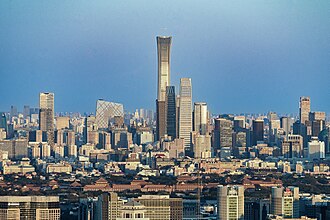
Beijing
3–4 days · Apr–May & Sep–Oct
- Great Wall (Mutianyu)
- Forbidden City
- Summer Palace
- 2

Xi'an
2–3 days · Apr–May & Sep–Oct
- Terracotta Army
- Ancient City Wall
- Muslim Quarter
- 3

Chengdu
2–3 days · Mar–Jun & Sep–Nov
- Giant Panda Base
- Jinli Street
- Sichuan hotpot
Every stop on this line exists in our interactive trip planner — open it to drag, drop and time this route on the map.
First, the train prefixes
The letter at the front of a train number tells you what you are buying, and it matters more than the seat class.
| Prefix | Type | Top speed | Use it for |
|---|---|---|---|
| G | High-speed “Gaotie” | 300–350 km/h | Almost every visitor journey |
| D | High-speed “Dongche” | 200–250 km/h | Slightly cheaper, a bit slower |
| C | Intercity | 200–350 km/h | Short dense corridors such as Beijing–Tianjin |
| Z / T | Conventional express | 120–160 km/h | Overnight sleeper routes |
| K | Conventional | Under 120 km/h | Cheapest, slowest, rural reach |
For nearly all visitor itineraries you want G, or D where it is cheaper. A useful detail: on some routes a D train covers the same corridor with a similar journey time at a lower fare, so it is worth checking both before booking. C trains serve short high-frequency corridors and are excellent value. Z and T trains are the ones that matter if you are considering an overnight sleeper.
The three seat classes, compared
| Class | Layout | Space | Extras | Price vs Second |
|---|---|---|---|---|
| Second Class | 3+2, five per row | Ample legroom, reclining seat | Power socket, tray table, luggage rack overhead | Baseline |
| First Class | 2+2, four per row | Wider seat, more recline, more legroom | Quieter carriage, deeper recline, footrest | Roughly 1.6–1.7× |
| Business Class | 1+2 or 1+1 | Lie-flat or near-flat pod | Lounge access at major stations, meal service, dedicated staff | Roughly 3× |
Prices are fixed by distance and class, not by demand, so what you see is what everyone pays. On the Beijing–Shanghai corridor, Second Class is RMB 553 and First Class RMB 933 — a gap of RMB 380 for a four-and-a-half-hour journey.
On that basis the honest recommendation is this. Second Class is the right choice for journeys under three hours — the difference is not worth the fare. First Class becomes worth it past four hours, where the extra width and recline genuinely change how you arrive. Business Class is a comfort purchase, not a value one, and it makes sense mainly on very long runs or when the station lounge access and the guaranteed quiet matter to you.
One caveat worth knowing: some routes sell a “standing” or “no-seat” ticket at the lowest fare. Avoid these unless you have no alternative. A three-hour journey standing in a vestibule is not the same product.
What the ride is actually like
Trains are punctual to a degree that surprises visitors. Departure is to the minute and the train does not wait. Boards display the coach and seat layout, and carriage numbers are marked on the platform, with coaches running in order along its length.
Boarding is by scanning your passport at an automated gate. Follow the bilingual signage to your platform, find your coach, and the seat number is printed on the inside of the coach above the window line.
Onboard: seats recline, tray tables fold out, and there is a power socket at every seat in every class — bring your own plug adapter, since the socket is a Chinese two- or three-pin. Wi-Fi exists on most G trains but is unreliable and slow, so do not plan to work through a tunnel section. Luggage space is generous, with overhead racks plus larger racks at the end of each carriage.
Station stops are short — often two to five minutes. If you are getting off, be at the door before the train stops, because it will leave on schedule whether or not you are on the platform.
Eating on board, honestly
Trolley and dining-car food on Chinese high-speed trains is limited, overpriced and not good: typically instant noodles, a few packaged snacks, a microwave rice box, and coffee. It is not a reason to avoid the train, but it is a reason to arrive prepared.
The standard move among regular travellers is to buy food at the station before boarding. Major stations have convenience stores, bakeries and food courts inside the concourse, priced normally. A picnic from the station is a better meal than anything onboard, at a lower price.
The feature almost no visitor knows about: on many G and D routes you can order food delivery to your seat through the official 12306 app. You select your train and seat, order from restaurants at an upcoming station, and a courier hands the bag to you through the door during that station stop. It works, it is priced normally, and it is one of the more quietly impressive pieces of Chinese travel infrastructure. The constraint is timing — you need to order early enough in the journey for the station to be ahead of you.
Hot water dispensers are available in every carriage, which is why a cup of tea or a pot of instant noodles is the default rail meal in China. Bringing a travel mug or a thermos is a small thing that improves every journey.
Luggage and what to carry on
There is no charge for luggage and no weighing at the gate. Formally, each passenger is limited to 20 kg with a maximum dimension of 130 cm on G and D trains, and in practice a large suitcase plus a carry-on is unremarkable. Full-size cases fit the racks at the carriage ends.
What will slow you down is the station rather than the train. Chinese stations involve long walks, escalators and stairs, and there are no porters. If you are moving between cities frequently, travelling lighter pays for itself in every station.
Things worth having within reach rather than in the overhead rack: your passport, since you will need it at the gate and again at your destination, and a power bank. Anything else can go up top for the duration.
Is the upgrade worth it? A short decision rule
Book Second Class for legs under three hours, and do not think about it again. Upgrade to First Class when a leg runs past four hours, when you are arriving somewhere and going straight into something that requires you to be functional, or when you are travelling with someone and want adjacent seats with room to work. Consider Business Class if the journey is very long, if you value the lounge at the departure station, or if you are treating a signature route — Beijing to Shanghai, or the run into Hong Kong West Kowloon — as part of the experience rather than as transport.
For everything else, the honest answer is that Second Class on a Chinese high-speed train is a better product than First Class on most railways elsewhere in the world.
Choosing your seat, coach and window
Seat selection is more controllable than most visitors realise, and a little attention here measurably improves a long leg.
Window versus aisle. In Second Class, seats A and F are windows and C and D are aisles. If you are travelling a scenic route — the Hangzhou–Huangshan corridor, or the run through Guizhou — the window is worth requesting. In First Class, seats A and D are windows and C and F are aisles.
Direction of travel. Chinese trains run in fixed seat orientations, so on some routes you will be facing backwards relative to travel. If this bothers you, seat letters group by facing direction, and the app shows the layout when you select. It is a small thing that a minority of travellers care about considerably.
Coach position. Coach 1 is at one end and the highest-numbered coach at the other. On large stations this can mean a walk of several hundred metres along the platform. If you have heavy luggage, checking which end of the train your coach sits at saves real effort.
Seating together. Because booking is by individual seat rather than by party, a group of three in Second Class may be split across a row. Selecting seats deliberately at booking — rather than accepting the default allocation — is the only reliable way to sit together.
Travelling with children, and accessibility
High-speed rail is an excellent way to travel with children in China. Trains are smooth, there is room to move, toilets are clean and the journey is short enough that boredom rarely becomes a crisis. Children require their own ticket and their own verified passenger record, with a passport if they hold one.
Two practical notes. Boarding is quicker than you expect and the train leaves on time, so managing children through the gate is easier if one adult handles luggage and the other handles the child. And station concourses are large and busy, so establishing a meeting point before you enter is worthwhile.
On accessibility: Chinese high-speed stations are generally well equipped with lifts, escalators and wide gates, and major stations have staffed assistance points. The gap is boarding the train itself, where there can be a step up from the platform and limited time to manage it. If you are travelling with a wheelchair or significant mobility limitation, arriving early and asking station staff for assistance at the gate is the reliable approach, and it is worth arranging this in advance through your booking platform rather than on the day.
Questions we get asked most
Which side should I sit on for the view? It varies by route rather than by any general rule, so the honest answer is to check the route map in the app. On most scenic corridors either side gives you something, and the tunnels mean much of the best scenery is glimpsed rather than watched.
Is there Wi-Fi? On most G trains, nominally. It is slow, patchy and unusable for video or large transfers. Treat the journey as offline time and download anything you need beforehand.
Can I drink alcohol on the train? There is no prohibition and a small amount is sold, but drunken behaviour is genuinely poorly regarded, and toasting culture does not extend to a train carriage. Keep it modest or skip it.
What happens if I board the wrong train? It is possible on busy platforms, where two trains can share a platform from opposite sides. Check the train number on the door against your booking before boarding. If you do board the wrong train, find the conductor immediately — they can arrange for you to disembark at the next stop and be rebooked, which is far better than being carried to the wrong city.
Do I need to print anything? No. Your passport is the ticket for G, D and C trains. Keep the booking reference on your phone as a backup, but the gate reads the passport.
Is Business Class worth the price? Rarely, unless you are treating the journey as part of the experience or the leg is very long. First Class is the upgrade that delivers most of the benefit at a fraction of the premium.
If you are assembling an itinerary around rail, our China high-speed rail guide covers the network and the corridors worth building a route around, and our 12306 booking walkthrough covers buying the tickets with a foreign passport. For legs where a car beats a train — regional loops, rural access, travelling with luggage or children — a private charter car is the better tool, and our China tours combine both.