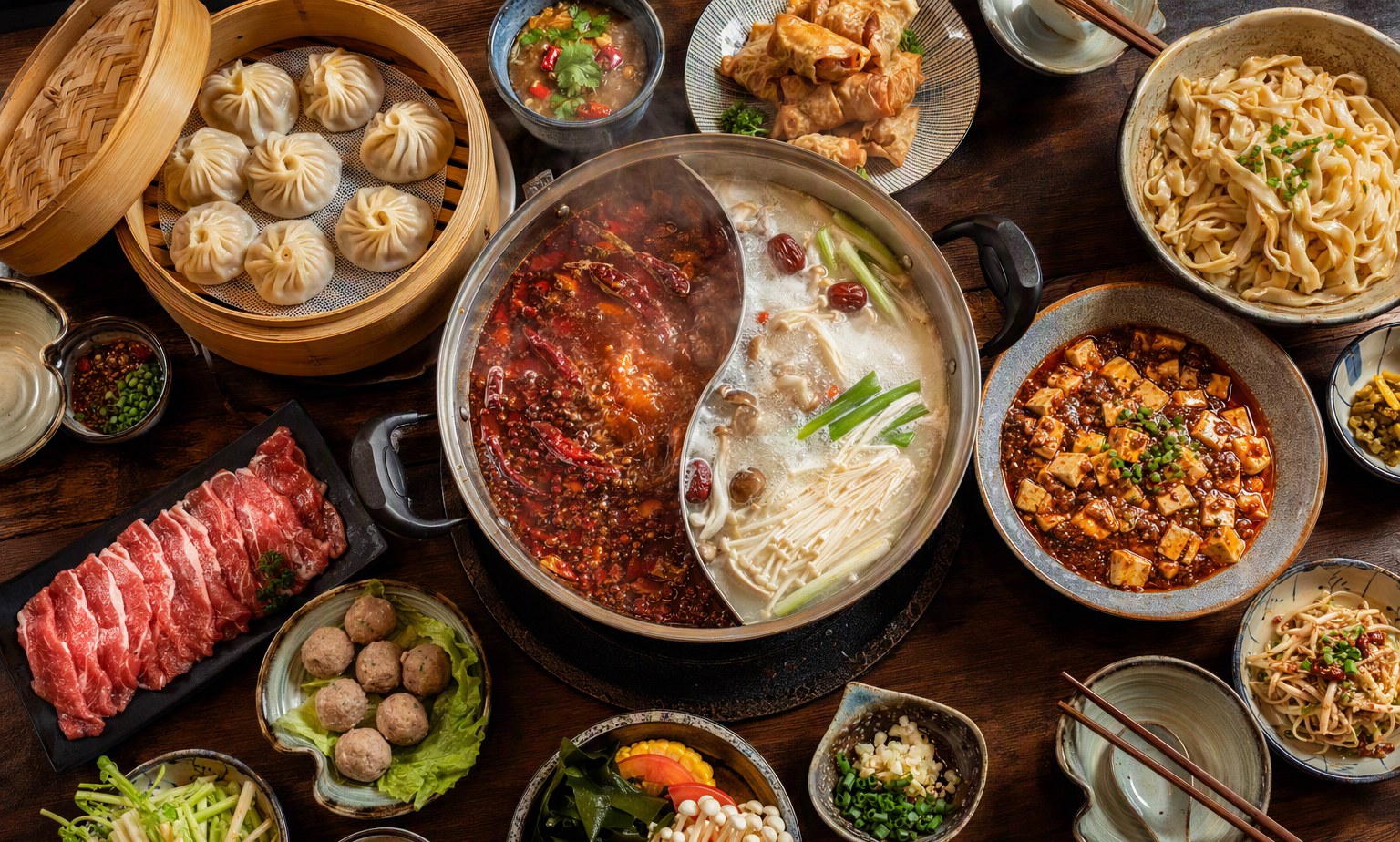
“Chinese food” abroad is a pale shadow of the real thing. China is a continent of eight recognised regional cuisines, thousands of local dishes, and a street-food culture with no real equivalent elsewhere. This is a first-timer’s field guide to eating well, ordering confidently and knowing what to prioritise when you only have one trip.
The regional big eight, and what to order
Beijing: Peking duck carved tableside and wrapped with hoisin and scallion, zhajiang noodles, jianbing egg crepes for breakfast, and lamb skewers in the hutongs.
Sichuan and Chongqing: hotpot with numbing peppercorn and chilli oil — ask for the split yuanyang pot if you want a mild side — plus mapo tofu, dan dan noodles and wontons in chilli oil.
Cantonese (Guangzhou and Hong Kong): dim sum mornings with har gow, char siu bao and rice-noodle rolls; roast goose; congee.
Shanghai and the Jiangnan region: xiaolongbao soup dumplings (nibble the skin, slurp the broth), red-braised pork, hairy crab in autumn, scallion oil noodles.
Xi’an: the Muslim Quarter’s roujiamo, hand-pulled biangbiang noodles, lamb paomo soup and cold liangpi.
Yunnan: crossing-the-bridge rice noodles, grilled goat cheese, mushroom hotpot in summer, flower cakes.
Hunan: the hotter, prouder cousin of Sichuan — steamed fish with chopped chilli, and stinky tofu that tastes far better than it smells.
Fujian: Buddha Jumps Over the Wall, a luxury slow-cooked soup; oyster omelettes; a deep soup culture.
For city-by-city specifics, our دليل ووهان لوجبات الشارع و دليل تشنغتشينغ لمأكولات الشارع go deeper on two of the most rewarding food cities.
Spice survival
“Mild” in Sichuan often means what a Western visitor would call hot. Two phrases carry you a long way: bú là (不辣, “not spicy”) and wēi là (微辣, “mildly spicy”). Save them in your translation app and show the screen rather than attempting the tones. Sichuan peppercorns do not add heat; they add a citrusy numbness called má, which is a different sensation entirely and worth trying deliberately.
Milk or yoghurt beats water for a chilli emergency. Every region has non-spicy classics, so spice is optional rather than mandatory — you can eat superbly for two weeks without ever ordering a numbing dish. If you have dietary restrictions, see our guide to الطعام الحلال والنباتي في الصين.
How ordering actually works
Many restaurants hand you a paper menu to tick, often with pictures. Pointing at what a neighbouring table is eating works remarkably well. Dishes arrive as they are ready and are shared, so order roughly one dish per person plus one extra, with rice as the anchor. Lazy Susans are standard at round tables. Tea is usually free; napkins sometimes carry a small charge.
For menus without pictures, a translation camera is your friend. Our guide to تطبيقات الترجمة والعبارات الأساسية covers which tools work and what to have offline.
Street food rules
A busy stall means high turnover, which usually means fresh oil. The queue is the review score. Breakfast streets and night markets are the two great arenas: jianbing, baozi, chuanr skewers, stinky tofu, tanghulu. Carry small notes, or set up a payment app before you fly — our دليل السفر بدون نقد explains the options. If a stall looks sleepy at lunchtime, walk on.
Hygiene standards vary, and most travellers eat street food without incident. Use judgement: cooked-to-order food from a hot wok or grill is a safer bet than anything sitting out pre-made.
Drinks, tea and digestifs
Beer is cheap and everywhere at meals, with local craft breweries now common in larger cities. Baijiu is the nuclear option — toast with it and sip politely. Tea is the real soul of the table: Longjing greens in Hangzhou, pu-erh in Yunnan, jasmine with Cantonese meals. Buy from a proper tea shop rather than an airport gift counter.
If you are moving between cities by rail, onboard catering is limited, so buy food at the station before boarding. Our high-speed rail seat classes and onboard food guide explains what to expect.
The five dishes to prioritise
With two weeks: Peking duck in Beijing, soup dumplings in Shanghai, dim sum in Guangzhou or Hong Kong, hotpot in Chengdu, and the Muslim Quarter in Xi’an at night. That is the pilgrimage. Everything else is a bonus.
Build the itinerary around meals rather than squeezing food in between sights, and check opening days and reservation requirements for popular restaurants on the venue’s own page before you travel — these change, and third-party listings lag behind.
الأسئلة الشائعة
Is it safe to eat street food in China?
Generally yes, with common sense. Choose stalls with a visible queue and food cooked to order in front of you. Avoid anything pre-cooked and sitting at ambient temperature, and be cautious with raw or unpeeled produce if your stomach is sensitive.
Do I need cash for restaurants and stalls?
Mobile payment dominates, and many stalls are cashless in practice. Set up a payment app before departure and keep a small amount of cash as backup. Check current setup requirements on the provider’s own page, since eligibility rules for foreign cards change.
How do I say “not spicy” in Chinese?
استخدام bú là (غير حار) للطعام غير الحار و wēi là (حار قليلًا) للطعام الحار قليلًا. عرض الأحرف على شاشة هاتفك بدل الاعتماد على النطق، وتأكد قبل الطلب وليس بعد وصول الطبق.
هل يمكن للنباتيين والمسافرين المسلمين تناول طعام جيد في الصين؟
نعم، مع التخطيط المسبق. فمطاعم البوذيين النباتية والمطابخ المخصصة للحلال (تشينغ تشين) وحي المسلمين في شيآن تقدّم أطباقًا خالية من اللحوم أو أطباقًا حلالًا. تعلّم الأحرف ذات الصلة واحملها مكتوبة معك؛ راجع دليلنا المتخصص للحصول على تفاصيل أكثر.
ما الأشياء التي يجب أن تحجزها قبل وصولك؟
تزايد اعتماد المطاعم الشهيرة في المدن الكبرى على الحجوزات، وبعض المعالم السياحية تتطلب حجز دخول في أوقات محددة. تحقق مباشرةً من الصفحة الرسمية لكل موقع أو قناة الحجز الخاصة به، وتأكد من أيام الافتتاح، إذ يغلق العديد من المتاحف والمطاعم يومًا واحدًا أسبوعيًا.
اعتبر المدارس الثمانية للطهي خريطة تقريبية لا دليلاً صارمًا، واطلب طبقًا إضافيًا أكثر مما تظن أنك تحتاجه، ودع الطابور يحدد لك المكان الذي ستتناول فيه طعامك. تأكد من أي معلومة مرتبطة بالوقت — مثل ساعات الافتتاح وأنظمة الحجز وإعدادات الدفع — من الصفحة الرسمية للمُشغِّل أو الموقع نفسه قبل الاعتماد عليها.