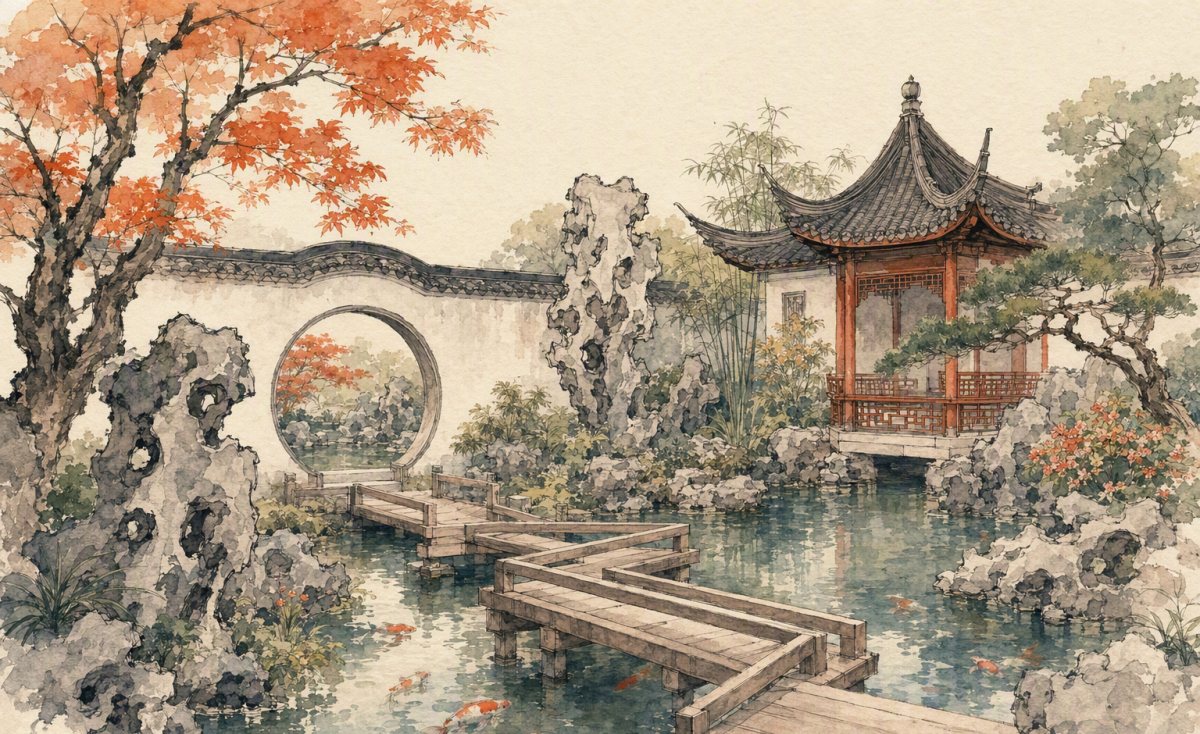
“Up above there is heaven; down below, Suzhou and Hangzhou.” For roughly a thousand years, retired officials and merchants built walled gardens in Suzhou, and nine of the surviving classical gardens are UNESCO-listed. The city rewards planning: the famous gardens are compact, the old canal lanes are walkable, and the water towns sit within an hour. This guide covers which gardens are worth your time, how to see the old town without the worst crowds, and how to slot Suzhou into a wider Jiangnan route.
Which classical gardens to prioritise
You cannot see all nine properly in a day, and you should not try. Pick two or three and give each an unhurried hour or two.
حديقة المُدير المتواضع is the largest and best known, built around a central pond with bridges, pavilions and borrowed scenery that pulls distant views into the composition. It draws the biggest crowds, so arriving at opening time is the single most effective decision you can make. Confirm the current opening time and last entry on the garden’s official ticketing page before you go, as seasonal hours change.
حديقة لينغرينغ is the most architectural of the group, known for corridors and lattice windows that frame deliberate views as you walk. It rewards slow movement rather than photography stops.
حديقة سيد الشباك is the smallest and most ingenious, using borrowed views to feel far larger than its footprint. In spring and autumn it sometimes hosts evening garden performances; whether these are running, and on which nights, is something to check directly with the garden or an official Suzhou tourism channel rather than assume.
Lion Grove is the rockery labyrinth, a stacked stone maze that children treat as a playground and adults treat as a puzzle. It is small; pair it with a nearby stop rather than making it the day’s centrepiece.
For a fuller picture of how these gardens fit into a wider regional itinerary, see this guide to ٥ أيام في هانغتشو, which covers the other half of the old proverb.
Old Suzhou on foot
Pingjiang Road is the canal lane on every camera roll: whitewashed houses, stone bridges, small shops. It is genuinely pleasant at the edges of the day and uncomfortably packed in the middle. Walk it early, then loop back through the quieter side alleys parallel to the main street.
Shantang Street runs a longer canal stretch and is best known for lantern-lit evening walks and boat rides. Boat services, timings and prices change; check at the jetty or on an official Suzhou tourism page rather than trusting an old blog post.
Tiger Hill sits outside the old grid and holds the leaning pagoda associated with the earliest garden laid out here. It is a half-day trip in itself, and the climb is short.
Museums, silk and indoor backup
الـ Suzhou Museum, designed by I.M. Pei, is a reason to visit the city on its own, and it sits beside the Humble Administrator’s Garden, so the two pair naturally. Entry is typically free but capacity-limited and often requires advance reservation through the museum’s official channel; check the current booking system before you travel.
الـ Silk Museum explains the whole process from cocoon to cloth, and the No.1 Silk Factory runs demonstrations. Both are useful wet-weather options, and both are the kind of place where you should confirm opening days and demonstration times on site or via official listings, since these vary by season.
Water towns within reach
Three are commonly visited from Suzhou. تونغ لي combines canals with its own classical garden and feels more lived-in. Zhouzhuang is the postcard version, with the crowds that implies. Luzhi is the quiet one, better for a slow half-day than a checklist. All are reachable by road, and some by bus or rail plus a local connection. Verify current routes, departure points and ticket arrangements on the operator’s own page, because services are adjusted seasonally.
If you are building a broader route, this برنامج جويلين إلى يانغشو shows how river-and-canal towns fit into a longer trip.
Getting there and when to go
Suzhou is a short القطار عالي السرعة hop from Shanghai, which makes it a viable day trip but a much better overnight. Two days lets you see gardens in the morning light, walk the canals in the evening, and add a water town. For how ticketing and station procedures work, see this دليل القطارات فائقة السرعة في الصين, and for passport-based booking specifics, this guide to شراء تذاكر القطار باستخدام جواز سفر أجنبي.
Spring blossom and autumn foliage are the classic windows. Chinese public holidays, especially the October Golden Week and Spring Festival, transform crowd levels and transport availability. Check the official public holiday calendar for your dates and avoid travelling between cities on the first and last days of any major holiday.
ملاحظات تخطيط عملية
Gardens are timed-entry in busy periods, so book through official channels rather than resellers. Payment in China is overwhelmingly mobile; set up a payment app before you arrive and keep a small cash backup. This دليل السفر بدون نقد يغطي هذا الجزء عملية الإعداد. أما للتخطيط اللاحق، فيمكن لأداة الذكاء الاصطناعي أن تُعدّ مساراً مقترحاً، لكن لا ينبغي الاعتماد عليها في أوقات الفتح المعلنة؛ لذا يُنصح بالتحقق من أي معلومات تقدّمها عبر الصفحات الرسمية، كما ورد في هذه المقالة حول استخدام الذكاء الاصطناعي لإعداد جدول رحلة إلى الصين دون افتراض أوقات فتح غير صحيحة.
الأسئلة الشائعة
كم عدد الأيام التي أحتاجها في سوتشو؟
يومان هما الحد الأدنى المريح: يومٌ لزيارة حديقتين أو ثلاث حدائق بالإضافة إلى المتحف، ويومٌ آخر لمدينة سوتشو القديمة وبلدة المياه. ويمكن زيارة سوتشو كرحلة ليوم واحد من شنغهاي، لكن ذلك يجبرك على الاختيار بين الحدائق والقنوات.
هل يجب حجز تذاكر الحدائق مسبقاً؟
نعم، عملياً، في موسم الذروة وحول العطل الرسمية. تحقّق من قناة التذاكر الرسمية لكل حديقة للإطلاع على قواعد الحجز الحالية، والفترة الزمنية المخصصة للدخول، وأي متطلبات وثائق هوية، إذ قد تتغير هذه الشروط.
هل يمكنني زيارة سوتشو كرحلة ليوم واحد من شنغهاي؟
نعم. رحلة القطار عالي السرعة قصيرة، لكنك ستقضي جزءاً ملحوظاً من اليوم في التنقل. أما البقاء ليلةً واحدة في المدينة فيمنحك الاستمتاع بأوقات الصباح الباكر والعشاء حين تبدو الحدائق والأزقة في أجمل حالاتها.
هل تستحق بلدة المياه زيارتها؟
نعم، إذا كنت تبحث عن القنوات دون الخلفية الحضرية. اختر البلدة حسب تحملك للازدحام: تونغلي للمزج بين الحدائق والقنوات، وزهوتشوانغ للصورة الكلاسيكية، ولوتشي للهدوء. تأكّد من تفاصيل النقل وأوقات الفتح قبل اتخاذ القرار.
ما الذي يجب أن أتجنبه؟
محاولة زيارة عدد كبير جداً من الحدائق في يوم واحد، والوصول إلى الحدائق الشهيرة في منتصف الصباح، والسفر خلال أسبوع الذهب. احجز عبر القنوات الرسمية، وتحقّق من الأوقات بنفسك، واحرص على ترك هامش زمني كافٍ في جدولك.
تعمل سوتشو بشكل أفضل عندما تُعامل كمكانٍ للتباطؤ بدلًا من قائمة مهام يجب إنجازها. اختر عدداً أقل من الحدائق، وتمشَّ في طرقات القنوات في أطراف اليوم الهادئة، وتأكد من كل التفاصيل المرتبطة بالوقت عبر الصفحة الرسمية قبل السفر.