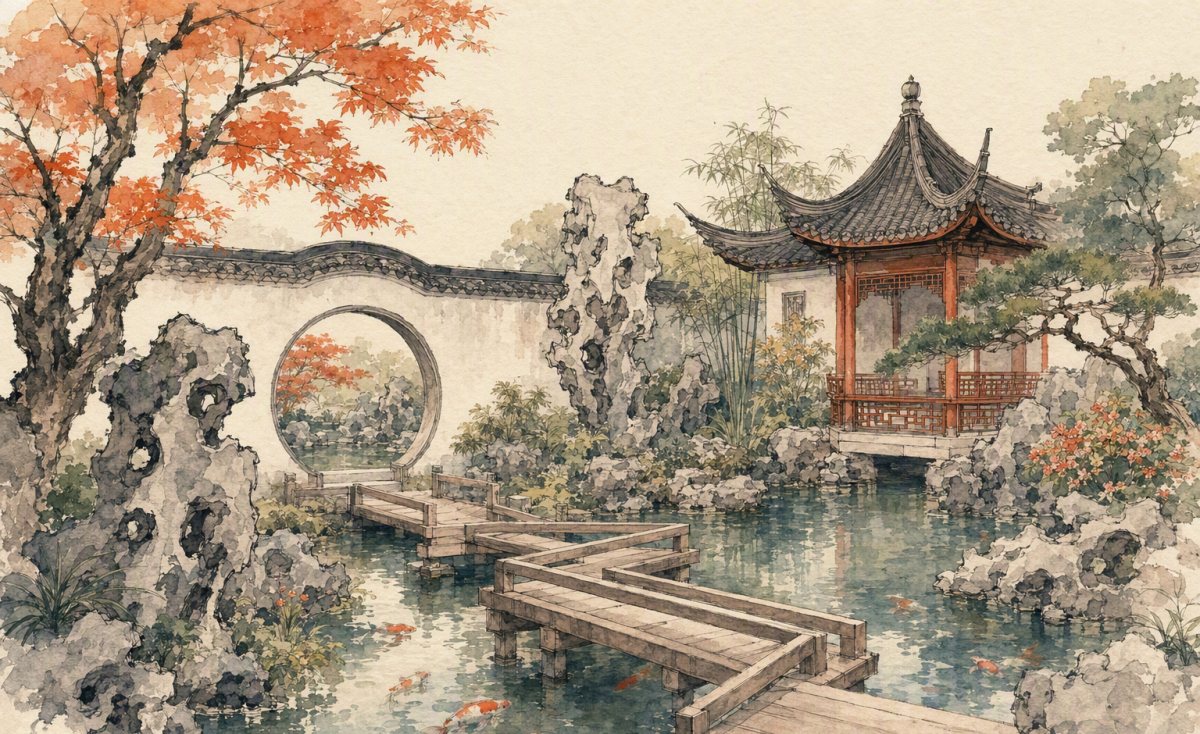
“Up above there is heaven; down below, Suzhou and Hangzhou.” For roughly a thousand years, retired officials and merchants built walled gardens in Suzhou, and nine of the surviving classical gardens are UNESCO-listed. The city rewards planning: the famous gardens are compact, the old canal lanes are walkable, and the water towns sit within an hour. This guide covers which gardens are worth your time, how to see the old town without the worst crowds, and how to slot Suzhou into a wider Jiangnan route.
Which classical gardens to prioritise
You cannot see all nine properly in a day, and you should not try. Pick two or three and give each an unhurried hour or two.
สวนอวี้หยวน (Humble Administrator’s Garden) is the largest and best known, built around a central pond with bridges, pavilions and borrowed scenery that pulls distant views into the composition. It draws the biggest crowds, so arriving at opening time is the single most effective decision you can make. Confirm the current opening time and last entry on the garden’s official ticketing page before you go, as seasonal hours change.
สวนหลิงหลิง (Lingering Garden) is the most architectural of the group, known for corridors and lattice windows that frame deliberate views as you walk. It rewards slow movement rather than photography stops.
สวนหม่าจื่อเหว่ย (Master of the Nets Garden) is the smallest and most ingenious, using borrowed views to feel far larger than its footprint. In spring and autumn it sometimes hosts evening garden performances; whether these are running, and on which nights, is something to check directly with the garden or an official Suzhou tourism channel rather than assume.
Lion Grove is the rockery labyrinth, a stacked stone maze that children treat as a playground and adults treat as a puzzle. It is small; pair it with a nearby stop rather than making it the day’s centrepiece.
For a fuller picture of how these gardens fit into a wider regional itinerary, see this guide to หางโจว 5 วัน, which covers the other half of the old proverb.
Old Suzhou on foot
Pingjiang Road is the canal lane on every camera roll: whitewashed houses, stone bridges, small shops. It is genuinely pleasant at the edges of the day and uncomfortably packed in the middle. Walk it early, then loop back through the quieter side alleys parallel to the main street.
Shantang Street runs a longer canal stretch and is best known for lantern-lit evening walks and boat rides. Boat services, timings and prices change; check at the jetty or on an official Suzhou tourism page rather than trusting an old blog post.
Tiger Hill sits outside the old grid and holds the leaning pagoda associated with the earliest garden laid out here. It is a half-day trip in itself, and the climb is short.
Museums, silk and indoor backup
The Suzhou Museum, designed by I.M. Pei, is a reason to visit the city on its own, and it sits beside the Humble Administrator’s Garden, so the two pair naturally. Entry is typically free but capacity-limited and often requires advance reservation through the museum’s official channel; check the current booking system before you travel.
The Silk Museum explains the whole process from cocoon to cloth, and the No.1 Silk Factory runs demonstrations. Both are useful wet-weather options, and both are the kind of place where you should confirm opening days and demonstration times on site or via official listings, since these vary by season.
Water towns within reach
Three are commonly visited from Suzhou. ถ่งลี่ combines canals with its own classical garden and feels more lived-in. Zhouzhuang is the postcard version, with the crowds that implies. Luzhi is the quiet one, better for a slow half-day than a checklist. All are reachable by road, and some by bus or rail plus a local connection. Verify current routes, departure points and ticket arrangements on the operator’s own page, because services are adjusted seasonally.
If you are building a broader route, this เส้นทางกุ้ยหลิน–หยางซู่โอะ shows how river-and-canal towns fit into a longer trip.
Getting there and when to go
Suzhou is a short รถไฟความเร็วสูง hop from Shanghai, which makes it a viable day trip but a much better overnight. Two days lets you see gardens in the morning light, walk the canals in the evening, and add a water town. For how ticketing and station procedures work, see this รถไฟความเร็วสูงจีน, and for passport-based booking specifics, this guide to การซื้อตั๋วรถไฟด้วยหนังสือเดินทางต่างประเทศ.
Spring blossom and autumn foliage are the classic windows. Chinese public holidays, especially the October Golden Week and Spring Festival, transform crowd levels and transport availability. Check the official public holiday calendar for your dates and avoid travelling between cities on the first and last days of any major holiday.
หมายเหตุการวางแผนเชิงปฏิบัติ
Gardens are timed-entry in busy periods, so book through official channels rather than resellers. Payment in China is overwhelmingly mobile; set up a payment app before you arrive and keep a small cash backup. This การเดินทางแบบไร้เงินสด ครอบคลุมการตั้งค่าเบื้องต้น สำหรับการวางแผนต่อเนื่อง เครื่องมือปัญญาประดิษฐ์ (AI) สามารถร่างเส้นทางให้ได้ แต่ไม่ควรไว้วางใจข้อมูลเวลาเปิด-ปิดที่ AI สร้างขึ้นเอง จึงจำเป็นต้องตรวจสอบข้อมูลทั้งหมดกับเว็บไซต์ทางการอีกครั้ง ตามที่อธิบายไว้ในบทความนี้เกี่ยวกับ การใช้ AI วางแผนเที่ยวจีนโดยไม่ใส่เวลาเปิด-ปิดที่แต่งขึ้นเอง.
คำถามที่พบบ่อย
ฉันควรใช้เวลาในซูโจวนานเท่าไรดี?
สองวันเป็นระยะเวลาขั้นต่ำที่เหมาะสม: วันแรกเที่ยวสวนสองถึงสามแห่งพร้อมพิพิธภัณฑ์ ส่วนวันที่สองสำรวจเมืองเก่าและเมืองริมน้ำ แม้จะไปแบบเช้าไปเย็นกลับจากเซี่ยงไฮ้ภายในวันเดียวได้ แต่คุณจะต้องเลือกระหว่างสวนกับคลองเท่านั้น
ฉันต้องจองตั๋วเข้าสวนล่วงหน้าหรือไม่?
ในช่วงฤดูท่องเที่ยวสูงสุดและรอบวันหยุดราชการ คำตอบคือ 'ใช่' ในทางปฏิบัติ โปรดตรวจสอบช่องทางจำหน่ายตั๋วอย่างเป็นทางการของแต่ละสวนเพื่อดูกฎการจองล่าสุด ช่วงเวลาเข้าชม และข้อกำหนดเกี่ยวกับเอกสารประจำตัว เนื่องจากอาจมีการเปลี่ยนแปลงได้ตลอดเวลา
ฉันสามารถเที่ยวซูโจวแบบเช้าไปเย็นกลับจากเซี่ยงไฮ้ได้หรือไม่?
ได้ค่ะ การเดินทางด้วยรถไฟความเร็วสูงใช้เวลาสั้นมาก แต่คุณจะใช้เวลาในการเดินทางค่อนข้างมากในแต่ละวัน การพักค้างคืนจะทำให้คุณได้สัมผัสช่วงเวลาที่ดีที่สุดของสวนและตรอกซอกซอย คือช่วงเช้าตรู่และเย็นมืด
เมืองริมน้ำเหล่านี้คุ้มค่ากับการมาเที่ยวหรือไม่?
หากคุณอยากเห็นคลองโดยไม่มีฉากหลังของเมืองใหญ่ ก็คุ้มค่าแน่นอน โปรดเลือกเมืองริมน้ำตามระดับความทนต่อฝูงชน: ถงลี่เหมาะสำหรับผู้ชื่นชอบสวนและคลอง โจวจวงเหมาะสำหรับภาพคลาสสิกที่คุ้นตา ส่วนลู่จื้อเหมาะสำหรับผู้ที่ต้องการความเงียบสงบ อย่าลืมตรวจสอบรายละเอียดการเดินทางและเวลาเปิด-ปิดก่อนตัดสินใจ
สิ่งที่ควรหลีกเลี่ยงคืออะไร?
พยายามเที่ยวสวนมากเกินไปในวันเดียว การไปถึงสวนชื่อดังตอนสาย และการเดินทางในช่วง Golden Week ควรจองผ่านช่องทางทางการ ตรวจสอบเวลาเปิด-ปิดด้วยตนเอง และเผื่อเวลาว่างไว้ในตารางการเดินทาง
ซูโจวจะให้ประสบการณ์ที่ดีที่สุดเมื่อคุณมองว่าเป็นสถานที่สำหรับชะลอจังหวะชีวิต ไม่ใช่แค่ทำเครื่องหมายว่า 'เสร็จแล้ว' โปรดเลือกเที่ยวสวนจำนวนน้อยลง เดินเล่นริมคลองในช่วงเวลาที่เงียบสงบของวัน และยืนยันทุกรายละเอียดที่ขึ้นกับเวลาผ่านเว็บไซต์ทางการก่อนออกเดินทางเสมอ