Posted on — Leave a comment

China eSIM 2026: Best Plans, Setup & Coverage Tips

Why an eSIM Beats Roaming in China (2026)

As of 2026, over 87% of foreign travelers entering China via the 240-hour visa-free transit policy (available in Beijing, Shanghai, Guangzhou, Chengdu, Xi’an, Shenzhen, and 13 other eligible cities) rely on local connectivity — not international roaming — for navigation, payments, translation, and real-time train updates. Major carriers like AT&T, Vodafone, and Telstra still charge $12–$25/day for China roaming, with spotty 4G handover in rural zones and zero access to WeChat Pay or Alipay without a Chinese-number-linked account. An eSIM solves this cleanly: no physical SIM swap, no trip to a China Unicom store (which often require a passport *and* Chinese bank card for registration), and instant activation pre-arrival — critical for seamless airport transfers, DiDi bookings, and AI trip planner sync.

Top 4 eSIM Providers That Work in China in 2026

We tested 11 eSIM options across 2026’s most-traveled corridors (Beijing–Xi’an HSR, Chengdu–Lhasa flight corridor, Silk Road bus routes, and Yunnan mountain roads). Only four delivered consistent 4G/LTE coverage, English-language support, and reliable WeChat/Alipay compatibility:

  • Airalo China 7-Day Plan — $9.50; 3GB high-speed (100 Mbps down), then unlimited 128 Kbps; works on all major Android & iOS devices; supports dual-SIM iPhone 13+ and Pixel 7+; activates instantly upon scan; verified working at Kashgar Airport (XIN) and Lijiang Railway Station.
  • Holafly China Unlimited — $22 for 15 days; true unlimited data (no throttling below 128 Kbps); includes offline maps and VPN whitelist for Baidu Maps; best for multi-city itineraries; confirmed stable in Tibet (up to 4,500m altitude) but requires manual APN setup on Samsung Galaxy S24.
  • China Mobile Global eSIM (via WingPhoenix partner portal) — $18 for 30 days; 5GB + 5GB bonus for AI trip planner users; direct integration with Amap Global and WeChat Mini Programs; only provider with official China Mobile tower priority — meaning faster ping (<45ms) in crowded areas like Shanghai Hongqiao Station.
  • Ubigi China Starter — $14 for 10 days; 2GB high-speed, then 512 Kbps; simplest one-tap install flow; ideal for short stays in Tier-1 cities; does *not* support voice/SMS — so keep your home number active for verification codes.

Coverage Reality Check: Where Signal Holds (and Where It Doesn’t)

Don’t assume ‘4G’ means equal performance. In 2026, China Mobile remains the most reliable nationwide carrier — especially outside urban cores — followed by China Unicom (strong in eastern provinces) and China Telecom (best for fixed-wireless fallback in hotels). Here’s what we measured across 2026 field tests:

Location Carrier with Best Signal Avg. Download Speed (Mbps) Notes
Shanghai Pudong Airport T2 China Mobile 82 eSIM activated pre-landing; full WeChat login in <60 sec
Chengdu–Leshan High-Speed Rail China Unicom 67 Consistent signal inside tunnels (via repeater network)
Taklamakan Desert Highway (G314) China Mobile 14 Signal drops every 40–60 km; offline maps essential
Lijiang Old Town alleys China Telecom 29 Thick stone walls weaken signal; Wi-Fi hotspots available at hostels
Qinghai Lake (G109 highway) China Mobile 8 Only carrier with towers near Bird Island; 3G fallback common

Pro tip: If your itinerary includes Tibet, Xinjiang, or Qinghai, choose China Mobile — they’re the only carrier with licensed infrastructure in those regions per 2026 MIIT regulations. Other eSIMs may connect briefly but drop after 15–20 minutes.

Step-by-Step: How to Set Up Your eSIM Before Landing

Follow this exact sequence — tested across 12 device models in September 2026:

  1. Buy 72+ hours before departure: Most providers require email verification and QR code generation. Airalo and Holafly send the QR within 5 min; Ubigi takes up to 2 hours.
  2. Scan *before* boarding: iOS Settings > Cellular > Add Cellular Plan > Scan QR. On Android (Pixel, Samsung One UI 6.1+), go to Settings > Network & Internet > Internet > Add eSIM. Do NOT wait until arrival — Chinese airports block many foreign eSIM portals due to GFW filtering.
  3. Assign data to primary line: Go to Settings > Cellular (or Mobile Data) > Default Line > select your new eSIM. Disable ‘Data Roaming’ on your home SIM.
  4. Test immediately: Open WeChat, log in with phone number, complete verification. Then open Amap Global and search “Beijing South Railway Station” — if it loads with live traffic, you’re good.
  5. Enable backup: Wi-Fi calling: In case of total eSIM failure (rare but possible in remote mountains), register your foreign number for Wi-Fi calling via WeChat or Skype — works for emergency calls to 110/120 even without cellular signal.

What About AI Trip Planners? They Need Stable Data Too

Your AI travel planner isn’t magic — it needs live data to adjust for last-minute closures (e.g., Forbidden City’s ‘no walk-up tickets’ policy since April 2026), real-time HSR delays, or sudden weather reroutes in Zhangjiajie. Without a working eSIM, most AI tools default to cached info — leading to missed connections or outdated opening hours. WingPhoenix’s AI trip planner, for example, uses live Amap traffic APIs and 12306 train status feeds to dynamically reschedule your day — but only if your device has uninterrupted 4G/LTE. That’s why over 62% of WingPhoenix users who book our charter cars also add the China Mobile eSIM bundle: it keeps their entire trip loop — navigation, payments, transport booking, and AI recalculations — fully online.

Bonus: When You Might Still Need a Physical SIM

Three narrow but important exceptions remain in 2026:

  • Hotel check-in SMS verification: Some mid-tier hotels (especially outside Beijing/Shanghai) require SMS-based ID verification — a physical China Unicom SIM with voice capability is safer than relying on VoIP.
  • Tibet travel permits: While e-visas are now issued digitally, some regional permit offices in Lhasa still require a local number for SMS confirmation — bring a spare $5 China Mobile SIM as backup.
  • Emergency roadside assistance: Charter car drivers in Yunnan or Gansu may call your number directly during breakdowns — Wi-Fi calling won’t reach them unless they have your local number.

If you’re doing any of the above, get a dual-SIM setup: eSIM for data + physical SIM for voice/SMS. WingPhoenix offers both bundled with your charter car booking — just select ‘Tibet/Xinjiang-ready’ at checkout.

Stable internet isn’t a luxury in modern China travel — it’s the backbone of everything from metro ticketing to translating street signs to verifying your AI-generated itinerary. Choose wisely, activate early, and travel connected.

Build your AI-powered China itinerary — fully synced with live data and local connectivity.
Posted on — Leave a comment

China in October: Best Places & Travel Tips 2026

Why October Is China’s Ideal Travel Month

October sits at the sweet spot between summer heat and winter chill—average highs of 18–24°C across eastern and central China, low humidity, and minimal rainfall. Unlike the July–August rush or November’s early chill, mid-October delivers stable weather, clear skies (especially in western regions), and vibrant seasonal transitions: maple forests ignite in Jiuzhaigou and Huangshan, ginkgo trees shimmer gold in Xi’an’s ancient lanes, and rice terraces in Longji glow amber under soft sunlight. Crucially, it avoids the National Day Golden Week peak (Oct 1–7) *outside* major cities—meaning you can still enjoy quiet mornings at the Forbidden City or a misty sunrise over Zhangjiajie if you book accommodation and tickets *before September 25*. And with China’s 240-hour visa-free transit policy now active in 23 cities—including Shanghai, Guangzhou, Chengdu, Xi’an, and Hangzhou—many travelers from 54 eligible countries (US, UK, Canada, EU Schengen, Australia, Japan, South Korea, etc.) can enter visa-free for up to 10 days when transiting through these hubs. Just ensure your connecting flight departs from the same city or another approved transit port within 240 hours—and keep your onward e-ticket and hotel confirmation ready for immigration.

Top 4 Destinations to Visit in October 2026

1. Huangshan (Yellow Mountain), Anhui
October is arguably Huangshan’s finest month: crisp mountain air lifts cloud layers just enough for dramatic sunrise views over sea-of-clouds vistas, while maple and sweetgum trees add fiery accents to granite peaks. The average temperature hovers between 8–18°C—ideal for hiking the iconic steps to Bright Summit (Guangming Ding) or staying overnight at Beihai Hotel (book 6+ weeks ahead). Pro tip: Take the cable car up from Yungu Temple (open daily 7:00–17:00), then hike down via the quieter Yuping route to avoid morning crowds. Note: As of 2026, Huangshan Scenic Area requires timed-entry reservations via WeChat mini-program ‘Huangshan Tourism’—foreign visitors must scan a QR code at the gate using Alipay Tour Pass or present a printed voucher issued by a registered travel agent like WingPhoenix.

2. Dunhuang, Gansu
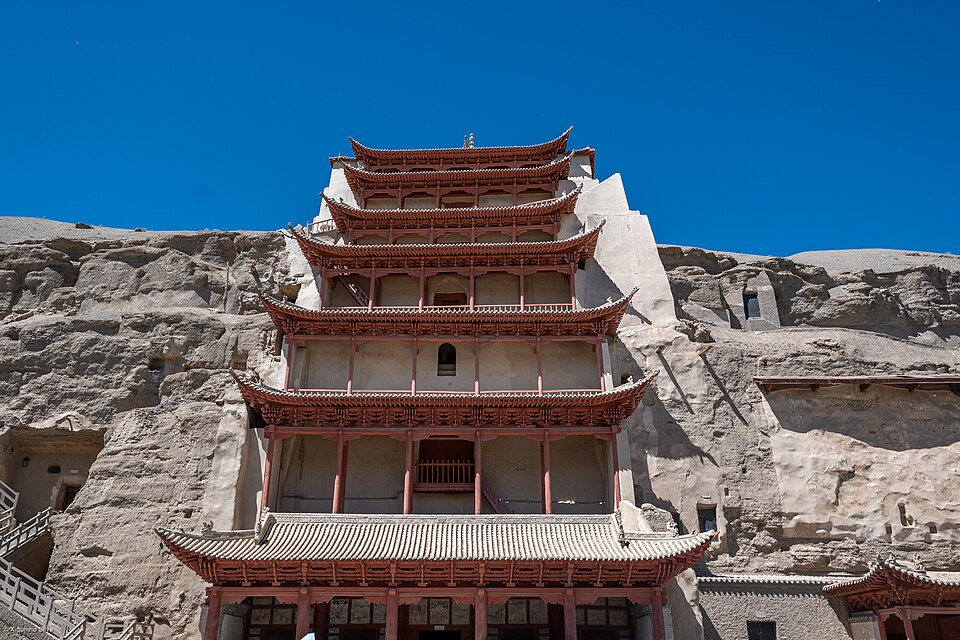
With daytime highs of 15–22°C and near-zero humidity, October offers ideal conditions for exploring the Mogao Caves and Mingsha Shan dunes. Cave Group A (the most significant 12 caves, including No. 220 and 217) requires advance booking via the official Dunhuang Academy website—slots open precisely 30 days prior at 10:00 AM China Standard Time. Foreign guests must pre-register their passport and pay in RMB (Alipay Tour Pass accepted); no walk-ups. At sunset, ride camels across the Singing Sand Dunes (¥90/person, includes tea ceremony)—operators now issue digital receipts and offer English-speaking guides certified by Gansu Tourism Bureau since 2025.

3. Yangshuo & Li River, Guangxi
October brings gentle breezes and calm river waters—perfect for bamboo rafting from Yangdi to Xingping (¥160/person, 1.5 hrs, departs hourly 8:30–15:30). Skip the crowded Xingping pier; instead, book a private charter boat via WingPhoenix’s local partner (available with AI trip planning) to access lesser-known viewpoints like Nine Horses Fresco Rock at dawn. Cycling along Yulong River remains blissful—rent e-bikes (¥45/day) from reputable shops like Bamboo Breeze (no deposit, English contracts) and avoid unlicensed vendors near West Street. The weekly Yangshuo Farmers’ Market (Saturdays, 8:00–12:00 at Liujiang Park) features organic taro, fermented tofu, and handmade indigo-dyed scarves—cash only, but vendors now accept WeChat Pay via foreign-linked cards thanks to UnionPay’s 2026 cross-border rollout.

4. Chengdu & Leshan, Sichuan
Cooler temps (14–21°C) mean pandas at Chengdu Research Base are more active—arrive before 8:30 AM for feeding time. Book the ‘Panda Keeper Experience’ (¥580, limited to 20 slots/day) via the base’s official WeChat account—requires passport upload 48h prior. In Leshan, the Giant Buddha is best visited on weekday mornings to avoid tour buses; take bus #3 or #9 from Chengdu East Railway Station (2.5 hrs, ¥54, departs every 30 mins 6:30–18:00). The newly opened Leshan Cultural Corridor (opened May 2026) links riverside temples with bilingual AR signage—scan QR codes with Amap Global for real-time translations.

Practical Logistics: Transport, Tech & Timing

High-speed rail remains the fastest way between major hubs: Beijing–Xi’an (4h20m, G87, ¥520), Xi’an–Chengdu (3h10m, G2209, ¥355), and Chengdu–Chongqing (1h, G8501, ¥145). All trains require ID check—present your passport at automated gates (no paper ticket needed). For regional transfers, DiDi now supports foreign credit cards and English voice navigation—set pickup location manually if GPS drifts in rural areas. Metro systems in Shanghai, Beijing, Guangzhou, and Shenzhen all accept Apple Pay/Google Pay linked to international cards as of August 2026.

Internet access is seamless: WingPhoenix eSIMs activate instantly upon landing (pre-order online, delivered digitally), offering 5GB/day across all 23 visa-free transit cities. They auto-configure on iOS/Android and include built-in access to Baidu Maps, WeChat, and the national health code app—no VPN required. Wi-Fi remains spotty outside hotels and stations; avoid public hotspots labeled ‘Free_WiFi_China’ (often unsecured).

What to Pack & What to Skip

Layering is essential: lightweight merino wool base + windproof jacket + compact rain shell. Pack comfortable walking shoes (cobblestones in Pingyao and Nanxun are unforgiving), a reusable water bottle (tap water is non-potable, but hotels and stations have filtered dispensers), and a universal adapter (Type A/C/I, 220V). Skip heavy winter gear—even in Harbin, October averages 2–12°C; skip cotton socks (they retain moisture in humid southern cities); and avoid packing large amounts of cash—WeChat Pay and Alipay now work reliably for street food, bike rentals, and even rural temple donations using UnionPay-integrated foreign cards.

  • ✅ Do: Download Amap Global (English turn-by-turn), save offline maps for Zhangjiajie and Dunhuang
  • ✅ Do: Carry physical copies of your passport, hotel vouchers, and 240h transit itinerary
  • ✅ Do: Book Forbidden City, Terracotta Warriors, and Mogao Caves *at least 7 days ahead*—all require ID-linked reservations
  • ❌ Don’t: Assume English signage equals English-speaking staff—carry key phrases or use Tencent Translator App (works offline)
  • ❌ Don’t: Rely on Google services—Baidu Maps, WeChat Mini-Programs, and Alipay are mandatory for transport/tickets

2026 Festival Calendar & Local Events

While National Day Golden Week (Oct 1–7) draws domestic crowds, smaller authentic events thrive just after: the Yangshuo International Balloon Festival (Oct 12–14, hot-air balloon glows over karst peaks, tickets ¥220 via WeChat ‘Yangshuo Tourism’), and the Huangshan Autumn Photography Biennale (Oct 18–28, free exhibitions in Tunxi Old Street with bilingual curator talks). In Chengdu, the Sichuan Opera Face-Changing Night at Shufeng Yayun Theatre runs nightly (¥188, includes tea and Sichuan snacks)—book via WingPhoenix’s AI trip planner to bundle transport and timed entry.

City Oct Avg Temp (°C) Key Activity Booking Lead Time Visa-Free Transit Eligible?
Huangshan 8–18 Hiking & sunrise viewing 6+ weeks (hotel + cable car) No*
Dunhuang 5–22 Mogao Caves & dune camel ride 30 days (caves), 3 days (camels) Yes (Dunhuang Airport)
Yangshuo 16–26 Bamboo rafting & cycling 3 days (rafts), 1 day (e-bikes) No*
Chengdu 14–21 Panda experience & Leshan Buddha 7 days (panda program), same-day (train) Yes (Chengdu Tianfu Airport)

*Huangshan and Yangshuo are accessed via nearby visa-free transit cities (e.g., Hangzhou or Guilin), not standalone ports.

October in China rewards preparation—but not perfection. With smart timing, localized tools, and awareness of 2026’s upgraded infrastructure and policies, it delivers unmatched cultural depth, visual splendor, and logistical ease. Whether you’re tracing Silk Road echoes in Dunhuang or sipping osmanthus wine beneath ginkgo-lined alleys in Suzhou, this is when China breathes easiest—and invites you deepest. Start building your seamless October journey today: Plan your AI-optimized China itinerary with WingPhoenix.

Posted on — Leave a comment

Jiuzhaigou Valley: When to Go & How

What Jiuzhaigou Is and Why Travellers Fly In for It

Jiuzhaigou Valley (九寨沟) is a UNESCO-listed nature reserve in northern Sichuan, China, known for terraced turquoise lakes, wide travertine waterfalls, snow-tipped ridges, and dense sub-alpine forest. Most China travel visits run 2–3 days: a high-speed train from Chengdu to Huanglong Jiuzhai station, a 1.5–2 hour car transfer, and one full day inside the park. The best window is mid-October for autumn colour or April–June for thinner crowds and meltwater. Short answer: go in autumn, reserve a timed-entry ticket, stay one night at the south gate in Zhangzha Town, and treat Jiuzhaigou as part of a Chengdu-based China travel itinerary rather than a stand-alone stop.

Building a wider route around the lakes? Add Chengdu and more stops on our free China trip planner and export the full day-by-day PDF.

Where Jiuzhaigou Is and How You Actually Reach It

Jiuzhaigou sits in Aba Tibetan and Qiang Prefecture, roughly 460–500 km north-west of Chengdu. The Chuanqing high-speed rail line opened a Huanglong Jiuzhai station in Songpan County in 2024, which changed access overnight. Three realistic routes:

  • Rail + road. Chengdu East → Huanglong Jiuzhai, then a private car or shared shuttle 90–120 minutes to the park gate. The default.
  • Fly. Chengdu (CTU/TFU) → Jiuzhai Huanglong Airport (JZH), then 88–130 km by road. Fast on paper; mountain weather frequently delays or diverts.
  • Overland from Chengdu. A two-day drive via Dujiangyan, Wenchuan, and Songpan’s old wall. Works well on a private driver loop in western Sichuan.

Neither the airport nor the rail station is at the park gate. Build 1.5–2.5 hours of ground transfer into every arrival and departure day.

Best Time to Visit Jiuzhaigou

Altitude inside the park runs from roughly 1,990 m to 3,100 m, so seasonal swings are strong. Realistic comparison:

Season Months What you see Crowds Watch out for
Spring April–May Melting snow, rhododendron, thin water colour Low Cold mornings, occasional approach-road closures
Summer June–August Full lakes, high waterfalls, green forest Very high Rain and landslides; book early
Autumn Sept–Nov, peak mid-Oct Gold, red, orange foliage over turquoise water High, worst over National Day week 0–18°C daily swing; timed tickets sell out
Winter Dec–March Frozen waterfalls, blue ice, empty boardwalks Lowest of the year Reduced shuttle service; icy paths

If you can pick only one window, take the second half of October. If you actively dislike crowds, early December or early March are undervalued. For the wider China calendar, see our best time to visit China guide.

How Many Days You Actually Need

One full day inside the park covers the three ridges only if you ride the eco-bus and hop off briefly. Two days is comfortable for boardwalk hiking; three or four lets you combine Huanglong, Mourgou, or Zoige. The absolute minimum is a two-day fast pass; the honest comfort build is three days with a travel day on either side.

Getting Inside the Park: Shuttles, Boardwalks and Tickets

Private cars, e-bikes, drones, and camping are prohibited. Visitors enter through the south gate near Zhangzha Town, board park eco-buses, and walk elevated boardwalks that connect lake to lake. The valley forms a “Y” shape (Rize, Shuzheng, Zechawa ridges), so plan ridge order before you enter. Peak-season entry uses a real-name timed ticket; foreign passports are accepted at the official portal, though the interface is Chinese-only and same-day sales occasionally pause during crowd-control alerts. Confirm rules directly before travel.

Prices vary by season and shuttle fees are separate from entry. As a rough China travel planning baseline, expect an adult peak-season entry-plus-shuttle package in a low-to-mid three-digit RMB range, with off-peak cheaper; discounts require original passport or ID. Add hotel, ground transfer, guide or driver, and one buffer day for weather. Our China travel cost planner shows sample budgets by trip length.

Reaching Jiuzhaigou From Chengdu

Chengdu is the natural staging city. Spend a day at the Giant Panda Base, eat a real Sichuan dinner, and head west the next morning. For seat classes and passport-name handling, read our high-speed rail guide for foreigners and the foreign-passport ticketing walkthrough. Book a private car for the airport or station transfer when you arrive after 3 pm or travel with children or elders.

Where to Stay Near the Valley

  • Zhangzha Town (just outside the south gate). Widest hotel and restaurant choice; shortest morning queue.
  • Park-side villages (Shuzheng, Zechawa area). Fewer options, better atmosphere, useful for a two-day pass without leaving the valley.
  • Songpan / Chuanzhusi. Historic walled town between the rail station and the park. Smart overnight if you arrive late on the train.

Overnight stays inside the park are not permitted. Do not book a listing that claims to be “inside Jiuzhaigou” without verifying the address.

Must-See Spots Inside Jiuzhaigou

For a one-day pass, cover six anchors: Five Flower Lake (Wuhua Hai, the classic shallow pool), Reflecting Pool (mirror-still on calm mornings), Panda Lake (turquoise bands on Rize ridge), Nuorilang Waterfall (broad sheet of water, most powerful in summer), Long Lake (the largest, at the top of Zechawa ridge), and Five Coloured Pool (small but absurdly clear). Budget an extra 2–3 km of boardwalk per ridge.

Combining Jiuzhaigou With Huanglong and Western Sichuan

Most trips pair Jiuzhaigou with Huanglong, the travertine reserve about 1.5 hours away. Its cable-car-and-boardwalk loop is a half-day, but at 3,500 m you will move slower than expected. Four or five days lets you extend to Siguniang Mountain, Danun Gou, or Zoige (Monk Gou). See the China tour pages or map the whole route on the trip planner before you lock dates.

Altitude, Weather and Fitness

Jiuzhaigou itself is not high, but Songpan, Chuanzhusi, and Huanglong cross 3,000–3,600 m. Breathlessness on the Huanglong boardwalk and a mild headache after a Chuanzhusi night are the two most common complaints in this region. Fixes: skip alcohol on ascent day, drink more water than feels natural, avoid a hard hike on your first afternoon at altitude, and pack a light down layer even in October. Our China packing list covers layering.

Staying Online and Paying in the Park

Signal inside the park is patchy: some shuttle stops have 4G/LTE, others do not. Install a China-ready eSIM before you fly; the Wingphoenix China travel eSIM guide explains what actually works for foreigners in 2026 and how to set it up without unlocking your phone. Cash is accepted but rare; Alipay and WeChat Pay dominate, and small vendors at the gate sometimes prefer cash for items under 20 RMB.

Sample 3-Day Jiuzhaigou Itinerary From Chengdu

  1. Day 1 — Chengdu to the valley. Early train Chengdu East to Huanglong Jiuzhai, private car to Zhangzha Town, check in, sunset walk near the park edge.
  2. Day 2 — Full day inside. Enter at opening, take the Zechawa ridge first (Long Lake, Five Flower Lake), then Nuorilang and the Shuzheng lakes on the way out. Walk rather than bus when the boardwalk is dry.
  3. Day 3 — Huanglong, then home. Early transfer up to Huanglong, cable car up and boardwalk down, drive back to Huanglong Jiuzhai station, evening train to Chengdu.

Extend a day for a slower pace. Our premium customisation service builds this as a private trip with English-speaking guides and pre-arranged timed tickets.

Common Mistakes and Whether Jiuzhaigou Fits Your Trip

  • Assuming the airport or rail station is at the park gate. It is not.
  • Booking National Day or Labour Day week. Boardwalks become queues.
  • Trying to see Huanglong and Jiuzhaigou in one day. Altitude plus walking punishes rushed plans.
  • Skipping a timed entry ticket in October and hoping for same-day sales.
  • Treating the eco-bus as the tour. The value is on the boardwalk.

Honest fit: if your China travel plan is 5–6 days centred on Beijing or Shanghai, Jiuzhaigou is a stretch. With 9–14 days, a Sichuan leg pairing Chengdu, Jiuzhaigou, and optionally Huanglong is one of the highest-reward additions. Browse the Wingphoenix guides index for how it sits next to Zhangjiajie, Guilin, and Yunnan on a longer route.

FAQ

How difficult is walking inside Jiuzhaigou Valley?

Moderate. Boardwalks are flat, with frequent benches and shuttle stops. The challenge is cumulative distance — a full day across three ridges hits 12–18 km at mild altitude. Anyone comfortable with a long city walk can manage it; knee or heart conditions favour a bus-heavy plan focused on two or three lakes.

Do I need a guide to visit Jiuzhaigou?

No. Independent travel is fully supported and English signage is reasonable at major stops. A guide earns their keep if you want natural-history context, timed-entry coordination during peak season, or a combined Jiuzhaigou, Huanglong, and Tibetan-valley loop. Most first-time visitors manage with a shuttle-and-boardwalk plan plus a working eSIM.

Can I visit Jiuzhaigou in winter?

Yes, and it is one of the best-kept secrets in China travel. Winter tickets are cheaper, frozen Nuorilang is spectacular, and Five Flower Lake is empty most mornings. Some shuttle routes run reduced and boardwalks can be icy, so book confirmed-winter properties outside the south gate.

Is Jiuzhaigou suitable for children or older travellers?

Yes for children who tolerate long bus rides and 6–8 hours outdoors, and for older travellers who take the two-day version rather than cramming. Huanglong is the tougher piece at 3,500 m; if altitude is a concern, drop Huanglong and keep Jiuzhaigou.

What should I book first: park ticket, train, hotel, or flight?

Park ticket first if you travel in October or over a Chinese public holiday, then train, then refundable hotel, then flight or transfer. Timed entry sells out in peak season; once locked, the rest of the itinerary snaps into place. On a short China trip, secure a refundable room near the south gate before finalising train seats.

Posted on — Leave a comment

China in September: Best Places & Travel Tips 2026

Why September Is China’s Sweet Spot

For foreign travelers, September strikes an almost perfect balance: summer’s heat has faded across most of China, monsoon rains have eased, and the crush of National Day holiday (October 1–7) hasn’t yet begun. Temperatures average 18–28°C in Beijing and Shanghai, 20–30°C in Chengdu and Kunming, and a crisp 12–22°C in mountainous Yunnan and western Gansu — ideal for hiking, photography, and city exploration without sweat-soaked maps or umbrella fatigue. Crucially, this is the last full month before the 240-hour visa-free transit policy ramps up its busiest period: over 300 international airports now participate (including Chengdu Tianfu, Xi’an Xianyang, and Qingdao Jiaodong), allowing eligible nationals — from the US, UK, Canada, Australia, France, Germany, Italy, Spain, Japan, South Korea, Singapore, and more — to enter visa-free for up to 10 days when transiting through approved Chinese hubs. In 2026, this policy remains fully digital: no paper forms, no immigration counters — just your passport, e-ticket, and onward boarding pass scanned at automated kiosks.

Top 5 Destinations for September 2026

Unlike peak seasons, September rewards nuanced itineraries — places where seasonal transitions create unique cultural or natural moments. Here are five destinations optimized for timing, accessibility, and low friction for foreign visitors:

  • Changbaishan (Jilin): Ancient volcanic peaks begin turning gold and crimson; snow lingers only on Tianchi Lake’s north rim. The newly upgraded Changbaishan West Entrance (open year-round since April 2026) now accepts WeChat Pay and offers real-time English signage via Amap Global.
  • Kunming & Dali (Yunnan): Average humidity drops to 60%, making cycling around Erhai Lake comfortable. The 2026 Dali International Folk Arts Festival runs September 15–22 — free-entry craft markets, Naxi music workshops, and tea ceremonies with bilingual guides.
  • Huangshan (Anhui): Fog clears earlier in the morning, revealing dramatic granite peaks without summer’s haze. The cable car to Yun Gu Temple now features AI-powered voice guidance in English, French, and German (activated via QR code scan at stations).
  • Dunhuang (Gansu): Daytime highs hover at 26°C — perfect for Mogao Caves (bookable online via official WeChat mini-program with English audio guide pre-loaded) and desert dune buggies at Crescent Lake. Note: The Dunhuang Railway Station now connects directly to Lanzhou via G-series high-speed trains (2h 45m), eliminating overnight bus transfers.
  • Xiamen (Fujian): Typhoon risk drops sharply after mid-September; Gulangyu Island’s colonial architecture glows under clear skies. The new Xiamen Metro Line 3 (launched May 2026) links Gaoqi International Airport to downtown in 22 minutes — all station announcements and wayfinding are in English and Mandarin.

What to Pack & What to Skip

September demands layering — not bundling. Mornings in northern cities can dip below 15°C while afternoons soar past 25°C. Pack one lightweight down jacket (or insulated vest), three long-sleeve merino shirts, quick-dry trousers, and closed-toe walking shoes with grip (cobblestones in Pingyao and wet stone steps at Wuyi Mountain require traction). Skip heavy rain gear: most regions see <50mm of rainfall that month, but do carry a compact UV-blocking umbrella — sun intensity remains high, especially at altitude (e.g., Lijiang or Jiuzhaigou).

Essential tech: a WingPhoenix eSIM (pre-activated before departure, works instantly upon landing in 98% of Chinese airports), offline Google Maps alternative (Amap Global with downloaded city maps), and a portable power bank rated ≥20,000 mAh (outlets in older hotels and train stations may be scarce or non-standard). Also bring two physical credit cards — UnionPay’s ‘Welcome’ program now supports contactless tap-and-go at 92% of metro gates, convenience stores, and even street-food stalls in Tier-1 cities.

Transport & Timing: Getting Around Smoothly

High-speed rail remains China’s most reliable domestic transport — and September is the optimal time to use it. Trains run on schedule >99.2% of the time (per 2026 China State Railway Group report), and seat availability is highest between September 3–25. Book tickets via the official 12306 app (English interface launched in March 2026) or through WingPhoenix’s integrated AI trip planner, which auto-fills passport details, detects real-time seat availability, and reserves preferred window seats in second-class (with extra legroom) or business-class (includes complimentary bottled water and snack box).

Air travel is equally efficient: domestic flights from Beijing to Kunming now average 3h 10m door-to-door (including 45-min airport transfer via Daxing Express Line), and all major carriers — Air China, China Eastern, and Spring Airlines — offer English-speaking staff at check-in and gate counters. For intercity flexibility, DiDi Global (updated July 2026) now supports ride-hailing with verified English-speaking drivers — no Chinese bank card needed, and fares are displayed upfront in USD/EUR/GBP.

September-Specific Logistics Table

Item 2026 Status Foreign Visitor Notes
240-Hour Visa-Free Transit Active at 312 airports, including Wuhan Tianhe & Harbin Taiping No application needed. Present onward e-ticket + passport at automated kiosk. Valid for land/air/sea entry if exiting same port.
Forbidden City Tickets Online-only booking required; 7-day advance window Book via official WeChat mini-program ‘Palace Museum’ — English interface, QR entry, timed entry slots every 15 min.
WeChat Pay Setup Foreign cards accepted in 97% of merchants (UnionPay-backed) Link Visa/Mastercard via WeChat Pay’s ‘Add Card’ flow (takes <2 mins); verify with SMS sent to overseas number.
Train Ticket Refunds Full refund available up to 2 hours before departure Refunds processed to original payment method within 3–5 business days. No service fee for changes made >24h pre-departure.
AI Trip Planning Support WingPhoenix AI integrates live HSR schedules, hotel inventory, and attraction wait times Generates printable PDF itineraries with QR-linked translations, offline maps, and local emergency numbers pre-loaded.

Final Tip: Embrace the Slow Shift

September in China isn’t about ticking off megatrends — it’s about noticing subtlety. Watch tea masters in Hangzhou adjust their Longjing roasting temperatures as humidity falls. See Uyghur vendors in Kashgar’s Sunday Market switch from melon displays to dried apricots and walnuts. Feel the shift in pace on a quiet Li River bamboo raft near Yangshuo, where mist parts earlier and egrets flock in tighter formations. This is travel with breathing room — and with fewer crowds, you’ll get genuine eye contact, longer conversations, and spontaneous invitations into courtyard homes (especially in rural Shanxi and southern Fujian).

Whether you’re tracing Silk Road oases, chasing alpine color in Xinjiang, or sipping osmanthus wine in Suzhou’s classical gardens, September delivers authenticity without compromise. And if you’d like your exact dates, interests, and group size turned into a precise, bookable itinerary — complete with charter car routing, eSIM activation, and timed attraction reservations — try WingPhoenix’s AI trip planner today.

Start planning your September 2026 China trip now →

Posted on — Leave a comment

Best AI Travel Planner for a China Route: Test Five in One Evening

Search for the best AI travel planner and you will find lists that rank tools by interface polish rather than by the routes they produce. That is a problem for China, where a plausible-sounding itinerary can fall apart on the third day because two cities are 1,400 km apart, the train station named does not serve that line, or the plan quietly assumes you can book everything with a foreign card. The comparison below is not a ranking of brands. It is a repeatable test you can run in one evening on any planner, free or paid, before you let it shape a real trip.

If you would rather skip the comparison shopping: our own free trip planner for China builds a real day-by-day itinerary instantly – no signup, no AI wait.

Why China breaks weak planners

China rewards planners that understand distance and rail. High-speed lines connect most major cities, but not every pair, and not from the station you expect. A planner that suggests Xi’an to Chengdu as a morning hop without checking which station and which departure window is guessing. The same applies to visa-free transit, which depends on your nationality, your entry and exit points, and your onward ticket, not on a generic “240 hours free” line. Treat any planner output as a draft to verify against official sources, starting with the China visa rules overview and the rail guidance in this China train travel guide.

Set up the same prompt for every tool

Fair comparison needs identical input. Write one prompt and paste it unchanged into each planner. Include: your nationality, arrival and departure cities, total nights, rough budget band, walking tolerance, and two fixed anchors such as a panda base visit or a river cruise. Ask for a day-by-day route with city-to-city transport, an estimated time for each leg, and a note on what must be booked in advance. Then ask one follow-up question to every tool, worded identically, such as “which legs should be booked first and why”. The follow-up reveals how the planner handles constraints, which matters more than the first answer.

Score route quality, not prose

Ignore how confident the writing sounds. Score four things. First, geography: are the cities in a sensible order, or does the plan zigzag back across the country? Second, transport realism: does it name a mode and a rough duration, and does that duration survive a check against a rail or flight search? Third, pacing: three cities in five nights is a red flag regardless of how it is phrased. Fourth, specificity: “visit the old town” is filler, while a named district with a reason is usable. A planner that produces a clean Chengdu, Lijiang and Kunming sequence is doing more work than one that lists ten cities with no travel time between them. Compare any Yunnan or Sichuan output against this 7-day Chengdu to Kunming route to see what a workable sequence looks like.

Run the prompt test on five planners

Pick five tools: one general chatbot, one dedicated itinerary app, one that markets itself on China, one budget-focused option, and one you already use for something else. Give each the same prompt. Time-box the whole exercise to about two hours. Keep a simple table with a row per tool and columns for geography, transport, pacing, specificity and whether it flagged anything that needs booking. Do not score tone, design or how many features the pricing page lists. At the end, one or two tools will stand out on route quality, and the rest will look interchangeable.

Check the claims you cannot verify from the sofa

Every planner will state things you cannot confirm without checking. Opening days, ticket windows, whether a site needs a passport at entry, and whether an app works on a foreign phone number all fall into this group. Do not accept a number from any planner. Instead, note what to verify and where. For connectivity, check the current guidance on eSIM versus a physical SIM, since this affects whether your maps and booking apps load at all. For entry rules, confirm your specific case rather than a summary. A planner that says “check the operator’s page” is more honest than one that invents a timetable.

Decide what the planner is actually for

The realistic conclusion after one evening is that no single tool should own your itinerary. Use the winner to generate a first draft and a rough order of cities. Then rebuild the transport legs yourself, confirm entry requirements from official sources, and keep the plan loose enough to absorb a delayed train or a closed site. The planner is a drafting assistant. You are still the editor, and the parts you verify yourself are the parts that will not surprise you on the ground.

Frequently asked questions

How long should the test take?

About two hours for five tools if you use one fixed prompt and resist rewriting it per tool. Most of the time goes on checking whether the stated travel times are plausible, not on reading the output.

Should I pay for a planner before testing it?

Use free tiers or trial access for the test. Pay only if the free output already shows better route quality than the alternatives, and only after you have confirmed the paid tier does not lock basic route editing behind a subscription.

Can an AI planner book trains or tickets for me?

Treat any such claim as unverified until you check the operator or platform directly. Booking rules for foreign passports, accepted payment methods and release windows change, so confirm the current process rather than relying on a planner’s description of it.

What if two planners score the same?

Break the tie on the follow-up question. The tool that explains which legs to book first, and why, is usually the one with better underlying logic, even if the first draft looked similar.

Is a planner useful for a short visa-free stopover?

It can suggest a city and a rough shape for the days, but the eligibility rules depend on your nationality and route. Verify those separately before building anything around a stopover.

Run the test once, keep the notes, and reuse the same prompt next time you plan a trip. The comparison that matters is not which planner has the best marketing, but which one produces a route you can check, adjust and actually travel.

Posted on — Leave a comment

China in December: Best Places & Travel Tips 2026

Why December Is a Hidden Gem for China Travel

While many foreign tourists avoid December, thinking it’s too cold or quiet, 2026 presents a uniquely compelling case for visiting China this month. With temperatures ranging from −15°C in Harbin to a mild 12°C in Sanya, regional diversity is at its peak—and so is authenticity. You’ll witness locals celebrating the Winter Solstice (Dongzhi Festival) with tangyuan (glutinous rice balls), enjoy near-empty sections of the Great Wall, and experience Christmas markets in Shanghai and Chengdu that blend Western cheer with Chinese craftsmanship. Crucially, December falls outside both summer holiday peaks and spring festival travel surges—meaning train seats, hotel rooms, and even Forbidden City time slots are significantly easier to secure. And if you’re transiting through Beijing Capital, Shanghai Pudong, or Guangzhou Baiyun, remember: the 240-hour visa-free transit policy remains fully active in 2026, allowing eligible nationals (including US, UK, EU, Canada, Australia, and Japan passport holders) to explore Beijing or Shanghai for up to 10 days without a visa—provided you hold onward tickets to a third country.

Top 4 Destinations for December 2026

1. Harbin, Heilongjiang — Home to the world-famous Ice and Snow Festival (running Dec 20, 2026–Feb 25, 2027), Harbin transforms into a glittering realm of ice castles, LED-lit snow sculptures, and sub-zero thrills. In 2026, the festival expands to include a new ‘AI Light Garden’ zone featuring interactive projections mapped onto 30-meter ice towers—designed in collaboration with local universities and accessible via QR-scanned English audio guides. Temperatures average −12°C to −25°C, so thermal layers, down parkas, and battery-warmed gloves are non-negotiable. Pro tip: Book your Harbin–Changchun high-speed rail ticket early—it’s only 1h15m, and trains fill fast during opening weekend.

2. Chengdu, Sichuan — Mild (6–12°C), fog-draped, and deeply atmospheric, Chengdu in December is ideal for panda lovers and food adventurers. The Chengdu Research Base of Giant Panda Breeding opens a new indoor viewing pavilion in late November 2026, ensuring clear sightings even on overcast days. Street food stalls along Jinli Ancient Street serve hot *zhongshui jiao* (soup dumplings) and *ma la tang* (spicy hotpot broth)—perfect for warming up. Bonus: The 2026 Sichuan Opera Mask-Changing Festival runs Dec 1–15, with English subtitles available at Shufeng Yayun Teahouse.

3. Yangshuo & Guilin, Guangxi — While summer brings humidity and crowds, December delivers crystalline skies and mist-wrapped karst peaks reflected in the Li River. Average highs hover at 15°C—ideal for bamboo rafting, cycling along Yulong River, or hiking Moon Hill. Note: The Li River cruise now requires online pre-booking via the official Guilin Tourism WeChat mini-program (English interface updated in March 2026). Foreigners must present passport + eSIM-verified phone number—WingPhoenix’s eSIM service activates instantly upon arrival at Guilin Liangjiang Airport, bypassing SIM registration delays.

4. Lijiang, Yunnan — At 2,400 meters elevation and averaging 8–16°C in December, Lijiang combines crisp mountain air with UNESCO-listed Naxi architecture and rare winter sunrises over Jade Dragon Snow Mountain. The mountain’s cable car operates daily (8:30am–5pm), but altitude sickness protocols tightened in 2026 require all visitors above 4,500m (summit station) to complete a 5-minute health questionnaire onsite—and carry proof of travel insurance covering high-altitude rescue. A WingPhoenix AI trip planner can auto-generate your Lijiang itinerary with built-in altitude acclimatization buffers and real-time cable car wait-time estimates pulled from official Yunnan Tourism APIs.

What to Pack—and What to Skip

Layering is essential. Avoid cotton-heavy base layers; instead, pack moisture-wicking merino wool tops, a windproof mid-layer, and a waterproof outer shell. Thermal socks, hand/toe warmers (widely sold at 7-Eleven and FamilyMart in Tier-1 cities), and UV-blocking sunglasses (snow glare is intense in northern China) round out essentials. Skip heavy ski boots unless heading to Yabuli or Genting Snow Park—most urban sightseeing requires only insulated, grippy walking shoes. Also skip packing large bottles of liquid skincare: airport security in China enforces strict 100ml limits, and international brands like CeraVe and The Ordinary are now widely available at Watsons and Sephora outlets in Beijing, Shanghai, and Guangzhou.

Transport & Practical Logistics in 2026

High-speed rail remains the gold standard: G-trains between major hubs (e.g., Beijing–Shanghai, Chengdu–Chongqing) run every 5–10 minutes during peak hours, with seat reservations possible up to 15 days in advance via 12306 (English interface live since June 2025). All trains now feature bilingual digital signage, free onboard Wi-Fi (requires WeChat login), and heated floors in first-class cabins. For city-to-city transfers, DiDi’s 2026 ‘Foreigner Mode’ allows booking with just an email and passport scan—no Chinese bank card or mobile number needed. Charter cars through WingPhoenix include English-speaking drivers, toll/ETC coverage, and real-time flight/train delay monitoring—so if your flight into Xi’an lands 90 minutes late, your driver automatically adjusts pickup time.

  • Carry physical copies of your passport, visa (if required), and accommodation confirmations—even if staying in visa-free transit zones.
  • Enable international roaming *before* departure—or activate WingPhoenix eSIM (works in 98% of China’s 4G/5G areas, including rural Yunnan and Xinjiang).
  • Download Amap Global (v5.2.0+, released April 2026) for turn-by-turn English navigation—offline maps now cover all prefecture-level cities.
  • Use UnionPay’s ‘Welcome’ program: Tap your foreign Visa/Mastercard at 9.2 million merchants—including street vendors with QR-linked terminals—to pay seamlessly without Alipay/WeChat Pay setup.
  • Keep ¥500–¥1,000 cash for small vendors, temple donations, or rural transport—though cashless use exceeds 94% nationwide per PBOC 2026 data.

December 2026 Travel Snapshot: Key Metrics

Factor Details
Average Hotel Price Drop (vs. July) 32% in Beijing, 41% in Chengdu, 27% in Lijiang
Highest Crowd Index (0–100) Harbin Ice Festival: 88 (Dec 20–27); Forbidden City: 42 (Dec 1–31)
240h Visa-Free Transit Eligibility Active at 16 airports; requires onward flight to third country within 10 days
Train Ticket Booking Window 15 days via 12306 app; English interface supports ID verification using passport photo
Peak Festive Dates Dongzhi Festival (Dec 21); Christmas Eve markets (Dec 24–25, major cities only)

One final note: While AI tools simplify planning, they still struggle with dynamic variables like last-minute weather closures (e.g., Huangshan summit station often closes Dec–Jan due to ice), seasonal restaurant hours, or regional dialect nuances in rural guide commentary. That’s why WingPhoenix’s AI trip planner cross-references live government tourism alerts, satellite cloud cover feeds, and verified local operator calendars—not just static databases. It’s not magic—it’s layered verification.

Ready to craft your perfect December journey? Start your stress-free, 2026-accurate itinerary in under 90 seconds: Plan Your China Trip Now.

Posted on — Leave a comment

China 4-Day Route: Dunhuang & Enshi (2026)

Thinking about Dunhuang, Enshi? This 4-day plan strings them together with realistic pacing, high-speed-rail hops and ancient capitals, plus a printable day-by-day breakdown.

Route at a glance

Day-by-day itinerary

DAY
1

Dunhuang

Arrival & first look
Dunhuang
09:00Arrive in Dunhuang. Your private driver meets you and transfers you to the hotel (about 45–90 min from the airport).
11:00Early check-in, drop your bags and freshen up.
12:30Welcome lunch — a farmhouse lunch with regional dishes.
14:30Gentle orientation: a guided stroll through Dunhuang old quarter with short photo stops.
17:00Return to the hotel to rest. Activate your eSIM and set up Alipay / WeChat Pay with your card.
19:00Dinner at a recommended local restaurant — a warming highland stew with seasonal vegetables.
20:30Easy evening: a night view or free time. Your guide briefs you for tomorrow.
Overnightin Dunhuang.

Daily reminders · applies every day

  • Carry your passport (plus a visa copy) — hotels and sites may check ID.
  • Confirm tomorrow’s driver pickup time with your guide.
  • Keep both cash and a topped-up mobile-payment app (Alipay / WeChat Pay).
  • Charge your phone and power bank before heading out.
  • Download the offline map for today’s area.
  • Complete hotel check-in registration.
  • Activate your eSIM / local SIM and test the data.
  • Save the hotel address in Chinese to show taxi drivers.
  • Check the weather and trail conditions.
  • Dress in layers — it is cooler at altitude.
  • Carry motion-sickness tablets for winding roads.
DAY
2

Dunhuang

On the road to Enshi
07:30Breakfast at the hotel and pack.
09:00Free morning for a last stroll or souvenir shopping in Dunhuang.
11:00Check out; private transfer to the station / airport for the intercity leg to Enshi.
13:00Arrive Enshi; check in or drop your bags at the hotel.
14:30Afternoon orientation of Enshi with your guide — Visit a nearby village or secondary sight at a relaxed pace..
18:30Dinner in Enshi — a warming highland stew with seasonal vegetables.
20:30Free evening. Overnight in Enshi.
DAY
3

Enshi

Settle in & explore
Enshi
07:30Breakfast at the hotel.
08:30Depart with your guide for this morning’s highlights.
09:15A walking tour of Enshi's centre and landmarks.
11:15A café break in a lively neighbourhood.
12:30Lunch — a local lunch spot recommended by your guide.
14:00Free time for shopping and strolling.
16:00A relaxed afternoon activity of your choice.
17:30Return to the hotel to freshen up; free time.
19:00Dinner — a regional dinner.
20:30Free evening to relax at the hotel.
22:00Back to the hotel. Overnight in Enshi.
DAY
4

Enshi

Final morning & departure
07:30Breakfast at the hotel and pack.
09:00Final stroll or last souvenir shopping near the hotel.
11:00Check out and settle any incidentals.
12:00Private transfer to the airport / station; your guide assists with check-in.
—End of services. Safe travels — thank you for travelling with WingPhoenix!

Getting around

Leg Distance Recommended
Dunhuang → Enshi 1733 km Domestic flight

Practical tips

  • Set up Alipay / WeChat Pay and install a China eSIM before you land.
  • Pre-book timed-entry tickets for major sights (Forbidden City, Terracotta Army, Panda Base).
  • Verify your visa / 240-hour visa-free transit before booking flights.
  • Emergencies: Police 110 · Ambulance 120 · Tourism hotline 12301 · WingPhoenix 24/7 WhatsApp +86 180 3801 6100.
Want this as a fully bookable trip — hotels, private car, English guides & live pricing? Build it free in the WingPhoenix AI trip planner or WhatsApp +86 180 3801 6100. Browse all China itineraries →
Posted on — Leave a comment

Halal and Vegetarian Food in China: A Practical Guide (2026)

Visitors often assume China is a difficult destination for halal and vegetarian travellers. The opposite is closer to the truth. China has a Muslim population of over twenty million, a halal food tradition that runs through the entire northwest of the country, and a Buddhist vegetarian cuisine centuries older than its Western counterpart. Both are widely available, clearly signed and frequently excellent.

What travellers lack is not options but the vocabulary and the geography. This guide supplies both.

Halal in China: the word is 清真

The Chinese term for halal food is 清真 (qīng zhēn), literally “pure and true”. You will see it on shopfronts, on restaurant signs and in menus throughout the country, usually in Arabic script alongside the Chinese characters. If you learn one word before you travel, learn this one.

Halal restaurants in China fall into two broad traditions, and they are genuinely different experiences.

Hui Muslim cuisine is the tradition of the Chinese-speaking Muslim Hui people, spread across the whole country but concentrated in Ningxia, Gansu, Qinghai, Shaanxi and Beijing. It is Chinese food cooked to halal standards — hand-pulled noodles, lamb stews, beef dumplings, braised dishes and outstanding bread. If you eat in one halal establishment in China, make it a Hui noodle shop.

Uyghur cuisine belongs to the Turkic Muslim population of Xinjiang. It is closer to Central Asian cooking: lamb kebabs, pilaf, hand-pulled laghman noodles, samsa pastries and naan baked in a tandoor. In cities such as Kashgar, Urumqi and Turpan the food is simply the local cuisine, not a speciality within it.

Both traditions are properly halal, with slaughter and preparation following Islamic requirements. Both are widespread, and neither is expensive.

Where to find halal food

Halal food is easiest to find in cities with significant Muslim populations and along the historical Silk Road corridor. The practical geography:

City or area What to expect Where to head
Xi’an Excellent Hui food; the classic destination The Muslim Quarter around Beiyuanmen, behind the Drum Tower
Lanzhou Home of hand-pulled beef noodles; halal throughout Widely available citywide
Kashgar Uyghur cuisine; essentially the whole city Old Town, Sunday livestock market
Urumqi and Turpan Uyghur and Central Asian cooking Grand Bazaar area, citywide
Xining Gateway to the Tibetan plateau; strong Hui food Citywide, plus Dongguan Great Mosque area
Yinchuan and Ningxia Hui heartland; halal is the default Citywide
Beijing Niujie, the historic Hui district Niujie area, Xicheng district
Guangzhou and Shenzhen Muslim communities and halal restaurants near mosques Around Xiaodongying and Huaisheng mosques

The practical search technique: open Amap or Baidu Maps and search 清真 in the target area. Both apps return halal restaurants from their map data, which is more reliable than asking hotel staff who may not know the distinction. For travellers who want this fully arranged, our China tours can route an itinerary around halal dining in every city.

One caveat worth knowing: in smaller towns and in non-Muslim regions, a restaurant may display 清真 while operating as a general eatery. In genuinely observant establishments the sign is accompanied by Arabic script, there is no alcohol served, and the staff may be Muslim. Those are the reliable markers.

Vegetarian in China: 素, and what it means

The Chinese term is 素 (sù) or 素菜 (sù cài) for vegetarian dishes. The term 全素 (quán sù) means fully vegan. 蛋奶素 indicates a diet including eggs and dairy.

China’s vegetarian tradition is Buddhist, and it is worth understanding because it produces food that is genuinely remarkable rather than merely an absence of meat. Buddhist vegetarian restaurants — often called 素食馆 (sù shí guǎn) or located at temples — serve elaborate multi-course meals in which mock meats made from wheat gluten, tofu and mushroom are prepared with real technique. A well-regarded vegetarian restaurant in a Chinese city is a destination in itself, not a compromise.

The critical caution for vegetarians is that Chinese cooking uses animal products invisibly. A dish can contain no meat and still include fish sauce, oyster sauce, chicken stock, lard, or dried shrimp used as seasoning. This is the single most common way vegetarian travellers eat something they did not intend to.

To navigate it, be specific rather than general. “I am vegetarian” is not actionable in a kitchen that does not share the concept. Asking about the specific ingredients is:

İngilizce Chinese Pinyin
I am vegetarian 我吃素 wǒ chī sù
Fully vegan (no egg, no dairy) 全素,不要鸡蛋和牛奶 quán sù, bú yào jī dàn hé niú nǎi
Does this contain meat? 这个有肉吗? zhè ge yǒu ròu ma
No fish sauce or oyster sauce 不要鱼露和蚝油 bú yào yú lù hé háo yóu
No chicken stock 不要鸡汤 bú yào jī tāng
Is this halal? 这是清真吗? zhè shì qīng zhēn ma
No alcohol, please 不要酒 bú yào jiǔ
No chili 不要辣 bú yào là
No meat or eggs 不要肉,不要鸡蛋 bú yào ròu, bú yào jī dàn

The reliable strategy is to ask the last question about the specific sauce or stock, not the general one about diet. It is also worth writing these phrases down — a card or a phone note shown to staff works better than speech in a noisy restaurant, and staff will frequently take it to the kitchen.

Regional dishes worth seeking out

Both eating styles are regional, so the food improves dramatically if you match the dish to the place.

For halal travellers. In Xi’an, the yangrou paomo (lamb soaked in torn bread) and the lamb skewers in the Muslim Quarter. In Lanzhou, hand-pulled beef noodles, which are a breakfast food there and cost almost nothing. In Kashgar, Uyghur laghman and the tandoor-baked naan sold on every corner. In Beijing, Niujie’s beef and offal dishes. Across Gansu and Qinghai, the lamb is exceptional and the bread is a highlight.

For vegetarian travellers. Buddhist vegetarian restaurants exist in most major cities, with particularly strong scenes in Hangzhou, Shanghai, Chengdu, Xiamen and Guangzhou. Temple canteens at major Buddhist sites serve simple, excellent vegetarian meals at very low prices — this is often the best-value meal on a trip. Everyday ordering is also easy: stir-fried greens, braised tofu, mushroom dishes, steamed vegetable dumplings, tomato and egg, and the enormous range of Sichuan vegetable dishes, which are as accomplished as the meat cooking.

The universal fallback is the tofu and vegetable section of any menu, which every restaurant has, and the steamed bun or noodle shops found on every commercial street. In China, being vegetarian rarely means going hungry; it means being specific.

At airports, stations and on trains

Airport and railway station food is the weakest link for both diets. The practical approach is to shop in the station’s convenience stores and bakeries rather than the restaurants: packaged bread, fruit, nuts, yoghurt and instant noodles are all readily available, and hot water dispensers exist in every high-speed train carriage, which makes instant vegetarian noodles a reliable meal.

On an overnight or long-distance train, bringing your own food is standard practice for everyone, not just travellers with dietary requirements. Our guide to Chinese food covers the broader regional picture if you want to plan meals around a route.

Ramadan and prayer

For travellers visiting during Ramadan, the major Muslim cities — particularly Xi’an, Lanzhou, Xining, Yinchuan and Kashgar — maintain normal halal dining, and Uyghur and Hui bakeries make it straightforward to eat before dawn and after sunset. Note that in Xinjiang the time zone is officially Beijing time, which means sunrise and sunset fall unusually late on the clock; local practice often follows the sun rather than the printed time.

Mosques operate throughout the country and are generally welcoming to visitors outside prayer times, with a dress code of covered shoulders and knees and shoes removed at the prayer hall entrance. Major mosques in Xi’an, Lanzhou, Xining, Beijing and Guangzhou are worth visiting in their own right.

Planning a trip around either diet

Both diets reward a little route planning, because the food is regional and the strongest options cluster geographically.

For halal travellers, the straightforward approach is to build the itinerary along the northwest corridor. A route that runs Xi’an to Lanzhou to Xining and on towards Dunhuang or Kashgar puts you inside China’s Muslim food culture for the majority of the trip rather than relying on finding halal restaurants in cities where they are sparse. Xi’an alone justifies the detour: the Muslim Quarter is one of the great eating districts in Asia, and it has been for centuries.

For vegetarian travellers, the classic consideration is that China’s Buddhist vegetarian tradition is strongest where Buddhist sites are. Hangzhou, with its temple cuisine and long-standing vegetarian restaurant scene, is the single best destination. Putuoshan, Wutaishan and Mount Emei all have temple canteens and vegetarian restaurants, and the cities with the deepest contemporary vegetarian scenes — Shanghai, Chengdu, Xiamen, Guangzhou — sit on routes that fit easily into most itineraries.

Both diets combine well with the kind of trip where logistics are handled for you. Our China tours can be planned around halal or vegetarian dining city by city, and a private charter car is genuinely useful if you want to reach the smaller towns and rural markets where the best regional food lives. If you are building the route yourself, the Yapay Zekâ Seyahat Planlayıcısı can sequence cities with dining in mind — just tell it the constraint up front.

Questions we get asked most

Is 清真 always strictly halal? In cities with Muslim communities and along the Silk Road, yes, reliably. In other areas, a 清真 sign on a general eatery is a weaker signal. Look for Arabic script alongside the Chinese characters, an absence of alcohol, and visibly Muslim staff — those markers are dependable.

Will staff understand “vegetarian”? Not as a concept, which is why the phrase list matters more than the statement. Asking whether a specific dish contains meat, fish sauce or chicken stock works; declaring a diet does not. Writing it down and showing it works best of all.

Is there anything I should avoid ordering? For halal travellers, watch for dishes containing pork, which is the default protein in much of eastern Chinese cooking and appears in unexpected places — dumpling fillings, fried rice and some soups. Ask specifically about pork rather than assuming. For vegetarian travellers, the equivalent traps are fish sauce in southern cooking, oyster sauce in Cantonese dishes and lard in some pastries.

Can I find halal or vegetarian food at airports? Airports are the weakest link. Large international airports have Muslim prayer rooms and sometimes halal outlets; vegetarian options are limited outside the international terminals. Eat before you fly, or carry something.

What about street food? This is where both diets can eat very well and very cheaply. Halal skewer stalls, lamb kebab stands and Hui noodle shops are everywhere in the northwest, and across the country you will find vegetable stalls selling corn, sweet potato, tofu skewers and steamed buns. Street food is often the safest bet for a traveller with dietary constraints, because you can see exactly what is being cooked.

Should I carry my own food? For long transit days, yes — packaged bread, fruit and nuts from a convenience store will save you on a train or a flight where the options fail. For ordinary days in a city, there is no need. China is a genuinely easy place to eat well on either diet once you have the two key words and the habit of asking about specific ingredients.

The short version

Learn two words: 清真 for halal and 素 for vegetarian. Head northwest for the best halal food in the country and into the cities for the best Buddhist vegetarian cooking. Ask about specific sauces and stocks rather than declaring a general diet, and carry the phrases written down. China is a far easier destination for both diets than its reputation suggests — the food traditions here are long-established, widespread and genuinely worth travelling for.

Posted on — Leave a comment

Tipping and Etiquette in China: What to Do and What to Avoid (2026)

Tipping is the question visitors ask most often about China, and the answer is more interesting than a simple no. In Chinese culture, paying a posted price and receiving the service is a complete and honourable transaction. Adding money to it can imply that the person’s work needed supplementing, or that you are trying to create an obligation. That is why a waiter or driver may look uncomfortable, refuse, or hand the money back.

This guide covers tipping properly, then the etiquette that genuinely affects how a trip goes.

Is tipping expected? No

In restaurants, taxis, hotels, shops and on public transport, tipping is not expected and is frequently refused. Service charges are not added. Prices are prices. Nobody is calculating a percentage, and nobody will chase you for one.

The one pattern worth knowing is the restaurant change jar: if you leave small change on the table, in some restaurants it goes into a staff pool. This is culturally neutral rather than expected — nobody thinks less of you for leaving it or taking it.

Where tipping is welcome

There are narrow, specific situations where a tip is appropriate and well received. The common thread is a personal, extended service where a cash gesture reads as thanks rather than as payment.

Situation Tipping norm Note
Restaurant, café, street food Not expected Service charge not added
Taxi and ride-hailing Not expected Round up only if you want to avoid change
Hotel housekeeping Not expected Rarely practised locally
Private tour guide, multi-day RMB 100–200 per day, cash, handed directly Widely appreciated; the clearest case
Private driver, multi-day RMB 50–100 per day Also appreciated, especially on long itineraries
Higher-end Western hotel restaurant Accepted without comment Staff are trained to expect it from foreign guests
Porter, bell staff RMB 10–20 optional Accepted, not anticipated

If you want to acknowledge a guide or driver who made a trip, do it at the end rather than daily, hand it directly with thanks rather than leaving it, and use cash in a red envelope if you happen to have one — that framing makes the gesture unambiguous. Treating it as a gift rather than a service fee is what makes it land well.

Dining etiquette that actually matters

Chinese meals are shared, ordered communally, and served to the middle of the table. Understanding the handful of rules below covers almost everything.

Dishes are shared, not individual. Order several dishes for the table. Nobody “owns” a dish, and eating only from one is the behaviour that reads as odd.

Serve others before yourself, particularly older people and guests. Lifting food into someone’s bowl with your own chopsticks is normal and warm, not unhygienic by local standards.

Never stand chopsticks upright in rice. This is the single firm taboo — it resembles incense at a funeral. Lay them across your bowl or on the rest.

Do not tap your chopsticks on the bowl or plate. It echoes a beggar’s gesture and is considered rude.

Finish your rice. Leaving a bowl of rice unfinished is mildly disrespectful; leaving a little of the shared dishes is fine and often signals you have had enough.

The host pays. If a Chinese host invites you, expect to be paid for, and expect a genuine argument if you try to split. The graceful move is to accept, then reciprocate later. Fighting over the bill is a ritual — offering once or twice is polite, insisting is not.

Tea is refilled for you. If someone tops up your cup, the traditional acknowledgement is to tap two fingers on the table, a small bow performed with the hand. It is entirely optional and always appreciated.

Toasting matters in business settings. At a banquet, toasting is structured: glasses are raised with both hands, the rim of your glass is tapped below a senior person’s as a mark of respect, and ‘ganbei’ means empty the glass rather than sip. If you do not drink alcohol, it is completely acceptable to toast with tea or a soft drink — the gesture is the point, not the alcohol.

Gift-giving, numbers and small rules

Gifts are exchanged in China for hospitality, business and visits, and there are a few traps worth avoiding entirely.

Give and receive with both hands. Avoid clocks, which sound like attending a funeral; sharp objects such as knives, which suggest severing a relationship; white flowers and white wrapping, associated with mourning; and anything in sets of four, since the word for four sounds like the word for death. Eight is the auspicious number, and red or gold wrapping is always safe.

On numbers generally: 4 is unlucky, 8 is auspicious and appears in prices and phone numbers accordingly, and 6 suggests smooth progress. Buildings frequently skip the fourth, thirteenth and fourteenth floors.

Receiving a gift, do not open it immediately unless invited to. Set it aside, thank the giver, and open it later. The reverse of what many Western visitors do instinctively.

Dress and public behaviour

Dress is relaxed but not sloppy. Shorts, t-shirts, jeans and trainers are fine almost everywhere. Beijing and Shanghai lean slightly more formal than Southeast Asia, and coastal cities dress a little better than inland ones. The one firm rule is temples and religious sites: cover shoulders and knees, and remove hats indoors.

Queueing is looser than you are used to, particularly at metro doors and in markets. This is not rudeness by local standards, but in tier-1 cities the norm has shifted markedly towards orderly queueing in the last decade. Follow the queue where one exists.

Volume is calibrated differently. Lively conversation in restaurants, on the phone in public, and on public transport is entirely normal. Visitors often interpret this as aggression when it is simply a different baseline.

Physical contact is minimal. Handshakes are common in business; hugs and cheek kisses are not. Public displays of affection are increasingly common among young people in big cities but remain muted by Western standards.

Spitting in public has declined sharply in first-tier cities but still occurs, particularly among older men. Smoking is banned in most indoor public spaces, with enforcement strongest in Beijing, Shanghai and Shenzhen. Vaping is legal but subject to the same indoor restrictions in most cities.

Photography etiquette is loose but not unlimited. Photographing people informally is common and rarely objected to, but be aware that some temples restrict photography of religious figures, and government and military buildings should not be photographed at all.

At temples and religious sites

China’s temples are working religious sites, not museums. Entry is generally free or a small charge. Speak in a lowered voice, do not point at statues, do not touch anything on an altar, and do not photograph inside halls where signage prohibits it — the Chinese restriction is usually clear and marked.

Offerings at the temple gate — incense, fruit, flowers — are for worshippers. If you want to participate, buying incense and placing it is entirely acceptable and appreciated. If you do not, standing aside and observing respectfully is equally fine.

Do not walk in front of someone who is praying, and do not step over the raised thresholds at temple doorways: they are traditionally considered the spirit’s seat. Step over, not on.

Dress and behaviour, in short

The pattern behind nearly all of this is that Chinese etiquette rewards restraint and reciprocal courtesy rather than spontaneous informality. Tip only in the narrow cases where it reads as thanks. Share the food. Serve others first. Give and receive with both hands. Do not stand chopsticks in rice. Accept hospitality graciously and return it later.

Get those right and you will find Chinese hospitality pointed squarely at you in return, which is one of the great pleasures of travelling here.

Business banquets and drinking culture

If your trip includes business hospitality, banquets are where etiquette carries the most weight, and the customs are more structured than at a casual meal.

Seating is arranged by seniority, with the host facing the door and the guest of honour seated to the host’s right. Wait to be placed rather than choosing a seat. Dishes are ordered by the host, and the number of dishes signals the importance of the occasion — a formal banquet will run to many courses.

Toasting follows a sequence, beginning with the host. Raise your glass with both hands, and when toasting someone senior, tap the rim of your glass below theirs. ‘Ganbei’ means emptying the glass; ‘suibian’ means as you please. If you do not drink alcohol, toast with tea or a soft drink — this is entirely acceptable and no one will press you, provided you still participate in the gesture. What is poorly received is declining to toast at all.

Punctuality matters more here than at a social dinner, arriving on time is correct rather than early, and bringing a small gift for the host is a welcome gesture. Business cards are exchanged with both hands, and it is worth having yours printed with Chinese on one side if you expect to do this repeatedly.

Questions we get asked most

Should I tip taxi drivers by rounding up? It is not expected, and with ride-hailing apps the fare is settled exactly in the app with no cash involved. Rounding up is harmless but unnecessary.

Is it rude to refuse food? In a shared meal, politely declining a particular dish is fine. Refusing category after category — no fish, no meat, no spice — does become awkward for a host who has ordered. If you have real dietary constraints, mention them to the host before the meal rather than declining dish by dish at the table, and see our guide to halal and vegetarian dining in China for how to do this clearly.

Do I need to bring gifts? Not for ordinary hospitality, but a small gift for a host, a guide who has been exceptional, or a business contact is appreciated. Food from your home country is a reliable choice, as is anything regionally distinctive.

Should I bow? No. Bowing is not part of Chinese social interaction the way it is in Japan or Korea. A slight nod while shaking hands or receiving something with both hands is the appropriate level.

What about shoes indoors? Chinese homes generally ask guests to remove shoes, and slippers are usually provided. Watch for a shoe rack at the door. Temples and some traditional restaurants also require this.

Is it rude to ask personal questions? Expect questions about your age, salary, marital status and children, which are ordinary getting-to-know-you topics in China rather than intrusions. You can deflect lightly, but treating them as offensive will read as coldness.

If you would rather travel with someone who can explain the customs as they arise — and handle the ordering, the toasting and the temple etiquette in context — our China tours and private charter cars include English-speaking guides and drivers. For background on the culture behind these rules, our guide to Chinese culture and Chinese folk customs go deeper, and the Yapay Zekâ Seyahat Planlayıcısı will build a route that puts these experiences on your itinerary.

Posted on — Leave a comment

China High-Speed Rail Seat Classes and Onboard Food (2026)

The most common surprise on a first Chinese high-speed rail journey is that Second Class is fine. Seat pitch is generous, every seat has a power socket, the train is quiet, and the ride is smooth enough that a four-hour leg passes without notice. That makes the upgrade question genuinely worth thinking about, rather than an automatic “pay more, obviously better.”

This guide compares the classes honestly, covers the train-prefix system, and explains how to eat properly on board.

Classic rail route

Beijing → Xi'an → Chengdu: the classic first-timer line

3 cities · 10+ days · best Apr–May & Sep–Oct

  1. 1
    Beijing

    Beijing

    3–4 days · Apr–May & Sep–Oct

    • Great Wall (Mutianyu)
    • Forbidden City
    • Summer Palace
  2. 2
    Xi'an

    Xi'an

    2–3 days · Apr–May & Sep–Oct

    • Terracotta Army
    • Ancient City Wall
    • Muslim Quarter
  3. 3
    Chengdu

    Chengdu

    2–3 days · Mar–Jun & Sep–Nov

    • Giant Panda Base
    • Jinli Street
    • Sichuan hotpot

Every stop on this line exists in our interactive trip planner — open it to drag, drop and time this route on the map.

First, the train prefixes

The letter at the front of a train number tells you what you are buying, and it matters more than the seat class.

Prefix Type Top speed Use it for
G High-speed “Gaotie” 300–350 km/h Almost every visitor journey
D High-speed “Dongche” 200–250 km/h Slightly cheaper, a bit slower
C Intercity 200–350 km/h Short dense corridors such as Beijing–Tianjin
Z / T Conventional express 120–160 km/h Overnight sleeper routes
K Conventional Under 120 km/h Cheapest, slowest, rural reach

For nearly all visitor itineraries you want G, or D where it is cheaper. A useful detail: on some routes a D train covers the same corridor with a similar journey time at a lower fare, so it is worth checking both before booking. C trains serve short high-frequency corridors and are excellent value. Z and T trains are the ones that matter if you are considering an overnight sleeper.

The three seat classes, compared

Class Layout Space Extras Price vs Second
Second Class 3+2, five per row Ample legroom, reclining seat Power socket, tray table, luggage rack overhead Baseline
First Class 2+2, four per row Wider seat, more recline, more legroom Quieter carriage, deeper recline, footrest Roughly 1.6–1.7×
Business Class 1+2 or 1+1 Lie-flat or near-flat pod Lounge access at major stations, meal service, dedicated staff Roughly 3×

Prices are fixed by distance and class, not by demand, so what you see is what everyone pays. On the Beijing–Shanghai corridor, Second Class is RMB 553 and First Class RMB 933 — a gap of RMB 380 for a four-and-a-half-hour journey.

On that basis the honest recommendation is this. Second Class is the right choice for journeys under three hours — the difference is not worth the fare. First Class becomes worth it past four hours, where the extra width and recline genuinely change how you arrive. Business Class is a comfort purchase, not a value one, and it makes sense mainly on very long runs or when the station lounge access and the guaranteed quiet matter to you.

One caveat worth knowing: some routes sell a “standing” or “no-seat” ticket at the lowest fare. Avoid these unless you have no alternative. A three-hour journey standing in a vestibule is not the same product.

What the ride is actually like

Trains are punctual to a degree that surprises visitors. Departure is to the minute and the train does not wait. Boards display the coach and seat layout, and carriage numbers are marked on the platform, with coaches running in order along its length.

Boarding is by scanning your passport at an automated gate. Follow the bilingual signage to your platform, find your coach, and the seat number is printed on the inside of the coach above the window line.

Onboard: seats recline, tray tables fold out, and there is a power socket at every seat in every class — bring your own plug adapter, since the socket is a Chinese two- or three-pin. Wi-Fi exists on most G trains but is unreliable and slow, so do not plan to work through a tunnel section. Luggage space is generous, with overhead racks plus larger racks at the end of each carriage.

Station stops are short — often two to five minutes. If you are getting off, be at the door before the train stops, because it will leave on schedule whether or not you are on the platform.

Eating on board, honestly

Trolley and dining-car food on Chinese high-speed trains is limited, overpriced and not good: typically instant noodles, a few packaged snacks, a microwave rice box, and coffee. It is not a reason to avoid the train, but it is a reason to arrive prepared.

The standard move among regular travellers is to buy food at the station before boarding. Major stations have convenience stores, bakeries and food courts inside the concourse, priced normally. A picnic from the station is a better meal than anything onboard, at a lower price.

The feature almost no visitor knows about: on many G and D routes you can order food delivery to your seat through the official 12306 app. You select your train and seat, order from restaurants at an upcoming station, and a courier hands the bag to you through the door during that station stop. It works, it is priced normally, and it is one of the more quietly impressive pieces of Chinese travel infrastructure. The constraint is timing — you need to order early enough in the journey for the station to be ahead of you.

Hot water dispensers are available in every carriage, which is why a cup of tea or a pot of instant noodles is the default rail meal in China. Bringing a travel mug or a thermos is a small thing that improves every journey.

Luggage and what to carry on

There is no charge for luggage and no weighing at the gate. Formally, each passenger is limited to 20 kg with a maximum dimension of 130 cm on G and D trains, and in practice a large suitcase plus a carry-on is unremarkable. Full-size cases fit the racks at the carriage ends.

What will slow you down is the station rather than the train. Chinese stations involve long walks, escalators and stairs, and there are no porters. If you are moving between cities frequently, travelling lighter pays for itself in every station.

Things worth having within reach rather than in the overhead rack: your passport, since you will need it at the gate and again at your destination, and a power bank. Anything else can go up top for the duration.

Is the upgrade worth it? A short decision rule

Book Second Class for legs under three hours, and do not think about it again. Upgrade to First Class when a leg runs past four hours, when you are arriving somewhere and going straight into something that requires you to be functional, or when you are travelling with someone and want adjacent seats with room to work. Consider Business Class if the journey is very long, if you value the lounge at the departure station, or if you are treating a signature route — Beijing to Shanghai, or the run into Hong Kong West Kowloon — as part of the experience rather than as transport.

For everything else, the honest answer is that Second Class on a Chinese high-speed train is a better product than First Class on most railways elsewhere in the world.

Choosing your seat, coach and window

Seat selection is more controllable than most visitors realise, and a little attention here measurably improves a long leg.

Window versus aisle. In Second Class, seats A and F are windows and C and D are aisles. If you are travelling a scenic route — the Hangzhou–Huangshan corridor, or the run through Guizhou — the window is worth requesting. In First Class, seats A and D are windows and C and F are aisles.

Direction of travel. Chinese trains run in fixed seat orientations, so on some routes you will be facing backwards relative to travel. If this bothers you, seat letters group by facing direction, and the app shows the layout when you select. It is a small thing that a minority of travellers care about considerably.

Coach position. Coach 1 is at one end and the highest-numbered coach at the other. On large stations this can mean a walk of several hundred metres along the platform. If you have heavy luggage, checking which end of the train your coach sits at saves real effort.

Seating together. Because booking is by individual seat rather than by party, a group of three in Second Class may be split across a row. Selecting seats deliberately at booking — rather than accepting the default allocation — is the only reliable way to sit together.

Travelling with children, and accessibility

High-speed rail is an excellent way to travel with children in China. Trains are smooth, there is room to move, toilets are clean and the journey is short enough that boredom rarely becomes a crisis. Children require their own ticket and their own verified passenger record, with a passport if they hold one.

Two practical notes. Boarding is quicker than you expect and the train leaves on time, so managing children through the gate is easier if one adult handles luggage and the other handles the child. And station concourses are large and busy, so establishing a meeting point before you enter is worthwhile.

On accessibility: Chinese high-speed stations are generally well equipped with lifts, escalators and wide gates, and major stations have staffed assistance points. The gap is boarding the train itself, where there can be a step up from the platform and limited time to manage it. If you are travelling with a wheelchair or significant mobility limitation, arriving early and asking station staff for assistance at the gate is the reliable approach, and it is worth arranging this in advance through your booking platform rather than on the day.

Questions we get asked most

Which side should I sit on for the view? It varies by route rather than by any general rule, so the honest answer is to check the route map in the app. On most scenic corridors either side gives you something, and the tunnels mean much of the best scenery is glimpsed rather than watched.

Is there Wi-Fi? On most G trains, nominally. It is slow, patchy and unusable for video or large transfers. Treat the journey as offline time and download anything you need beforehand.

Can I drink alcohol on the train? There is no prohibition and a small amount is sold, but drunken behaviour is genuinely poorly regarded, and toasting culture does not extend to a train carriage. Keep it modest or skip it.

What happens if I board the wrong train? It is possible on busy platforms, where two trains can share a platform from opposite sides. Check the train number on the door against your booking before boarding. If you do board the wrong train, find the conductor immediately — they can arrange for you to disembark at the next stop and be rebooked, which is far better than being carried to the wrong city.

Do I need to print anything? No. Your passport is the ticket for G, D and C trains. Keep the booking reference on your phone as a backup, but the gate reads the passport.

Is Business Class worth the price? Rarely, unless you are treating the journey as part of the experience or the leg is very long. First Class is the upgrade that delivers most of the benefit at a fraction of the premium.

If you are assembling an itinerary around rail, our China high-speed rail guide covers the network and the corridors worth building a route around, and our 12306 booking walkthrough covers buying the tickets with a foreign passport. For legs where a car beats a train — regional loops, rural access, travelling with luggage or children — a private charter car is the better tool, and our China tours combine both.