Posted on — Leave a comment

How to Pay in China as a Foreigner: Alipay, WeChat & Cash Guide

China went cashless well before most Western countries, and the shift is visible at street level: QR codes taped to market stalls, noodle counters and taxi dashboards. For foreign visitors the practical news is that the two dominant apps, Alipay and WeChat Pay, both support international cards, so you can pay almost anywhere without a Chinese bank account. The setup is quick, but it is far easier to do at home than on arrival. This guide covers what to install, how payments actually work, where physical cards still function, and the mistakes that catch first-time visitors.

Setting up Alipay and WeChat Pay before you fly

Do this at home, on your normal mobile connection, roughly a week before departure. Both apps require identity verification and a card binding step, and both send SMS codes that can be slow or unreliable on foreign numbers roaming inside China.

For Alipay: download the app, register with your home phone number, complete passport verification when prompted, then add your Visa, Mastercard or Amex under the account and bank card section. For WeChat Pay: install WeChat, register, then go to Me, Services, Wallet and add your card there. The WeChat interface is slightly clunkier, but once a card is bound it is accepted just as widely. Set both apps to English before you travel, because menu labels are easier to follow when you are not rushing at a till.

If you want to understand how these apps fit alongside data and roaming choices, our guide to internet access in China explains the connectivity side, and the broader cashless travel guide covers the same ground in more detail.

How a payment actually works in a shop

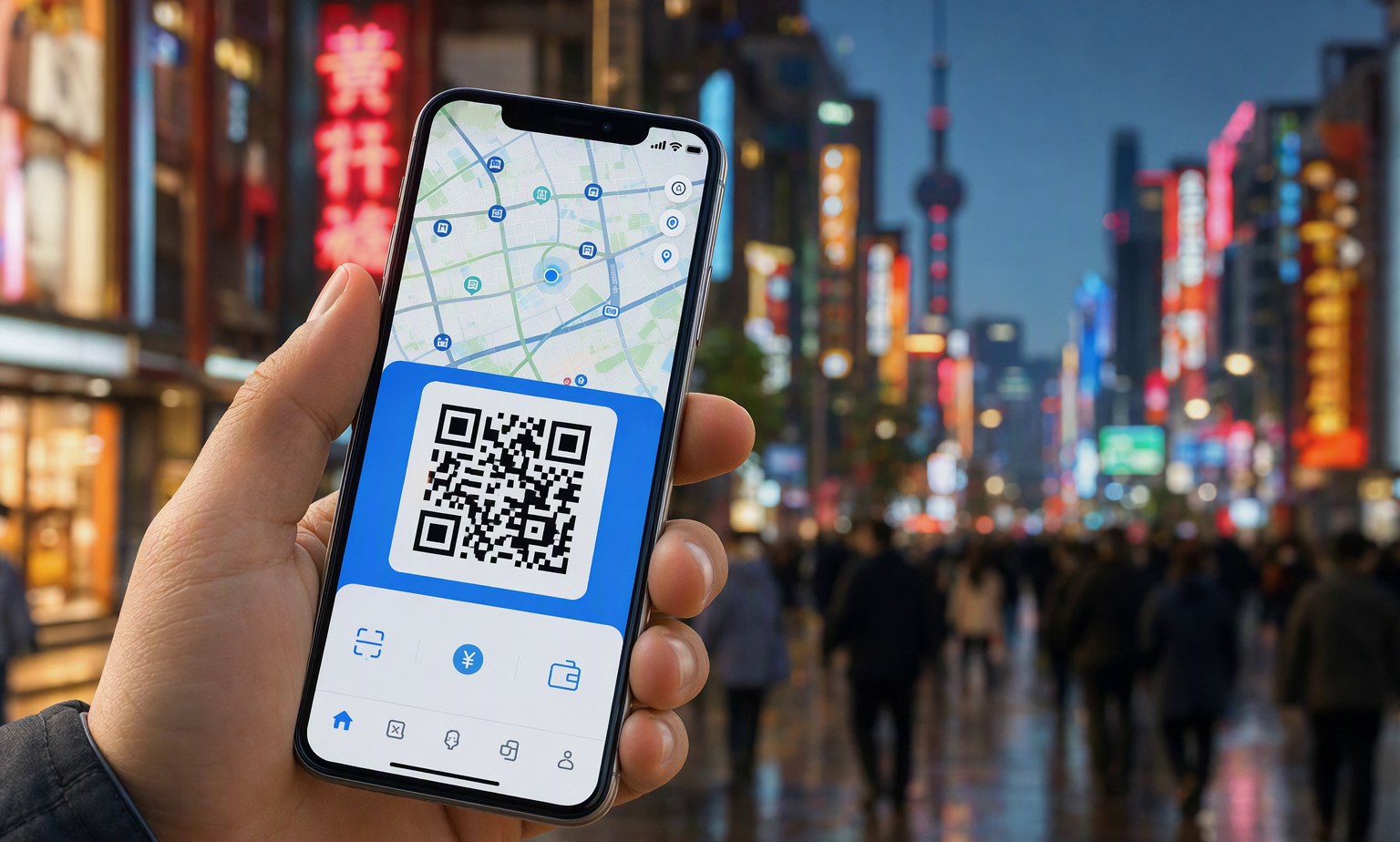
There are two directions, and both are common. In the first, you open the app, tap Pay, scan the merchant’s printed QR code, check the merchant name and amount shown on screen, then confirm. In the second, typically at convenience stores and supermarkets, the cashier scans the payment code displayed on your phone. Either way, the app shows you who you are paying and how much before anything is deducted.

Foreign cards generally work for merchant payments but not for person-to-person transfers. That distinction matters: a small vendor whose QR code is a personal account rather than a registered merchant account may decline your card. If that happens, pay cash rather than trying the code repeatedly. Refunds on card-funded payments normally reverse automatically to the same card, so keep the in-app transaction record for anything expensive.

Fees, limits and what to check

Fee structures and per-transaction thresholds change, and they also depend on your own card issuer. Rather than relying on any figure quoted in a blog, check two things yourself. First, open the relevant help or fee section inside Alipay and WeChat Pay and look for the current terms on international card payments, including any threshold above which a percentage fee applies. Second, check your card issuer’s foreign transaction fee, because that is charged independently and is often the larger cost. Do both before you travel, not at the till.

Cash: how much to carry and why

Cash is not dead in China, just demoted. Withdraw or exchange a modest float on arrival, at an airport or a bank counter, and keep it for the situations where QR payment fails: tiny vendors with personal codes, rural stalls, temple donation boxes, and the occasional technical problem with your phone. Small notes matter more than a large total, because breaking a large note is genuinely difficult in a cashless economy. Treat your float as insurance rather than your main method, and top it up only if you find yourself using it.

Where physical cards still work

International cards are accepted at international hotels, upscale restaurants and shops aimed at tourists. Almost everywhere else, from taxis and metro ticket machines to convenience stores and noodle joints, payment is QR-based. Do not assume that carrying a UnionPay-branded card solves this; the practical universal key is a bound Alipay or WeChat Pay account. Note also that Apple Pay and Google Pay only work where physical card terminals exist, which is a small minority of places you will actually spend money. If you are booking accommodation, our guide to hotels that accept foreign guests covers the booking side.

Common pitfalls and how to avoid them

The most frequent failure is registering inside China: verification codes sometimes never arrive on a foreign number that is roaming. Set both apps up before departure. The second is assuming your phone alone is enough; carry a backup, either a second card bound in the app or a cash float, in case your phone is lost, stolen or out of battery. The third is tipping confusion. Tipping is not expected in China, and our tipping and etiquette guide explains the exceptions. Finally, remember that if you are paying a tour operator or driver directly, agree the method in advance and ask for a receipt.

Frequently asked questions

Can I use Alipay or WeChat Pay with a foreign credit card?

Both apps support binding international cards, but the exact card networks accepted and any verification requirements are set by the apps and can change. Check the current supported card list inside each app’s help section before you rely on it, and bind your card at home so you can test it.

What should I do if a vendor’s QR code declines my card?

This usually means the code is a personal transfer account rather than a registered merchant. Pay cash instead. Do not keep retrying, as repeated failed attempts waste time and may trigger a security check on your account.

How much cash should I carry?

Enough to cover a few days of small purchases and emergencies, in small notes. The right amount depends on your itinerary and how rural it is, so judge it against where you are going rather than a fixed figure, and withdraw more only if you actually use it.

Do I need a Chinese bank account?

No. A foreign card bound to Alipay or WeChat Pay covers the overwhelming majority of day-to-day spending. A Chinese account is only relevant for long stays or for features such as person-to-person transfers, which foreign cards generally cannot access.

What happens to refunds?

Refunds on card-funded payments normally return automatically to the same card. Timelines vary by merchant and issuer, so keep the in-app transaction record and, for large purchases, ask the merchant how long they expect the reversal to take.

Ten minutes of setup at home removes most day-to-day friction from a China trip. Bind your cards to both apps before you fly, test that a payment screen loads, carry a small cash float in low denominations, and keep a second payment method available in case your phone lets you down. Do that, and money stops being something you think about, which leaves more attention for everything else. For the wider pre-departure picture, our first-time in China checklist is a sensible next read.


Posted on — Leave a comment

China Trip Cost 2026: Realistic Budget Breakdown Per Day

Working out what a China trip will cost in 2026 is difficult because published figures age quickly and the range between travel styles is enormous. This page sets out the categories that drive a budget, explains what changes the numbers, and points you to the places where current figures should be checked before you commit. Nothing below should be treated as a fixed price. Treat it as a structure for your own planning, then verify each line on the operator’s or official page.

The five cost categories that matter

Almost every China budget breaks down into accommodation, ground transport, food, attraction tickets and intercity travel. Their relative weight shifts with your style. On a comfortable mid-range trip, accommodation and private transport usually take the largest share, while food and tickets stay surprisingly modest. On a tight budget, trains and local transport dominate and hotels shrink to a small line item.

The single biggest variable is not the city you visit but how you move between and within them. A private car with a driver costs several times a metro-and-taxi day, and a domestic flight or high-speed rail leg can cost more than a night’s hotel. Decide your transport approach first; the rest of the budget follows from it.

Accommodation: where the range is widest

Hotel pricing in China spans an enormous range, and the category of property matters more than the city. International four-star brands, Chinese five-star properties and boutique courtyard hotels in old towns each sit in different bands, and the same hotel can differ sharply by date.

Two things move prices more than anything else: peak domestic holiday periods and booking lead time. During Golden Week and Chinese New Year, demand from domestic travellers pushes rates up and availability down, sometimes dramatically. Book well ahead for those windows, or avoid them entirely.

One practical check that catches first-timers: not every property is registered to accept foreign guests. Confirm this before paying a deposit rather than assuming. Our guide to which hotels in China accept foreign guests explains how to verify registration status when booking.

Private cars, drivers and local transport

A car with a driver is priced per day rather than per hour in most cases, with a standard daily window and a distance allowance. Sedans, seven-seat MPVs and larger coaches sit in clearly different bands, and the gap between a sedan and an MPV is usually smaller than people expect, which makes splitting a larger vehicle between companions good value.

Before booking, confirm three things in writing: the included hours, the included distance, and how overages are charged. Fuel and tolls are sometimes bundled and sometimes not. Ask whether the driver speaks your language, and whether airport or station pickups carry a surcharge.

For city days, the metro is fast, cheap and largely signposted in English. Our China metro guide covers how to pay and navigate. Combining metro for short hops with a car for out-of-town days is the most common way to control this category.

Food: the least predictable line

Food is where China rewards flexible budgets. Street breakfasts, local noodle shops and market stalls cost very little, a sit-down regional restaurant meal sits in the middle, and hotel fine dining or a formal banquet sits at the top. A Peking duck dinner is a mid-range splurge rather than a luxury one.

Dietary needs are manageable with preparation. Vegetarian and halal food are both widely available once you know which neighbourhoods and restaurant types to look for. Our guide to halal and vegetarian food in China covers how to phrase requests and where to search.

Tipping is not expected in China. It is occasionally appreciated for genuinely good service, particularly from guides and drivers. The norms are subtle, so read our tipping and etiquette guide before you decide.

Attractions and reservations

Entrance tickets are rarely the biggest cost, but they are the most likely to derail a day. Many major sites now use timed, passport-linked online reservations, released on a schedule and often selling out. The Forbidden City is the standard example, and the same pattern applies at popular museums and scenic areas.

Check the official ticketing channel for each site, note when bookings open, and confirm whether a passport number is required per visitor. Our guide to attraction reservations foreigners actually need lists which sites require advance booking and how the process works.

Budget for the extras that sit outside the ticket: cable cars, shuttle buses inside scenic areas, and boat rides. These are frequently mandatory in practice because walking alternatives are long.

Intercity travel and hidden costs

High-speed rail is the default for most routes, with several seat classes at different prices. Second class is comfortable for daytime journeys; first and business class add cost quickly. Booking opens on a rolling window, and popular routes and dates sell out. Our guide to high-speed rail seat classes explains what each fare buys, and the 12306 booking walkthrough covers the official channel.

Domestic flights can undercut rail on long routes if booked early, but add airport transfer time and baggage rules. Private intercity transfers cost more than either, though they convert travel time into sightseeing time if you route via a site en route.

Hidden costs to plan for: travel insurance, visa or transit-permit fees that vary by nationality, mobile data or eSIM plans, and a small contingency for the unexpected. Visa rules change, so check your eligibility and any fees on the official immigration or embassy page for your nationality rather than relying on older figures.

Frequently asked questions

Is China expensive to travel in compared with Japan or Europe?

Generally less, but the gap narrows if you book private cars and five-star hotels. The savings come from food, local transport and mid-range accommodation rather than from luxury travel, which is priced closer to Western levels.

How far ahead should I book hotels and trains?

For ordinary dates, a few weeks is usually enough. For Golden Week, Chinese New Year and major holidays, book several months ahead, because domestic demand affects both price and availability. Train tickets release on a rolling window, so check the official channel for your travel date.

Do I need a private driver, or can I manage with public transport?

In Beijing, Shanghai, Chengdu and similar cities, the metro plus taxis covers most needs. A driver earns its cost for out-of-town sites, tight schedules, or groups splitting the vehicle. Confirm included hours and distance before booking.

How much should I budget for attraction tickets?

Less than most people expect per site, but more in total once cable cars, shuttles and boat rides are added. Check each site’s official page for current prices and whether advance reservation is required.

Are there costs people commonly forget?

Travel insurance, visa or permit fees, mobile data, airport transfers, and the internal transport inside large scenic areas. Build a contingency of roughly ten per cent on top of your estimate.

Build your budget category by category, verify every figure that matters on the operator’s or official page close to your travel date, and leave room for the costs that sit outside the headline prices. A trip planned this way rarely surprises you at the till.

Posted on — Leave a comment

First Time in China: Complete Planning Guide (2026)

China rewards preparation. It is safe, modern and genuinely diverse, but it runs on its own apps, its own payment systems and its own internet. This guide walks a first-timer through the decisions that actually matter, in the order you need to make them: entry paperwork, internet access, payments, apps, routes, health and language. Where a figure or rule can change, this page tells you what to check and where to check it rather than quoting a number that may be out of date by the time you fly.

Entry: visa-free transit, unilateral visa-free entry, or a visa

Start here, because everything else depends on how long you can stay. Three routes exist, and they are not the same thing.

The first is visa-free transit, which allows a short stay in specified regions when you are passing through China to a third country. The permitted regions, eligible nationalities, ports of entry and the length of the window have all been revised more than once in recent years, and the 240-hour version is not available everywhere. Because the details are strict — your onward ticket must leave for a different country than the one you arrived from — verify your exact nationality, port and route on the official National Immigration Administration pages or your nearest Chinese embassy before booking flights. Our 240-hour visa-free transit checklist walks through the same checks in order.

The second is unilateral visa-free entry, under which China has granted visa-free access to citizens of a changing list of countries for limited periods. The list has been extended and amended repeatedly, so treat any list you read online, including older versions of this page, as provisional. Confirm your nationality on the embassy site for your country.

The third is a standard tourist visa, which citizens of countries not covered by either scheme still need. Application is made at a Chinese visa application centre, usually with an appointment, and requirements differ by nationality and by consulate. Check the current document list on the centre’s own website rather than relying on a checklist from a forum.

Internet access before you land

Many international services, including Google, WhatsApp, Instagram and Facebook, are not reachable from mainland networks. How you handle that is a personal choice, and the practical options are a roaming or travel eSIM with routing outside the mainland, an international roaming plan from your home carrier, or a VPN installed before departure. VPN availability changes constantly, and app stores inside China do not reliably carry them, so install and test at home. Our guide to internet access, Wi-Fi, eSIM and roaming compares the options without promising that any specific service will work on your dates.

Whatever you choose, download offline maps and an offline translation pack before you fly. They are your fallback if connectivity disappoints.

Payments: the mistake most first-timers make

Urban China is close to cashless. QR code payment is standard in restaurants, taxis, convenience stores and markets. Foreign visitors can generally link an international Visa or Mastercard to Alipay or WeChat Pay, but acceptance is not universal: some smaller vendors decline foreign-card transactions because of processing costs, and card-linked payments can fail at the moment you are standing at a till. Carry a modest cash float as backup, and expect to use it occasionally. Our cashless travel guide to WeChat Pay and Alipay covers setup, verification and the situations where cash still wins.

Also worth knowing: UnionPay has been promoting card acceptance for inbound visitors at selected merchants and transit systems. Coverage is expanding rather than complete, so check the current merchant list if you plan to rely on a physical card.

Apps to install, and transport between cities

A short list covers most needs: Alipay or WeChat for payments and mini-programs; DiDi for ride-hailing with an English interface; Amap or Baidu Maps for navigation, since international mapping apps are unreliable in China; a translation app; and the official 12306 railway app for trains. For rail, seat classes, luggage rules and onboard food vary by train type, and the booking flow with a foreign passport has its own quirks — see our step-by-step 12306 booking guide and the high-speed rail seat class breakdown before you choose a fare.

Choosing a route that fits the time you have

Two weeks is the realistic minimum for four cities, and four is already ambitious. The classic first route is Beijing, then Xi’an, then Shanghai, connected by high-speed rail. Add Chengdu if pandas and Sichuan food matter more to you than another museum, or Guilin and Yangshuo for karst scenery and river cruising. Rail journeys between these cities are typically measured in hours rather than days, which is why the route works.

Two timing notes. Public holidays, especially the October Golden Week and Spring Festival, sell out transport and hotels well in advance and make major sights far more crowded. And several headline attractions now require timed reservations, often booked through WeChat mini-programs with passport details. Our guide to attraction reservations foreigners actually need explains which ones and how the booking windows work.

Health, safety and the language barrier

Violent crime against visitors is rare. The realistic annoyances are pickpocketing in crowded areas and unofficial taxi touts at airports and stations, so use official ranks or a pre-booked transfer. Tap water is not drinkable; sealed bottled water is cheap and everywhere. Carry tissues and hand sanitiser, since public toilets frequently lack both. If you take regular medication, bring it in original packaging with a copy of your prescription, and check whether your specific drug is restricted before travel. Pharmacies and clinics handle minor problems well, and payment arrangements differ from what you may expect at home — our healthcare guide for travellers covers pharmacies, clinics and insurance.

English is limited outside hotels and major tourist sites. That is manageable with a translation camera, a screenshot of your hotel address in Chinese characters, and a few polite phrases. It is also the single strongest argument for hiring a guide for at least part of the trip, particularly for food, markets and anywhere you want to ask questions rather than just order.

Frequently asked questions

Do I need a visa for China?

It depends on your nationality and your itinerary. Citizens of some countries can enter visa-free under unilateral arrangements, and many nationalities can use visa-free transit if they are continuing to a third country. Both schemes are revised frequently. Check the National Immigration Administration site and your nearest Chinese embassy for your passport and your exact route before booking anything non-refundable.

Can I use my normal bank card in China?

Often yes, once linked to Alipay or WeChat Pay, but not everywhere. Small vendors may decline foreign-card transactions, and card-linked payments occasionally fail. Carry some cash as a backup and treat your phone as the primary method rather than the only one.

Will my usual apps work?

Many international messaging and social services are not reachable on mainland networks. Whether a particular tool works depends on your SIM, your roaming arrangement and services that change without notice, so test before you rely on anything for bookings or work.

How many cities should a first trip cover?

Four in two weeks is a sensible ceiling, and three is more comfortable. High-speed rail makes moving between cities easy, but packing and checking in and out costs more time than the timetable suggests.

When should I book trains and major sights?

Intercity rail tickets open for sale on a rolling window before departure, and popular attractions release timed slots on their own schedules, sometimes only days ahead. Check each operator’s or attraction’s official channel for the current window rather than assuming a fixed number of days.

Work through the sections above in order — entry first, then connectivity and payments, then routes and reservations — and the trip becomes a series of small, verifiable tasks rather than a leap into the unknown. Confirm every rule, price and opening time on the official page for that operator or site close to your travel date, and keep screenshots of your bookings, addresses and confirmations offline.

Posted on — Leave a comment

Chengdu Travel Guide: Pandas, Hotpot & the Art of Doing Nothing

Chengdu is the capital of Sichuan, a UNESCO City of Gastronomy, the home of the giant panda, and a city that has built an identity around not rushing. Most visitors arrive with a checklist and leave wishing they had built in a spare day. This guide covers the panda base, the food, the teahouse ritual, realistic day trips, and how to pace a trip so the city works for you rather than against you.

Getting In and Getting Around

Chengdu Tianfu International Airport handles most long-haul arrivals, while Shuangliu handles many domestic routes. Both connect to the city by metro and airport bus, and metro signage is in English. Before you fly, check which airport your ticket actually uses — the two are far apart and the transfer is not trivial.

Payment is the first practical hurdle. WeChat Pay and Alipay both support foreign cards, but the setup process and any limits change, so verify current rules on the app’s own help pages rather than trusting a blog post. Our China cashless travel guide walks through the setup step by step, and a China eSIM setup guide covers connectivity before you land. Chengdu’s metro is extensive, cheap and easy; the China metro guide explains ticketing and transfer basics if this is your first Chinese city.

The Panda Priority

The Chengdu Research Base of Giant Panda Breeding opens early, and the pandas are most active in the first hours after opening, when keepers put out food. Arrive at opening rather than mid-morning: by late morning most adults are asleep and the enclosure looks like a field of grey boulders. Check the base’s official channels for current opening times and ticketing, since these change seasonally and during public holidays.

The red panda enclosures are semi-open and often more entertaining than the giant pandas — they move, they climb, and they come close. Do not skip them.

If you want more than viewing, Dujiangyan has a panda keeper volunteer programme where participants help with feeding and enclosure work. Places are limited and booking well in advance is normal. Confirm details, eligibility and current pricing directly with the operator, because programmes like this change. For a realistic hour-by-hour plan, see our guide to Chengdu and the Giant Panda Base.

Eating Through Chengdu

Sichuan food is not one flavour. It is numbing (ma), spicy (la), sweet, sour and fermented, often in the same dish.

Hotpot is the social centrepiece. If you cannot handle the heat, ask for a yuanyang split pot — half mild broth, half spicy — and build a dipping sauce from the condiment bar. Mapo tofu is best eaten here, where it originates, and the version served in Chengdu is noticeably more numbing than what most overseas restaurants produce. Dan dan noodles, sweet water noodles, couple’s lung slices (a beef and offal dish despite the name) and teahouse snacks round out the essentials.

Eat where the queue is local and the menu is short. For broader context on regional cooking, our Chengdu city guide maps neighbourhoods and metro stops, and the Chongqing street food guide is useful if you are continuing east and want to compare the two schools of Sichuan cooking.

The Teahouse Ritual

The bamboo-chair teahouses in People’s Park are the city’s living room. You order a tea — jasmine is the standard — and refills keep coming as long as you sit there. Ear-cleaning masters work the tables with tuning forks and long tools; it is a performance as much as a service, and you can decline or accept. Card games, mahjong and conversation fill the rest.

Budget two unhurried hours. This is not a sightseeing stop; it is the point of Chengdu. If you try to fit it between two other attractions, you have misunderstood the city.

Day Trips Worth the Time

The Leshan Giant Buddha is a 71-metre carving roughly 1,200 years old, cut into a cliff where two rivers meet. You can view it from a boat on the water or descend the stairway carved alongside the statue. The stair route involves queues that can be long in peak season; the boat is faster and gives a full-frontal view. Check current ticketing arrangements on the official scenic area page.

Mount Qingcheng is one of the birthplaces of Taoism, forested and quiet, with temples along the trail. Dujiangyan’s irrigation system has been working for over 2,300 years and is still functioning — an engineering site that rewards a guide or at least some reading beforehand.

Jiuzhaigou is a two-day commitment at minimum, reached by air or a long drive, and requires checking park entry rules and daily visitor caps in advance. If you are heading further west afterwards, our Chengdu to Lhasa train itinerary covers the altitude and permit side of that route.

Best Time and Pace

March to June and September to November give the most comfortable temperatures. Summer is humid and hot; winter is grey, damp and mild rather than freezing. Avoid the major public holidays if you can — check the official holiday calendar, because attraction queues and transport bookings change dramatically. Our China public holidays guide lists what to watch for.

Three days is a sensible minimum for Chengdu itself, more if you add day trips. The city rewards slowness: the best travellers here cancel a plan or two and spend the time in a teahouse instead.

Frequently asked questions

How many days do I need in Chengdu?

Three full days covers the panda base, central Chengdu and one day trip. Add a day each for Leshan, Mount Qingcheng or Dujiangyan. Jiuzhaigou needs a separate two-day block at minimum.

What time should I arrive at the panda base?

At opening. Pandas are fed early and are active for the first few hours; after that they sleep. Confirm current opening times on the base’s official channels, as they vary by season.

Is Chengdu food too spicy for visitors?

Not necessarily. Ask for a yuanyang split pot at hotpot, request mild (bu la) at restaurants, and try dishes like sweet water noodles and teahouse snacks. Numbing rather than pure heat is the characteristic sensation, and it takes adjustment.

Can I visit the pandas without joining a tour?

Yes. The base is reachable by metro plus a shuttle or by taxi, and independent visits are straightforward. Tours mainly help with early entry and transport, which matters if you are not a morning person.

Do I need cash in Chengdu?

Rarely, but carry a small amount as backup. Mobile payment dominates, and foreign card support in WeChat Pay and Alipay changes periodically — verify current limits on the apps’ own help pages before you travel.

Chengdu works best when you treat it as a place to slow down rather than tick off. Sort your payments and connectivity before you fly, book panda-related activities early, and leave at least one afternoon unplanned. That gap is usually where the trip actually happens.

Posted on — Leave a comment

Hangzhou Travel Guide: West Lake, Longjing Tea & Song Dynasty Poetry

Hangzhou has drawn travellers for a thousand years on the strength of one lake and one leaf. West Lake is the water the Song dynasty poets wrote about; Longjing, the green tea the emperors demanded as tribute. Today the same city hosts parts of China’s technology sector, which makes for an odd but genuinely interesting mix of classical gardens and glass office towers. This guide covers how to see the lake properly, when to visit the tea terraces, what lies beyond the water, and how to check the practical details yourself rather than trusting a printed schedule.

West Lake: It Is Not One View

The lake is usually described through ten classical scenes, named centuries ago and still used on signage and tickets. They include Dawn on the Su Causeway in Spring, Moon over the Three Pools Mirroring the Moon, and Evening Bell at Nanping Hill. You will not see all ten in a day, and trying to is the fastest way to enjoy none of them.

A workable pattern: start at dawn on the Su Causeway, when local residents are doing tai chi and mist sits on the water; take a boat out to the small islands, including the one with the three stone pagodas that give the moon-viewing scene its name; finish at Leifeng Pagoda for sunset over the southern shore. The full ring road around the lake runs roughly 15km, and shared bikes are a reasonable way to cover it — check the rental app’s map and unlock rules on the day, as operating companies and zones change.

Boats come in several types, from large ferries to small rowed craft, with different piers and prices. Fares and last departures are posted at each pier; read the board rather than relying on any figure you have seen online. For getting around the city more broadly, our China metro guide explains how ticketing and gates work.

The Longjing Tea Pilgrimage

Longjing village sits in the hills southwest of the lake, surrounded by terraced tea bushes. The most prized harvest is picked before the Qingming festival, usually late March into early April, and the exact window shifts each year with the weather. If tea is your reason for coming, aim for that period and confirm the current picking status locally — guesthouses and tea shops will know.

You can walk the terraces on marked paths, watch leaves being roasted by hand in a hot wok, and taste several grades side by side. Prices vary enormously by grade, harvest date and vendor, so taste before buying and ask which picking period a batch comes from. Meijiawu, a short distance away, is quieter and better suited to an unhurried afternoon. For what to eat around the city, see our Hangzhou street food guide.

Beyond the Lake

Lingyin Temple, founded well over a thousand years ago, sits in a wooded valley with the Feilai Peak carvings — hundreds of Buddhist figures cut into the limestone — on the approach. Tickets are separate for the scenic area and the temple itself, and both are sold on site; check the boards at the entrance for current prices and closing times.

Other options within reach: Xixi Wetland, a maze of waterways best seen by boat; Hefang Street, where craft workshops and old-style shops cluster; and Qiandao Lake, a reservoir dotted with over a thousand islands, which works as a long day trip or an overnight. In the finance district, the Song-inspired architecture is worth an hour if you are curious how contemporary Hangzhou references its past. If you are continuing elsewhere, our China train travel guide covers booking and boarding.

When to Go

March and April bring the tea harvest, blossom and misty mornings. September to November brings osmanthus, whose scent fills much of the city, along with the last lotus on the lake. Summer is hot and humid; if you visit then, keep to early mornings and evenings. Winter is quiet and often grey, but the lake in low light has its own appeal.

Two to three days suits most visitors. Hangzhou pairs naturally with Shanghai by high-speed rail, a journey of well under an hour on the fastest services, though you should check current timetables and seat availability when booking. Public holidays fill hotels and trains quickly, so check the calendar before fixing dates; our China public holidays guide lists the main dates.

The Poetry Angle

Hangzhou rewards knowing a single line. Su Dongpo, poet and governor of the city, compared West Lake to Xizi, a famous beauty of antiquity: lovely in any dress, meaning beautiful in any weather. It is the most quoted description of the lake, and it explains why locals will tell you rain is a good time to visit. Reading a little of the poetry before you arrive changes what you notice on the causeways and in the pavilions, most of which carry inscriptions the average signboard does not translate.

Practical Notes

Mobile payment dominates everyday transactions in China. Whether a given foreign card works with a given wallet depends on your bank, the app version and the merchant, so test a small payment early and keep a modest cash backup. Our cashless travel guide walks through setup and verification.

Entry rules, transit permissions and permitted stay lengths change, and they depend on your nationality and route. Check the current requirements on your nearest Chinese embassy or consulate page and on the official immigration service site before booking anything non-refundable.

Frequently asked questions

How many days do I need in Hangzhou?

Two full days covers West Lake and Longjing comfortably; three lets you add Lingyin Temple, Xixi Wetland or a day trip without rushing. If you only have one day, pick either the lake circuit or the tea village rather than both.

Is West Lake free to visit?

The lake and its causeways are open to the public at no charge. Individual sites around it — pagodas, temples, boats and some gardens — charge their own admission. Prices and opening hours are posted at each entrance and change periodically, so check on arrival rather than relying on older listings.

When is the best time to see the Longjing tea harvest?

The most valued picking happens before the Qingming festival, typically late March to early April, but the exact dates move with the weather each year. Confirm the current status with a local guesthouse or tea shop before planning around it.

Can I visit Hangzhou as a day trip from Shanghai?

Yes. High-speed trains link the two cities in well under an hour, making a day trip feasible, though it is a long day if you want both the lake and the tea hills. Check current departure times and buy tickets in advance through the official rail app or a ticket office.

Do I need cash in Hangzhou?

Most payments are made by phone, but foreign cards do not always link successfully with every wallet. Test a small transaction soon after arrival and carry some cash as a backup. See our cashless guide for how to check your setup before you travel.

Hangzhou rewards a slower pace than most Chinese cities on a first itinerary. Pick two or three things, check the current details for each on the operator’s own page, and leave room for the lake at an hour when it is quiet.

Posted on — Leave a comment

Lijiang Travel Guide: Old Town, Jade Dragon Snow Mountain & Naxi Culture

Lijiang sits in a high valley in northwest Yunnan, where cobbled canals run beneath a glacier peak, the Naxi people still write in a pictographic script, and wooden bridges carry more foot traffic than most Chinese cities see in a week. The Old Town is a UNESCO World Heritage Site, and the surrounding county holds enough for several days rather than one. This guide covers what to see, how the altitude works, when to go, and how to plan the rest of a Yunnan route around it.

The Old Town: Daybreak, Lanterns and Crowds

Lijiang’s Old Town is a grid of stone lanes, willow-lined canals and wooden bridges, with the Naxi in traditional dress still a visible presence rather than a staged one. Daybreak is the honest time to walk it: shopfronts shuttered, water audible, mist on the rooftops. Midday brings tour groups in volume, and the lanes around Sifang Square become slow. After roughly 9pm the day-trippers leave, red lanterns come on over the square, and rooftop bars turn toward the snow mountain.

Two practical points. The Old Town charges a maintenance fee, collected at various entry points and sometimes checked at attractions; the amount and enforcement change, so confirm the current position at your accommodation or at the official visitor centre before you budget for it. The lanes are uneven stone, slippery after rain, and wheeled luggage is genuinely awkward — many guesthouses send someone to meet you at a vehicle-accessible point, so ask when booking.

Jade Dragon Snow Mountain

The mountain is the reason most people come. The Glacier Park cable car climbs to around 4,506m, and access is capped: tickets are tied to timed slots and frequently sell out in peak season, so book through the official channel or a licensed operator well ahead and confirm the current booking rules rather than assuming you can turn up. Above the cable car station the air is thin and the walkways are stepped — pace yourself, and treat any headache or nausea as a signal to descend.

Below the glacier, Blue Moon Valley’s terraced turquoise pools are the most photographed spot in the county, and the spruce meadows offer gentler walking at lower elevation. The Impression Lijiang outdoor show, directed by Zhang Yimou and performed by a large cast at roughly 3,100m, is staged in an open amphitheatre; check the current performance schedule and whether it runs in your season, and dress for cold wind even in summer.

Naxi Culture and the Dongba Script

The Dongba script is the world’s only living pictographic writing system, and you can see it taught and demonstrated in Lijiang rather than only in a museum case. Workshops and small cultural centres around the Old Town and Baisha run sessions; ask your guesthouse which ones are currently operating and what they charge, since these are small operations that open and close.

Naxi ancient music performances use instruments and repertoire that predate much of what survives elsewhere in China, and the ensembles are usually happy to explain what you are hearing. Further out, the Mosuo communities around Lugu Lake are known for a matrilineal family structure — often loosely described as matriarchal. Visiting properly takes time: Lugu Lake is a long drive from Lijiang and realistically needs two extra days. Treat Mosuo culture as a living community, not an exhibit, and book any homestay through operators who work with local families.

Tiger Leaping Gorge, Baisha and Shuhe

Tiger Leaping Gorge, roughly two hours north of Lijiang, is one of China’s great walks. The high trail is usually done as an overnight with a guesthouse stop, or as a long single day on the lower path if you are fit and the weather is stable. Path conditions, guesthouse openings and trailhead access shift with landslides and season, so check locally before setting out rather than relying on an old route description.

Baisha village, closer to the mountain, has murals that predate the Old Town’s rise and a far quieter pace. Shuhe, often called Lijiang’s mellower cousin, is a smaller old town with the same architecture and a fraction of the footfall — a good base if you want evening calm. Both are easy half-days by taxi or bicycle.

Altitude, Timing and Getting There

Lijiang itself sits at about 2,400m, which most visitors handle without trouble, but the mountain goes far higher and the transition is quick. Build in a gentle first day, drink more water than usual, and avoid heavy drinking before the cable car. If you are continuing to Tibetan plateau destinations, sequence the altitude gradually rather than jumping from Lijiang to somewhere much higher; our Tibet travel guide explains how that ramp works.

The most reliable windows are April to June and September to November, with clear mountain views and comfortable walking temperatures. July and August bring rain and cloud that can hide the peak entirely; winter is cold but often bright. Lijiang has its own airport and rail connections to Kunming and beyond — check current schedules and book trains with your passport details in advance, as outlined in our guide to buying train tickets with a foreign passport. For a longer regional route, see this Chengdu to Lijiang and Kunming itinerary.

Practical Planning

Payments, connectivity and bookings are the three things that trip up first-time visitors. Set up a mobile wallet before you fly and carry a small cash backup, as described in our cashless travel guide. Sort a data plan before departure — an eSIM installed and tested at home avoids a scramble at the airport. For everything else, start with the first-time in China checklist.

Frequently asked questions

Is Lijiang’s altitude a problem?

The town is around 2,400m, which most healthy visitors tolerate well. The risk is the rapid jump to over 4,500m at Glacier Park. Take the first day easy, hydrate, and descend if you feel unwell.

Do I need to book the snow mountain cable car in advance?

Access is capped and busy periods sell out. Book through the official channel or a licensed operator as early as you can, and confirm the current ticketing and timed-entry rules directly, since they change.

How many days should I give Lijiang?

Three full days covers the Old Town, the mountain and one outlying village comfortably. Add two days for Tiger Leaping Gorge and two more if you want Lugu Lake.

When is the best time to visit?

April to June and September to November give the clearest mountain views. Summer is wet and often cloudy; winter is cold but frequently sunny.

Can I see the Dongba script without a tour?

Yes. Small workshops and cultural centres in the Old Town and Baisha demonstrate it. Ask locally which are open, as these are small operations with variable hours.

Lijiang rewards a slower pace than its popularity suggests: walk early, book the mountain ahead, and leave room for the villages and the gorge rather than treating the Old Town as the whole trip. Verify fees, cable car slots and show schedules close to your dates, and the rest of the planning falls into place.

Posted on — Leave a comment

Dali Travel Guide: Erhai Lake, Bai Culture & the Slow Life

Dali sits on the western shore of Erhai Lake in Yunnan, backed by the Cangshan range. It earned its reputation the slow way: a walled old town of whitewashed Bai courtyards, lakeside villages that still run on fishing and farming, and a long-settled community of artists and drifters who came for the light and stayed. Where some Yunnan towns perform their heritage for visitors, Dali largely just lives in it. This guide covers what to see, how to move around, where to base yourself, and how to slot Dali into a wider Yunnan route.

Why Dali feels different

The Bai minority’s architectural signature is everywhere: white lime walls, painted gables, screened gateways and courtyards built around a central well or garden. In villages such as Xizhou and Zhoucheng these are working homes, not exhibits, and the morning market is where locals actually shop. On parts of Erhai Lake, cormorant fishing is still practised, though as much for demonstration as for catch these days. The other ingredient is the light — clear, high-altitude and unusually even — which is why painters and photographers began settling here decades ago and never quite left. The result is a town with a genuine resident culture rather than a seasonal one.

The main things to do

The classic Dali activity is the loop around Erhai Lake, roughly 120km by road. Cyclists do it in stages over two or three days; drivers and e-bike riders can manage it in one long day. Either way, build in stops: Xizhou for its morning market and courtyard architecture, Shuanglang on the eastern shore for sunset over the water, and Zhoucheng for tie-dye workshops where you can watch indigo dyeing and buy direct.

In Dali Old Town itself, the Three Pagodas and their reflection pond are the signature sight, and the surrounding streets reward aimless wandering once you leave the busiest lanes. Above town, the Cangshan cable car lifts you to high trails including the Jade Cloud path, a paved walk along the mountainside with long views over the lake — check the weather before committing, as cloud can close in fast. Food-wise, try Xizhou baba, a layered flatbread baked in village ovens, and the local dairy products the area is known for.

Where to stay

Two broad choices. Lakeside guesthouses in Shuanglang or Caicun trade walkability for views — many rooms look straight across the water to Cangshan, and this is one of the better-value scenic stays in China, though rates swing hard with season and weekends, so compare dates rather than trusting any single quoted figure. Dali Old Town suits people who want cafes, restaurants and the train station within easy reach, and it is the more practical base if you are only staying two nights. Book lakeside properties well ahead for national holidays.

Getting there and around

Dali has its own airport and a railway station served by trains from Kunming and Lijiang; schedules and journey times change, so confirm current services on the official China Railway booking channel or a reputable ticketing app before planning connections. Within the Dali area, taxis, ride-hailing and rented e-bikes cover most needs, and local buses run between the old town and lakeside villages. If you are new to Chinese rail, our guide to buying train tickets with a foreign passport walks through the passport-verification step that trips people up. Payment is another thing to sort early — see our cashless travel guide for how WeChat Pay and Alipay work for foreign cards.

Combining Dali with Lijiang and Shangri-La

The standard northern Yunnan triangle runs Dali, then Lijiang, then Shangri-La, generally taking seven to nine days in total. A workable split is three nights in Dali, two or three in Lijiang and two or three in Shangri-La, allowing for the altitude gain as you move north. The mountain roads between these towns are slow and occasionally affected by weather, which is why many visitors choose a private car and driver rather than assembling buses themselves. If you are building the wider trip, our Chengdu to Lijiang and Kunming route shows how Yunnan fits with Sichuan, and the two-week China itinerary planner helps place it in a longer trip.

When to go

Dali is mild year-round, which is the main reason people linger. March to May brings blossoms and dry, clear air; autumn is similarly pleasant. Summer is the rainy season, with afternoon showers rather than all-day washouts. Winter days can be sunny and comfortable while mornings and evenings are cold. Whatever the month, pack layers — the lake wind picks up in the evening and the temperature drops quickly once the sun goes.

Frequently asked questions

How many days do you need in Dali?

Two full days covers the old town, Three Pagodas and a partial lake loop. Three to four days lets you cycle or drive the full Erhai ring with village stops, add a Cangshan hike and take a tie-dye workshop without rushing.

Is Dali better than Lijiang?

They serve different purposes. Dali is quieter, more residential and better for slowing down; Lijiang has a denser old town and is a more convenient base for Tiger Leaping Gorge and onward transport north. Many itineraries include both.

Do I need to worry about altitude in Dali?

Dali sits at moderate altitude and most visitors notice little. Shangri-La, further north, is considerably higher, so build in a gradual ascent and take the first day there gently.

Can I cycle the whole Erhai Lake ring?

Yes, but treat it as a multi-day ride unless you are fit and used to the distance and traffic. E-bikes and scooters are a common middle option. Check rental terms, helmet provision and whether your travel insurance covers you.

How do I verify practical details before travelling?

Confirm opening hours, cable car operation, ticket prices and train times on the operator’s own page or official booking platform close to your travel date, as these change seasonally and without much notice.

Dali rewards a slower pace than most Chinese destinations, so resist over-scheduling it. Pick two or three anchors — the lake, the mountain, one village — and leave room for the town itself, which is the part people remember. For the wider trip, our China travel guide for first-timers covers the logistics that apply everywhere in the country.

Posted on — Leave a comment

Wuhan Travel Guide: River City, Cherry Blossoms & Hot Dry Noodles

Wuhan sits where the Han River meets the Yangtze, and the city is split by water into three historic towns: Wuchang, Hankou and Hanyang. It has a recorded history going back roughly three thousand years, a role as central China’s transport and industrial hub, and a food culture that locals defend fiercely. Most foreign travellers pass through on a train and never leave the station. This guide explains what a stop actually involves, how to time it, and what to check before you go.

Why Wuhan deserves a stop

The main practical argument is geography. Wuhan sits on major high-speed rail lines, so several of China’s biggest cities are reachable within a few hours by train. Exact journey times and train numbers change with the timetable, so check the current schedule on the official booking channel rather than trusting any figure you read online. The useful search terms are your origin and destination stations — for Wuhan these are typically Wuhan, Hankou or Wuchang station, and they are not interchangeable, so confirm which one your train uses before booking accommodation. Our step-by-step guide to booking tickets on 12306 covers the process for foreign passports.

Within the city, the appeal is a mix of river scenery, museums, temple architecture and street food. It is not a city of one headline sight; it rewards a day and a half of wandering more than a rushed afternoon.

The main sights, honestly described

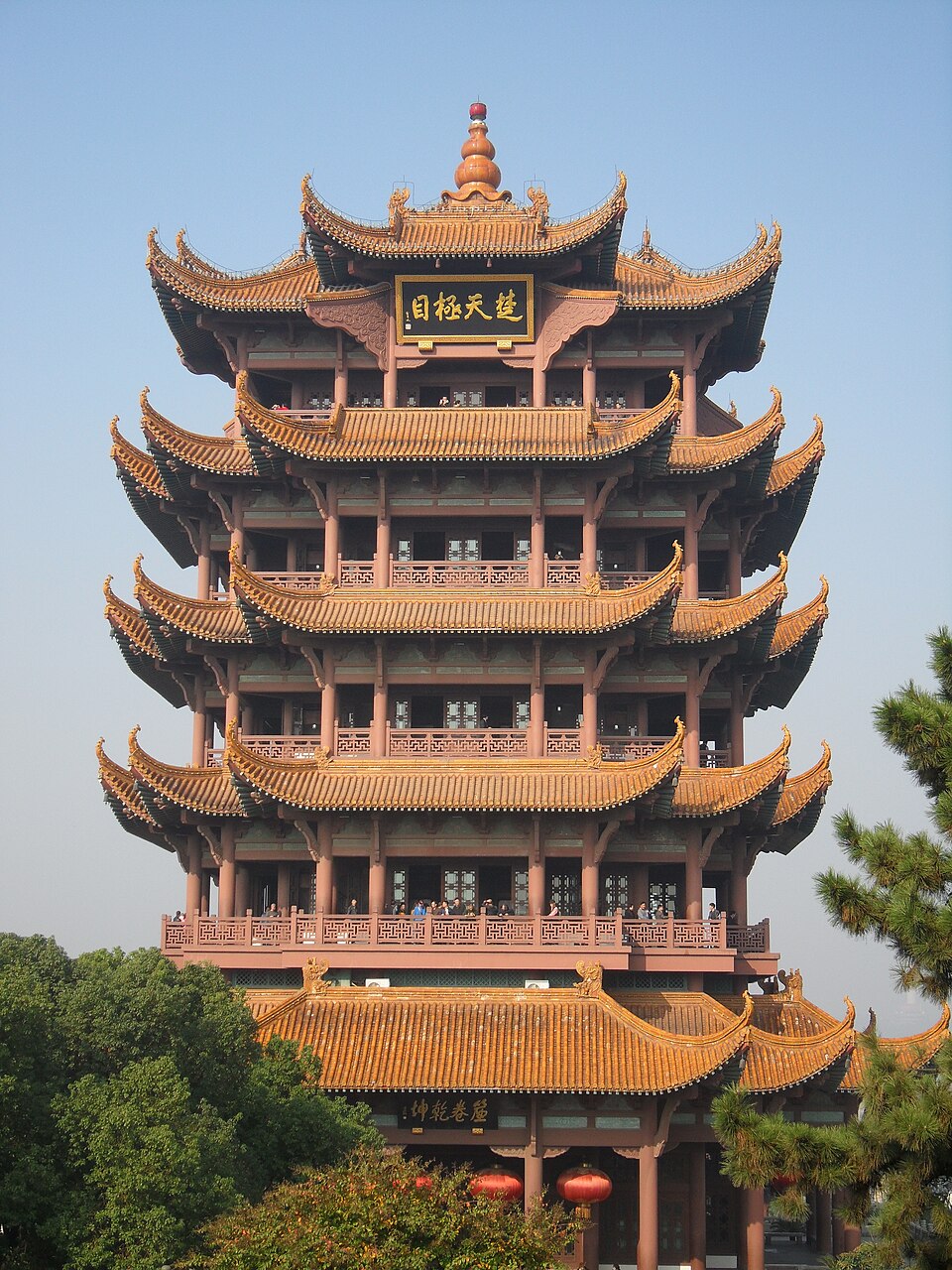
Yellow Crane Tower is the city’s emblem, a reconstructed tower on a hill above the Yangtze with views over the river and the bridge. It is popular, so expect crowds at weekends and public holidays. Nearby, walking the Yangtze River Bridge gives you the scale of the river and the three-town layout in one go.

The Hubei Provincial Museum is the strongest indoor sight, best known for its ancient chime bells and other excavated bronzes. Entry arrangements and any reservation requirements for Chinese museums change, so check the museum’s official page or a current reservation platform before travelling — see our notes on which Chinese attractions actually require reservations for foreigners.

East Lake is a large lake-and-park area with a long greenway loop, best explored by bike or on foot over a half day. Guiyuan Temple is a working Buddhist temple known for its hall of arhat statues. In spring, cherry blossom viewing draws large local crowds, particularly around Wuhan University; access to campus areas during blossom season is usually controlled, so verify current arrangements locally rather than assuming you can walk in.

What to eat in Wuhan

Wuhan’s signature breakfast is hot dry noodles — sesame-dressed wheat noodles, usually mixed with chilli oil and pickles, eaten fast and standing or walking. It is the dish to try on your first morning. Other local staples include doupi, a rice-and-egg-skin parcel with sticky rice inside, and steamed Wuchang fish. Duck neck, sold spiced and vacuum-packed from small shops, is the city’s default snack.

Hubu Alley is the well-known food street, though it is tourist-oriented; nearby residential streets often serve better and cheaper versions of the same dishes. Prices are low by Chinese big-city standards, but rather than quoting figures, check current prices on site or in a delivery app. If you have dietary restrictions, our guide to halal and vegetarian food in China explains how to ask and what to look for. Payment is overwhelmingly by phone; see our cashless travel guide for WeChat Pay and Alipay before you arrive, and carry a small cash backup.

When to go and how long to stay

Spring and autumn are the comfortable windows. Late March brings cherry blossoms and large crowds; October and November bring clearer, cooler weather. Summer in Wuhan is famously hot and humid, and winter is grey and damp. Two full days covers the main sights at a relaxed pace; one day works if you treat it as a rail-hub stopover and pick either the museum-and-tower cluster or the food-and-lake cluster. For broader seasonal context, see China in October and China in November.

Practical planning notes

Wuhan has a metro system that connects the main rail stations and most sights; our China metro guide explains how to ride and pay. Not every hotel in China is registered to accept foreign guests, so confirm this before booking — our guide to hotels that accept foreign guests covers what to check. Internet access, translation and mobile data are the other three things worth sorting before you fly; our guides to internet access in China and the language barrier and translation apps explain the options and how to verify what works on your device.

Frequently asked questions

Is Wuhan worth visiting for foreign tourists?

Yes, if you value food, river scenery and museums over headline monuments, and especially if you are already crossing central China by rail. It works well as a one- or two-night stop rather than a dedicated long trip.

How many days do I need in Wuhan?

Two days is comfortable for the tower, the museum, East Lake and a food street. One day is enough for a focused stopover if you choose either the cultural sights or the lake and food.

How do I get to Wuhan?

High-speed rail connects it to several major cities, and Tianhe International Airport serves domestic and some international routes. Check current timetables and train numbers on the official booking channel, and note that Wuhan has more than one main rail station.

What should I eat first in Wuhan?

Hot dry noodles, ideally at breakfast. Follow with doupi, steamed Wuchang fish and duck neck. Verify opening hours and prices on site, since small shops change frequently.

Do I need to book attractions in advance?

Some Chinese museums and popular sites require timed reservations, and rules differ for foreign passports. Check each site’s official page or a current reservation platform a few days ahead rather than assuming walk-in entry.

Treat Wuhan as a working city with a strong food culture and a genuine river setting rather than a checklist destination, confirm your train station, museum reservations and hotel eligibility before you commit, and it will repay the stop.

Posted on — Leave a comment

Hong Kong Travel Guide: Skyscrapers, Dim Sum & Island Hikes

Hong Kong packs a vertical city, island trails and a working harbour into a space you can cross in under an hour. It also runs on its own immigration, currency and transport systems, separate from mainland China, which is the single most useful thing to understand before you book. This guide covers the essential sights, the hiking that surprises most visitors, food through the day, and how to combine Hong Kong with Shenzhen, Guangzhou or Macau. Verify all prices, opening hours and entry rules on official operator or government pages before you travel, since these change.

The essential Hong Kong experience

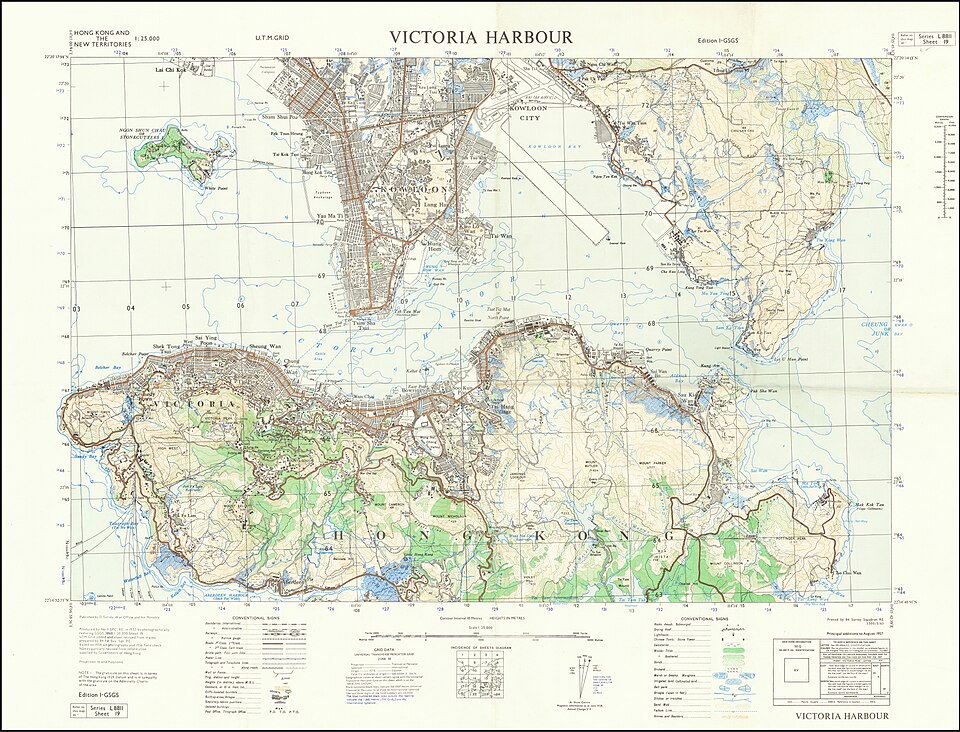
Start with Victoria Peak, ideally in the late afternoon so you catch the harbour in daylight and again as the lights come on. The Peak Tram has long queues at peak times; check the tram operator’s own site for current operating hours and consider walking up via the Central Green Trail or taking a bus or taxi instead. The Star Ferry between Central and Tsim Sha Tsui remains one of the cheapest and most scenic crossings anywhere; fares are low, but confirm the current timetable and fare on the Star Ferry’s official page rather than relying on old figures.

Dim sum is best treated as a morning or lunch ritual. Traditional teahouses and modern Michelin-listed rooms both exist, and prices vary enormously, so check menus on arrival. In the evening, the Tsim Sha Tsui promenade and the Avenue of Stars give you the skyline and the harbour together. Mong Kok’s markets are worth an hour after dark. The Mid-Levels escalator is a genuine commuter route as well as a curiosity, running downhill in the morning and uphill later; check the official hours if you plan to ride it in a specific direction.

Hong Kong’s hiking, close to the city

Roughly two-thirds of Hong Kong’s land is country park, which is why trails start within a short bus or taxi ride of dense urban areas. Dragon’s Back on Hong Kong Island is the best-known ridge walk, with sea views and a finish near Big Wave Bay; it takes a few hours at an easy pace. The Victoria Peak circle trail is a gentle loop with skyline views and no climbing. On Lantau, Sunset Peak is a steeper, more exposed climb, and Sai Kung’s coves are often reached by boat or a long walk. Check the Agriculture, Fisheries and Conservation Department’s country park pages for trail conditions, and carry water, sun protection and shoes with grip. Weather in summer is hot and humid, and typhoon signals can close trails and ferries at short notice.

Entry, borders and the mainland question

Hong Kong operates its own immigration policy, separate from mainland China. Whether you need a visa, and for how long you may stay, depends on your nationality; check your own government’s travel advice and the Hong Kong Immigration Department’s official pages for the current rules rather than any summary, including this one. If you also plan to enter mainland China, you will need a separate Chinese visa or a visa-free arrangement that applies to you. Crossing between Hong Kong and Shenzhen means clearing immigration on both sides, even if you already hold a China visa. See the China visa rules 2026 overview and the 240-hour visa-free transit checklist for how the mainland side works.

Eating through the day

Mornings belong to the cha chaan teng: milk tea, pineapple buns and French toast. Lunch is dim sum, from bargain trolley places to refined dining rooms. Mid-afternoon calls for an egg tart, ideally warm. Dinner might be roast goose, claypot rice or a dai pai dong stall, and late evening means sweet soup desserts. Hygiene standards are generally high, but if you have dietary restrictions, the halal and vegetarian food guide covers how to explain requirements clearly. Tipping is not expected in most restaurants; the tipping and etiquette guide explains the exceptions.

Hong Kong alone, or with the Greater Bay Area

Hong Kong on its own fills three to four comfortable days: one for the Peak and Central, one for Kowloon and the markets, one for a hike or a beach, and one for Lantau or the outlying islands. Combined with Shenzhen, Guangzhou or Macau, it becomes a Greater Bay week. Cross-border transport includes high-speed rail from West Kowloon, ferries to Macau and Shenzhen, and buses over the land crossings. For rail, read the China train travel guide and the 12306 booking walkthrough. Note that mainland payment apps and internet access behave differently from Hong Kong’s; the cashless travel guide and internet access guide explain what to set up before you cross.

Practical planning notes

Hong Kong’s MTR is fast and easy to use with a contactless card or a stored-value card; check the MTR’s own site for fares and airport line details. Airport transfers range from the Airport Express to buses and taxis. Accommodation is expensive by regional standards, so book early. For onward mainland travel, confirm hotel registration requirements in advance using the guide to hotels that accept foreign guests. If you want help sequencing Hong Kong with the mainland, an itinerary planner can help, but always verify the resulting opening hours and transport times yourself.

Frequently asked questions

Do I need a visa for Hong Kong?

It depends entirely on your nationality. Hong Kong sets its own immigration policy, separate from mainland China. Check the Hong Kong Immigration Department’s official website and your own government’s travel advice for the current rules and permitted length of stay.

Can I visit Shenzhen from Hong Kong without a China visa?

Some nationalities qualify for visa-free transit or short-stay arrangements under specific conditions. These rules change, so verify your eligibility on the official Chinese embassy or immigration pages before travelling, and carry the documents the scheme requires.

How many days do I need in Hong Kong?

Three to four days covers the main sights, one hike and a day on the outlying islands at a relaxed pace. Add more if you want beaches, museums or day trips to Macau and Shenzhen.

Is Hong Kong expensive?

Accommodation and some dining are costly, while transport, ferries and street food are affordable. Set a budget by checking current prices on operator websites rather than relying on older figures.

When is the best time to visit?

Autumn and early winter generally bring clearer, cooler weather. Summer is hot, humid and within typhoon season, which can disrupt ferries and trails. Check seasonal guides such as China in October and China in November for context.

Treat this as a framework rather than a fixed plan: confirm fares, timetables, trail conditions and entry rules on the relevant official pages close to your travel dates, and build the trip around what is actually open when you arrive.

Posted on — Leave a comment

Macau Travel Guide: Casinos, Portuguese Old Town & Egg Tarts

The Vegas of the East is also a UNESCO-listed Portuguese colonial time capsule — pastel churches, egg tarts, and the world’s highest bungee jump. Complete English guide.

Two Macaus in One

The Cotai Strip’s mega-casinos (Venetian, City of Dreams — larger than Vegas equivalents) AND the Historic Centre: Senado Square’s wave-patterned stones, St. Paul’s Ruins facade, A-Ma Temple — 450 years of Portuguese-Chinese fusion, all UNESCO.

Beyond the Casinos

Macanese cuisine (the world’s first fusion food — try African chicken and minchi) · Lord Stow’s egg tarts (the original bakery on Coloane) · Taipa village lanes · the Macau Tower bungee (233m, world’s highest commercial jump) · gallery-hopping in the old quarter.

Border & Visa Logistics

Macau has separate visa policies from mainland China: many nationalities get visa-free entry (30 days for US/EU/etc.). Enter via Zhuhai’s Gongbei border (walk across) or the HK-Macau ferry/bridge. We coordinate charters to all crossings.

Money & Practical

Macau pataca (MOP) but Hong Kong dollars accepted everywhere at 1:1. Cantonese and Portuguese official; English widely understood in tourism. Compact — walk the old town in a half-day.

The Bigger Trip

Macau pairs perfectly with Hong Kong + Shenzhen + Guangzhou: our Greater Bay Area itineraries cover all four with border logistics handled.

Plan Your Macau Trip

Build a custom itinerary with our AI planner (free, instant) or WhatsApp our travel designer: +86 180 3801 6100. Full guide library: all China travel guides.