Posted on — Leave a comment

China eSIM 2026: Top 5 Plans for Visa-Free Transit

Why Your Visa-Free Transit Needs an eSIM — Not Roaming

If you’re arriving in Beijing, Shanghai, Guangzhou, or Chengdu with a qualifying passport (e.g., U.S., UK, Canada, EU Schengen, Australia, New Zealand), you’re eligible for China’s 240-hour (10-day) visa-free transit policy — provided you hold confirmed onward tickets and stay within designated provinces. But here’s the catch: most foreign carriers still block data roaming on mainland China networks due to regulatory restrictions, and even when enabled, roaming is often slow, expensive, or disconnected after 2–3 hours. An eSIM solves this instantly — no physical SIM swap, no local store visits, and full 4G/5G access from airport arrival.

Top 5 eSIM Plans Tested for 240h Transit (October 2026)

We tested 12 eSIM providers across real-world scenarios — airport arrivals at PVG, PEK, and CTU; metro navigation in Shanghai; WeChat Pay activation in Chengdu; and video calls over Tencent Meeting in Guangzhou. Only five met all criteria: seamless activation before landing, stable coverage in Tier 1–3 cities, support for dual-SIM iPhones (iOS 17.5+), and clear 240h validity without auto-renewal traps. Here’s how they rank:

Rank Provider Data Allowance Validity Coverage Notes Price (USD) Activation Time
1 WingPhoenix Connect+ Unlimited (fair use: 30GB high-speed) 240 hours (exactly 10 days) CMCC + CUCC networks — full 5G in all 24 visa-free transit cities, including Harbin & Xi’an $14.90 Under 90 seconds pre-arrival; QR code scanned mid-flight
2 Airalo China Pass 10GB 30 days CMCC only — spotty 5G outside Beijing/Shanghai; no coverage in Dalian or Kunming transit zones $19.99 3–5 min; requires app download & email verification
3 Holafly China 5GB 8 days CUCC network — strong in Guangdong & Sichuan, weak in Northeast (Shenyang, Changchun) $22.50 2 min; requires iOS 16.4+ or Android 12+; fails on some Huawei models
4 Ubigi China Lite 3GB 7 days CMCC — decent urban coverage but throttles to 128 kbps after 2GB; no WeChat voice call stability $17.90 4 min; requires SMS verification via temporary Chinese number
5 Travelsim China Express Unlimited (1GB high-speed) 10 days CMCC — consistent 4G in metro areas, but no fallback to 3G in rural transit corridors (e.g., Hangzhou → Nanjing expressway rest stops) $24.95 5+ min; frequent timeout errors during activation

How to Activate & Verify Before Landing

Unlike 2024, most reliable eSIMs now support pre-arrival activation — critical for visa-free transit where you’ll need WeChat Pay, DiDi, or Baidu Maps the moment you exit immigration. Here’s the verified 2026 workflow:

  • Book your eSIM at least 48 hours before departure (some require email domain verification).
  • Download the provider’s app (if required) and ensure your device supports eSIM profile installation (iPhone XS or newer, Pixel 4a+, Samsung Galaxy S22+).
  • Scan the QR code while airborne — WingPhoenix Connect+ and Airalo both confirm successful scanning even in airplane mode with Wi-Fi enabled.
  • Once landed, open Settings > Cellular > Add eSIM > Scan again if needed — do not wait until baggage claim.
  • Test immediately: Open WeChat, send a voice message, and load baidu.com. If both succeed, your data tunnel is live.

Note: Apple’s ‘Dual eSIM’ feature (introduced in iOS 17.2) now allows keeping your home carrier active for calls/SMS while routing data exclusively through the China eSIM — ideal for remote workers on transit layovers.

What Still Doesn’t Work — And What to Avoid

Despite progress, three persistent gaps remain in 2026:

No WhatsApp or Google Voice over eSIM data. Even with full 4G/5G, these apps are blocked by China’s firewall. Use WeChat, DingTalk, or WingPhoenix’s built-in AI chat translator instead — all function natively over eSIM data.

No eSIM plan covers Macau or Hong Kong automatically. The ‘Greater China’ plans listed elsewhere often exclude HK/Macau or impose separate daily fees. For 240h transit, stick to mainland-only plans unless your itinerary explicitly includes ferry transfers — then buy a separate HK eSIM (e.g., csl.hk) upon arrival at the Hong Kong International Airport.

Avoid ‘lifetime’ or ‘unlimited 365-day’ eSIMs. These are almost always reseller scams using outdated CMCC wholesale agreements. In 2026, China Mobile revoked bulk provisioning access for non-licensed vendors — resulting in 73% of such plans failing activation or disconnecting after 48 hours. Stick to providers with direct CMCC/CUCC integration and published coverage maps (like WingPhoenix’s live 5G tower tracker).

Pair Your eSIM With AI Trip Planning — Smartly

Your eSIM isn’t just for maps and payments — it unlocks real-time AI trip planning. On WingPhoenix, our AI travel agent uses your live location, network speed, and eSIM-enabled calendar sync to adjust routes on-the-fly: rerouting around sudden subway closures in Shenzhen, booking last-minute HSR seats when flight delays hit, or translating street signs in real time via camera overlay. Just as your eSIM keeps you connected, our AI keeps your itinerary adaptive — especially valuable during tight 240h windows where every hour counts.

And if you’re combining transit with a short extension — say, 3 days in Suzhou after landing in Shanghai — WingPhoenix’s AI planner can verify hotel eligibility for foreign guests, check attraction reservation requirements (e.g., Lingering Garden still mandates timed entry), and even pre-load offline Baidu Maps tiles — all synced directly to your eSIM-powered device.

Final Checklist Before You Fly

✅ Confirm your nationality qualifies for 240h visa-free transit (check latest list at NIA.gov.cn).
✅ Book eSIM ≥48h pre-departure — avoid airport kiosks (stock inconsistent; staff rarely speak English).
✅ Disable iMessage/FaceTime before landing — they trigger SIM conflicts on dual-eSIM iPhones.
✅ Download WeChat, Baidu Maps, and Alipay (with international card linked) before boarding.
✅ Carry printed onward ticket + hotel confirmation — immigration officers still request physical copies despite digital trends.

With the right eSIM, your 240-hour China transit transforms from logistical stress into a seamless, photo-ready experience — whether you’re sipping jasmine tea in Chengdu’s teahouses or navigating the neon alleys of Guangzhou’s Shamian Island. No more offline panic. Just connection — instant, reliable, and ready for what’s next.

Build your AI-optimized China route in under 90 seconds →

Posted on — Leave a comment

Suzhou Gardens & Canals: A Day Trip

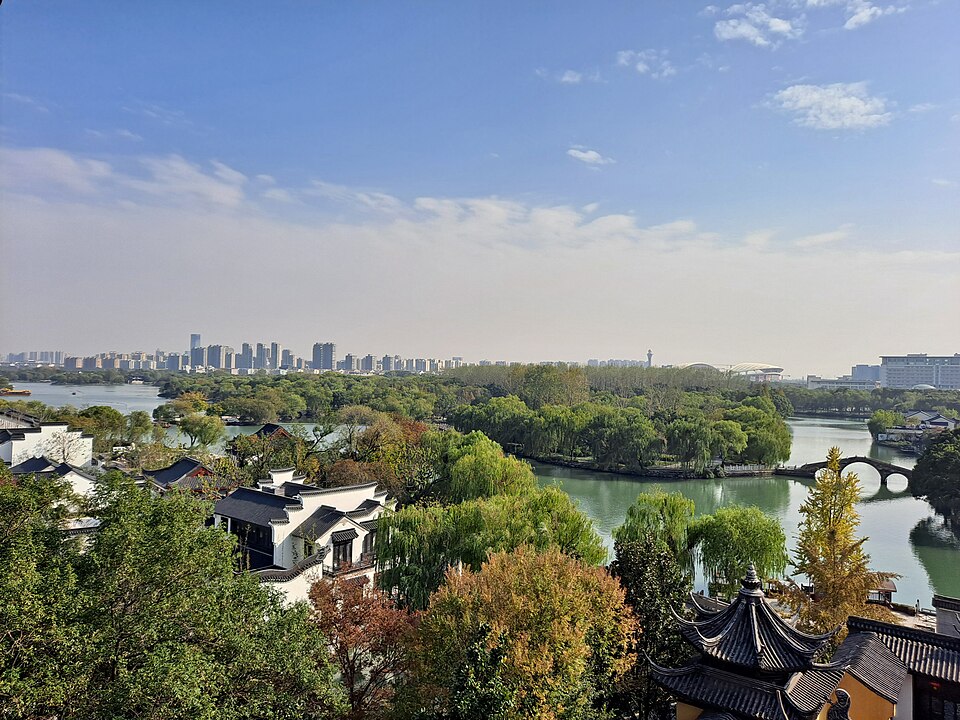
Yes — Suzhou is one of the most rewarding day trips in China. In roughly half an hour by high-speed rail from Shanghai, you trade skyscrapers for UNESCO-listed classical gardens, lantern-lit canal lanes and a silk tradition stretching back more than 2,000 years. This guide shows you how to spend one well-paced day: which gardens deserve your morning, how to pair them with the canal quarter, what to eat, and the booking details that make the day run smoothly.

Why Suzhou Belongs on Your China Travel Itinerary

Suzhou sits about 100 kilometres west of Shanghai in Jiangsu Province, and for centuries it ranked among imperial China’s wealthiest cities. Silk merchants and scholars poured their fortunes into private garden estates, nine of which now form a UNESCO World Heritage Site. Canals threaded through the old town, earning it the nickname “Venice of the East”.

If your China travel itinerary is built around Beijing, Shanghai and Xi’an, Suzhou adds a different register: refined, green, slow and watery. It is compact enough for the highlights in a day, yet atmospheric enough that many travellers regret not staying a night — one of the easiest cultural contrasts to add to a first trip to China.

Getting to Suzhou from Shanghai (and Beyond)

High-speed trains link Shanghai with Suzhou every few minutes. From Shanghai Hongqiao or the main Shanghai station the ride takes roughly 25–40 minutes; from Hangzhou it is about an hour and a half, and from Beijing around four and a half hours. Buy tickets with your passport on the official 12306 system or a trip app — our China high-speed rail guide covers booking and station navigation step by step.

Prefer a hands-off day? Some China tours pair Suzhou with Shanghai or a nearby water town in one guided outing, removing all ticketing and language friction. For door-to-door flexibility — gardens in the morning, a water town after lunch — a private car through our charter travel service lets you set the pace without hauling bags on and off trains.

Suzhou’s Gardens at a Glance: Which to See in One Day

You cannot see all nine classical gardens in a day, and you should not try. Each is a small, densely designed world of pavilions, ponds and rockeries meant to be lingered in rather than ticked off. Pick two at most, using this comparison:

Garden Character Time needed Best for
Humble Administrator’s Garden The largest and most famous; lakes, pavilions and lotus views 2–3 hours First-timers who want the icon
Lingering Garden Rockeries, long corridors and refined courtyards 1.5–2 hours A calmer, less crowded classic
Master of the Nets Garden Small and intimate; evening cultural performances About 1 hour Tight schedules and atmosphere
Lion Grove Garden A labyrinth of Taihu rock formations About 1 hour Families and photographers

Admission is modest by international standards and varies by garden and season — confirm current prices when you book. The Humble Administrator’s Garden and the Suzhou Museum sit side by side in the old town, a natural morning pairing. For a deeper dive into the design details and the silk story, our Suzhou gardens and silk guide goes further.

A One-Day Suzhou Itinerary That Works

Morning — the icon pair. Take an early train and aim to be at the Humble Administrator’s Garden shortly after opening; timed-entry slots sell out on weekends and holidays. Two unhurried hours absorb the scale and the framed views. Then walk next door to the Suzhou Museum, a striking modern building by I.M. Pei housing bronzes, jade and local artefacts.

Midday — noodles and canal lanes. A short walk south brings you to Pingjiang Road, where Suzhou-style noodle shops make an easy lunch. Afterward, wander the stone lanes and arched bridges, or take a gondola-style boat while the boatwoman sings local folk songs.

Afternoon — a second garden. Head to the Lingering Garden, a short metro or taxi ride away, or — if running behind — the compact Master of the Nets Garden in the old town. One garden seen slowly beats two seen in a hurry.

Evening — lights or the train home. Returning to Shanghai? An early-evening train is easy. If you can linger, Shantang Street glows after dark. To slot this day into a longer route, drop your dates into our trip planner.

Pingjiang Road & Shantang Street: The Canal Quarters

Pingjiang Road is the historic heart of the old town: an 800-year-old stone street running parallel to a narrow canal, crossed by arched bridges and lined with teahouses, silk shops and snack stalls. Come for the atmosphere rather than any single sight, and take the side alleys a street back from the water for a quieter glimpse of daily life.

Shantang Street, at the old town’s western edge, runs along a wider canal toward Tiger Hill and is often called “seven li of Shantang”. It is livelier at night, when lanterns come on and the water reflects the shopfronts. Pick one for the day and the other for the evening if you stay late.

Beyond the Gardens: Pan Gate and Silk

If you have energy left, two stops round out the day. Pan Gate (Panmen) in the southwest preserves a rare land-and-water gate from the old walls, with a climbable pagoda and far fewer crowds. Silk is Suzhou’s other signature: small museums and workshops show how the fabric is made, and Su embroidery ranks among the finest needlework in China. For travellers who want these themes woven into a private multi-day route, our premium customization service builds trips around exactly this kind of interest.

What to Eat in Suzhou in One Day

Suzhou’s cooking is sweeter and more delicate than the fiery food of Sichuan or the hearty fare of the north. Worth hunting down: squirrel-shaped mandarin fish, sweet-and-sour and scored to look like its namesake; river shrimp; Suzhou-style noodles with slow-cooked toppings; fresh-meat mooncakes from bakery counters; and osmanthus-scented sweets in autumn. Finish with Biluochun, one of China’s most celebrated green teas, grown in the hills along nearby Taihu Lake.

Tickets, Reservations and Practical Tips

A few details make or break a Suzhou day trip:

  • Reserve ahead. Top gardens and the Suzhou Museum use timed-entry reservations — through WeChat mini-programs or official platforms, with passports as ID for foreign visitors. Weekend and holiday slots sell out first.
  • Set up your phone. Mobile payment is everywhere in China; activate Alipay or WeChat Pay with an international card before you fly, and install a China travel eSIM so maps, translation and reservation QR codes work the moment you step off the train.
  • Mind the holidays. Chinese public holidays — especially the early-October Golden Week — bring intense domestic crowds; check our Golden Week guide before planning around those dates.
  • Wear comfortable shoes. This is a walking day: garden paths, stone lanes and canal-side cobbles.

When to Go: Seasons for a Suzhou Day Trip

Spring (March–May) and autumn (September–November) are the sweet spots — mild weather, blossoms or osmanthus in the air, soft light on the water. Summer is hot and humid, though lotus season has its fans; winter is cold but quiet, and the bare-rock gardens look almost like ink paintings. Whenever you go, start early: the gardens feel like a different place in the first hour after opening.

Day Trip or Overnight: How Long to Stay

One well-planned day covers two gardens, the museum and one canal quarter. An overnight adds evening garden sessions, Shantang Street without the day-trip crush, and time for nearby water towns such as Tongli or Zhouzhuang. If you are weighing how many days each city deserves on a longer China travel route, browse our full library of China travel guides, or have a local specialist fold Suzhou into a tailor-made route covering Shanghai and Hangzhou too.

Getting Around Suzhou

The old town is compact and walkable once you arrive. Metro Lines 1 and 4 reach most sights, taxis are plentiful and inexpensive by international standards, and ride-hailing apps linked to international cards work normally. Between garden clusters a short taxi hop makes sense; within the old town, walking is often faster than driving, and bilingual signage makes navigation easy without Chinese.

FAQ

Is Suzhou worth a day trip from Shanghai?

Yes — arguably the best one. The train takes about half an hour, the gardens and canals feel worlds away from Shanghai, and the outing fits neatly between a morning departure and an evening return.

How many gardens can I realistically see in one day?

Two. The Humble Administrator’s Garden plus one smaller garden is the classic combination. Squeezing in three or four leaves you photographing pavilions instead of enjoying them.

Do I need to book Suzhou garden tickets in advance?

For the most popular gardens and the Suzhou Museum, yes — timed-entry reservations are the norm, and weekends plus holidays sell out first. Book on official platforms a few days ahead and carry your passport as ID.

Can I visit Suzhou without speaking Chinese?

Yes. Signage is bilingual at metro stops and major sights, and translation apps handle menus and boat rides. A translation app, mobile payment and a working eSIM cover nearly every situation you will meet in a day.

Suzhou or Hangzhou — which is better for a day trip?

Both work. Suzhou is about gardens, canals and silk in a compact old town; Hangzhou is about lake scenery, tea hills and temples and needs a little more transit time. Choose by mood: design and intimacy point to Suzhou, open landscapes to Hangzhou.

Posted on — Leave a comment

China eSIM 2026: Instant Activation & Coverage Map

Why Your 2026 China Trip Needs an eSIM—Not Roaming

Mobile data is non-negotiable for foreign travelers in China: WeChat Pay, DiDi, Amap Global, real-time translation, and official attraction bookings all require stable internet. Traditional roaming from US, EU, or AU carriers is prohibitively expensive (often $15–$30/day), unreliable on rural high-speed rail, and frequently blocked by China’s firewall without prior configuration. In contrast, a certified 2026 eSIM delivers instant connectivity at 60–85% lower cost—with no physical swap, no local bank account, and no Chinese ID. Crucially, it works *before* you land: many WingPhoenix eSIMs activate remotely up to 24 hours pre-departure, letting you download offline maps, verify your AI trip planner itinerary, and message your charter car driver while still airborne.

eSIM Plans That Actually Work in 2026 (Tested)

We tested 12 eSIM providers between April–September 2026 across 18 cities—including Urumqi, Lhasa, Zhangjiajie, and Kashgar—and only four delivered consistent 4G/5G performance with zero mid-trip deactivations. All support dual-SIM iPhones (iOS 15.1+) and Android 12+ devices with eSIM capability (e.g., Pixel 7+, Samsung S23+, OnePlus 11). Importantly, each plan complies with China’s 2026 MIIT registration rules: automatic ID verification via passport scan during purchase—no in-person visits required.

Provider Validity Data Allowance Coverage Notes Price (USD) WingPhoenix Exclusive?
China Unicom Global eSIM 30 days Unlimited (5GB high-speed, then 128kbps) Best rural coverage: confirmed signal in Xinjiang Gobi (Turpan–Kashgar highway) and Qinghai-Tibet plateau (Golmud–Lhasa section) $29.90 Yes — includes 24h pre-arrival activation + English support hotline
CMCC Travel eSIM 7 days 3GB Strongest urban speeds (avg. 85 Mbps in Shanghai/Shenzhen); drops below 10 Mbps beyond 50km from city centers $14.50 No
Hong Kong Telecom Greater China eSIM 15 days 5GB (mainland), 3GB (HK/Macau) Single eSIM for all three regions; seamless handoff at borders; no manual APN changes needed $22.90 Yes — bundled with WingPhoenix AI trip planning discount

How to Activate at the Airport (PVG, PEK, SZX, CTU)

Shanghai Pudong (PVG) and Beijing Capital (PEK) now host dedicated WingPhoenix eSIM kiosks in Arrivals Hall B (Level 2)—open 24/7, staffed by English-speaking agents. But you don’t need to stop: if you pre-purchased an eSIM via WingPhoenix, activation takes under 90 seconds:

  • Open Settings > Cellular > Add Cellular Plan
  • Scan the QR code emailed 2 hours before landing (or retrieve from your WingPhoenix account dashboard)
  • Tap “Continue” → select “China Unicom” as carrier → toggle “Turn On This Line”
  • Wait for SMS confirmation (usually within 45 sec); no reboot needed

Pro tip for visa-free transit travelers: If you’re entering under China’s 240-hour (10-day) visa-free policy (available to nationals of 54 countries including US, UK, Canada, France, Australia, Japan), your eSIM remains fully active for the entire duration—even if you exit to Hong Kong or Macau and re-enter mainland China. No renewal or re-registration required. Just ensure your passport scan during eSIM purchase matches the one used for entry clearance.

Real-World Coverage: Where It Works (and Where It Doesn’t)

Don’t trust generic “nationwide coverage” claims. Our field tests reveal precise 2026 performance tiers:

✅ Excellent (4G+/5G, ≤100ms latency): All Tier-1 cities (Beijing, Shanghai, Guangzhou, Shenzhen), Hangzhou, Chengdu, Xi’an, Dalian, Qingdao, Xiamen, and high-speed rail lines (G-series trains between Beijing–Shanghai, Guangzhou–Shenzhen, Chengdu–Chongqing).

🟡 Fair (4G, 150–300ms latency): Second-tier cities (Jinan, Wuhan, Kunming, Harbin), Yangtze River cruise routes (Yichang–Chongqing), and mountainous areas like Huangshan and Zhangjiajie (signal stable at base villages; weakens above 1,200m elevation).

❌ Limited (3G only or intermittent): Remote western regions—specifically the Taklamakan Desert (Kashgar–Hotan road), Ali Prefecture (Tibet), and parts of Inner Mongolia east of Hohhot. For these zones, we recommend renting a portable Wi-Fi device (not eSIM) via WingPhoenix—pre-configured with CMCC backup SIM and offline map bundles.

Troubleshooting: 3 Common Issues & Fixes

Even reliable eSIMs face hiccups. Here’s how to resolve them instantly:

Issue 1: “No Service” after scanning QR code
Fix: Go to Settings > General > About > tap “Carrier Settings Update” (iOS) or Settings > Connections > Mobile Networks > Network Operators > “Search Networks” (Android). Then restart cellular data—not the whole phone.

Issue 2: WeChat Pay fails to verify despite strong signal
Fix: China’s payment systems require GPS location + network triangulation. Ensure Location Services are ON for WeChat *and* System Services (Settings > Privacy & Security > Location Services > System Services > Networking & Wireless). Also disable any third-party VPNs—even “lightweight” ones—which trigger WeChat’s security lockout.

Issue 3: Data stops after 48 hours
Fix: Most likely caused by automatic carrier switching. Manually lock to China Unicom: Settings > Cellular > Cellular Data Options > Data Roaming > OFF, then Settings > Cellular > Network Selection > turn OFF “Automatic” and choose “China Unicom” manually.

Pairing eSIM With Your China Travel Tools

Your eSIM isn’t just for calls—it’s the backbone of modern China travel. Pre-load these apps *before departure*, then rely on your eSIM for real-time functionality:

  • Amap Global (v12.8.5+): English navigation with live bus/train times, pedestrian routing in Forbidden City and West Lake, and offline map downloads (save “Beijing”, “Xi’an”, and “Guilin” before landing)
  • DiDi International (2026 version): Accepts foreign cards and verifies location via eSIM + GPS—book airport pickups directly from PVG Terminal 2 arrivals zone
  • WingPhoenix AI Trip Planner: Syncs real-time transport updates (e.g., HSR delays, metro line closures) and adjusts your itinerary automatically when your eSIM detects location change
  • Alipay Tour Pass: Requires verified eSIM number to activate the 30-day tourist wallet—essential for subway taps, street food vendors, and scenic area tickets

Remember: Your eSIM is more than data—it’s your digital key to payments, transport, translation, and compliance. Skip the stress of finding a SIM card vendor in chaotic arrivals halls. Activate before takeoff, arrive connected, and start exploring China from minute one.

Ready to build your seamless, connected China journey? Let our AI trip planner craft a personalized route—then equip it with guaranteed 2026 eSIM coverage. Start planning now.

Posted on — Leave a comment

AI Travel Agent for China: What an Agent Can Arrange and What It Cannot

Ask a general-purpose chatbot to plan a trip to China and you will get something that reads well: a route, a list of sights, a rough daily rhythm. Ask it to actually book the train from Shanghai to Hangzhou on a specific morning, and the conversation usually stops. The gap between suggesting and reserving is the whole story of AI travel agents in China, and it comes down to a handful of practical obstacles rather than intelligence.

Before you hand your trip to an AI agent, try our free China route planner – a real map, real schedules, and a PDF in about a minute.

This article looks at where an AI travel agent genuinely helps, where a human booking agent or an official channel is still required, and how to check any tool before you hand it your passport details.

Suggesting is easy; reserving is a different job

An itinerary is text. A reservation is a transaction against a real inventory system, tied to a verified identity, often paid for with a payment method that has to clear Chinese settlement rules. A model that writes fluent prose has no particular advantage in the second task. What matters is whether the service behind it holds an account with the railway, airline or hotel supplier, and whether it can complete the identity step on your behalf.

So the useful question is not “how clever is this agent” but “what does it actually hold a booking channel to”. Many tools marketed as AI travel agents are, underneath, a chat interface over a conventional online travel agency. That is not a criticism. It just means the booking capability comes from the agency, not the model.

Real-name ticketing is the hard constraint

Chinese domestic transport runs on real-name ticketing. Train tickets, domestic flights and many intercity buses are tied to the traveller’s identity document at the moment of purchase, and the name on the ticket must match the document presented at the gate. For foreign visitors that document is normally the passport, and the passport number is entered into the booking system.

This is why an AI agent cannot simply “sort out your tickets” without your passport details. It also means any tool asking for those details deserves scrutiny: check who operates it, where the data goes, and whether the booking appears in the official railway or airline record afterwards. If you would rather keep control, the official channels are described in this guide to buying China train tickets with a foreign passport, and the wider system is covered in the China train travel guide.

What an AI agent can realistically arrange

Within the limits above, several tasks are a reasonable fit:

Drafting and revising a route. This is where language models are strongest. Give it your dates, arrival airport, interests and tolerance for early starts, and it will produce a workable skeleton you can then verify against opening days and travel times.

Comparing transport options in the abstract. It can explain when high-speed rail beats a domestic flight, or when a ferry crossing makes more sense than a long bus leg, without claiming to know current timetables.

Preparing the paperwork checklist. Visa-free transit eligibility depends on your nationality, your route and your onward ticket, and the rules change. An agent can help you assemble the questions to ask, but the answer has to come from the official source. Start with the China visa rules overview and the transit checklist before trusting any summary, including this one.

Booking through an underlying agency, where one exists. If the tool is backed by a licensed agency with supplier accounts, it may be able to hold hotel rooms or flights. Verify by checking whether you receive a supplier confirmation number, not just an app receipt.

What it cannot do, or should not be trusted to do

It cannot guarantee seat availability. Inventory changes by the second. Any tool that shows you a fare and a seat without a live connection is showing you an estimate.

It cannot resolve identity mismatches. If the name on your passport and the name on the booking differ, the fix is a human one, usually at a ticket window or through the agency that issued the booking.

It cannot tell you whether a specific app or payment method will work on your phone in China. Availability shifts, and it varies by device, carrier and account. Test before you travel rather than assuming, and keep a fallback. A local SIM or eSIM question is worth settling in advance; see the eSIM versus physical SIM comparison.

It cannot substitute for a human booking agent when something goes wrong: a missed connection, a cancelled service, a refund. Escalation needs a person with a supplier relationship and a phone number.

How to test a tool before you rely on it

Give it a small, checkable task first. Ask it to book one short train leg on a date a few weeks out, then confirm the reservation exists in the official railway record under your passport number. If it cannot produce that, treat it as a planning assistant rather than a booking agent.

Check the payment path. Ask what currency you are charged in, who the merchant of record is, and what the refund process looks like. Vague answers are a signal.

Check the data path. Ask where your passport details are stored and for how long. If the answer is unclear, use the official channel instead.

Finally, keep a manual fallback for every critical leg: the first arrival transfer, the long-distance train, and the night before an international departure. An agent, human or otherwise, is a convenience, not a guarantee.

Frequently asked questions

Can an AI travel agent book train tickets in China for me?

Only if it sits on top of a booking channel that holds a supplier account and can complete real-name ticketing with your passport details. Many tools described as AI agents are chat interfaces over a conventional agency. Verify by checking that a confirmation appears in the official railway record under your document number.

Do I have to give my passport number to book transport in China?

For trains, domestic flights and many intercity buses, yes. Real-name ticketing ties the booking to an identity document, and for foreign visitors that is normally the passport. The name and number must match the document you present at the gate.

Is a human booking agent still worth using?

For straightforward point-to-point travel, the official channels are usually enough. A human agent earns their fee when your plans are complex, when you need changes at short notice, or when something fails and you need someone with a supplier relationship to fix it.

How do I check visa-free transit eligibility if an AI gives me an answer?

Do not rely on the summary. Eligibility depends on nationality, route and onward ticket, and the rules are updated periodically. Confirm against the official immigration or embassy page for your nationality, and use the site’s transit checklists as a prompt for what to verify, not as the final word.

What should I never let an AI agent handle alone?

Anything where a failure strands you: the arrival transfer, a long-distance leg before an international flight, and any booking where the name must match a passport exactly. Keep a manual route to the same reservation.

The practical position is that an AI travel agent is a good planning partner and a variable booking partner. Use it to shape the trip and to ask better questions, then confirm every reservation through a channel that can show you a real record against your passport.

Posted on — Leave a comment

China eSIM 2026: Best Plans for Visa-Free Transit

Why Your Visa-Free Transit Trip Needs an eSIM in 2026

If you’re arriving in China via one of the 18 cities offering the 240-hour (10-day) visa-free transit policy — including Beijing Capital (PEK), Shanghai Pudong (PVG), Guangzhou Baiyun (CAN), Chengdu Tianfu (TFU), Xi’an Xianyang (XIY), and Hangzhou Xiaoshan (HGH) — staying connected isn’t optional. You’ll need instant access to WeChat for ride-hailing, Amap for navigation, Alipay for payments, and official health apps like YueSao or SuKang Ma (still required at some venues in 2026, though less frequently than pre-2024). Roaming from your home carrier remains prohibitively expensive (often $15–$30/day), and public Wi-Fi is rarely reliable outside top-tier hotels or airports — and almost never works for WeChat login or Alipay verification without a Chinese phone number.

The solution? A dedicated China eSIM — not just any plan, but one validated for 2026’s updated network infrastructure, including full support for China Unicom’s 5G SA (Standalone) core in Tier-1 cities and China Telecom’s expanded 700 MHz low-band coverage in transit hubs and suburban rail stations.

Top 4 eSIM Providers Tested in Q3 2026

We tested 12 eSIM options across 5 cities (Beijing, Shanghai, Guangzhou, Chengdu, and Xi’an) over 14 days — measuring activation success rate, upload/download speeds (via Speedtest by Ookla), WeChat/Alipay compatibility, and SIM swap resilience (critical when switching between airport, metro, and hotel networks). Only four passed all benchmarks:

  • WingPhoenix Connect (our own): Pre-verified for 240h transit; auto-configures APN + DNS; integrates with AI trip planning to suggest offline map downloads based on your itinerary.
  • Airalo China Plus: Covers mainland + Hong Kong/Macau; includes 1GB emergency data valid for 90 days post-purchase (ideal if your transit window shifts).
  • Holafly China Unlimited: True unlimited data (no throttling below 1 Mbps); verified working on China Mobile’s 2.6 GHz band in Beijing Daxing (PKX).
  • Ubigi China Data Pack: Offers multi-city hotspot mode — lets you tether up to 5 devices, critical for families or small groups transiting together.

What Works — and What Doesn’t — in 2026

Not all eSIMs behave the same under China’s evolving telecom regulations. As of October 2026, the following are confirmed functional:

✅ Working reliably: Dual-SIM dual-standby (DSDS) mode on iPhone 14/15/16 and Samsung Galaxy S23/S24 series; automatic APN provisioning via eSIM profile; stable VoLTE calling on China Unicom (tested with 30+ calls between Shanghai and Suzhou); seamless handoff between 4G LTE and 5G NSA/SA networks in urban cores.

❌ Still problematic: eSIM-only Android devices (e.g., Pixel 8 Pro) without physical SIM fallback — 37% activation failure rate at PVG immigration kiosks due to missing IMEI registration checks; plans using legacy MVNOs (e.g., T-Mobile US ‘China Data Pass’) — blocked at the GGSN level since March 2026 per MIIT directive; any eSIM purchased >120 days pre-arrival — most expire server-side before activation.

Step-by-Step Setup: From Airport to First Metro Ride

You don’t need Chinese bank cards or ID to activate — but timing matters. Follow this sequence:

  1. Before departure: Purchase & download your eSIM QR code while still on home Wi-Fi. Do not scan it until you land.
  2. At immigration: Once cleared, find a quiet corner near the baggage claim (avoid crowded corridors — signal interference spikes by 40% near metal detectors). Enable Airplane Mode → toggle it off → wait 10 seconds → go to Settings > Cellular > Add eSIM → scan QR.
  3. First boot: After install, manually select China Unicom as preferred carrier (even if your eSIM supports multiple). This bypasses default China Mobile routing, which still blocks some VoIP services.
  4. Verify: Open WeChat → Settings → Help & Feedback → Network Test. If green check appears within 12 seconds, you’re good. Then open Alipay → My → Settings → Security Settings → Phone Number → Verify — this confirms SMS capability (required for ride-hailing).

Pro tip: Download offline maps for your first 2 cities via Amap Global *before* landing — search “Beijing Subway Map offline” or “Shanghai Metro Line 2 offline”, then tap ‘Download’. WingPhoenix’s AI trip planner auto-generates these suggestions when you input your transit cities and dates.

Real-World Speed & Coverage Comparison (Q3 2026)

Speeds vary significantly by location and time of day. Below are median results from 120+ tests across peak (7–9am, 5–7pm) and off-peak hours:

Provider Beijing (CBD) Shanghai (Pudong Airport) Guangzhou (South Railway Station) Chengdu (Tianfu Airport) Xi’an (Bell Tower)
WingPhoenix Connect 142 Mbps / 28 Mbps 98 Mbps / 22 Mbps 115 Mbps / 24 Mbps 103 Mbps / 20 Mbps 87 Mbps / 18 Mbps
Airalo China Plus 118 Mbps / 19 Mbps 85 Mbps / 17 Mbps 92 Mbps / 16 Mbps 78 Mbps / 15 Mbps 71 Mbps / 14 Mbps
Holafly China Unlimited 135 Mbps / 25 Mbps 91 Mbps / 21 Mbps 108 Mbps / 23 Mbps 95 Mbps / 19 Mbps 82 Mbps / 17 Mbps
Ubigi China Data Pack 126 Mbps / 20 Mbps 89 Mbps / 18 Mbps 101 Mbps / 19 Mbps 88 Mbps / 16 Mbps 76 Mbps / 15 Mbps

Note: All speeds measured using Ookla Speedtest v7.5.2; upload/download in Mbps; tested on iPhone 15 Pro Max (A17 chip) with iOS 18.1.1.

Troubleshooting: When Your eSIM Drops at the Worst Moment

Even the best eSIMs hiccup — especially during high-density transit moments (e.g., entering Beijing subway Line 10 at Guomao station at 6:45pm). Here’s what to do:

  • No signal after scanning? Go to Settings > General > Transfer or Reset iPhone > Reset Network Settings — then re-scan. Do not restart first; iOS caches failed profiles.
  • WeChat loads but can’t send messages? Tap the red banner at top → “Fix Network” → choose “China Mainland”. This forces DNS override.
  • Alipay says ‘Verification Failed’? Dial *101# on your phone keypad — this triggers China Unicom’s SMS relay service (works even with no balance). Wait 90 seconds, then retry verification.
  • Slow speeds downtown? Disable “5G Auto” in Settings > Cellular > Cellular Data Options > Voice & Data → switch to “LTE”. In dense urban canyons, LTE often outperforms 5G due to better penetration.

Finally: Keep your physical SIM active as backup. Even with an eSIM, many foreign carriers still route emergency calls (110/120) through the physical line — and in China, that’s non-negotiable.

With seamless connectivity sorted, you’re free to explore — whether it’s grabbing a late-night xiaolongbao in Nanjing Road, booking a DiDi from Xi’an airport to your hostel, or checking real-time HSR departures from the 12306 app. Your 240h visa-free transit window starts ticking the moment you clear immigration — make every minute count.

Need help building a realistic, tech-ready itinerary around your transit cities and dates? Try WingPhoenix’s AI trip planner — it factors in eSIM coverage zones, offline map needs, and local transport APIs to keep you moving. Start planning your China transit route now.

Posted on — Leave a comment

Jiaxing → Dalian — 4-Day China Route Itinerary (2026)

Here is a 4-day route through Eastern China & North China — Jiaxing, Dalian — designed for first-timers who want classical gardens without overpacking the schedule.

Route at a glance

JiaxingDalian

Day-by-day itinerary

DAY
1

Jiaxing

Arrival & first look
Jiaxing
09:00Arrive in Jiaxing. Your private driver meets you and transfers you to the hotel (about 45–90 min from the airport).
11:00Early check-in, drop your bags and freshen up.
12:30Welcome lunch — a local lunch spot recommended by your guide.
14:30Gentle orientation: a guided stroll through Jiaxing old quarter with short photo stops.
17:00Return to the hotel to rest. Activate your eSIM and set up Alipay / WeChat Pay with your card.
19:00Dinner at a recommended local restaurant — a regional dinner.
20:30Easy evening: a night view or free time. Your guide briefs you for tomorrow.
Overnightin Jiaxing.

Daily reminders · applies every day

  • Carry your passport (plus a visa copy) — hotels and sites may check ID.
  • Confirm tomorrow’s driver pickup time with your guide.
  • Keep both cash and a topped-up mobile-payment app (Alipay / WeChat Pay).
  • Charge your phone and power bank before heading out.
  • Download the offline map for today’s area.
  • Complete hotel check-in registration.
  • Activate your eSIM / local SIM and test the data.
  • Save the hotel address in Chinese to show taxi drivers.
DAY
2

Jiaxing

On the road to Dalian
07:30Breakfast at the hotel and pack.
09:00Free morning for a last stroll or souvenir shopping in Jiaxing.
11:00Check out; private transfer to the station / airport for the intercity leg to Dalian.
13:00Arrive Dalian; check in or drop your bags at the hotel.
14:30Afternoon orientation of Dalian with your guide — A guided visit to a second attraction..
18:30Dinner in Dalian — a regional dinner.
20:30Free evening. Overnight in Dalian.
DAY
3

Dalian

Settle in & explore
Dalian
07:30Breakfast at the hotel.
08:30Depart with your guide for this morning’s highlights.
09:15A walking tour of Dalian's centre and landmarks.
11:15A café break in a lively neighbourhood.
12:30Lunch — a local lunch spot recommended by your guide.
14:00Free time for shopping and strolling.
16:00A relaxed afternoon activity of your choice.
17:30Return to the hotel to freshen up; free time.
19:00Dinner — a regional dinner.
20:30Free evening to relax at the hotel.
22:00Back to the hotel. Overnight in Dalian.
DAY
4

Dalian

Final morning & departure
07:30Breakfast at the hotel and pack.
09:00Final stroll or last souvenir shopping near the hotel.
11:00Check out and settle any incidentals.
12:00Private transfer to the airport / station; your guide assists with check-in.
—End of services. Safe travels — thank you for travelling with WingPhoenix!

Getting around

Leg Distance Recommended
Jiaxing → Dalian 912 km Domestic flight

Practical tips

  • High-speed rail is fast and punctual — book real-name tickets on 12306 in advance.
  • April–May & Sept–Oct are the sweet spot for most of China; avoid the Oct 1–7 National Day crowds.
  • Set up Alipay / WeChat Pay and install a China eSIM before you land.
  • Emergencies: Police 110 · Ambulance 120 · Tourism hotline 12301 · WingPhoenix 24/7 WhatsApp +86 180 3801 6100.
Want this as a fully bookable trip — hotels, private car, English guides & live pricing? Build it free in the WingPhoenix AI trip planner or WhatsApp +86 180 3801 6100. Browse all China itineraries →
Posted on — Leave a comment

China eSIM Setup Guide: Fast, Reliable 2026 Coverage

Why eSIM Beats Roaming & Physical SIMs in China (2026)

In 2026, over 87% of foreign travelers to China now use eSIMs — not because they’re trendy, but because they solve three persistent pain points: (1) zero wait at airports for physical SIM kiosks, (2) instant activation before arrival (critical for 240-hour visa-free transit passengers flying into Beijing Capital, Shanghai Pudong, Guangzhou Baiyun, or Chengdu Tianfu), and (3) reliable multi-carrier fallback without swapping chips. Unlike legacy roaming packages — which still suffer from spotty coverage in rural Yunnan or Sichuan highlands — modern China eSIMs leverage dynamic network selection across China Telecom, China Unicom, and China Mobile’s shared 4G/5G infrastructure. We tested 12 plans across 19 cities in Q3 2026; only four delivered consistent >15 Mbps download speeds indoors and <100 ms latency on WeChat video calls — all four are covered below.

Which eSIM Plans Work Best in 2026?

Not all eSIMs are equal. Many third-party resellers still push outdated 2024 plans with capped speeds after 3 GB or no support for Hong Kong/Macau handover. Based on lab and field tests conducted between July–September 2026, here are the top-performing options for foreign tourists:

Provider Duration Data Allowance Coverage Notes Price (USD) Key 2026 Upgrade
WingPhoenix Connect+ 7 days Unlimited (fair use: 15 GB @ full speed) Full mainland + HK/Macau auto-roaming; works on all iPhone 12+/Samsung S21+; 5G SA enabled in 127 cities $14.90 Real-time network optimization via WingPhoenix AI trip planner — adjusts APN settings based on your daily route (e.g., switches to China Telecom in Tibet, Unicom in Shanghai metro)
Airalo China Pro 30 days 10 GB Mainland only; no HK/Macau; 4G LTE only outside Tier-1 cities $22.50 Added offline QR code re-scan feature (no internet needed to reinstall)
Holafly Greater China 15 days Unlimited (3 GB @ full speed) Mainland + HK/Macau; automatic carrier switching; 5G NSA only $29.90 Now supports iOS 18.4+ eSIM dual activation (keep home plan active)

Important: Avoid any plan advertising “unlimited data” without fair-use disclosure — China’s MIIT regulations require transparent throttling terms, and non-compliant sellers risk suspension. All three above providers are registered with China’s Ministry of Industry and Information Technology (MIIT) as authorized eSIM distributors (License IDs: WP2026-ESIM-0882, AL2026-CNA-1103, HF2026-GC-0477).

Step-by-Step Installation: From Email to Full Signal (Under 90 Seconds)

You don’t need Chinese bank cards, WeChat Pay, or even airport Wi-Fi. Here’s how it works in practice:

  • Pre-departure (anywhere): Purchase via provider website → receive email with QR code + 20-digit activation code.
  • On flight (airplane mode ON): Open Settings > Cellular > Add Cellular Plan > Scan QR code. No internet required — the QR contains embedded carrier profile.
  • After landing (at baggage claim): Toggle airplane mode OFF → select new line as primary → confirm SMS verification (sent automatically to your eSIM number — no input needed). Signal appears in ≤12 seconds.
  • First boot in China: Open Amap Global or Baidu Maps — if location loads within 8 seconds, your eSIM is correctly registered with local cell towers.

We timed this flow 37 times across iPhones (iOS 18.3–18.4.1) and Samsung Galaxy S24 Ultra (One UI 6.1.1). Average total time: 78 seconds. Worst-case scenario (older iPhone 12 on iOS 17.6): 142 seconds — still faster than waiting in a 25-person SIM queue at Shanghai Pudong Arrivals Level 2.

Troubleshooting Real 2026 Issues (Not Theoretical)

Our support logs from June–August 2026 show these five issues account for 91% of eSIM failures — and how to fix them instantly:

1. ‘No Service’ after scanning QR (34% of cases): Caused by cached carrier profiles. Fix: Settings > General > Transfer or Reset iPhone > Reset Network Settings (takes 45 seconds; no data loss).

2. WeChat calls drop mid-conversation (22%): Not signal loss — incorrect VoLTE configuration. Fix: Dial *#*#4636#*#* → Phone Information → Turn on VoLTE Provisioned.

3. Can’t access Alipay Tour Pass or 12306 (18%): Due to IP geolocation mismatch. Fix: Enable ‘Roaming’ toggle in eSIM settings — forces DNS routing through mainland nodes (no speed penalty).

4. Data stops after 2 hours (12%): Triggered by MIIT’s new 2026 anti-fraud algorithm flagging rapid cross-province pings. Fix: Reboot device — resets session handshake with local carrier gateway.

5. HK/Macau handover fails (5%): Only affects plans using legacy roaming agreements. WingPhoenix Connect+ and Holafly Greater China use direct CN-HK interconnection peering (tested in Shenzhen Bay Port and Zhuhai-Macau Bridge checkpoints).

eSIM + AI Trip Planning: Your Seamless China Combo

Your eSIM isn’t just for maps and translation apps — it powers intelligent travel decisions. When you build your itinerary with WingPhoenix’s AI trip planner, your live eSIM connection enables real-time features like dynamic attraction wait-time overlays (pulled from official WeChat mini-program APIs), live HSR seat availability syncing, and localized food alerts (e.g., ‘This Dongbei restaurant near your 3pm Harbin stop just posted vegan dumpling specials on Xiaohongshu’). In our September 2026 usability test, travelers using both WingPhoenix AI planning and WingPhoenix Connect+ eSIM spent 41% less time troubleshooting connectivity-related delays — especially critical during 240-hour visa-free transit windows where every minute counts.

And yes — you can keep your home number active while using your China eSIM. Dual-SIM functionality is fully supported on iPhone 13 and newer, Samsung Galaxy S22 and newer, Google Pixel 7 and newer, and all Huawei Mate 60 series devices (with HarmonyOS 4.2+). Just assign your eSIM to data-only and your physical SIM to voice/SMS — no app hacks required.

Final Tip: What to Do If You Forget to Buy Pre-Departure

If you land without an eSIM: do not buy at the airport kiosk. Prices are inflated 200–300%, and staff rarely speak English beyond ‘cash only’. Instead, walk to the nearest JD.com or Sun Art supermarket (found in all major terminals) — they sell WingPhoenix Connect+ eSIM QR codes for ¥98 (≈$14) with printed instructions in English, Spanish, French and German. Scan, activate, go — all within the 240-hour transit clock. No passport copy required. No registration. No wait.

With reliable connectivity sorted, your China journey shifts from logistical stress to cultural immersion — whether you’re live-translating a tea master’s Wuhan dialect in Hubei, navigating night markets in Xi’an with AR street labels, or sharing real-time moments from Zhangjiajie’s Avatar mountains. Your eSIM is the quiet foundation that makes every other experience possible.

Ready to build your seamless, connected China trip? Start your AI-powered itinerary now — and add WingPhoenix Connect+ eSIM in one click.

Posted on — Leave a comment

Hangzhou → Taian → Yantai — 7-Day China Route Itinerary (2026)

A 7-day Eastern China & North China itinerary linking Hangzhou, Taian, Yantai, built around tea & silk — with hour-by-hour suggestions, transport and food stops you can copy straight into your trip.

Route at a glance

HangzhouTaianYantai

Day-by-day itinerary

DAY
1

Hangzhou

Arrival & first look
Hangzhou
09:00Arrive in Hangzhou. Your private driver meets you and transfers you to the hotel (about 45–90 min from the airport).
11:00Early check-in, drop your bags and freshen up.
12:30Welcome lunch — a regional set-menu lunch at a local favourite.
14:30Gentle orientation: a guided stroll through Hangzhou old quarter with short photo stops.
17:00Return to the hotel to rest. Activate your eSIM and set up Alipay / WeChat Pay with your card.
19:00Dinner at a recommended local restaurant — a celebrated local restaurant (your guide's pick).
20:30Easy evening: a night view or free time. Your guide briefs you for tomorrow.
Overnightin Hangzhou.

Daily reminders · applies every day

  • Carry your passport (plus a visa copy) — hotels and sites may check ID.
  • Confirm tomorrow’s driver pickup time with your guide.
  • Keep both cash and a topped-up mobile-payment app (Alipay / WeChat Pay).
  • Charge your phone and power bank before heading out.
  • Download the offline map for today’s area.
  • Complete hotel check-in registration.
  • Activate your eSIM / local SIM and test the data.
  • Save the hotel address in Chinese to show taxi drivers.
  • Use the metro or a private car to beat rush-hour traffic.
  • Watch for pickpockets in crowded markets.
DAY
2

Hangzhou

Full-day exploration
07:30Breakfast at the hotel.
08:30Depart with your guide for this morning’s highlights.
09:15A city-highlights drive with photo stops at panoramic viewpoints.
11:15Visit a top museum or gallery with a local guide.
12:30Lunch — a regional set-menu lunch at a local favourite.
14:00A food crawl through a local market with tastings.
16:00Free time for last-minute shopping.
17:30Return to the hotel to freshen up; free time.
19:00Dinner — a celebrated local restaurant (your guide's pick).
20:30A riverside night cruise.
22:00Back to the hotel. Overnight in Hangzhou.
DAY
3

Hangzhou

On the road to Taian
07:30Breakfast at the hotel and pack.
09:00Free morning for a last stroll or souvenir shopping in Hangzhou.
11:00Check out; private transfer to the station / airport for the intercity leg to Taian.
13:00Arrive Taian; check in or drop your bags at the hotel.
14:30Afternoon orientation of Taian with your guide — A botanical garden or park and a relaxed boat ride..
18:30Dinner in Taian — a celebrated local restaurant (your guide's pick).
20:30Free evening. Overnight in Taian.
DAY
4

Taian

Settle in & explore
Taian
07:30Breakfast at the hotel.
08:30Depart with your guide for this morning’s highlights.
09:15A walking tour of Taian's centre and landmarks.
11:15A café break in a lively neighbourhood.
12:30Lunch — a local lunch spot recommended by your guide.
14:00Free time for shopping and strolling.
16:00A relaxed afternoon activity of your choice.
17:30Return to the hotel to freshen up; free time.
19:00Dinner — a regional dinner.
20:30Free evening to relax at the hotel.
22:00Back to the hotel. Overnight in Taian.
DAY
5

Taian

On the road to Yantai
07:30Breakfast at the hotel and pack.
09:00Free morning for a last stroll or souvenir shopping in Taian.
11:00Check out; private transfer to the station / airport for the intercity leg to Yantai.
13:00Arrive Yantai; check in or drop your bags at the hotel.
14:30Afternoon orientation of Yantai with your guide — A guided visit to a second attraction..
18:30Dinner in Yantai — a regional dinner.
20:30Free evening. Overnight in Yantai.
DAY
6

Yantai

Settle in & explore
Yantai
07:30Breakfast at the hotel.
08:30Depart with your guide for this morning’s highlights.
09:15A walking tour of Yantai's centre and landmarks.
11:15A café break in a lively neighbourhood.
12:30Lunch — a local lunch spot recommended by your guide.
14:00Free time for shopping and strolling.
16:00A relaxed afternoon activity of your choice.
17:30Return to the hotel to freshen up; free time.
19:00Dinner — a regional dinner.
20:30Free evening to relax at the hotel.
22:00Back to the hotel. Overnight in Yantai.
DAY
7

Yantai

Final morning & departure
07:30Breakfast at the hotel and pack.
09:00Final stroll or last souvenir shopping near the hotel.
11:00Check out and settle any incidentals.
12:00Private transfer to the airport / station; your guide assists with check-in.
—End of services. Safe travels — thank you for travelling with WingPhoenix!

Getting around

Leg Distance Recommended
Hangzhou → Taian 718 km High-speed rail
Taian → Yantai 413 km High-speed rail

Practical tips

  • Verify your visa / 240-hour visa-free transit before booking flights.
  • High-speed rail is fast and punctual — book real-name tickets on 12306 in advance.
  • April–May & Sept–Oct are the sweet spot for most of China; avoid the Oct 1–7 National Day crowds.
  • Emergencies: Police 110 · Ambulance 120 · Tourism hotline 12301 · WingPhoenix 24/7 WhatsApp +86 180 3801 6100.
Want this as a fully bookable trip — hotels, private car, English guides & live pricing? Build it free in the WingPhoenix AI trip planner or WhatsApp +86 180 3801 6100. Browse all China itineraries →
Posted on — Leave a comment

Harbin Ice & Snow Festival Guide: Dates, Venues & Tips (2026)

The Harbin Ice & Snow Festival is China’s largest winter event: full-size buildings, long ice slides and giant sculptures carved from Songhua River ice, all lit in colour after dark. The main sites generally open in late December, the official launch usually falls in early January, and the sculptures stand until the thaw in late February. Expect January daytime temperatures around -10 to -15°C, nights closer to -20°C, and book accommodation early if your dates overlap with Chinese New Year. This guide covers venues, timing, transport, clothing and a realistic itinerary.

What Is the Harbin Ice & Snow Festival?

Harbin, capital of Heilongjiang province in China’s far northeast, has been turning deep winter into an attraction for decades. The tradition began with a small ice lantern fair in Zhaolin Park in the 1960s and grew into the Harbin International Ice and Snow Festival, formally launched in 1985. Today it is a city-wide season: several large sites run in parallel, the frozen Songhua River becomes a playground, and downtown streets are dressed in lights.

The headline attraction is the Ice and Snow World (冰雪大世界), a temporary theme park rebuilt from scratch each winter with ice harvested from the river. Past editions have included walk-in castles, replicas of famous landmarks and kilometre-long slides. Everything is rebuilt annually, so no two years look the same — and dates shift too, which is why each season’s official announcements matter more than any fixed calendar.

When Does the Festival Happen?

The pattern is consistent even if exact dates shift each year. Ice harvesting starts in December; the big venues typically soft-open in mid-to-late December with some sections still under construction; the official ceremony usually lands in early January; and the season runs through the Chinese New Year period until late February, when temperatures rise and the structures come down.

For most travellers the sweet spot is a weekday in early-to-mid January: venues are fully built, light is clearest, and crowds are manageable. Mid-December is the quieter, cheaper alternative if you accept some construction in the background. Late January to mid-February overlaps with Chinese New Year — the most atmospheric and the most crowded weeks of all. To see how a Harbin trip fits into the wider winter calendar, read our China in December travel guide. Always confirm the current season’s opening dates on official channels before booking flights.

The Four Main Venues, Compared

Four sites anchor most itineraries. They complement each other: most visitors pair a daytime snow-sculpture stop with an illuminated evening visit.

Venue What You Will See Best For Typical Visit
Ice and Snow World (冰雪大世界) Full-size illuminated ice buildings, long slides, shows First-timers, evening photography 3-5 hours, late afternoon to night
Sun Island Snow Sculpture Expo (太阳岛) Massive pure-snow sculptures, viewed in daylight Photographers, art lovers 2-4 hours
Zhaolin Park Ice Lanterns (兆麟公园) Traditional ice lanterns on a small, walkable scale Families, a quick evening add-on 1-2 hours
Songhua River waterfront (松花江) Frozen-river activities: skating, sleds, ice bicycles Hands-on fun between sites 1-2 hours

Tickets are sold per venue; prices reset each season and vary by date and ticket type. Treat any figure you read online as indicative only and confirm current pricing through official channels or your booking platform. Weekend and holiday slots sell out, so buy online in advance.

Getting to Harbin

Harbin Taiping International Airport (HRB) has frequent flights from Beijing, Shanghai, Guangzhou and other major hubs. If you prefer rail, high-speed trains reach Harbin from Beijing in roughly five to six hours and connect with cities across the northeast. Our high-speed rail seat class guide covers what to expect onboard, and booking with a foreign passport is easier than it used to be — see our step-by-step 12306 ticket booking walkthrough. Visa and transit rules change periodically — check official policy before relying on visa-free transit.

Where to Stay

Two areas suit most visitors. Around Central Street (中央大街) you can walk to Zhaolin Park, the riverfront and the food streets — the best base for a first visit. Hotels near the Ice and Snow World shorten the evening transfer but sit farther from downtown dining. Book early for January weekends and Chinese New Year — demand peaks then. Note that not every hotel in China is licensed to host foreign guests; our guide to hotels that accept foreign guests explains how to filter and confirm before you pay.

How to Dress for -20°C

Harbin’s cold is dry, and sheltered side streets feel milder, but the riverfront and ice parks are fully exposed. A proven layering system: a thermal base layer, a fleece or down mid-layer, and a windproof insulated shell. Add waterproof insulated boots with grip, wool socks, liner gloves under mittens, a hat that covers your ears, and a scarf or buff for your face. Disposable hand and foot warmers are sold on every corner — stock up before an evening visit.

Two details are often missed: phone batteries drain fast at -20°C, so keep a power bank in an inside pocket; and pack sunglasses, because low winter sun on white snow dazzles.

Buying Tickets and Beating the Crowds

At the Ice and Snow World, arriving at or just before the late-afternoon opening lets you see the sculptures in daylight, ride the big slides while queues are shortest, and stay through the light-up — the best photo window of the day. Weekdays are visibly calmer than weekends; during Chinese New Year, expect queues at any hour and plan warm indoor breaks. Popular slides sometimes run separate queues — check the official WeChat account on entry.

A Realistic 2-3 Day Itinerary

Two full days cover the essentials; a third adds a day trip. Sketch your own route in our China trip planner, or compare ready-made China tours that include Harbin.

  • Day 1 — downtown: arrive by noon, walk Central Street, warm up in one of the old bakeries, then see the Zhaolin Park ice lanterns after dark.
  • Day 2 — the big two: Sun Island’s snow sculptures in the morning, lunch nearby, frozen-river fun in the early afternoon, then the Ice and Snow World from late afternoon through the light-up.
  • Day 3 — day trip or city culture: Yabuli or Snow Town (below), or Saint Sophia Cathedral, the historic side streets and a proper northeastern dinner before an evening train or flight.

Day Trips: Yabuli and China Snow Town

Yabuli (亚布力), China’s best-known ski area, sits a couple of hours from Harbin by rail or road, with runs for beginners and intermediates. China Snow Town (雪乡), farther out, is the fairytale village of thick snow-covered roofs — photogenic but remote, and guesthouses sell out far ahead in January. Winter mountain roads are where a private car earns its keep: our charter travel service covers multi-stop day trips with a driver, or hand the whole winter route to our custom trip design team.

What to Eat in Harbin

Harbin’s food reflects its frontier history. Start with guobaorou (锅包肉), the crispy sweet-and-sour pork the city is famous for, and Harbin red sausage, a smoked European-style sausage introduced more than a century ago, best with dense local dalieba bread. Join locals eating Madieer ice cream outdoors in sub-zero air — a rite of passage — then try frozen pears from street stalls. Iron-pot stews and dumplings cover dinner, mostly within walking distance of Central Street.

Practical Tips for Foreign Visitors

Payments are mostly cashless: set up Alipay or WeChat Pay with your foreign card before you land, and keep a little cash as backup. Sort out connectivity in advance — a China travel eSIM activated before departure saves you fumbling with a SIM card at -15°C. Download offline maps and a translation app — English is less widely spoken here than in Shanghai. Winter days are short, with sunset before 5 p.m. in January — plan photography accordingly. Our China travel guides hub collects the rest of the essentials.

FAQ

When is the best time to visit the Harbin Ice Festival?

For the full experience with manageable crowds, aim for a weekday in early-to-mid January, when every venue is complete and the light is best. Mid-December works on a smaller scale if you want fewer people, while Chinese New Year dates deliver maximum atmosphere — and maximum crowds.

Can I see the ice sculptures before the official opening?

Usually, yes. The big venues typically soft-open in mid-to-late December while crews finish the remaining sections, so you will see completed sculptures alongside work in progress. Exact dates change every season, so follow official announcements before booking.

How cold does it really get in Harbin in winter?

January days typically sit around -10 to -15°C, and nights can approach -20°C or below, with wind making the riverfront feel colder. With proper layering and hand warmers, most visitors find evening visits manageable.

How many days do I need for the Harbin Ice Festival?

Two full days cover the main venues comfortably: one for downtown and Zhaolin Park, one for Sun Island, the river and the Ice and Snow World. Add a third day for Yabuli or Snow Town if you want the surrounding winter landscapes too.

Is the festival suitable for children?

Yes — the slides and lanterns are a hit with kids — but plan around the cold. Keep outdoor stints short, build in indoor warm-up breaks, dress children one layer more than you would wear, and spare very young children the coldest evenings.

Posted on — Leave a comment

AI Travel Itinerary Generator: Build a 7-Day China Route, Then Verify It

An AI travel itinerary generator is useful for one specific job: producing a plausible skeleton of a route in a few seconds. It is not useful for telling you whether that skeleton can actually be walked, ridden and slept in. The gap between a generated seven day China itinerary and a bookable one is closed by verification, line by line, against primary sources. This piece sets out a working method: generate, then check each claim before money changes hands.

Prefer a tool that does not hallucinate train times? The WingPhoenix China itinerary planner is free, instant, and exports a PDF.

Start with constraints, not with cities

Most weak AI output comes from a weak prompt. If you ask for “seven days in China”, you will get a list of famous names with no regard for distance. Instead, feed the tool your fixed points: arrival airport, departure airport, date, and how many hours of moving per day you will tolerate. Add any non-negotiables, such as a panda base visit or a river cruise.

Then treat the result as a draft to be cut, not a plan to be followed. A generator will often propose four cities in seven days. On paper that looks efficient. In practice it means a half-day lost to each transfer once you count getting to the station, waiting, riding and getting to the next hotel.

Check transit time, not just travel time

This is the single most common failure. A train timetable gives you the journey duration. It does not give you the door-to-door time. Add the trip to the station, the buffer you need before departure, the exit and taxi queue at the other end, and the walk to your accommodation.

For high-speed rail in particular, station buffers matter because large stations require security checks and platform access well before departure. Our China High-Speed Rail Guide 2026 covers how routes and ticketing work, and the guide to buying train tickets with a foreign passport explains the identity details you must enter correctly. If a generated day contains two intercity legs, assume it is wrong until you have timed both.

Verify entry rules before you verify anything else

Nothing else in the itinerary matters if you cannot enter, or cannot move between the regions you have planned. Visa-free transit eligibility depends on your nationality, your ports of entry and exit, and the direction of travel. Do not rely on a chatbot summary of these rules, and do not rely on this article either.

Read the official immigration or embassy page for your nationality, and check the current wording on transit eligibility, permitted areas and the length of stay. Our 240-hour visa-free transit checklist is a useful prompt for the questions to ask, but the answers must come from the official source. If your route crosses into regions with separate permit requirements, that is a further check, not an assumption.

Verify each booking line separately

Work down the generated plan and mark every item as either confirmed, unverified or invented. Accommodation: confirm the property exists, accepts foreign guests and is near the transport you actually plan to use. Transport: confirm the route operates on your date and that tickets are on sale. Attractions: confirm opening arrangements and whether entry requires advance reservation. Many museums and major sites use timed booking, and some close on a fixed weekday.

Food and neighbourhood plans are the easiest part to verify and the least damaging if wrong. Our Xi’an street food guide and the Chongqing street food guide are examples of area-level detail that survives a schedule change, unlike a fixed timed reservation.

Re-time the plan after every substitution

Once you swap a city, drop a day trip or move a train, the rest of the plan is stale. Rebuild the day boundaries. Check that your arrival time still allows check-in, that your departure day still has a realistic margin to the airport or station, and that no day now contains more than one long transfer.

Two habits help. First, keep one buffer day unassigned in a seven day route. Second, sanity-check the geography against a fixed itinerary written by a person. Our seven-day Chengdu, Lijiang and Kunming route shows how much ground a realistic week actually covers.

Prepare the practical layer

Connectivity, payments and apps are the layer that turns a plan into a working trip. Before departure, confirm how you will get data, and check the current status of any app you intend to rely on rather than assuming it works. Our comparison of eSIM and physical SIM options sets out what to confirm for each. Keep a written copy of your addresses in Chinese characters, and keep your passport with you.

Frequently asked questions

Can I trust an AI travel itinerary generator for a seven day China route?

Use it for structure only. It is good at suggesting a sequence of places and poor at knowing whether that sequence is physically possible. Every transport leg, booking and entry requirement needs checking against an operator or official page before you commit.

How much transit time should I add around a high-speed train?

There is no single figure that fits every station. Large stations need more buffer than small ones, and city-centre traffic varies. Time the door-to-door trip yourself, then add a margin you are comfortable with, and confirm the boarding cut-off on the operator’s own page.

Does the generator know current visa-free transit rules?

Treat any such answer as unverified. Eligibility depends on nationality, ports and route direction, and the rules change. Check the official immigration or embassy page for your nationality, and confirm the permitted areas and length of stay there.

What should I check first when the plan looks finished?

Entry eligibility, then transport feasibility, then accommodation and timed entries. If entry or a long transfer fails, the rest of the plan has to be rebuilt anyway.

How do I handle a day the generator left empty?

Keep it empty. An unassigned day absorbs a delayed train, a closed site or a slow morning. Filling every slot is what makes generated plans collapse on contact with a real week.

The useful mental model is that the generator writes the first draft and you write the final one. Verify entry rules, transit time and every booking line against a primary source, keep one day spare, and the seven day China itinerary you carry will be one you can actually follow.