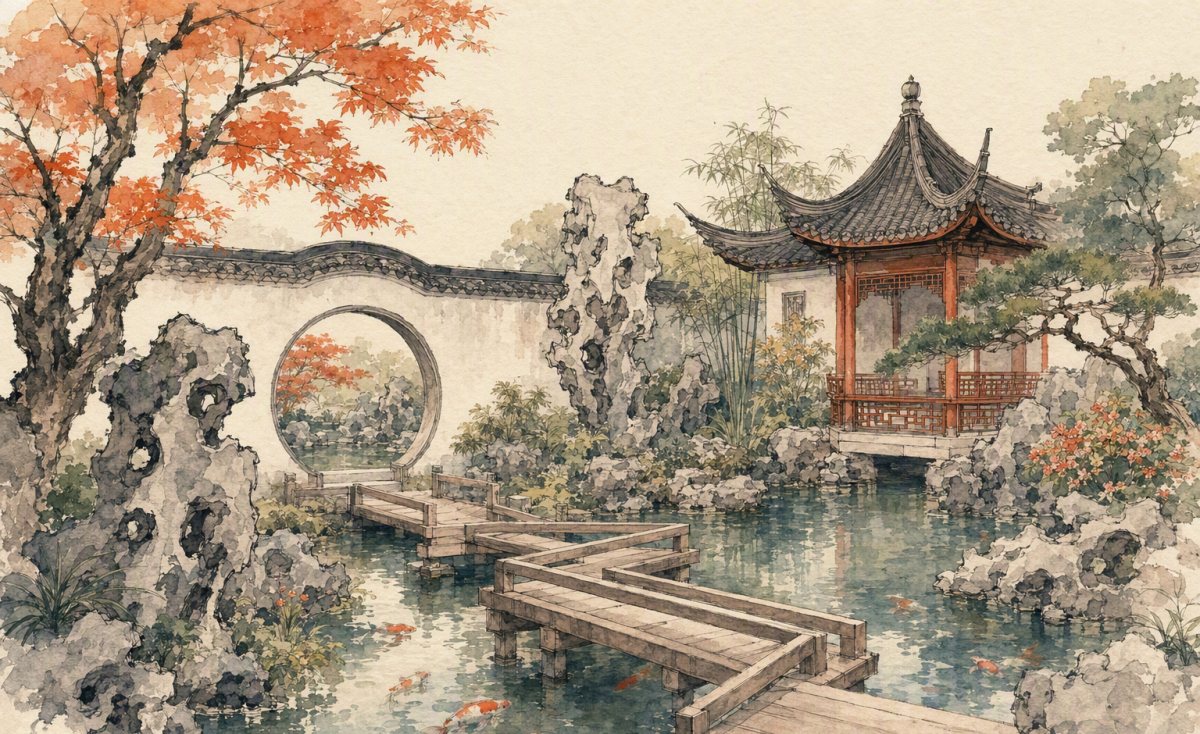
“Up above there is heaven; down below, Suzhou and Hangzhou.” For roughly a thousand years, retired officials and merchants built walled gardens in Suzhou, and nine of the surviving classical gardens are UNESCO-listed. The city rewards planning: the famous gardens are compact, the old canal lanes are walkable, and the water towns sit within an hour. This guide covers which gardens are worth your time, how to see the old town without the worst crowds, and how to slot Suzhou into a wider Jiangnan route.
Which classical gardens to prioritise
You cannot see all nine properly in a day, and you should not try. Pick two or three and give each an unhurried hour or two.
Humble Administrator’s Garden is the largest and best known, built around a central pond with bridges, pavilions and borrowed scenery that pulls distant views into the composition. It draws the biggest crowds, so arriving at opening time is the single most effective decision you can make. Confirm the current opening time and last entry on the garden’s official ticketing page before you go, as seasonal hours change.
Lingering Garden is the most architectural of the group, known for corridors and lattice windows that frame deliberate views as you walk. It rewards slow movement rather than photography stops.
Master of the Nets Garden is the smallest and most ingenious, using borrowed views to feel far larger than its footprint. In spring and autumn it sometimes hosts evening garden performances; whether these are running, and on which nights, is something to check directly with the garden or an official Suzhou tourism channel rather than assume.
Lion Grove is the rockery labyrinth, a stacked stone maze that children treat as a playground and adults treat as a puzzle. It is small; pair it with a nearby stop rather than making it the day’s centrepiece.
For a fuller picture of how these gardens fit into a wider regional itinerary, see this guide to 5 days in Hangzhou, which covers the other half of the old proverb.
Old Suzhou on foot
Pingjiang Road is the canal lane on every camera roll: whitewashed houses, stone bridges, small shops. It is genuinely pleasant at the edges of the day and uncomfortably packed in the middle. Walk it early, then loop back through the quieter side alleys parallel to the main street.
Shantang Street runs a longer canal stretch and is best known for lantern-lit evening walks and boat rides. Boat services, timings and prices change; check at the jetty or on an official Suzhou tourism page rather than trusting an old blog post.
Tiger Hill sits outside the old grid and holds the leaning pagoda associated with the earliest garden laid out here. It is a half-day trip in itself, and the climb is short.
Museums, silk and indoor backup
The Suzhou Museum, designed by I.M. Pei, is a reason to visit the city on its own, and it sits beside the Humble Administrator’s Garden, so the two pair naturally. Entry is typically free but capacity-limited and often requires advance reservation through the museum’s official channel; check the current booking system before you travel.
The Silk Museum explains the whole process from cocoon to cloth, and the No.1 Silk Factory runs demonstrations. Both are useful wet-weather options, and both are the kind of place where you should confirm opening days and demonstration times on site or via official listings, since these vary by season.
Water towns within reach
Three are commonly visited from Suzhou. Tongli combines canals with its own classical garden and feels more lived-in. Zhouzhuang is the postcard version, with the crowds that implies. Luzhi is the quiet one, better for a slow half-day than a checklist. All are reachable by road, and some by bus or rail plus a local connection. Verify current routes, departure points and ticket arrangements on the operator’s own page, because services are adjusted seasonally.
If you are building a broader route, this Guilin to Yangshuo itinerary shows how river-and-canal towns fit into a longer trip.
Getting there and when to go
Suzhou is a short high-speed rail hop from Shanghai, which makes it a viable day trip but a much better overnight. Two days lets you see gardens in the morning light, walk the canals in the evening, and add a water town. For how ticketing and station procedures work, see this China high-speed rail guide, and for passport-based booking specifics, this guide to buying train tickets with a foreign passport.
Spring blossom and autumn foliage are the classic windows. Chinese public holidays, especially the October Golden Week and Spring Festival, transform crowd levels and transport availability. Check the official public holiday calendar for your dates and avoid travelling between cities on the first and last days of any major holiday.
Practical planning notes
Gardens are timed-entry in busy periods, so book through official channels rather than resellers. Payment in China is overwhelmingly mobile; set up a payment app before you arrive and keep a small cash backup. This cashless travel guide covers the setup. For onward planning, an AI tool can draft a route but should not be trusted for opening hours, so cross-check anything it produces against official pages, as discussed in this piece on using AI for a China itinerary without invented opening hours.
Frequently asked questions
How many days do I need in Suzhou?
Two days is a comfortable minimum: one for two or three gardens plus the museum, one for the old town and a water town. A single day is possible from Shanghai but leaves you choosing between gardens and canals.
Do I need to book garden tickets in advance?
In peak season and around public holidays, yes in practice. Check each garden’s official ticketing channel for current reservation rules, entry slots and any identity document requirements, since these change.
Can I visit Suzhou as a day trip from Shanghai?
Yes. The high-speed rail journey is short, but you will spend a meaningful part of the day in transit. Staying overnight gives you the early and late hours when the gardens and lanes are at their best.
Are the water towns worth it?
If you want canals without the city backdrop, yes. Choose based on crowd tolerance: Tongli for gardens and canals, Zhouzhuang for the classic image, Luzhi for quiet. Verify transport and opening details before committing.
What should I avoid?
Trying to see too many gardens in one day, arriving at the famous ones mid-morning, and travelling during Golden Week. Book official channels, check hours yourself, and leave slack in the schedule.
Suzhou works best when treated as a place to slow down rather than tick off. Choose fewer gardens, walk the canals at the quiet ends of the day, and confirm every time-sensitive detail on an official page before you go.