Posted on — Leave a comment

Tianjin Weekend Guide: A Colonial Port City Break

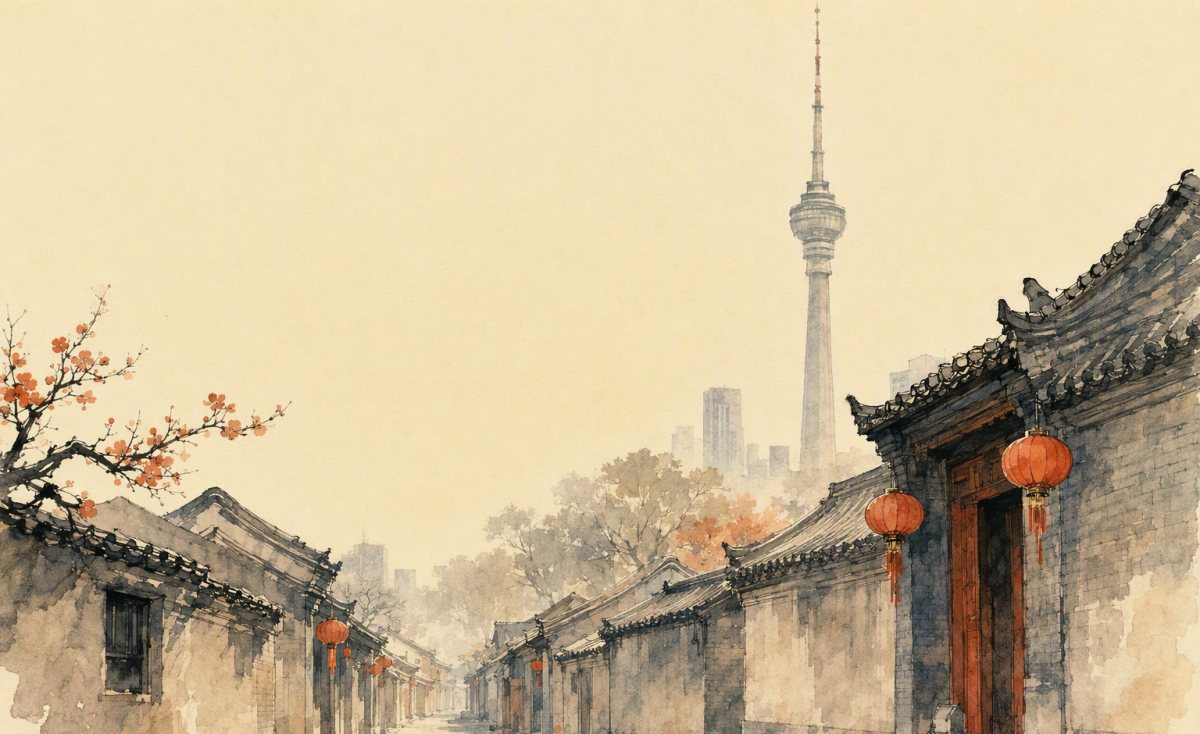
Tianjin sits roughly half an hour from Beijing by high-speed train, which makes it one of the easiest two-day additions to a Beijing itinerary and one of the most rewarding. The city was carved into foreign concessions in the nineteenth and early twentieth centuries, and the architecture, river frontage and food culture still carry that layered history. This guide covers the main districts, how to move between them, what to eat, and how to check the details that change, such as opening hours, reservations and train times.

Getting there and getting around

High-speed trains run between Beijing South and Tianjin several times an hour, and the journey is short enough to treat as a day trip, though two days suits the city better. Schedules and seat classes change, so check the current timetable rather than relying on any figure you read elsewhere. If you are booking independently, the step-by-step process for the official booking channel is covered in How to Book Train Tickets in China: 12306 Step by Step, and seat categories are explained in China High-Speed Rail Seat Classes and Onboard Food.

Within Tianjin, the metro is the simplest way to link the train stations, the Five Great Avenues and the river. Taxis and ride-hailing work well for shorter hops. The Binhai district, where the library and coastal sights sit, is a separate trip east and is best done as a dedicated half or full day rather than squeezed into a city-centre afternoon.

The Five Great Avenues (Wudadao)

This grid of streets holds around two thousand villas built in the 1920s and 1930s, when nine nations administered concessions here. The architecture ranges from English cottages to Italianate villas and German-style townhouses, and many former residences of warlords, officials and writers now function as cafés, guesthouses or small museums. The lanes themselves are the attraction; walking is the best way to see them, with bicycles and horse-carriages available if you prefer. Some individual houses charge admission and keep limited hours, so check at the door or on the site’s own listing before planning around a specific building.

The Hai River, the skyline and Italian Style Town

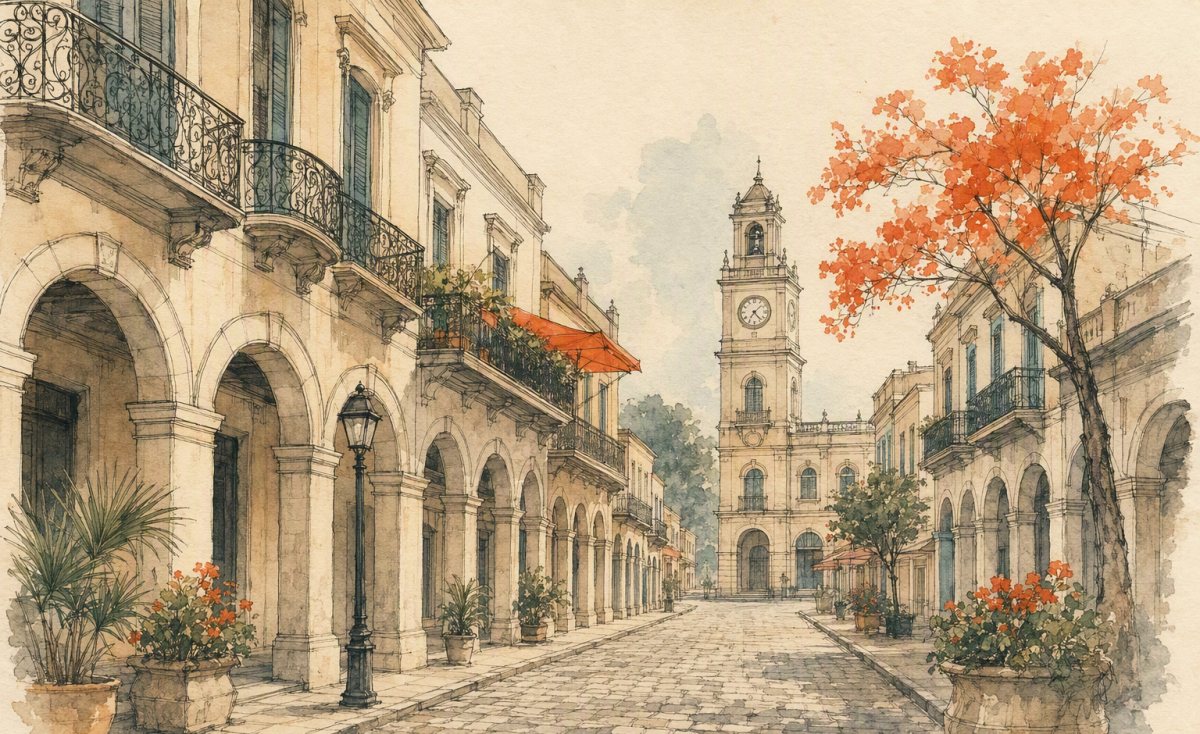
The Hai River is the spine of the city, crossed by bridges of different eras and lined with walking paths that are pleasant in the evening. The Tientsin Eye Ferris wheel is built over the river on a bridge, and the surrounding promenades fill with families after dark. Italian Style Town, a short walk from the river, has arcaded piazzas, cafés and restaurants that are at their best at lantern-hour, when the lighting comes on.

The Binhai Library, with its curved book terraces around a central sphere, is the most photographed interior in the region and sits in the Binhai cultural district. It is a working public library, so entry arrangements, reservation requirements and opening days are subject to change. Check the library’s own official page for current visitor rules and whether a booking is needed before you travel out there.

What to eat and where to laugh

Tianjin takes its breakfast and its snacks seriously. Goubuli baozi is the city’s best-known dumpling brand, with a flagship that draws visitors and branches that locals tend to prefer; quality and pricing vary by branch, so treat the name as a starting point rather than a guarantee. Jianbing guozi, the savoury breakfast crêpe with a crisp fried cracker inside, originated here and is sold from street stalls across the city in the morning. Erduoyan fried cake and mahua, the twisted fried dough, are traditional snacks associated with the Ancient Culture Street area.

Crosstalk, or xiangsheng, is Tianjin’s signature performance form, staged in teahouses around the old town and the river. Even without following the Chinese, the timing and audience reaction carry the show. Tickets are usually bought at the venue or through local booking platforms; confirm the current performance schedule directly, as teahouse programmes shift seasonally. If dietary restrictions matter to you, the practical guidance in Halal and Vegetarian Food in China: A Practical Guide is worth reading before you go.

The Binhai add-on

Beyond the library, Binhai has a decommissioned aircraft carrier opened as a theme park and stretches of coastal wetland that make a modern counterpoint to the concession-era centre. These are spread out and not walkable from one another, so plan transport in advance and check each site’s official page for current opening arrangements, since seaside attractions in particular operate seasonally.

When to go and how to plan it

Spring and autumn, roughly April to May and September to October, give the most comfortable walking weather. Winter brings sharp river winds but often clear skies, and the indoor sights remain open. Tianjin slots neatly into a Beijing trip as a two-day branch, and the combined route is the kind of thing a planning tool handles well if you verify the details it produces; see AI Travel Planner for China: What It Plans Well and Where It Breaks for where those tools tend to go wrong. A private car with driver is a reasonable option if you want to cover the Five Great Avenues and the Binhai circuit in a single day without depending on public transport.

Frequently asked questions

Is Tianjin worth visiting from Beijing?

Yes, if you have two spare days. The concession architecture, riverfront and food scene are distinct from Beijing’s, and the train journey is short. A single rushed day covers only the Five Great Avenues and the river; two days allow for Binhai as well.

Do I need to book the Binhai Library in advance?

Possibly. Public libraries in China sometimes require advance reservation and sometimes restrict entry on certain days. Check the library’s official page or its official booking channel shortly before your visit, and look specifically for visitor reservation rules and closed days.

Can I see the main sights without speaking Chinese?

Largely yes. Signage in the main tourist areas is often bilingual, and translation apps handle the rest. For teahouse crosstalk, the performance is enjoyable without full comprehension, but booking by phone may be difficult, so ask your hotel to help or use a booking platform. See The Language Barrier in China: Translation Apps and Essential Phrases for practical setup.

How do I pay for things in Tianjin?

Mobile payment dominates, and foreign cards can often be linked to the main payment apps, though support varies by card issuer and app version. Carry some cash as a backup and verify your app works before you leave Beijing.

Should I stay overnight or day-trip?

Overnight is better. Evening is when the riverfront and Italian Style Town are at their most atmospheric, and a day trip forces you back to Beijing before that. Two nights gives a comfortable pace.

Treat every specific detail here, from train times to library entry rules, as something to confirm on the operator’s or venue’s own page close to your travel date, and build the trip around what you find rather than what any guide, including this one, states as fixed.

Posted on — 1 Comment

Huangshan Travel Guide: Sunrise, Sea of Clouds & Villages

Huangshan, the Yellow Mountain, is the peak that defines “Chinese mountain” in a thousand ink paintings: granite spires, weather-beaten pines and seas of cloud that swallow the valleys below. It sits in southern Anhui, a few hours from Shanghai or Hangzhou, and the classic move is still one overnight on the summit so you catch both sunset and sunrise. This guide covers the standard two-day route, how the sunrise and cloud sea actually work, the logistics that trip people up, and the Ming and Qing villages an hour away that most summit-focused visitors skip.

The classic two-day route

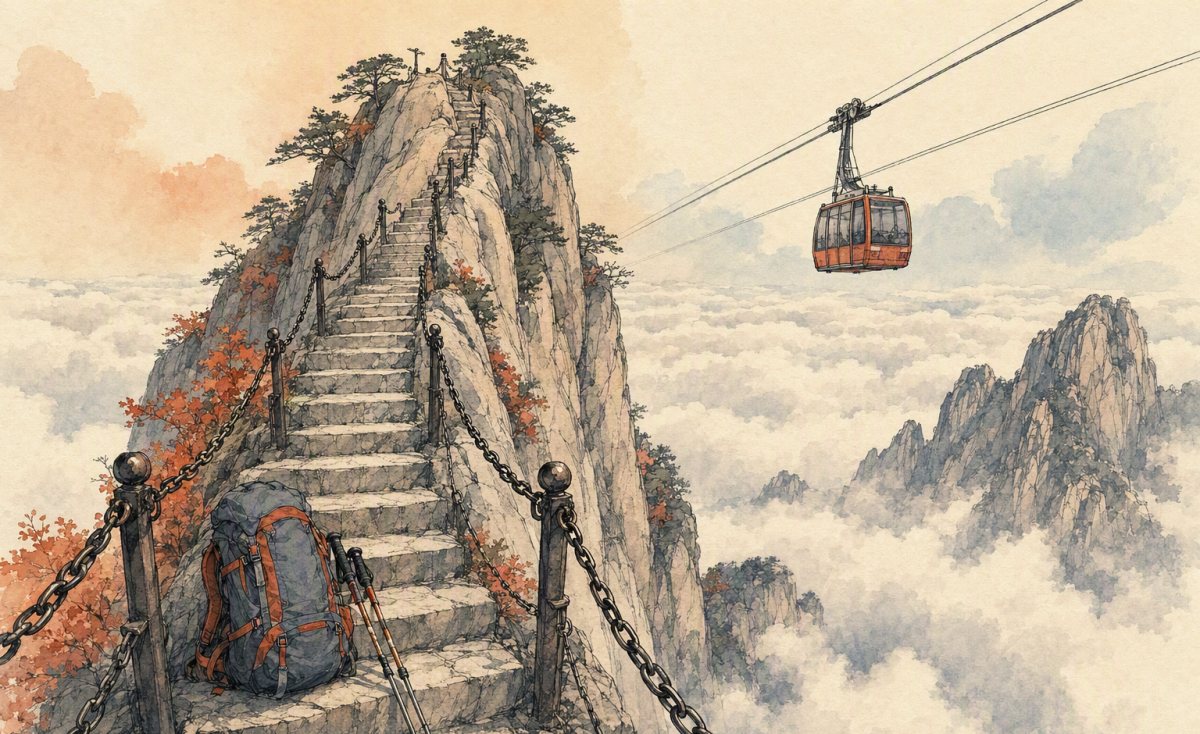
Day one: take the cable car up from Yungu station on the eastern side, then walk the ridge past Begin-to-Believe Peak and along the West Sea canyon rim. The West Sea Grand Canyon loop is the demanding highlight of the mountain, all stone steps cut into cliff faces, and it closes in ice or high wind, so check conditions at the station before committing. Sleep at a summit hotel in the Beihai or Xihai area.

Day two: rise for sunrise near Refresh-Fresh Peak or Lion Peak, walk to Guangmingding (Bright Summit), the highest of the main viewing points, continue past Flying-Over Rock, and descend by the Jade Screen cable car, passing the Guest-Greeting Pine on the way down. This is a full day of steps even with the cable cars doing the vertical work.

Sunrise, sunset and the cloud sea

Summit hotels post sunrise and sunset times at reception each day; use those rather than any figure you read online, because they shift through the year and the hotels adjust for the actual forecast. Leave your room well before the posted time in peak season, as the popular platforms fill.

The cloud sea is not guaranteed and cannot be booked. It needs moisture in the valleys and clear air above, so the reliable pattern is the morning after rain, or the days following a cold front. Late spring and autumn generally give the best odds; winter brings ice-coated pines and near-solitude on the paths, but some sections close. Summer is warm, wet and crowded. If you are weighing dates, our notes on China in October and China in November cover what the rest of the country is doing in those months.

Tickets, bookings and what to verify

Entry to the scenic area and the cable cars are separate charges, and the cable car is effectively mandatory unless you plan to walk up several thousand steps with luggage. Prices, opening hours and last-entry cut-offs change by season and are set by the scenic area, so check the official Huangshan scenic area page or the ticket counter on the day and look specifically for the entry ticket, the per-cable-car fare, and the last downward cable car time, which is earlier than you expect.

Foreign visitors book with a passport, and some attractions in China now require advance reservation slots. The mechanics of that are covered in Booking Attractions in China 2026. Carry your passport on the mountain; it is checked at the gate and at hotel check-in.

Luggage, summit hotels and difficulty

Leave large bags at Tangkou town at the base, where guesthouses store luggage for a small fee, or arrange a porter to carry them to your summit hotel. Porters exist and are used, but confirm the arrangement and the price in person rather than assuming it is included.

Summit hotels are basic for the price and sell out in peak season and on public holidays, so reserve as early as your dates allow. Rooms are cold and damp outside summer; ask what heating and bedding are provided. Expect shared dormitories as well as private rooms.

The walking is stone steps throughout, up and down, with handrails in places and long exposed sections. Anyone of reasonable fitness can do the standard route in two days, but knees suffer on the descents and the West Sea loop adds real time. Trekking poles help.

The villages below: Hongcun, Xidi and Tachuan

Hongcun, the village with the moon pond and the filming location for Crouching Tiger, Hidden Dragon, and nearby Xidi are both UNESCO-listed Ming and Qing settlements, roughly an hour’s drive from the mountain base. They are worth a night rather than a rushed afternoon. Tachuan, next door to Hongcun, is known for autumn colour and is quieter.

Village entry is ticketed and the same verification rule applies: check the official site or the gate for current prices and hours.

Getting there and onward

High-speed rail runs to Huangshan North station from Shanghai and from Hangzhou, with journey times varying by service, so check schedules and seat classes on the official booking channel rather than relying on a remembered figure. Our 12306 booking walkthrough covers the passport registration step that trips up most first-timers.

From the station, a private driver linking station, mountain base and villages in one arc removes a lot of bus transfers and is the usual choice for a two- or three-night trip. If you are planning the whole loop from the coast, the Huangshan from Shanghai guide handles the longer version.

Frequently asked questions

Do I need to book the cable car in advance?

Usually you buy the cable car ticket at the station on the day, but in peak periods advance booking through the scenic area’s official channels is safer. Check the official page for whether timed slots apply on your dates, and note the last downward departure time.

Is one night on the summit enough?

Yes for the classic route, if you accept an early start and a full second day of walking. Two nights suits photographers chasing both a sunset and a sunrise, or anyone wanting the West Sea loop without rushing.

Can I see the cloud sea for certain?

No. It depends on weather. The best odds come the morning after rain or after a cold front passes, most often in spring and autumn. Treat it as a possibility, not a plan.

How fit do I need to be?

Moderate fitness is enough for the standard route with cable cars, but the steps are relentless and the descents are hard on knees. The West Sea Grand Canyon loop adds significant time and effort.

Should I add Hongcun and Xidi?

If you have a spare day, yes. They are an hour from the base, UNESCO-listed, and a genuine contrast to the mountain. Stay overnight in or near Hongcun rather than day-tripping from the station.

Plan the mountain around weather rather than a fixed date, verify every price and time at the official source, and book summit beds and village accommodation early. That combination is what turns a rushed cable-car dash into the trip the paintings promise.

Posted on — Leave a comment

Huangshan Hiking Guide: Routes, Cable Cars & Where to Stay

You do not need to be a mountaineer for Huangshan. Almost every path on the mountain is cut as stone steps with railings, and the walking itself is straightforward. What decides whether your legs survive day two is route choice: which cableway you take up, how much of the ridge you try to cover, and whether you sleep on the summit or at the base. This guide sets out the realistic options, the order that works best, and the things worth checking before you commit.

Cable car or steps: choosing your ascent

Huangshan has several cableways, and the two most useful for a first visit serve different parts of the massif. The Yungu cableway on the eastern side is the standard ascent, running up towards the ridge near the main summit hotel cluster. It is the sensible choice if you plan to sleep up top, because it puts you close to where you will stay and leaves the afternoon free for the West Sea. The Jade Screen cableway serves the southern side and lands near the Guest-Greeting Pine, which makes it the natural exit if you are doing the mountain in a single day and want to finish at the famous pine before descending.

Walking up instead of riding is possible on the eastern steps. It is a long, relentless staircase rather than a trail, and it takes most fit walkers a good half-day with a pack. Do it because you want the climb, not because you think it saves time. Cableway operating hours, seasonal closures for maintenance, and last-run times change through the year, so check the official Huangshan scenic area page or your hotel before you travel and look specifically for the current first and last departure times for each cableway.

The two-day route, and why it works

Go up by the Yungu cableway, walk out to Begin-to-Believe Peak, then check into a summit hotel and drop your bag. In the afternoon, walk the West Sea Grand Canyon, the deep slot between the rock pillars that is the most dramatic section of the mountain. Allow two to three hours, and note that a sightseeing monorail climbs out of the first section if your legs have had enough. Finish with sunset from Danxia Peak or Bright Summit, both a short walk from the summit hotels.

Day two starts with sunrise, then Flying-Over Rock, Bright Summit, and the walk down past the Guest-Greeting Pine to the Jade Screen cableway. This order puts the hardest walking on day one while you are fresh and keeps the second morning short, which matters when you are up before dawn in the cold.

The one-day version

If you only have a day, take the Yungu cableway up, walk to Begin-to-Believe Peak, shuttle across the ridge to Bright Summit, then descend via Jade Screen past the Guest-Greeting Pine. You will see the essence of the mountain. You will miss the sunrise, and you will sleep well afterwards. Trying to add the West Sea on top of this in one day is where people get caught out by the last cableway.

Training, packing and money on the mountain

Walk stairs with a loaded daypack for a couple of weeks before you go. That is the specific fitness the mountain asks for. Pack layers, because the summit runs noticeably colder than the valley below; a headlamp for the pre-dawn walk to a viewpoint; gloves for the chain sections; and snacks, since food on the mountain is carried up by porters and priced accordingly. Cards and phone payments are widely used in China, and our China cashless travel guide explains how WeChat Pay and Alipay work for foreign visitors, including how to check whether your card is supported before you rely on it.

Connectivity on the ridge is patchy in places. Sort your data before you arrive rather than on the cableway; the guide to Wi-Fi, eSIM and roaming in China covers the options and how to test them before you fly.

Where to stay

Summit hotels around Beihai, Shilin and Xihai are basic and expensive, and worth it for a zero-commute sunrise. Tangkou, at the base near the gates, is the budget option and works if you accept an early start and a queue. Hongcun, the village below the mountain, is the atmospheric choice for the night before or after. Availability at the summit is limited and peak-season dates sell out, so book early and confirm directly with the property that they accept foreign guests; our guide to hotels that accept foreign guests explains what to check.

Getting there and combining the trip

Most visitors reach Huangshan by high-speed rail and then take a bus or private car to Tangkou. Train seats on the relevant routes fill on weekends and holidays, so read the step-by-step guide to booking on 12306 and book as soon as your dates are fixed. Many travellers pair the hike with Hongcun and Qiandao Lake; a private car and driver solves the luggage-and-station problem, and an AI planner can draft the sequence, though you should verify every time and ticket against the operator.

Frequently asked questions

Do I need to be very fit to climb Huangshan?

No, but you need to be comfortable with stairs. The paths are stepped and railed, and cableways remove most of the ascent. The West Sea and the ridge walks involve hours of up-and-down steps, so train on stairs with a pack beforehand.

Can I see Huangshan in one day?

Yes, via the Yungu cableway up and Jade Screen down, with Bright Summit and the Guest-Greeting Pine in between. You will not see sunrise or the West Sea, and you must keep an eye on the last cableway departure time, which you should confirm on the official scenic area page.

Is it worth sleeping on the summit?

For sunrise, yes. Summit rooms are basic and costly, but they remove a pre-dawn descent and climb. If you are on a tight budget, stay in Tangkou and accept the early start.

How do I pay for things on the mountain?

Mobile payment is standard across China, including at many mountain vendors, but coverage and acceptance vary. Carry a backup card and check in advance whether your card works with the payment apps.

When should I go?

Spring and autumn are the most comfortable for walking. Whatever you choose, check the forecast for the summit rather than the valley, and verify current cableway hours and any maintenance closures before booking.

Plan the mountain around verified timings rather than optimistic ones: confirm cableway hours, summit availability and train seats first, then build the rest of the trip around them.

Posted on — Leave a comment

Zhangjiajie Travel Guide: Glass Bridges & Tianmen Mountain

Zhangjiajie confuses first-timers because three separate headline attractions sit within a couple of hours of each other, and all three lean on the word “glass” in their marketing. They are not the same place, they are not run by the same operator, and they do not share a ticket. This guide explains what each one actually is, how long each deserves, how to sequence them, and which practical details to verify yourself before booking.

The National Forest Park (Wulingyuan): the reason most people come

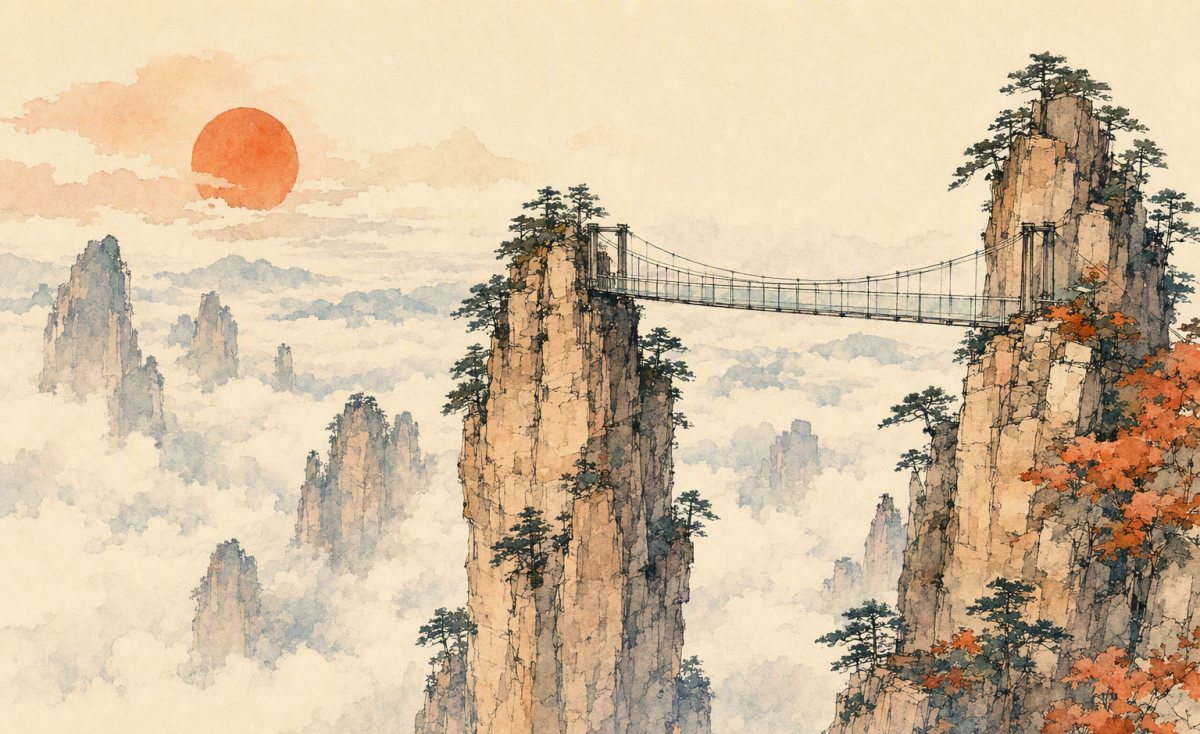
This is the UNESCO-listed core, a landscape of thousands of narrow sandstone pillars rising out of forested valleys. The ticket operates as a multi-day pass rather than a single-day entry, and the validity period is set by the operator, so check the current terms on the official ticketing page before you commit to a plan — look for the stated number of days of validity and whether it is consecutive.

The classic scenery loop runs between Yuanjiajie (the formations most often associated with the floating-mountain imagery) and Tianzi Mountain, connected by a network of free shuttle buses inside the park. These buses are included with entry, but they are slow, crowded at peak times and stop running in the evening, so plan your last descent with margin. Golden Whip Stream is the other essential: a mostly flat valley-floor walk of several kilometres that puts you at the base of the pillars rather than above them. Doing the park properly takes two full days at minimum. Three is better if you want Bai Long Elevator, Ten-Mile Gallery and the quieter upper paths without rushing.

Tianmen Mountain: the adrenaline day, inside the city

Tianmen is a separate mountain in Zhangjiajie city itself, not part of the forest park, and it is reached by a long cableway that starts from the lower town. The route up is usually a combination of cableway, shuttle bus along a very winding road, and escalators, and the exact sequence and opening times change with season and maintenance. Verify the day’s arrangements on the operator’s official channel the evening before, and check what time the first cableway departs, because that is what determines whether you beat the queues.

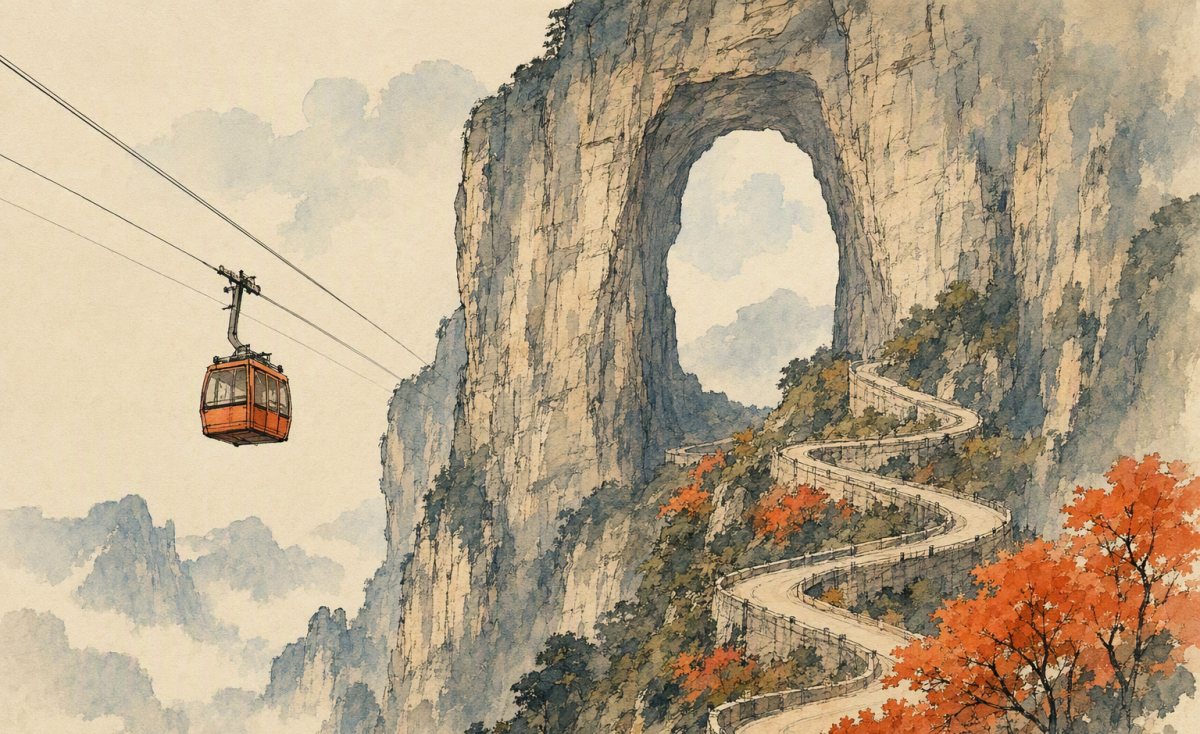
At the top you get cliff-hugging walkways bolted to the rock face, glass sections on some of them, and the huge natural arch of Tianmen Cave reached by a long, steep flight of steps. It is one very full day. If you have limited tolerance for heights or crowds, this is the day to consider skipping, and it is the one where weather matters most: cloud can erase the entire view.

Grand Canyon and the glass bridge: the photo stop

The Zhangjiajie Grand Canyon is a separate scenic area with its own ticket, and the glass bridge is the transparent span across it that appears in most social media posts. The bridge crossing itself takes only minutes; the rest of the visit is the canyon-floor walk past pools and waterfalls. Treat it as a half day, and if you are already in the Wulingyuan area, pairing it with Baofeng Lake makes a sensible single outing.

Two things to verify rather than assume: whether the bridge requires a separate timed reservation from canyon entry, and what the current rules are on bags, cameras, shoe covers and stiletto heels, since these have changed over the years. Check the official scenic area page for the day’s arrangements.

How many days total, and in what order

A workable four-day shape is: two days in the national park, one day at Tianmen, and one half-day at the glass bridge, with the remaining half-day given to Baofeng Lake, Huanglong Cave or the drive to Fenghuang. If you are adding Fenghuang, budget a night there rather than a day trip — the old town is at its best in the evening and early morning, and the road transfer eats a large chunk of any single day.

Order matters less than geography. Stay in Wulingyuan town for the park days and move to Zhangjiajie city for Tianmen, which removes two long daily commutes. For the wider picture of how this fits a longer route, see this 2-week China travel itinerary planner, and if Zhangjiajie is your first stop in the country, the basics in China travel for beginners cover payments, SIMs and bookings.

Practical points that actually affect the trip

Tickets at all three attractions are real-name, which means you need your passport — the physical one, matching the document used to book — at every entry gate. Peak-season slots (Chinese public holidays, summer weekends, the October golden week) can sell out days ahead, so book as soon as your dates are fixed. For the mechanics of booking transport and timed entries, the guide to using AI for a China itinerary without invented opening hours is a useful caution about tools that guess at details.

Weather at the top changes fast and is often several degrees colder and much windier than the valley. A light shell belongs in your bag even in midsummer. Mist after rain produces the best photographs; flat fog produces whiteout. Many hotels and visitor pages run live webcams of the pillars — check one before deciding which day to spend where, and keep your plan flexible enough to swap days.

Finally, cash and connectivity. Cards are widely accepted at ticket offices but small vendors and shuttle-side stalls often are not, so read the China cashless travel guide before you fly, and sort a data plan in advance rather than at the airport.

Frequently asked questions

Is the glass bridge inside the national forest park?

No. The Grand Canyon and its glass bridge are a separate scenic area with a separate ticket from the national forest park in Wulingyuan. They are in the same county but not the same site, and you cannot walk between them.

Can I see the park and Tianmen Mountain in one day?

Not realistically. The park’s shuttle network alone takes an hour or more to cross, and Tianmen needs most of a day once you include the cableway queues. Attempting both leaves you rushing through each.

How far ahead should I book?

Outside holidays, a few days is usually enough. Around Chinese public holidays and summer weekends, book as soon as your dates are fixed and check the official ticketing page for release windows and any timed-entry slots.

Do I need my passport for entry?

Yes. Tickets are issued against your identity document, and staff check it at the gate. Carry the same passport you booked with, and keep a photo of the details page as backup.

Which attraction should I drop if I only have two days?

Drop the glass bridge. It is the shortest experience and the easiest to substitute elsewhere in China. Two days in the national park, or one park day plus Tianmen, gives you far more for the time.

Zhangjiajie rewards people who accept that it is three trips in one, not one attraction with three entrances. Decide which two matter most to you, build the days around those, and leave the rest for a return visit.

Posted on — Leave a comment

Chengdu Travel Guide: Pandas, Teahouses & Hotpot

Chengdu’s official city slogan is “a city you won’t want to leave”, and the pandas, teahouses and chilli-laced food do make a strong case. This guide covers how to see the pandas without wasting the morning, where the city slows down, how to order hotpot without regret, and which day trips are worth the travel time. It deliberately avoids quoting ticket prices, opening hours or train times, because these change; where a figure matters, check the operator’s own page before you go.

Pandas done right

The Chengdu Research Base of Giant Panda Breeding is the main reason many visitors come. The single most useful habit is to arrive for opening and walk directly to the outdoor enclosures rather than lingering near the entrance. Pandas eat in the cool of the morning; by late morning, heat pushes them into sleep and the enclosures become much less interesting.

Check the base’s official channels for current opening times, last entry and ticket rules, and note whether booking in advance is required on your date. If newborn cubs are on show, the nursery is usually the busiest area, and viewing windows are brief. Half a day is a sensible allocation. The Dujiangyan panda volunteer programmes run separately, with their own application process and conditions, so confirm details with the operator rather than assuming availability.

For a realistic walk-through of the day, including how the timing works in practice, see Chengdu & the Giant Panda Base: A Realistic Day in 2026.

Slow Chengdu: teahouses, lanes and temples

People’s Park is the classic introduction to Chengdu’s pace: bamboo chairs, tea refilled from long-spouted kettles, ear-cleaning masters working with tuning forks, and match-making corners where parents advertise their adult children’s prospects. Prices for tea vary by house and leaf, so ask before sitting down. Mornings are the most unhurried.

Kuanzhai Alleys, restored Qing-era lanes, mix teahouses, brick courtyards and snack stalls; they are touristy but pleasant early. Jinli Street is at its best after dark, when the lanterns are lit. Wenshu Monastery is a working temple with a vegetarian restaurant and a garden teahouse, and it rewards a slower visit than the commercial streets.

For orientation, transport and neighbourhood detail, the Chengdu City Guide 2026: Pandas, Sichuan Spice & Metro Tips covers the ground this page does not.

Hotpot school

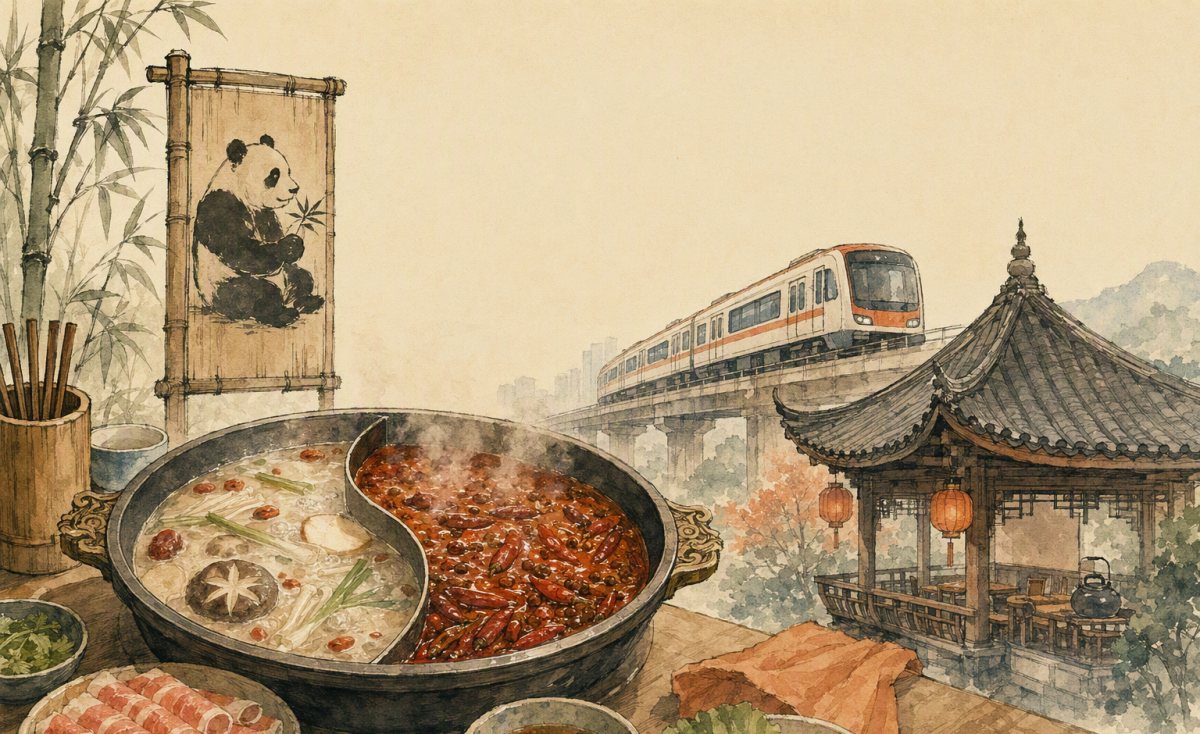
Sichuan hotpot is a shared pot of simmering broth, and the split “yuanyang” pot is the sensible order: clear broth on one side for cooling and tasting, red chilli and Sichuan peppercorn on the other for the real thing. Peppercorn produces a tingling numbness rather than pure heat, which is the point.

Dip in sesame oil with garlic, which coats the tongue and tames the fire. Common orders include tripe, duck blood, lotus root, potato slices and beef in oil. Cooking times matter: tripe is swished briefly, not left to boil. Sweat is part of the experience, and so is ordering more than you think you need.

If you want to compare regional styles before you commit, the Chongqing City Guide 2026: Mountains, Hotpot & Metro Tips explains how the neighbouring city’s version differs.

Day trips: Leshan, Dujiangyan and Qingcheng

The Leshan Giant Buddha is a 71-metre figure carved into a cliff above the confluence of three rivers, roughly a couple of hours from Chengdu by road or rail depending on your route. Queues for the stairway descent can be long; check current arrangements and whether timed entry applies. Dujiangyan pairs the ancient irrigation works, still functioning, with Mount Qingcheng, a wooded Daoist mountain and a good half-day on its own.

Within the city, Taikoo Li and the surrounding eastern districts are Chengdu’s modern face, best seen after dark. If you are extending the trip, the Chengdu → Lijiang → Kunming 7-day route shows how Chengdu fits into a longer Sichuan and Yunnan itinerary.

Practical planning

March to June and September to November are the mildest periods; summer is humid and hot, and winter is grey but quiet. The metro is efficient and easy to use, though for the panda base’s early start a private car or a pre-booked driver removes the guesswork. For payment, transport and connectivity basics, see the First Time in China: 12 Things to Sort Before You Book checklist.

Verify anything with a number attached — tickets, hours, train departures, visa-free eligibility — on the official operator or government page, and check the date on the page you are reading. Third-party summaries, including AI-generated itineraries, are useful for shape but not for figures; the guide to using AI for a China itinerary without invented opening hours explains where those tools go wrong.

Frequently asked questions

How long do I need at the panda base?

Half a day is right for most visitors if you arrive at opening. Add time if you are combining it with the Dujiangyan area, and check the base’s official page for current opening times and any advance-booking requirement.

Is Chengdu’s metro enough, or do I need a driver?

The metro covers the centre, Jinli, Kuanzhai Alleys and the main rail stations well. For the panda base at opening time, a car or pre-booked driver is simpler, particularly if you are travelling with children or luggage.

Can I visit Leshan and Dujiangyan on the same trip?

They sit in different directions from Chengdu, so doing both usually means two separate days or an overnight. Check current train times and ticket availability on the official rail booking channel before fixing your plan.

What should I order at a Sichuan hotpot restaurant?

Start with the split yuanyang pot, sesame-oil and garlic dipping sauce, and a mix of tripe, beef, lotus root and vegetables. Ask staff for cooking times if you are unsure, and confirm prices from the menu rather than assuming.

When is the best time to visit Chengdu?

Spring and autumn are the most comfortable. Summer heat affects both your comfort and panda activity, so plan early mornings outdoors and keep afternoons for teahouses, museums and indoor sights.

Chengdu rewards a slower itinerary than most Chinese cities: one early panda morning, one long teahouse sit, one hotpot dinner and one day trip is a fuller trip than a checklist of sights. Confirm the details that matter on official pages, leave room for an unplanned afternoon, and the slogan starts to make sense.

Posted on — Leave a comment

48 Hours in Chengdu: The Perfect Layover Guide

Chengdu suits a short stop better than most Chinese cities. The sights that matter most sit within a compact centre, the metro connects both airports to downtown, and two full days is enough to see pandas, old lanes, teahouses and a Sichuan opera show without sprinting. What follows is a realistic two-day structure, plus the logistics that decide whether a layover works: arrival timing, visas, payments and data.

Before you fly: the three things that make or break a layover

First, the visa question. China operates visa-free transit arrangements at selected ports, and Chengdu is one of the cities involved, but eligibility depends on your nationality, your route and which entry point you use. Do not assume you qualify because a friend did. Read the current rules on the official immigration or embassy page for your country, and check the specific conditions: the permitted length of stay, whether your onward destination must be in a different country or region from where you arrived, and which ports allow the arrangement. Our 240-hour transit checklist walks through what to confirm before booking.

Second, payments. Foreign cards are widely accepted in Chengdu, but small teahouses, market stalls and some taxis still work more smoothly with a mobile wallet. Set up WeChat Pay or Alipay before departure rather than in the arrivals hall — verification can take time. See our cashless travel guide for the setup sequence.

Third, data. Maps, translation and ride-hailing all need a working connection from the moment you land. Sort an eSIM or SIM before you fly and test it at home. Our eSIM versus physical SIM comparison covers the trade-offs.

Getting in from the airport

Chengdu has two airports serving international and domestic traffic. Both connect to the city centre by metro, and the journey is straightforward if you have a metro app or a stored payment method ready. Journey times vary by line and terminal, so check the current metro map on the operator’s site rather than trusting an old blog post. Note the last-train times for your arrival terminal — they differ between airports and change seasonally.

If you land late or carry heavy bags, a taxi or pre-booked transfer is simpler. Confirm the pickup point in writing with your driver, since both airports have multiple exits. Our airport transfers guide explains how the options compare.

Day one: pandas in the morning, old Chengdu after

The Giant Panda Base opens early and the animals are most active in the first hours. Aim to arrive for opening rather than mid-morning; by around 10am the crowds thicken and the pandas often settle down to sleep. Buy tickets through the official channel and check current opening hours and any timed-entry requirement on the base’s own page before you go. Our realistic panda base day covers transport, timing and what to expect.

After lunch, slow down. Wenshu Monastery’s garden teahouse is the classic place to sit for an hour with a covered cup and no agenda. Then walk the Kuanzhai Alleys, the restored Qing-era lanes of teahouses, snack stalls and craft shops — touristy, but pleasant in the late afternoon light.

For dinner, try hotpot. Order a split pot if you are unsure about the spice level, and use the sesame-oil dip rather than soy sauce; it cools the chilli rather than amplifying it. In the evening, a Sichuan opera face-changing performance is the standard introduction to the city’s performing arts. Book through a reputable operator and confirm the venue and showtime directly, as schedules rotate.

Day two: teahouses, temples and a last stroll

Start at People’s Park, where you can drink tea, watch tai chi and see the marriage market boards that local families still use. It is a genuine slice of city life rather than a staged attraction. Lunch on mapo tofu and dan dan noodles at a neighbourhood Sichuan restaurant — the quality is generally high and the prices modest.

In the afternoon, Taikoo Li’s low-rise designer courtyards sit directly beside the ancient Daci Temple, a contrast that sums up modern Chengdu. Finish with Jinli Street’s lanterns in the early evening, then find skewers and beer somewhere with a rooftop view.

Extending beyond two days

If you have more time, the Leshan Giant Buddha and the Dujiangyan irrigation works are the two easiest additions, both reachable as day trips. Beyond that, Chengdu is a natural starting point for Sichuan and Yunnan routes. Our Chengdu to Lijiang and Kunming route shows how a layover can grow into a week. If you are building the plan yourself, an AI planner can help with sequencing but should never be trusted for opening hours or prices — see our notes on using AI for a China itinerary.

Frequently asked questions

Is two days enough for Chengdu?

Yes, for the core sights: pandas, a teahouse, the old lanes, hotpot and an opera show. You will not see everything, but you will not feel rushed either. Three days allows a day trip to Leshan or Dujiangyan.

Can I leave the airport on a transit visa-free entry?

Often yes, but eligibility depends on your nationality, route and entry port. Check the current rules on the official immigration or embassy page for your country, and confirm the permitted stay length and onward-travel conditions before booking.

Do I need cash in Chengdu?

Not much, but carry a small amount as backup. Mobile wallets work almost everywhere; foreign cards work in many places but not all. Set up your wallet before you fly.

When should I visit the Panda Base?

As close to opening as you can manage. The pandas are most active early and the site gets busy later. Verify current opening hours and ticketing on the official site, as these change by season.

Is the metro easy to use from the airport?

Yes, both airports connect to the centre by metro. Check the current map and last-train times for your terminal on the operator’s site, and have a payment method ready before you arrive.

Chengdu rewards a slow pace more than a packed one. Build the two days around the pandas and the teahouses, verify the visa and ticketing details on official pages before you fly, and the rest of the trip tends to look after itself.

Posted on — 1 Comment

Zhangjiajie 4-Day Itinerary: Avatar Mountains Complete Guide

Four days is the right number for Zhangjiajie. Two days go to the national park at Wulingyuan, one to Tianmen Mountain above the city, and one to a choice: the glass bridge over the Grand Canyon, Fenghuang Ancient Town, or Huanglong Cave. This guide sets out how to sequence those days, what to book in advance, how to move between the sites, and what to check before you commit. Prices, opening hours and transport schedules change, so where a figure matters this guide tells you where to verify it rather than quoting one.

Day 1: Wulingyuan and the Avatar pillars

Start at the Wulingyuan gate, the park’s main entrance. The Hundred Dragon Elevator, a cliff lift built into the sandstone, takes you up towards Yuanjiajie — the dense pillar forest usually described as the inspiration for Avatar’s floating mountains. From the top, a boardwalk circuit links the main viewpoints. Expect crowds mid-morning; arriving at opening is the simplest way to stay ahead of the tour groups.

In the afternoon, take the park shuttle to Tianzi Mountain for the west-sea stone forest, a broader and often quieter panorama. Overnight in Wulingyuan town, which puts you close to the gate for day two. Note that the park entry ticket and the elevator, cable cars and shuttle network are separate: check the official Wulingyuan park page for the current entry ticket validity, which lifts are included, and whether real-name booking with your passport is required for your dates.

Day 2: Streams, galleries and the cloud sea

Golden Whip Stream is a flat riverside walk of roughly two and a half hours beneath the towers, with macaques along the path. Keep food out of sight; the monkeys are quick and persistent. In the afternoon, choose between the Ten-Mile Gallery scenic tram and the quieter boat on Baofeng Lake.

If it rained overnight, change the plan. The cloud sea — mist pooling between the pillars — is the single best reason to re-climb Yuanjiajie, and it only appears after rain. Check the park’s live notices or ask at your guesthouse before committing; visibility forecasts for the park are unreliable, and a clear morning in town does not mean a clear morning up top.

Day 3: Tianmen Mountain

Tianmen Mountain sits directly above Zhangjiajie city and is a separate ticket from the national park. The long cable car runs from the city up to the summit; below it, the 99-bend road climbs to the same plateau. At the top, cliff-hung walkways trace the rim, and the Tianmen Cave arch is reached by a long staircase — count the steps on the day rather than trusting a number, as access sections close for maintenance.

The glass skywalk section is optional and costs extra; it is a short segment, so decide when you see the queue. Descend in the late afternoon for better light on the road below. Cable car operating hours, last ascent times and any closure days vary by season and weather — confirm on the official Tianmen Mountain operator page before you travel, and build in a spare half-day in case high winds stop the cable car.

Day 4: Glass bridge, Fenghuang or Huanglong Cave

Option A is the glass bridge over the Grand Canyon, a structure spanning the gorge with a transparent deck. Option B is Fenghuang Ancient Town, roughly two and a half hours away by road, with its stilt houses and lantern-lit riverfront — it deserves an overnight if you can spare one. Option C is Huanglong Cave, whose chambers are among the largest in the region and make a good wet-weather substitute.

Whichever you pick, book timed entry where the operator offers it. The glass bridge in particular uses timed slots and caps daily numbers; check the official Grand Canyon scenic area page for slot times, passport requirements and whether bags or cameras are restricted on the deck.

Tickets, booking and timing

Two things trip people up. First, the national park entry ticket does not cover the elevator, cable cars or the Tianmen cableway — budget separately and verify each price on the operator’s own page. Second, most sites now use real-name booking, so carry the passport you booked with. Payment inside the park is overwhelmingly mobile; if you have not set up WeChat Pay or Alipay, sort that before you arrive — see this China cashless travel guide.

On seasons: spring and autumn generally give the best mix of mist and visibility, while winter brings snow on the pillars and far shorter queues at the cost of cold and occasional ice closures. Summer is hot, wet and busy. Before fixing dates, check the China public holidays calendar — national holiday weeks fill hotels and park shuttles well beyond comfort.

Getting there and getting around

Zhangjiajie has its own airport and a high-speed rail station, Zhangjiajie West, connected to the main national network. For booking trains with a foreign passport, see this guide to buying China train tickets. Inside the park, free shuttle buses link the gates, lifts and viewpoints, and they are the only practical way to move between zones.

For the Fenghuang and Huanglong Cave days, a private car with driver removes a lot of logistics, since public buses run to fixed timetables and drop you short of some entrances. Mobile coverage inside the park is patchy in the valleys; if you rely on maps, download offline copies and check your data allowance against a realistic estimate — this day-by-day data estimate is a useful starting point.

Frequently asked questions

Is four days enough for Zhangjiajie?

Yes, for the national park, Tianmen Mountain and one further day trip. It is tight if you want both Fenghuang and the glass bridge; add a night in Fenghuang rather than trying to do it as a day return.

Do I need to book park tickets in advance?

Real-name booking is standard at the main sites and timed slots apply at some. Check each operator’s official page for your dates, and carry the passport used for the booking.

What if it rains?

Rain is not necessarily bad news — it produces the cloud sea over Yuanjiajie. Cable cars and the glass bridge can close in high wind or storms, so keep one flexible day in your plan.

Can I visit without speaking Chinese?

Yes, with preparation. Signage at major viewpoints is bilingual, but shuttle announcements and guesthouse staff may not be. Translation apps and offline maps help; set up mobile payment before arrival.

Where should I stay?

Wulingyuan town for the park days, Zhangjiajie city for Tianmen Mountain, and a night in Fenghuang if you choose that option. Verify current reviews rather than relying on older write-ups.

Treat the itinerary above as a framework rather than a fixed schedule: confirm tickets, lift operating times and transport on the official operator pages close to your travel dates, keep one day flexible for weather, and the four days will cover the essentials without feeling rushed.

Posted on — Leave a comment

Beijing 5-Day Itinerary: The Perfect First Visit

Five days is a realistic first visit to Beijing. It is enough time to see the three headline UNESCO sites, walk a quieter stretch of the Great Wall, and spend an afternoon in the hutong lanes rather than only photographing them from a coach window. This plan is deliberately paced: two major sights a day, one long day trip, and evenings left loose. It assumes you are staying somewhere inside the Second Ring Road, near a metro line, which keeps travel time down.

Two things shape everything below. First, several major sites now require advance reservation, often with a passport number, and quotas do sell out in peak season. Second, distances are large: Beijing is a city of over 20 million people and a cross-town trip can easily take an hour. Verify all opening days, reservation windows and ticket rules on each site’s official channel before you travel, because they change by season and by policy.

Before you go: reservations, payments and connectivity

The Forbidden City is the one booking that genuinely needs planning. It releases tickets on a rolling advance window and closes on Mondays for most of the year, though this is worth confirming on its own official site rather than trusting any blog, including this one. You book with your passport details and enter through the Tiananmen gate side only. Read the specifics on Booking Attractions in China 2026: Reservations Foreigners Actually Need (Forbidden City & More) before you set dates.

For everything else, sort out mobile payment and internet access before you fly. A foreign card can often be linked to WeChat Pay or Alipay, but the setup works best when done in advance. See China Cashless Travel Guide: WeChat Pay & Alipay 2026 and Internet Access in China: Wi-Fi, eSIM and Roaming Explained. Which apps and services work, and how well, varies by network and by month, so test yours on arrival rather than assuming.

Day 1: Forbidden City, Jingshan and the hutongs

Enter the palace complex from the south through Tiananmen, at opening if you can manage it. The central axis is the busiest route; the eastern and western side halls are quieter and often more interesting. Allow three to four hours without rushing.

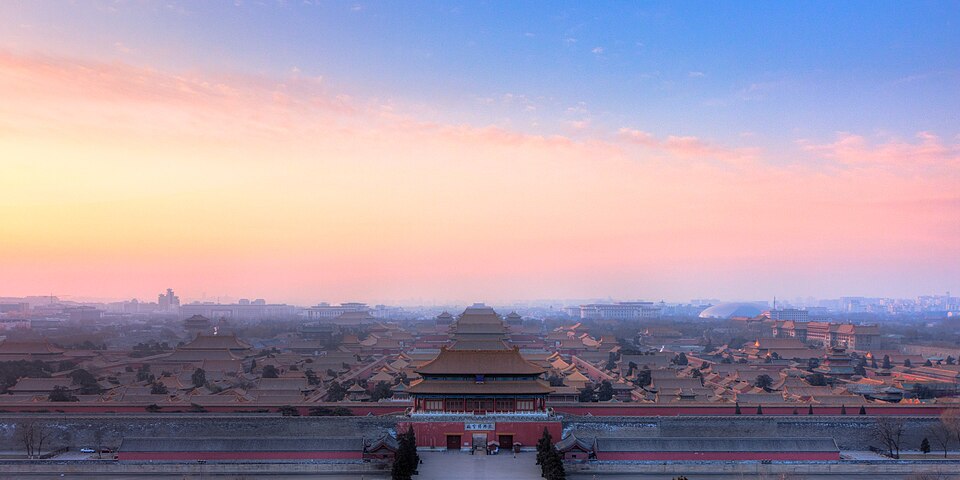
Exit at the north gate and cross into Jingshan Park, where a short climb gives you the classic view back over the palace roofs. From there, walk or take a pedicab west into the Shichahai and Nanluoguxiang area. The rickshaw tours are a commercial product with negotiable prices; if that does not appeal, the same lanes are perfectly walkable on foot. Finish with dinner in a courtyard restaurant around Houhai.

Day 2: The Great Wall at Mutianyu

Mutianyu is the practical choice for a first visit: restored enough to walk comfortably, but far less crowded than Badaling. It sits roughly 70km northeast of the city. Leaving central Beijing early in the morning is the single biggest factor in avoiding coach groups, which tend to arrive mid-morning.

Options to reach it include a private driver, a pre-booked small-group tour, or public buses to Huairou plus a local connection, which is cheaper but slower and harder to time. A cable car runs up to the wall and a toboggan runs down; check current operating status and prices at the ticket office or official site, as both are weather-dependent. Bring water, sun protection and shoes with grip, since the steps are steep and uneven. On the way back, farmhouse restaurants near the wall serve simple trout and mountain vegetables.

Day 3: Temple of Heaven, Qianmen and Peking duck

Start early at the Temple of Heaven, where the surrounding park fills with tai chi, dancing and card games well before the ticket halls open. The Hall of Prayer for Good Harvests is the building most people come for, but the park itself is the reason to arrive at dawn.

In the afternoon, walk south through Qianmen and the Dashilar lanes, a restored commercial quarter with older courtyard streets behind the main drag. If museums suit you better, the National Museum sits on the east side of Tiananmen Square and requires its own advance booking. For dinner, Peking duck is the obvious choice; the well-known restaurants take reservations and queue badly without one, so book through your hotel or the restaurant’s own channel.

Day 4: Summer Palace and 798 Art District

The Summer Palace is a half-day at minimum. Enter at the north gate if you want to climb Longevity Hill first, or the east gate to walk the Long Corridor along Kunming Lake. A boat across the lake is a pleasant way to link the two ends, subject to season and weather. The site is large, so pick two or three areas rather than trying to cover all of it.

In the afternoon, head northeast to the 798 Art District, a former factory complex now full of galleries and studios. Opening days vary by gallery and many close on Mondays, so check a few you actually want to see. Sanlitun, a short taxi ride away, has the densest concentration of restaurants and bars for dinner.

Day 5: Choose your final day

Three sensible options depending on energy and interest:

Temples and lakes. Lama Temple and the neighbouring Confucius Temple make a compact morning, followed by Beihai Park’s lake and the White Dagoba on the hill. This is the gentlest option and works well if you are flying out that evening.

A second wall section. Juyongguan, combined with the Ming Tombs, suits anyone who wants more wall and has already done Mutianyu. It is closer to the city but steeper and busier.

A slower city day. Yonghegong’s surrounding streets, the Drum and Bell Towers, and a long lunch. Not every day needs a headline sight.

Frequently asked questions

When is the best time to visit Beijing?

April to May and September to October generally give the most comfortable temperatures. Winter is cold but clear, with far fewer visitors and occasional snow on the palace roofs. Summer is hot, humid and busy, and late summer can bring heavy rain. If you are weighing months, China in October: Best Places & Travel Tips 2026 covers the autumn window in detail.

Do I need to book the Forbidden City in advance?

Yes, in practice. Tickets are released on a rolling advance window, sold against passport details, and peak dates sell out. The site also closes on certain days, typically Mondays, though you should confirm the current pattern on its official booking page rather than relying on second-hand information. Book as soon as your dates are fixed.

Should I take a tour to the Great Wall or go independently?

Either works. A private driver gives you the earliest start and the most flexibility; a small-group tour costs less and removes the logistics; public transport is cheapest but slowest. What matters most is arriving before the coach groups, whichever option you choose.

How do I get around Beijing?

The metro is fast, cheap and covers almost everything on this itinerary, with signage in English. Buy a single-journey ticket from the machines or use a transport card in your phone wallet if it supports one. For the Great Wall and outlying sites, a car is far more practical than public transport. See China Metro Guide: How to Ride in 2026 for how the systems work.

Is five days enough for Beijing?

It covers the essentials comfortably. If you want the Ming Tombs, a second wall section and more museum time, add a day or two. If you only have three days, cut Day 5 and choose between the Summer Palace and 798.

Treat the plan above as a frame rather than a schedule. Confirm reservation windows, opening days and transport options on official channels in the week before you travel, keep one afternoon deliberately unbooked, and Beijing will reward you with the parts you did not plan.

Posted on — Leave a comment

Beijing Travel Guide 2026: Hutongs, Museums & New City Sights

If you have already ticked off the Forbidden City and a Great Wall section, Beijing rewards a second visit far more than most capitals. This guide covers the city regulars return to: the north-south spine that became a UNESCO World Heritage Site in 2024, courtyard lanes where people still live rather than perform, and a museum scene that can absorb whole days. It also covers the practical side — payments, passports, airport transfers and how to check the details that change.

The Central Axis: Beijing’s New UNESCO Listing

Beijing’s Central Axis is the north-south line running from Yongdingmen in the south to the Bell and Drum Towers in the north. It was inscribed on the UNESCO World Heritage List in 2024, which surprised few residents but changed how the city talks about its own geography. The listing covers a sequence of gates, squares, bridges, temples and palace complexes rather than a single monument, so the sensible approach is to walk or ride it in stages.

A south-to-north route takes in Yongdingmen, then Qianmen with its restored archways and tram street, then Tiananmen Square, the Forbidden City, Jingshan Park for the view back down the line, and finally the Houhai lakes and the Drum Tower, where a drum performance is usually staged in the late afternoon. Check the Drum Tower’s official channels for current performance times and last admission, since these are adjusted seasonally.

Two notes for planning. Tiananmen Square and the Forbidden City require advance reservation and passport registration, and the square is sometimes closed at short notice for state events. Jingshan is the best single vantage point on the axis and needs no reservation beyond a normal park ticket. If you are building a longer route around the city’s sights, the metro is the most predictable way to move along the axis; see this China Metro Guide 2026 for ticketing and security-check basics.

Hutong Beijing: Where to Stay and What to Do

The lanes around Nanluoguxiang and Baochao Hutong remain the most convenient base for a courtyard hotel, though the trade-off is noise and narrow access for cars. Mornings are the reward: older residents walk caged birds, play chess on pavement tables and queue at breakfast counters. The same lanes now hold specialty coffee bars, small vinyl shops and dumpling counters with four seats, so a single street can cover both the old and new versions of the city.

Wudaoying Hutong near the Lama Temple and Yangmeizhu Xiejie south of Qianmen are the current favourites among people who live here, largely because they have kept a mix of residents and businesses. When choosing a courtyard hotel, ask directly about heating in winter, whether the room has a private bathroom, and how far a car can actually get to the door. Many courtyard properties are conversions with thin walls; reviews that mention noise are worth reading closely.

Museums Worth Flying For

The National Museum of China sits on the east side of Tiananmen Square and is free to enter, but requires a timed reservation made in advance with your passport. It is enormous; the ancient bronze galleries alone can take two hours, so pick two or three sections rather than attempting the whole building.

The Capital Museum, in the west of the city, is the better choice if you want a coherent narrative of Beijing’s own history, and it is generally quieter than the National Museum. UCCA in the 798 district anchors the contemporary art scene in decommissioned factory buildings, and 798 as a whole is worth half a day even if you skip the paid exhibitions. Opening days vary by venue and exhibitions change, so confirm current hours and any Monday closures on each institution’s own site before travelling across the city.

Getting In, Getting Around and Paying

Beijing Daxing International Airport’s terminal serves a large share of international routes, and the airport express links it to the city rail network. Beijing Capital Airport remains the main hub for many other carriers, so check which airport your flight uses before booking a hotel — they are on opposite sides of the city. For transfers generally, this China Airport Transfers guide covers taxis, metro links and eSIM setup.

Mobile payment is the default for almost everything, including small dumpling stalls. Foreign-issued cards can usually be linked to Alipay and WeChat Pay, but acceptance depends on your card issuer and the app’s current verification rules, so set it up and test it before you fly rather than at a till. The step-by-step process is covered in this China Cashless Travel Guide. Carry a small amount of cash as a backup.

Passports are still required for Forbidden City and Great Wall tickets, and your passport number must match the one used for the reservation. Visa and transit rules change; check the current requirements on the official Chinese embassy or consulate site for your nationality and confirm the wording of any transit exemption rather than relying on a summary.

Seasons and Timing

October brings ginkgo avenues and the most comfortable walking weather of the year. Winter freezes Houhai, where skate rental is available on the ice, and the crowds thin everywhere. Spring brings cherry blossom at Yuyuantan Park, usually late March into April, and early summer suits the ancient observatory and the temple courtyards. Air quality has improved markedly since 2017, though it still varies day to day; check a live air quality index during your stay and plan heavy walking days accordingly. Public holidays distort everything — book transport and major sights well ahead around those dates.

Frequently asked questions

Do I need to book the Forbidden City in advance?

Yes. Entry is by timed reservation made online with your passport, and tickets are released on a set schedule ahead of the visit date. Confirm the current release time and booking channel on the palace museum’s official site, and bring the same passport you used to book.

Is the Central Axis walkable in one day?

It is roughly 7.5 km end to end and technically walkable, but the Forbidden City crossing alone takes hours. Most people split it into a southern section around Qianmen and a northern section around Jingshan and the Drum Tower, using the metro to link them.

Can I use Alipay or WeChat Pay with a foreign card?

Usually yes, but support depends on your card issuer and the app’s verification requirements at the time. Set up and test both apps before departure, keep a physical card and some cash as backup, and check the app’s own help pages for the current limits.

Which airport should I fly into?

Both work. Daxing handles many international routes and has a fast rail link to the city; Capital Airport is closer to the north-east and the hutong areas. Check your flight’s actual airport before booking accommodation, as the transfer times differ significantly.

When is the best time to visit for weather?

Late September to October is generally the most comfortable, with clear skies and autumn foliage. Spring is pleasant but windy and dusty. Summer is hot and humid, and winter is cold but quiet, with ice skating on Houhai when conditions allow.

Treat this as a framework rather than a fixed plan: confirm reservations, opening days and payment settings on the relevant official pages close to your travel dates, then leave room in the schedule for the parts of Beijing that only reveal themselves on foot.

Posted on — Leave a comment

Xi’an Travel Guide 2026: Terracotta Warriors & Muslim Quarter

Xi’an served as the capital of China for more than a thousand years and sat at the eastern end of the Silk Road, which is why the city holds more excavated history per square kilometre than most countries manage in total. For a visitor, that translates into three things: the Terracotta Army, a complete Ming-era city wall you can ride around, and a food culture that many Chinese travellers rate as the country’s best. This guide covers what to see, how to move between the sights, when to come, and what to check before you book anything.

The Terracotta Warriors: planning the visit properly

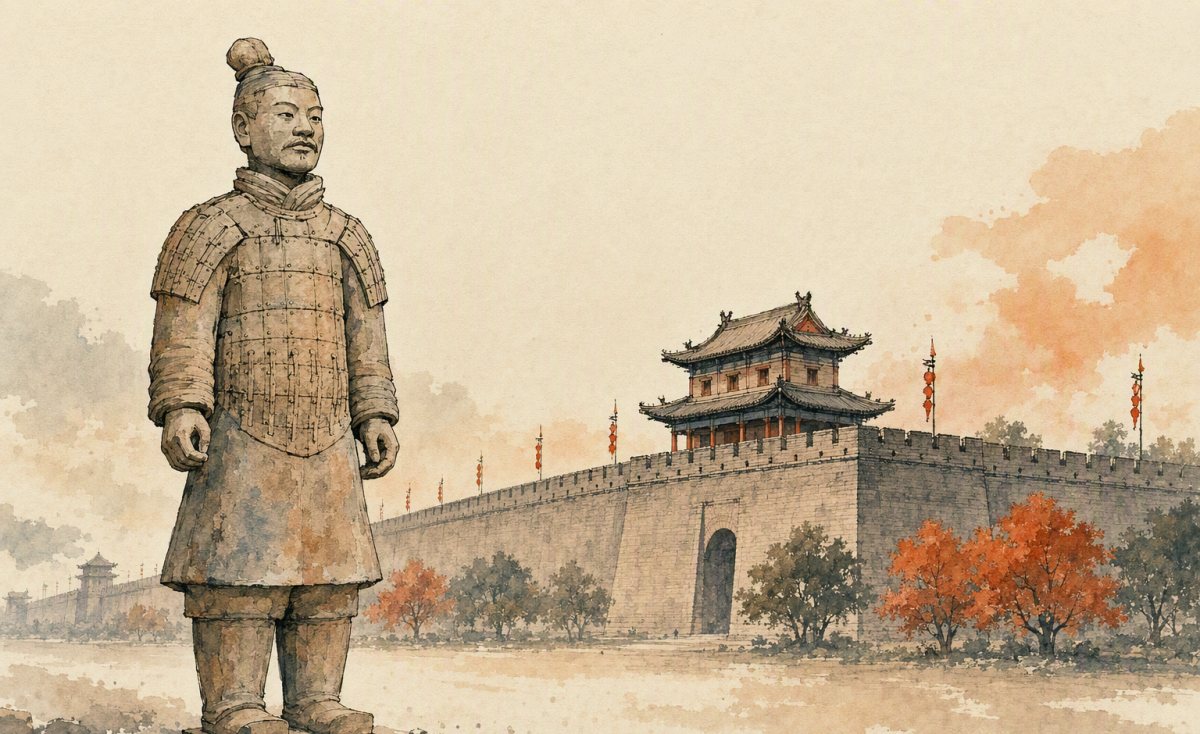
The site sits roughly an hour east of the city, outside the metro network, so the trip needs planning rather than improvisation. Arrive for opening if you can — the halls fill quickly from mid-morning, and Pit 1, the largest and most photographed, is best seen before the tour groups arrive in force. The usual order is Pit 1, then Pit 3, then Pit 2, finishing at the bronze chariots, but any sequence works if you start early.

Hire a guide or use an audio guide. Without context the pits read as rows of clay figures; with it, you get the individual faces, the excavation history, the bronze chariots, and the story of the farmers who found the site in 1974 while digging a well. Opening hours, ticket prices and any seasonal closures change, so check the official site before you travel and look specifically for the current ticket release window — tickets are often sold in advance slots and can sell out on public holidays. For dates to avoid, see our guide to China public holidays 2026.

The city wall and the Muslim Quarter

The Ming wall is complete, roughly 14 kilometres around, and the South Gate is the main access point for bike rental. Sunset is the most comfortable time to ride: the light is good, the heat has gone, and the wall is lit afterwards. Rental terms, deposits and closing times vary by gate and season, so confirm on arrival rather than assuming a late finish.

The Muslim Quarter, centred on Beiyuanmen Street near the Drum Tower, is the city’s densest eating district — lamb skewers, roujiamo, biangbiang noodles, cold liangpi and pomegranate juice, all cooked in front of you. It is busy, touristy and genuinely worth it. Go hungry, carry small change or a working payment app, and expect to eat standing up. Our Xi’an street food guide covers 18 specific dishes and where to find them.

Other essentials worth your time

The Big Wild Goose Pagoda’s north square hosts a fountain and music show, typically around midday and again in the evening — timings shift with season, so check locally. The Shaanxi History Museum holds the Tang gold and Silk Road material that gives the city its context; entry is free but requires advance booking through the official reservation channel, and slots disappear fast in peak season.

Tang Dynasty dinner shows pair a meal with court music and dance. They are staged and touristic, but they are also a straightforward way to see Tang-era performance without hunting for it. Book through your hotel or a reputable operator and confirm what the ticket actually includes before paying.

Getting around and getting there

The metro reaches the wall, the pagoda, the museum and the main food streets, and it is the simplest way to move around the centre. Fares are low and machines accept English; our China metro guide explains how to buy and use tickets.

The Terracotta Warriors are the exception. Public buses run from the main railway station area, and private cars or guided transfers remove the guesswork for an early start. If you are arriving by rail, read our China train travel guide for booking and passport rules — Xi’an is well connected to Beijing, Shanghai, Chengdu and Luoyang on high-speed lines.

When to go and what to sort in advance

March to May and September to November give the most comfortable temperatures. Summer is hot and crowded; winter is cold but quiet, and the Warriors site is far more pleasant without queues. Book the Warriors ticket, the Shaanxi History Museum slot and any dinner show before you arrive, especially around national holidays.

Set up a payment app before you fly. Mobile payment is near-universal, and a foreign card linked to the major apps usually works, but you should verify your specific card and app combination before relying on it — see our cashless travel guide. Carry a small amount of cash as backup.

Frequently asked questions

How many days do I need in Xi’an?

Two full days covers the Warriors, the wall and the Muslim Quarter without rushing. Three days lets you add the Shaanxi History Museum, the pagoda and a slower food crawl.

Can I visit the Terracotta Warriors independently?

Yes. Public buses and taxis both work. A guide adds a great deal, though, because the site’s value is in the detail rather than the visuals.

Is the Muslim Quarter suitable for vegetarians?

Options exist — liangpi, some noodle dishes and vegetable skewers — but the district is built around lamb and beef. Check ingredients rather than assuming.

Do I need to book the Shaanxi History Museum?

Yes, in practice. Entry is free but reserved in advance through the official channel, and popular slots fill quickly. Confirm the current booking process before your trip, as it changes.

Xi’an rewards preparation more than most Chinese cities: the headline sights are spread out, the best food is eaten standing in a crowd, and the tickets that matter are released in advance. Sort the Warriors slot, the museum booking and your payment setup before you arrive, then give the rest of the trip to the wall at sunset and the noodle stalls after dark.