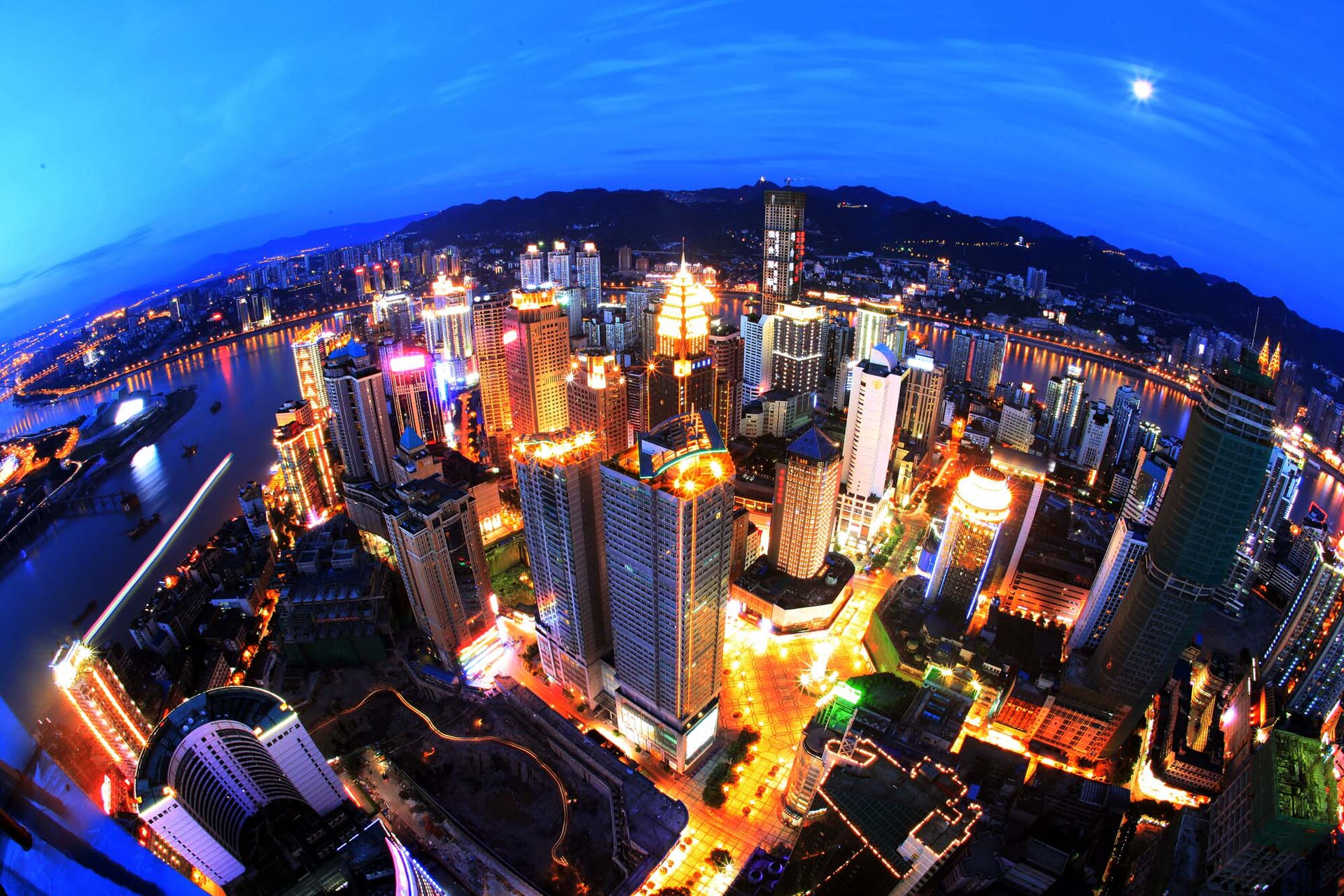
Why Chongqing Belongs on Your 2026 China Itinerary
Chongqing isn’t just another Chinese megacity — it’s a topographic marvel. Perched at the confluence of the Yangtze and Jialing rivers, this mountainous municipality (officially a province-level city since 1997) rises and falls across 5,470 square kilometers of steep ridges, mist-wrapped cliffs, and layered urban infrastructure. With over 32 million residents and zero flat blocks, Chongqing delivers an unforgettable sensory contrast: neon-lit skyscrapers dangling above centuries-old stilted houses (diaojiaolou), steamy hotpot joints tucked beneath elevated monorail tracks, and escalators that double as public transit arteries. For foreign tourists in 2026, Chongqing is uniquely accessible: it’s a designated 240-hour transit sans visa city for nationals from 53 countries (including the US, UK, Canada, Australia, France, Germany, Japan, and South Korea) flying into Chongqing Airport (CKG) en route to a third country — no prior visa required if you stay ≤10 days and hold confirmed onward tickets.
Getting In & Around: Metro, Monorail & Elevator Logic
Forget taxis for short hops — Chongqing’s metro is your lifeline. As of mid-2026, Line 10 now fully connects CKG Airport to downtown Yuzhong District in 42 minutes (¥8, ~32 km), with bilingual signage, real-time English announcements, and NFC/QR code entry via Alipay or WeChat Pay (no physical card needed). The city operates 12 metro lines — more than Beijing or Shanghai — covering 536 km total. Crucially, Lines 2 and 3 run on straddle-beam monorails that glide silently above streets and through buildings (yes — literally *through* the commercial complex at Liziba Station, where trains pass between floors of a residential tower). Download the official (iOS/Android) — disponible en anglais, affiche les horaires en temps réel des trains et guide vers les sorties (indispensable quand celles-ci débouchent sur des niveaux de rue différents). app (iOS/Android) for live train tracking and station exit maps — essential when exits are labeled A1–A7, B1–B9, and one staircase leads to a noodle shop while another drops you onto a 200m cliffside footpath.
For hillside navigation, embrace the elevators. Chongqing has over 17 public outdoor escalators — the longest being the 112-meter, 35-second ride from Xingfu Square to Linjiangmen. Many operate 24/7 and accept QR payments. Pro tip: When Googling directions, always cross-check with Baidu Maps (not Google Maps) — the latter misplaces >60% of Chongqing’s pedestrian tunnels and underground walkways due to elevation complexity. WingPhoenix’s AI trip planning tool automatically layers Baidu-sourced routing with real-time metro delays and crowd heatmaps, so your itinerary avoids 3 p.m. escalator queues at Jiefangbei.
Eat Like a Local: Hotpot, Noodles & Hidden Tea Houses
Chongqing-style hotpot is non-negotiable — but skip the tourist traps near Jiefangbei’s ‘Hotpot Street’. In 2026, locals flock to Yue Lao Shu (‘Moon Old Tree’) in Nan’an District: open-air, coal-fired cauldrons, 24-hour service, and a ‘no MSG, no pre-boiled broth’ policy. Order ma la xiang guo (spicy dry pot) for milder heat, or go full Sichuan with duck blood vermicelli and beef tendon. Vegetarians: request su hotpot — broth made from dried shiitake and rock sugar, served with lotus root, wood ear, and tofu skin (confirm no lard is used; most reputable spots comply).
Don’t miss xiao mian: Chongqing’s signature spicy wheat noodles. Best versions come from hole-in-the-wall stalls like Xiao Tian Fu near Ciqikou Old Town — hand-pulled, springy, doused in chili oil, Sichuan peppercorns, and preserved mustard greens. For caffeine with altitude views, head to Hongya Cave’s third-floor tea terraces, where zhonghua green tea is served in bamboo steamers overlooking the Yangtze. Note: Most traditional teahouses don’t take reservations — arrive before 10 a.m. or after 4 p.m. to avoid lunchtime crowds.
Must-See Spots: From Cliffside Temples to Futuristic Skyscrapers
Chongqing rewards vertical exploration. Start at Ciqikou Old Town — not the overcommercialized main street, but the quieter western alleyways behind Baolin Temple, where artisans still fire celadon pottery and elderly women hand-roll guoba (crispy rice cakes). Next, ride Line 2 to Liziba Station, then walk 10 minutes to the viewing platform — best at sunset (5:45–6:15 p.m. in October 2026) when golden light catches the monorail mid-transit.
For panoramic perspective, visit Wulong Karst National Park (2.5 hrs by high-speed rail + shuttle; book via 12306 app or WingPhoenix transferts en voiture privée). Its three UNESCO-listed sinkholes — Tiankeng, Shenyinget Qingkou — feature rope bridges suspended 200+ meters above jungle floors and limestone caves accessible only by guided electric cart (English guides available daily; reserve 48h ahead). Closer to town, Musée des Trois Gorges offers free timed-entry tickets (scan QR at entrance; English audio guide ¥25) and houses original artifacts from the submerged Fengdu Ghost City — plus a startlingly accurate 1:1000 scale model of the Three Gorges Dam.
Practical 2026 Essentials: eSIM, Cash & Transit Smarts
Chongqing runs on digital payments — but don’t assume Wi-Fi is universal. Purchase a eSIM Chine before arrival (WingPhoenix offers plug-and-play plans starting at ¥99/7 days with 5GB data, full CKG airport activation support, and guaranteed compatibility with iOS 17+/Android 14+ devices). Physical SIMs require ID registration at carrier stores — time-consuming and often English-unfriendly. Carry ¥200–300 cash minimum: some street food vendors, temple donation boxes, and rural shuttle buses still operate cash-only.
If entering via 240h zones de transit sans visa transit, keep your passport, onward flight e-ticket, and hotel reservation (printed or digital) ready — immigration officers at CKG may ask. Note: You ne pouvez pas exit Chongqing for Chengdu or Guiyang during this window without a visa. However, you vous pouvez take the high-speed train to nearby Fuling (45 mins, ¥65) — a charming riverside town with the world’s largest Baiji dolphin memorial and zero international tourist footprint.
Here’s how Chongqing’s key transit options compare in 2026:
| Mode | Cost (CNY) | Speed (Downtown) | Remarques |
|---|---|---|---|
| Metro (all lines) | ¥2–6 per ride | ~35 km/h avg | Free transfers within 30 mins; 10% discount with QR code |
| Monorail (Lines 2/3) | ¥2–7 | ~40 km/h avg | Runs 6 a.m.–11:30 p.m.; avoid rush hour (7:30–9 a.m., 5–7 p.m.) |
| Voiture avec chauffeur (WingPhoenix) | ¥380/day (min 8 hrs) | On-demand | Includes English-speaking driver, tolls, parking, and 240h transit documentation support |
| Shared E-bike (Meituan/Hellobike) | ¥1.5/15 mins | ~15 km/h | Only viable on flatter zones (Nanbin Road, Yuzhong riverside); helmets provided |
When to Go & How to Plan Smart
October 2026 is ideal: average highs of 22°C, low humidity, and minimal fog — unlike December–February, when dense river mist can obscure skyline views for days. Avoid National Day Golden Week (Oct 1–7), when Jiefangbei’s pedestrian zone hits 80,000+ people/hour. Book accommodations early: Chongqing Marriott Hotel (Jiefangbei) and The Qube Hotel (Hongya Cave) offer rooftop bars with unobstructed river views and verified English-speaking staff — both accept foreign credit cards without surcharge.
For stress-free planning, use WingPhoenix’s AI ou tracez l'itinéraire complet sur le to auto-generate a Chongqing itinerary based on your flight times, dietary needs, mobility preferences, and 240h transit window. It syncs real-time metro status, hotpot wait times (scraped from Dianping), and even adjusts for Chongqing’s notorious micro-climates — suggesting indoor alternatives if rain is forecast for Ciqikou. Need deeper local insight? Our AI can generate printable neighborhood maps with phonetic pronunciation guides (e.g., “Lǐzǐbā” → “Lee-dzuh-bah”) and emergency phrases in Mandarin script + Pinyin.
Ready to unlock Chongqing — without the guesswork? Build your smart, 2026-optimized Chongqing itinerary now.
Feature photo of Chongqing: Jonipoon · Wikimedia Commons · CC BY 3.0