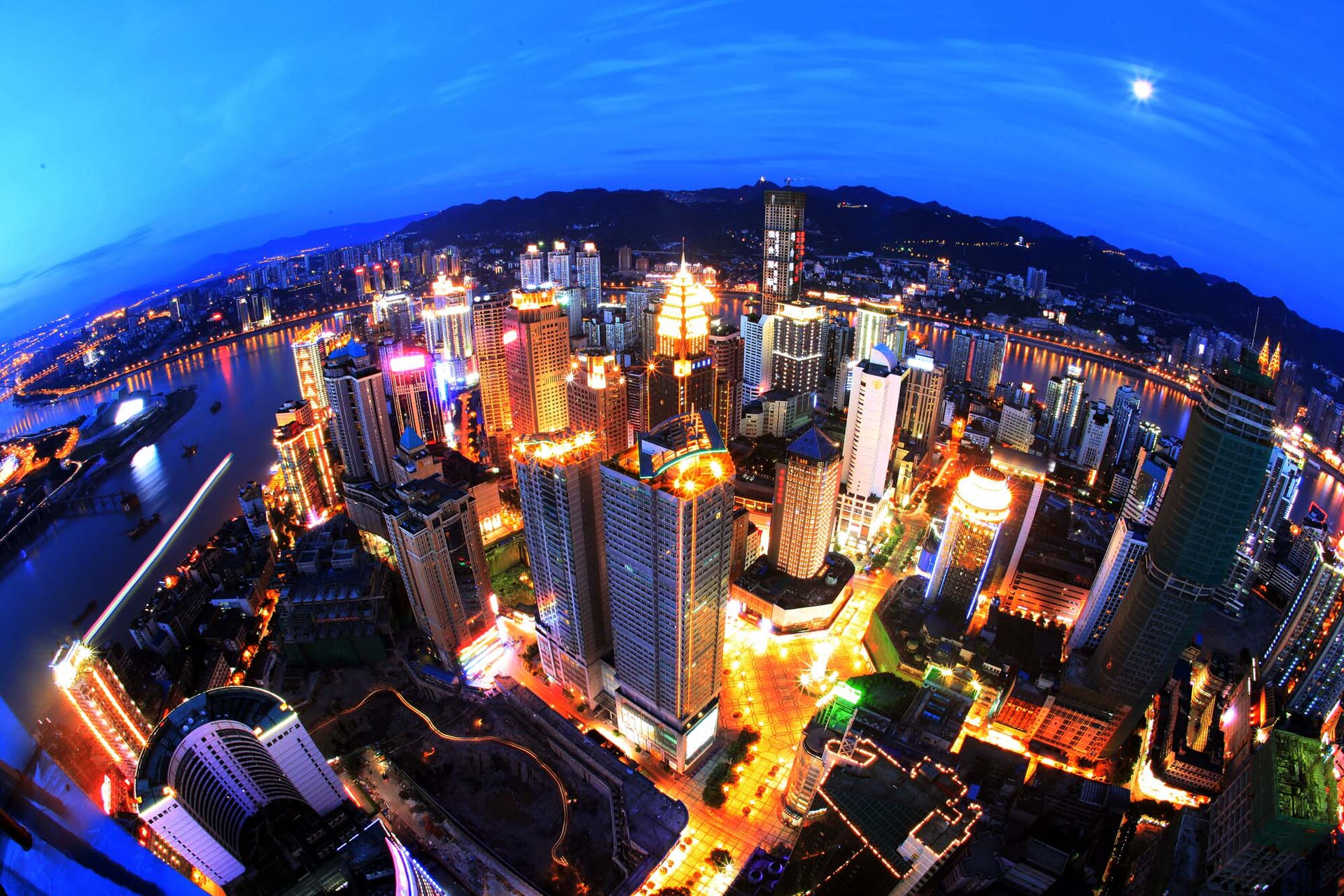
Why Chongqing Belongs on Your 2026 China Itinerary
Chongqing isn’t just another Chinese megacity — it’s a topographic marvel. Perched at the confluence of the Yangtze and Jialing rivers, this mountainous municipality (officially a province-level city since 1997) rises and falls across 5,470 square kilometers of steep ridges, mist-wrapped cliffs, and layered urban infrastructure. With over 32 million residents and zero flat blocks, Chongqing delivers an unforgettable sensory contrast: neon-lit skyscrapers dangling above centuries-old stilted houses (diaojiaolou), steamy hotpot joints tucked beneath elevated monorail tracks, and escalators that double as public transit arteries. For foreign tourists in 2026, Chongqing is uniquely accessible: it’s a designated 240-hour miễn thị thực quá cảnh city for nationals from 53 countries (including the US, UK, Canada, Australia, France, Germany, Japan, and South Korea) flying into Chongqing Airport (CKG) en route to a third country — no prior visa required if you stay ≤10 days and hold confirmed onward tickets.
Getting In & Around: Metro, Monorail & Elevator Logic
Forget taxis for short hops — Chongqing’s metro is your lifeline. As of mid-2026, Line 10 now fully connects CKG Airport to downtown Yuzhong District in 42 minutes (¥8, ~32 km), with bilingual signage, real-time English announcements, and NFC/QR code entry via Alipay or WeChat Pay (no physical card needed). The city operates 12 metro lines — more than Beijing or Shanghai — covering 536 km total. Crucially, Lines 2 and 3 run on straddle-beam monorails that glide silently above streets and through buildings (yes — literally *through* the commercial complex at Liziba Station, where trains pass between floors of a residential tower). Download the official Chongqing Rail Transit app (iOS/Android) for live train tracking and station exit maps — essential when exits are labeled A1–A7, B1–B9, and one staircase leads to a noodle shop while another drops you onto a 200m cliffside footpath.
For hillside navigation, embrace the elevators. Chongqing has over 17 public outdoor escalators — the longest being the 112-meter, 35-second ride from Xingfu Square to Linjiangmen. Many operate 24/7 and accept QR payments. Pro tip: When Googling directions, always cross-check with Baidu Maps (not Google Maps) — the latter misplaces >60% of Chongqing’s pedestrian tunnels and underground walkways due to elevation complexity. WingPhoenix’s AI trip planning tool automatically layers Baidu-sourced routing with real-time metro delays and crowd heatmaps, so your itinerary avoids 3 p.m. escalator queues at Jiefangbei.
Eat Like a Local: Hotpot, Noodles & Hidden Tea Houses
Chongqing-style hotpot is non-negotiable — but skip the tourist traps near Jiefangbei’s ‘Hotpot Street’. In 2026, locals flock to Yue Lao Shu (‘Moon Old Tree’) in Nan’an District: open-air, coal-fired cauldrons, 24-hour service, and a ‘no MSG, no pre-boiled broth’ policy. Order ma la xiang guo (spicy dry pot) for milder heat, or go full Sichuan with duck blood vermicelli and beef tendon. Vegetarians: request su hotpot — broth made from dried shiitake and rock sugar, served with lotus root, wood ear, and tofu skin (confirm no lard is used; most reputable spots comply).
Don’t miss xiao mian: Chongqing’s signature spicy wheat noodles. Best versions come from hole-in-the-wall stalls like Xiao Tian Fu near Ciqikou Old Town — hand-pulled, springy, doused in chili oil, Sichuan peppercorns, and preserved mustard greens. For caffeine with altitude views, head to Hongya Cave’s third-floor tea terraces, where zhonghua green tea is served in bamboo steamers overlooking the Yangtze. Note: Most traditional teahouses don’t take reservations — arrive before 10 a.m. or after 4 p.m. to avoid lunchtime crowds.
Must-See Spots: From Cliffside Temples to Futuristic Skyscrapers
Chongqing rewards vertical exploration. Start at Ciqikou Old Town — not the overcommercialized main street, but the quieter western alleyways behind Baolin Temple, where artisans still fire celadon pottery and elderly women hand-roll guoba (crispy rice cakes). Next, ride Line 2 to Liziba Station, then walk 10 minutes to the viewing platform — best at sunset (5:45–6:15 p.m. in October 2026) when golden light catches the monorail mid-transit.
For panoramic perspective, visit Wulong Karst National Park (2.5 hrs by high-speed rail + shuttle; book via 12306 app or WingPhoenix xe riêng). Its three UNESCO-listed sinkholes — Tiankeng, Shenying, và Qingkou — feature rope bridges suspended 200+ meters above jungle floors and limestone caves accessible only by guided electric cart (English guides available daily; reserve 48h ahead). Closer to town, Bảo tàng Tam Hiệp offers free timed-entry tickets (scan QR at entrance; English audio guide ¥25) and houses original artifacts from the submerged Fengdu Ghost City — plus a startlingly accurate 1:1000 scale model of the Three Gorges Dam.
Practical 2026 Essentials: eSIM, Cash & Transit Smarts
Chongqing runs on digital payments — but don’t assume Wi-Fi is universal. Purchase a eSIM Trung Quốc before arrival (WingPhoenix offers plug-and-play plans starting at ¥99/7 days with 5GB data, full CKG airport activation support, and guaranteed compatibility with iOS 17+/Android 14+ devices). Physical SIMs require ID registration at carrier stores — time-consuming and often English-unfriendly. Carry ¥200–300 cash minimum: some street food vendors, temple donation boxes, and rural shuttle buses still operate cash-only.
If entering via 240h miễn thị thực transit, keep your passport, onward flight e-ticket, and hotel reservation (printed or digital) ready — immigration officers at CKG may ask. Note: You không thể exit Chongqing for Chengdu or Guiyang during this window without a visa. However, you có thể take the high-speed train to nearby Fuling (45 mins, ¥65) — a charming riverside town with the world’s largest Baiji dolphin memorial and zero international tourist footprint.
Here’s how Chongqing’s key transit options compare in 2026:
| Phương tiện | Cost (CNY) | Speed (Downtown) | Ghi chú |
|---|---|---|---|
| Metro (all lines) | ¥2–6 per ride | ~35 km/h avg | Free transfers within 30 mins; 10% discount with QR code |
| Monorail (Lines 2/3) | ¥2–7 | ~40 km/h avg | Runs 6 a.m.–11:30 p.m.; avoid rush hour (7:30–9 a.m., 5–7 p.m.) |
| Xe riêng (WingPhoenix) | ¥380/day (min 8 hrs) | On-demand | Includes English-speaking driver, tolls, parking, and 240h transit documentation support |
| Shared E-bike (Meituan/Hellobike) | ¥1.5/15 mins | ~15 km/h | Only viable on flatter zones (Nanbin Road, Yuzhong riverside); helmets provided |
When to Go & How to Plan Smart
October 2026 is ideal: average highs of 22°C, low humidity, and minimal fog — unlike December–February, when dense river mist can obscure skyline views for days. Avoid National Day Golden Week (Oct 1–7), when Jiefangbei’s pedestrian zone hits 80,000+ people/hour. Book accommodations early: Chongqing Marriott Hotel (Jiefangbei) and The Qube Hotel (Hongya Cave) offer rooftop bars with unobstructed river views and verified English-speaking staff — both accept foreign credit cards without surcharge.
For stress-free planning, use WingPhoenix’s AI công cụ lập kế hoạch chuyến đi to auto-generate a Chongqing itinerary based on your flight times, dietary needs, mobility preferences, and 240h transit window. It syncs real-time metro status, hotpot wait times (scraped from Dianping), and even adjusts for Chongqing’s notorious micro-climates — suggesting indoor alternatives if rain is forecast for Ciqikou. Need deeper local insight? Our AI can generate printable neighborhood maps with phonetic pronunciation guides (e.g., “Lǐzǐbā” → “Lee-dzuh-bah”) and emergency phrases in Mandarin script + Pinyin.
Ready to unlock Chongqing — without the guesswork? Build your smart, 2026-optimized Chongqing itinerary now.
Feature photo of Chongqing: Jonipoon · Wikimedia Commons · CC BY 3.0