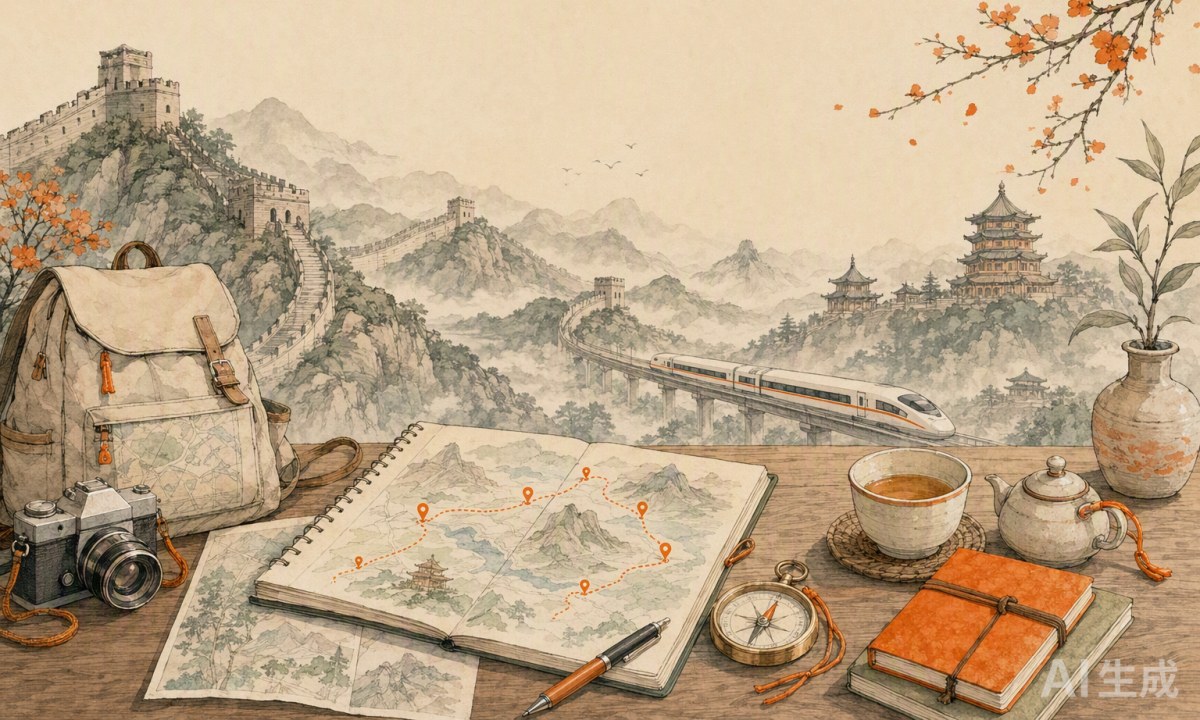
A China travel designer is a local trip-planning professional who builds an itinerary around your dates, pace, and budget, then arranges sopir pribadi Andas, hotels, tickets, and guides behind the scenes. For first-time visitors, a designer removes the language barrier, the passport-only booking hurdles, and the guesswork of connecting high-speed rail with hill towns and megacities — you approve a plan instead of assembling one yourself. This guide shows how custom trip planning works in China and how to judge whether a designed trip fits you.
What a China Travel Designer Actually Does
A travel designer (sometimes called a trip designer or custom travel consultant) is not a tour guide. The designer never travels with you. Instead, this person is the architect of your trip: they listen to your interests, propose a day-by-day route, reserve hotels and tickets, assign a licensed English-speaking guide or private driver to each city, and stay on call for changes while you travel. The designer is your single point of contact for everything else, from a mobil sewaan in Xi’an to a connecting flight to Zhangjiajie.
Why Foreign Travelers Use a Local Designer
China rewards local knowledge in ways most destinations do not. Tiket kereta api sell out during holidays, scenic-area reservations run passport-only, and many attractions now require real-name booking days in advance. A good designer solves those problems before you land. The three most common reasons travelers ask for help are:
- Bahasa: English signage is improving in big cities but thin everywhere else; a designer builds a route where you are never stranded at a ticket window.
- Fragmented booking: Flights, trains, parks, and shows each sit on different Chinese platforms; the designer consolidates them into one plan and one support line.
- Route logic: Distances between highlights are larger than they look on a map. Designers know that pairing Beijing with Harbin in five days is a mistake, while Beijing-Xi’an-Shanghai in ten is comfortable.
Custom Trip vs. Group Tour vs. DIY Planning
There are three realistic ways to organize a China trip. Here is how they compare on the things travelers ask about most.
| Faktor | DIY Planning | Fixed Group Tour | Custom Trip with a Designer |
|---|---|---|---|
| Itinerary freedom | Total, but you solve every problem alone | Fixed schedule, set pace | Yours, adjusted anytime before and during the trip |
| Language support | Apps and gestures | Group guide for the whole coach | Dedicated driver-guide or guide per city |
| Booking burden | All on you, mostly in Chinese | Tidak ada | None — designer handles tickets, hotels, cars |
| Cost structure | Cheapest on paper, expensive in time | Low sticker price, add-ons common | Higher sticker, fewer surprises |
| Paling Cocok Untuk | Experienced China repeaters | Solo budget travelers who like meeting people | Families, seniors, first-timers, short trips |
For a first visit of seven to fourteen days, the designed private trip is usually the best value per hour of vacation — our group tour vs private tour breakdown compares the details.
How the Planning Process Works, Step by Step
Most custom planning follows the same five stages.
- Discovery. You share travel dates, party composition, interests, and comfort level. Using a trip planner form is the fastest way to give the designer everything at once.
- First proposal. Within a couple of working days you receive a day-by-day plan with hotel categories, intercity transport, and inclusions, often with two route options.
- Revision rounds. You swap a mountain for a museum, slow down a pace, upgrade one night. Good designers revise until the plan fits; do not accept a trip that feels rushed on paper, because it will feel worse in person.
- Confirmation and logistics. After you confirm, the designer books trains, entry tickets, drivers, and guides, and sends a printed or digital trip dossier.
- Live support. During the trip, one message channel reaches the person who built your plan — weather detours, extra hours, a hospital visit, a missed connection.
What a Designer Needs from You
The quality of a custom trip plan is set by the quality of the brief. Beyond dates and cities, tell your designer: how you feel about 6 a.m. starts; whether you want cooking classes or just great noodles; any mobility limits; dietary needs; and the one non-negotiable (the panda trip for a seven-year-old counts). Budget range matters too — hiding it wastes everyone’s time, because designers plan differently for moderate hotels than for boutique ones.
How Far in Advance Should You Plan
For peak windows — Chinese New Year, Labor Day, July-August, and Golden Week in early October — start three to six months ahead, because hotel and guide supply genuinely tightens. Shoulder-season trips can be designed in two to four weeks. Last-minute works outside peak periods for cars and hotels, though peak-week train tickets will already be gone. If your timeline is compressed, read our notes on what stays bookable in 48 hours before committing to a route.
How Custom Trips Are Priced
Custom trip quotes are built from components rather than a per-person rack rate: hotel nights at your chosen category, a private vehicle with driver each day, guide hours, intercity train or flight segments, and reserved tickets. Two families with identical itineraries can pay different amounts because hotel choice and party size drive the number. Reputable designers show inclusions and exclusions line by line, so you can trim a guide hour or drop a hotel tier to manage cost. Never compare a custom quote against a coach-tour sticker price; compare it against what the same inclusions cost to assemble yourself. For the car-and-driver component, our charter car price guide shows how pricing works by city and vehicle type.
Private Drivers, High-Speed Rail, and Internal Flights
A designed itinerary mixes three transport layers. Between cities you take dan mobil pribadi. where the network is strong (Beijing-Xi’an is a comfortable train hop) and fly where it is not. Inside cities, a private driver with a charter car handles transfers, suburban sights like the Mutianyu Great Wall, and any day your schedule changes mid-trip. If you are weighing train versus car on a specific leg, our panduan kereta cepat untuk wisatawan asing explains passport booking and station realities.
Connectivity and Payments on a Designed Trip
Even with a designer, two things work best if you set them up before you fly: a eSIM Tiongkok so your phone works the moment you land (maps, translation, and ride-hailing all depend on data), and a payment method linked to your foreign card, since China runs on QR payments at even the smallest noodle shop.
When a Custom Trip Is Not the Right Choice
Honestly: skip the designer if you are an experienced China repeater who enjoys solving problems yourself. Long solo backpacking trips, single-city stays, and ultra-budget travel fit DIY better. A designed trip earns its keep on first visits, family groups, mixed-ability parties, short windows, and multi-city routes where one missed train wastes a whole day.
Entry Rules: Check the Official Source
Visa dan 240 jam rules for China change often and differ by nationality. The authoritative source is the official website of China’s National Immigration Administration — verify there before booking anything, and treat any blog (including this one) as context, not policy.
Frequently Asked Questions
Is a custom trip in China more expensive than a group tour?
Per day, yes — you are buying a private vehicle, dedicated guide hours, and hotel choice instead of shared seats on a coach. But a designed trip removes the hidden costs of group travel: shopping-stop time, single supplements, and fixed extras. Compared item-for-item with a premium small-group departure, custom pricing is often similar, and it adapts to your party size.
Can I change the itinerary after the trip has started?
That is the main advantage of working through a designer with live support. Same-day changes — sleeping in, swapping a museum for a food street, adding an evening driver — are usually easy. Changes that move hotel nights or paid train tickets cost whatever the supplier’s change rules charge, and the designer will tell you before you commit.
Do I need a guide in every city?
No. Many travelers design a hybrid: private drivers and pre-booked tickets everywhere, a licensed guide only in Beijing, Xi’an, and the Terracotta Warriors, where context genuinely multiplies the experience, then self-guided days elsewhere. A good designer proposes this split instead of selling guide hours you will not use.
How do I know a designer is legitimate?
Look for a registered local operator with a physical office, named drivers and guides, transparent inclusions, and payment to a company account rather than a personal wallet. Ask how on-trip support works after hours, and check whether hotel categories and vehicle types appear in writing — what a serious customization service commits to is a useful benchmark.
What does a typical first-visit custom route look like?
Seven to ten days usually covers Beijing, Xi’an, and Shanghai with one nature stop — see our Golden Triangle 10-day itinerary for the standard version, and five one-week route options if you have less time. A designer’s job is to bend those templates to your pace rather than sell them as-is.