China is home to a Muslim population numbering in the tens of millions, and mosques stand in cities most visitors already have on their itinerary: Xi’an, Guangzhou, Beijing, Hangzhou, Quanzhou. For Muslim travellers, the practical questions are usually the same ones any traveller asks — where do I eat, where do I pray, what do I need to check before I go — and the answers are more workable than many first-timers expect. This guide covers how halal (qingzhen) food works in practice, how to approach mosque visits, what to know about the Hui northwest and Uyghur Xinjiang, and which details you must verify yourself rather than take on trust.
What “qingzhen” means and where to find it
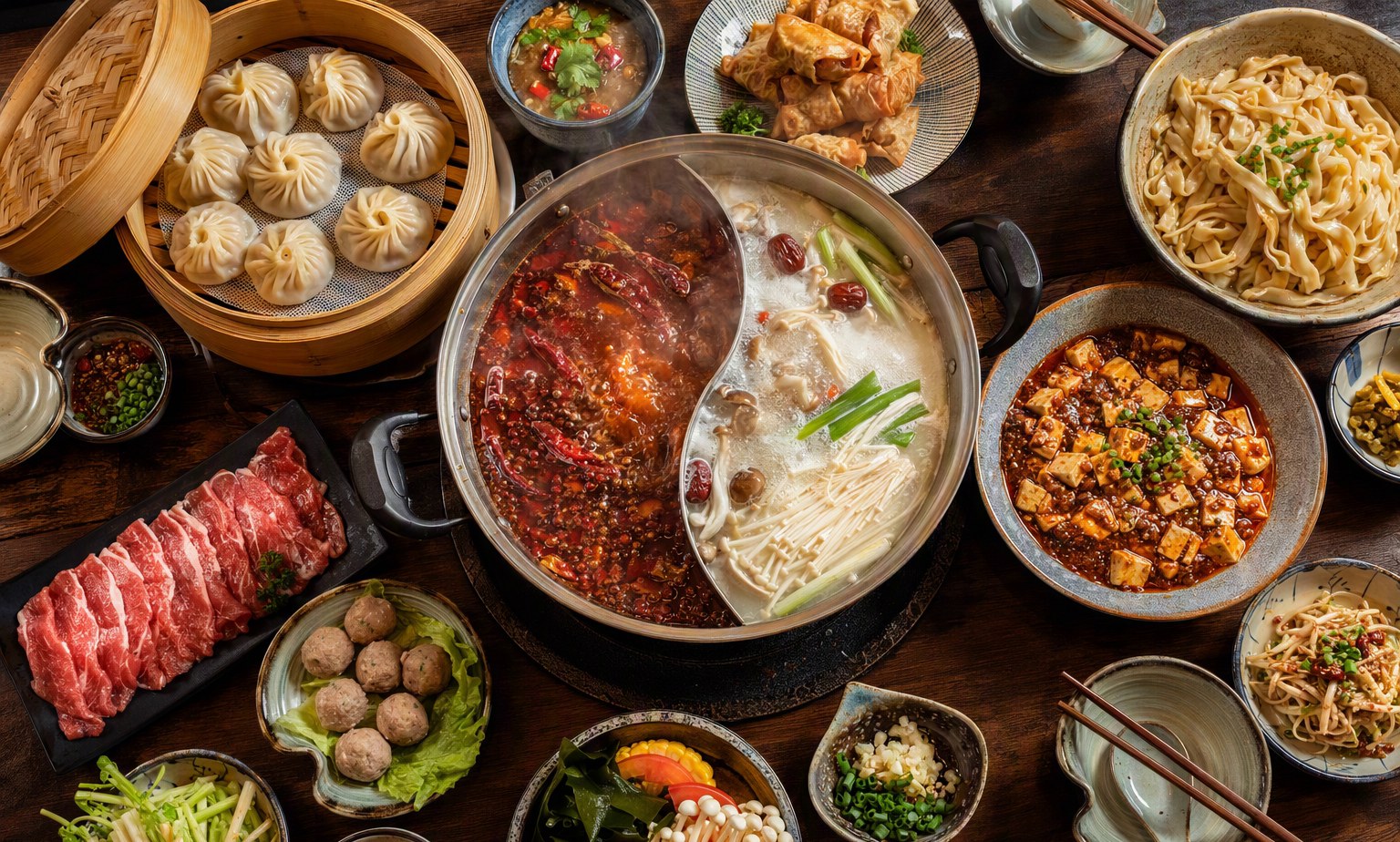
In China, halal food is described as qingzhen — literally “pure and true”. The reliable marker is green signage, often with Arabic script alongside Chinese characters. Lanzhou-style beef noodle shops are the closest thing to a nationwide constant: they appear in almost every city, are inexpensive, and are run by Hui families who keep qingzhen kitchens. Beyond noodles, look for qingzhen restaurants attached to mosques, and for Hui-run barbecue and dumpling shops in older quarters.
One caution: “qingzhen” on a sign is a claim, not a certificate you can independently audit. Standards and enforcement vary by province and by shop. If certification matters to you — for strict dietary or religious reasons — ask to see documentation, or ask your guide to translate and confirm with the kitchen. In tourist areas, a guide who speaks the local dialect can ask directly about cooking oil, shared woks and separate preparation, which is where the real answers usually lie. Our guida pratica al cibo halal e vegetariano in Cina approfondisce la lettura dei menù e la formulazione delle richieste.
Moschee storiche degne di un itinerario dedicato
Several of China’s oldest mosques sit in cities on standard tourist routes, and they are architecturally distinct from mosques in the Middle East or South Asia — Chinese timber halls, courtyards and pagoda-style minarets built around Islamic function.
Xi’an’s Great Mosque, in the Muslim Quarter, is the best-known example, traditionally dated to the Tang era. Guangzhou’s Huaisheng Mosque is associated with some of the earliest Islamic presence in China. Beijing’s Niujie Mosque anchors a historic Hui neighbourhood. Elsewhere, Hangzhou, Quanzhou, Yangzhou and Nanjing all hold old mosque sites tied to Silk Road and maritime trade history.
Access rules change. Many major mosques admit non-Muslim visitors outside prayer times, sometimes for a small fee, sometimes free; some restrict entry during prayers or on Fridays, and a few have closed to tourists entirely at various points. Do not rely on any figure or schedule you read online, including ours. Check the mosque’s own listing, ask your hotel, or have a guide call ahead on the day. Treat prayer halls as working religious spaces: dress modestly, remove shoes where indicated, and stay out of the way during prayer.
Le regioni Hui e il Nord-Ovest
Gli Hui sono musulmani di lingua cinese, le cui comunità sono concentrate in Ningxia, Gansu, Qinghai e nell’est dello Xinjiang, con presenze significative in ogni grande città. Per un viaggiatore musulmano, il Nord-Ovest è semplicemente più facile: il cibo qingzhen è la norma, non una ricerca; la densità di moschee è alta e gli spazi per la preghiera fanno parte della quotidianità.
Lanzhou, Xining and the surrounding towns work well as a first northwest trip. Linxia, sometimes described as China’s “little Mecca”, has an unusual concentration of mosques and madrasas. The wider Silk Road corridor — from Xi’an through Gansu to Xinjiang — is where Islamic, Buddhist and Chinese histories visibly overlap.
Xinjiang requires more care in planning. Rules on movement, permits and access to certain areas change, and they change without much notice. Rather than relying on any summary, check your own country’s travel advisory, and confirm current requirements with a licensed operator who works the region regularly. Some areas that were straightforward a few years ago are not now, and the reverse can also be true.
Logistica della preghiera in viaggio
Major Chinese airports generally have prayer rooms, though quality and location vary and they are not always well signposted — ask at an information desk. High-speed rail stations are less consistent. On long train journeys, prayer on board is a matter of timing and space rather than dedicated facilities; our approfondimento sulle classi di posto e sul cibo a bordo dei treni ad alta velocità descrive com’è davvero l’ambiente nei vagoni.
Nelle città, la maggior parte delle moschee accoglie i fedeli per le cinque preghiere quotidiane e molte offrono servizi per le abluzioni. Il vincolo pratico è la programmazione: le giornate di visita possono essere organizzate intorno agli orari di preghiera, purché autista e guida ne siano informati. Se prenotate un tour privato, comunicatelo già nella fase di pianificazione, non il giorno stesso.
Ramadan e orari dei pasti
Le date del Ramadan cambiano ogni anno secondo il calendario lunare, quindi verificate quelle correnti invece di dare per scontato. Nelle aree a maggioranza Hui, la cultura dell’iftar è calorosa e visibile, e i ristoranti restano aperti fino a tardi. Nelle città con una piccola popolazione musulmana, trovare il suhoor prima dell’alba può essere davvero difficile: pianificate acquistando cibo la sera prima o soggiornando in un posto con cucina aperta 24 ore. Fuori dal Ramadan, ricordate che molti ristoranti di noodles qingzhen chiudono presto la sera.
Preparazione pratica
Two things make the biggest difference. First, language: being able to say and show “qingzhen” in characters, and to ask whether a kitchen is genuinely separate, removes most of the guesswork. Our approfondimento sulle app di traduzione e sulle frasi essenziali include opzioni offline, fondamentali perché la connettività può essere irregolare. Secondo, la connettività stessa: attivate un piano dati e verificate che tutti gli strumenti di cui avete bisogno funzionino già prima dell’arrivo.
Oltre a ciò, valgono le normali indicazioni per viaggiare in Cina — app per i pagamenti, idoneità degli hotel per ospiti stranieri e prenotazioni obbligatorie per attrazioni, alcune delle quali sono ora richieste nei siti più visitati. Risolvete questi aspetti in anticipo e le parti specifiche halal del viaggio diventeranno semplici.
Domande frequenti
Il cibo halal è facile da trovare anche al di fuori delle regioni a maggioranza musulmana?
Sì, in generale, nelle città. I ristoranti di noodles di Lanzhou sono diffusi e affidabili come punto di riferimento. In città più piccole e nelle aree panoramiche remote, le opzioni si riducono drasticamente: pianificate i pasti intorno alle soste più grandi o portatevi del cibo.
I non musulmani possono visitare le moschee in Cina?
Many major mosques admit visitors outside prayer times, but policies vary by site and change over time. Some restrict or close access during prayers or on Fridays. Confirm with the mosque, your hotel or a local guide on the day rather than relying on any published summary.
È semplice viaggiare nello Xinjiang?
It requires more planning than other parts of China. Access rules, permits and restrictions on specific areas change, sometimes at short notice. Check your government’s current travel advisory and confirm arrangements with a licensed operator who works the region before committing to an itinerary.
Devo informare l’operatore turistico in anticipo sui miei bisogni alimentari e di preghiera?
Sì, in modo specifico. Chiedete se tutti i pasti saranno qingzhen, se autista e guida possono organizzare la giornata intorno agli orari di preghiera e come l’operatore verifica la certificazione dei ristoranti. Le rassicurazioni vaghe non bastano: chiedete cosa succede in una giornata di viaggio senza opzioni qingzhen nelle vicinanze.
Come verifico che un ristorante sia davvero halal?
Cercate innanzitutto l’insegna verde qingzhen, poi chiedete direttamente informazioni su wok separati, olio dedicato e preparazione distinta. Gli standard di certificazione non sono uniformi in tutta la Cina. Se la questione è particolarmente importante, fatevi accompagnare da qualcuno che parla cinese per parlare direttamente con la cucina, oppure chiedete di vedere la documentazione.
Il viaggio musulmano in Cina funziona meglio quando considerate le infrastrutture religiose come un elemento da pianificare attivamente, non come qualcosa da sperare di trovare: inserite pasti qingzhen e soste per la preghiera nell’itinerario, verificate l’accesso alle moschee e le regole regionali poco prima della partenza, e confermate per iscritto gli accordi alimentari con chi prenota il vostro viaggio.