China is home to a Muslim population numbering in the tens of millions, and mosques stand in cities most visitors already have on their itinerary: Xi’an, Guangzhou, Beijing, Hangzhou, Quanzhou. For Muslim travellers, the practical questions are usually the same ones any traveller asks — where do I eat, where do I pray, what do I need to check before I go — and the answers are more workable than many first-timers expect. This guide covers how halal (qingzhen) food works in practice, how to approach mosque visits, what to know about the Hui northwest and Uyghur Xinjiang, and which details you must verify yourself rather than take on trust.
What “qingzhen” means and where to find it
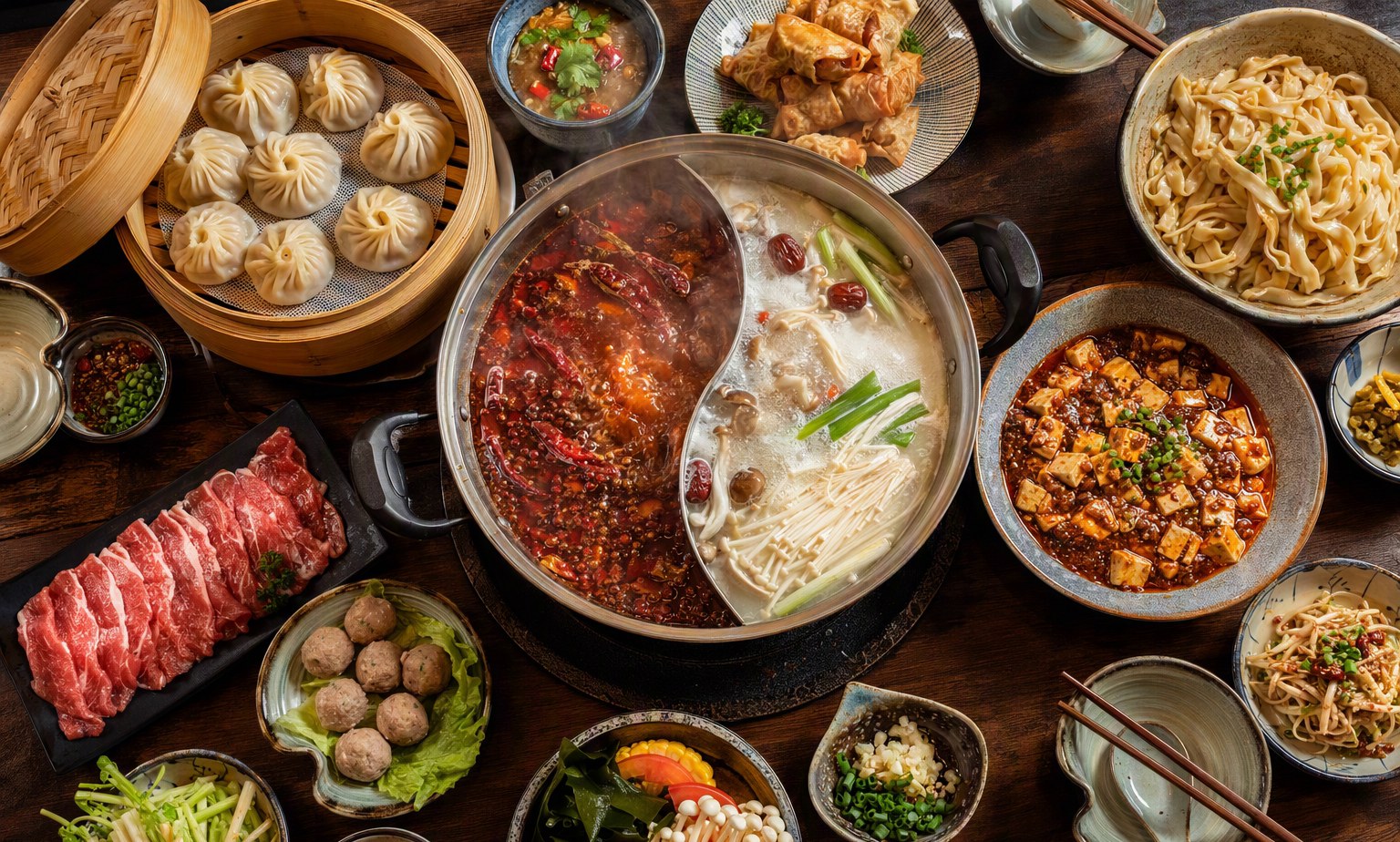
In China, halal food is described as qingzhen — literally “pure and true”. The reliable marker is green signage, often with Arabic script alongside Chinese characters. Lanzhou-style beef noodle shops are the closest thing to a nationwide constant: they appear in almost every city, are inexpensive, and are run by Hui families who keep qingzhen kitchens. Beyond noodles, look for qingzhen restaurants attached to mosques, and for Hui-run barbecue and dumpling shops in older quarters.
One caution: “qingzhen” on a sign is a claim, not a certificate you can independently audit. Standards and enforcement vary by province and by shop. If certification matters to you — for strict dietary or religious reasons — ask to see documentation, or ask your guide to translate and confirm with the kitchen. In tourist areas, a guide who speaks the local dialect can ask directly about cooking oil, shared woks and separate preparation, which is where the real answers usually lie. Our guia prático de comida halal e vegetariana na China guia aprofunda como ler cardápios e formular pedidos corretamente.
Mesquitas históricas que valem a pena planejar
Several of China’s oldest mosques sit in cities on standard tourist routes, and they are architecturally distinct from mosques in the Middle East or South Asia — Chinese timber halls, courtyards and pagoda-style minarets built around Islamic function.
Xi’an’s Great Mosque, in the Muslim Quarter, is the best-known example, traditionally dated to the Tang era. Guangzhou’s Huaisheng Mosque is associated with some of the earliest Islamic presence in China. Beijing’s Niujie Mosque anchors a historic Hui neighbourhood. Elsewhere, Hangzhou, Quanzhou, Yangzhou and Nanjing all hold old mosque sites tied to Silk Road and maritime trade history.
Access rules change. Many major mosques admit non-Muslim visitors outside prayer times, sometimes for a small fee, sometimes free; some restrict entry during prayers or on Fridays, and a few have closed to tourists entirely at various points. Do not rely on any figure or schedule you read online, including ours. Check the mosque’s own listing, ask your hotel, or have a guide call ahead on the day. Treat prayer halls as working religious spaces: dress modestly, remove shoes where indicated, and stay out of the way during prayer.
Regiões Hui e o noroeste
Os Hui são muçulmanos de língua chinesa, cujas comunidades se concentram em Ningxia, Gansu, Qinghai e no leste de Xinjiang, com populações significativas em todas as grandes cidades. Para um viajante muçulmano, o noroeste é simplesmente mais fácil: a comida qingzhen é a norma, não uma busca, a densidade de mesquitas é alta e instalações para oração fazem parte da infraestrutura cotidiana.
Lanzhou, Xining and the surrounding towns work well as a first northwest trip. Linxia, sometimes described as China’s “little Mecca”, has an unusual concentration of mosques and madrasas. The wider Silk Road corridor — from Xi’an through Gansu to Xinjiang — is where Islamic, Buddhist and Chinese histories visibly overlap.
Xinjiang requires more care in planning. Rules on movement, permits and access to certain areas change, and they change without much notice. Rather than relying on any summary, check your own country’s travel advisory, and confirm current requirements with a licensed operator who works the region regularly. Some areas that were straightforward a few years ago are not now, and the reverse can also be true.
Logística de oração em trânsito
Major Chinese airports generally have prayer rooms, though quality and location vary and they are not always well signposted — ask at an information desk. High-speed rail stations are less consistent. On long train journeys, prayer on board is a matter of timing and space rather than dedicated facilities; our guia sobre classes de assentos em trens de alta velocidade e refeições a bordo descreve como são realmente os vagões.
Nas cidades, a maioria das mesquitas recebe fiéis para as cinco orações diárias, e muitas oferecem instalações para a purificação ritual. A restrição prática é o cronograma: dias de passeio podem ser organizados em torno dos horários de oração, desde que seu motorista e guia saibam disso. Se estiver reservando um tour privado, informe isso na fase de planejamento — não no dia da viagem.
Ramadã e horários das refeições
As datas do Ramadã mudam anualmente conforme o calendário lunar, portanto verifique as datas atuais em vez de presumir. Nas regiões majoritariamente Hui, a cultura do iftar é acolhedora e visível, e os restaurantes permanecem abertos até tarde. Em cidades com pequenas populações muçulmanas, encontrar suhoor antes do amanhecer pode ser realmente difícil; planeje comprando comida na noite anterior ou hospedando-se em um local com cozinha 24 horas. Fora do Ramadã, observe que muitas lanchonetes de macarrão qingzhen fecham cedo à noite.
Preparação prática
Two things make the biggest difference. First, language: being able to say and show “qingzhen” in characters, and to ask whether a kitchen is genuinely separate, removes most of the guesswork. Our guia sobre aplicativos de tradução e frases essenciais inclui opções offline — fundamentais, pois a conectividade pode ser irregular. Segundo, a própria conectividade: tenha um plano de dados e todos os recursos de que depende funcionando antes de desembarcar.
Além disso, aplicam-se as recomendações padrão para viagens à China — aplicativos de pagamento, elegibilidade de hotéis para estrangeiros e reservas antecipadas em atrações, exigidas atualmente em vários locais populares. Resolva esses pontos cedo e as partes específicas da viagem halal tornam-se simples.
Perguntas frequentes
É fácil encontrar comida halal fora das regiões majoritariamente muçulmanas?
Geralmente sim, nas cidades. As lanchonetes de macarrão de Lanzhou são amplamente difundidas e confiáveis como ponto de partida. Em cidades menores e áreas cênicas remotas, as opções diminuem drasticamente — planeje refeições em paradas maiores ou leve comida consigo.
Não muçulmanos podem visitar mesquitas na China?
Many major mosques admit visitors outside prayer times, but policies vary by site and change over time. Some restrict or close access during prayers or on Fridays. Confirm with the mosque, your hotel or a local guide on the day rather than relying on any published summary.
Viajar em Xinjiang é simples?
It requires more planning than other parts of China. Access rules, permits and restrictions on specific areas change, sometimes at short notice. Check your government’s current travel advisory and confirm arrangements with a licensed operator who works the region before committing to an itinerary.
Preciso informar previamente à operadora turística sobre minhas necessidades dietéticas e de oração?
Sim — e de forma específica. Pergunte se todas as refeições serão qingzhen, se motoristas e guias podem organizar o dia em torno dos horários de oração e como a operadora verifica a certificação dos restaurantes. Garantias vagas não são úteis; pergunte o que acontece em um dia de viagem sem opções qingzhen próximas.
Como verificar se um restaurante é realmente halal?
Comece procurando a sinalização verde qingzhen, depois pergunte diretamente sobre woks separados, óleo exclusivo e preparação distinta. Os padrões de certificação não são uniformes na China. Se for estritamente necessário, peça a alguém que fale chinês para conversar com a cozinha ou solicite a documentação.
Viajar como muçulmano na China funciona melhor quando você trata a infraestrutura religiosa como algo a ser planejado — e não como algo a ser esperado: inclua refeições qingzhen e paradas para oração no roteiro, verifique o acesso às mesquitas e as regras regionais perto da data da viagem e confirme os arranjos alimentares por escrito com quem estiver organizando sua viagem.