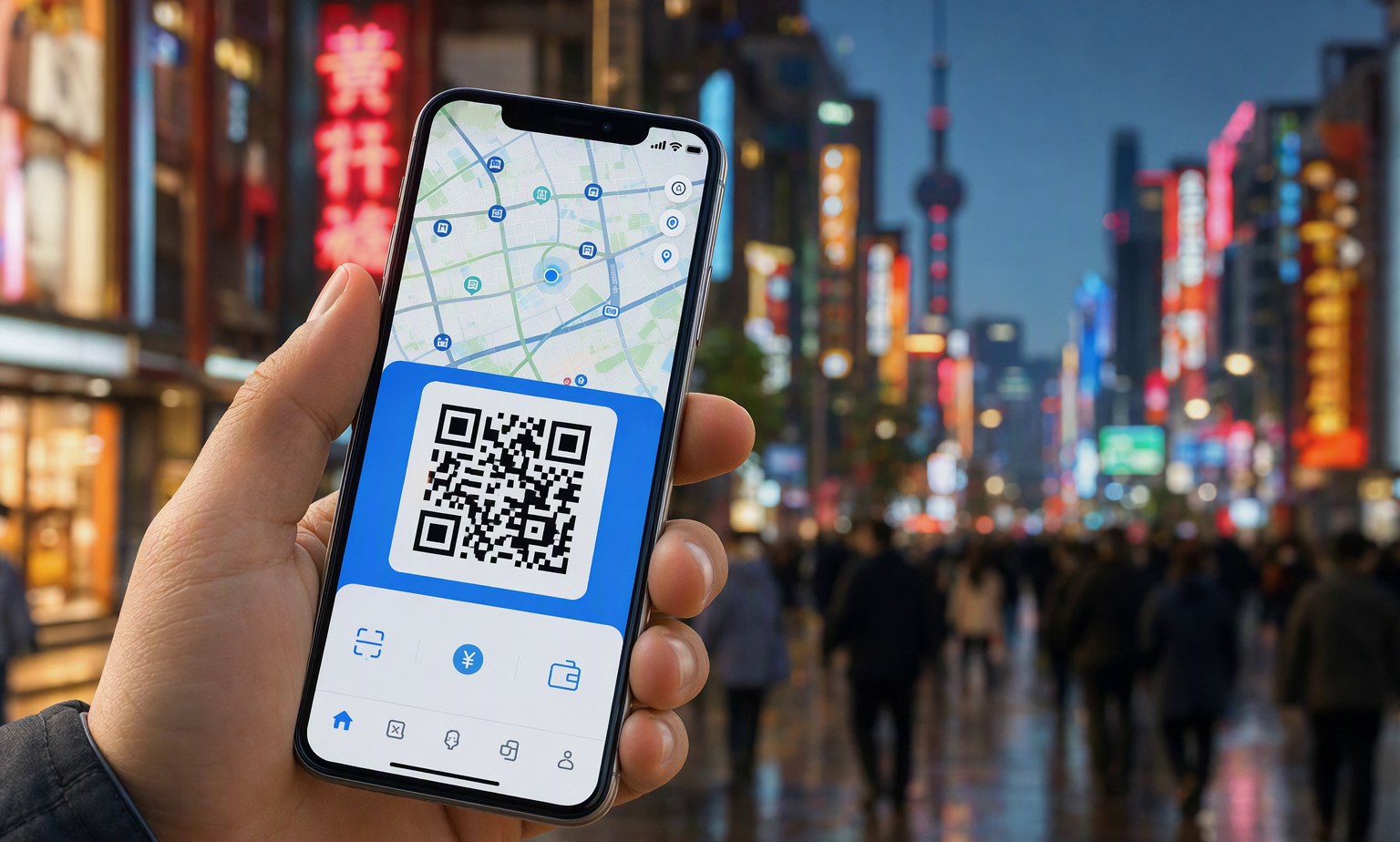
Paying for things in China as a foreign visitor is the single biggest practical hurdle you will face, and it is worth sorting before you fly rather than on your first afternoon. Almost everyone, from a noodle stall to a department store, expects a QR code scan rather than a card or notes. This guide explains how the two dominant apps work for foreign cards, what still needs cash, and how to check the details that change, such as fees and card support, on the operators’ own pages.
Why payment is the main friction point
China is close to cashless in daily life. Mobile QR payment is the default in shops, markets, taxis, metro ticket machines, chain restaurants and even temple donation boxes. Cash is still legal tender and will be accepted, but in practice it slows you down: staff may not keep enough change, and a foreigner visibly handling notes in a tourist area attracts unwanted attention from the rare opportunistic scam rather than genuine vendors.
Getting one working digital payment method removes most of the day-to-day difficulty of a China trip. It also unlocks things beyond paying: ride-hailing, bike hire, attraction bookings, restaurant menus and mini-programmes all sit inside the same two apps. If you are still at the planning stage, our first time in China checklist covers the other items to sort before you book.
Alipay for foreign visitors
Alipay is usually the easier of the two to set up. Download the app, register with your home mobile number, and add an international card. Card networks have been progressively widening foreign card support in both major wallets, but the exact list of accepted networks and card issuers changes, so check inside the app when you add the card rather than relying on a blog post. If your card is declined, the app will normally tell you at the point of adding it.
Once a card is linked, you scan a merchant’s QR code or show your own payment code to be scanned. Two things are worth verifying yourself before you rely on it: the transaction fee applied to foreign-card payments (this has changed more than once and is set by the operator, not by us), and any per-transaction or annual cap your own bank applies. Look for the fee schedule in the app’s help or payment settings, and check your card issuer’s terms for overseas and foreign-currency transactions.
WeChat Pay for foreign visitors
WeChat is the other wallet most visitors end up with, and it is worth having as a backup even if you prefer Alipay. Setup runs through the wallet section of your account, where you add a bank card in much the same way. The same caveats apply: confirm current foreign-card support and the fee in the app, and check your bank’s limits.
WeChat’s advantage is breadth. The same app handles messaging, restaurant ordering, mini-programmes for attractions and transport, and ride-hailing. If you plan to book rail travel yourself, it can also be a route into ticketing, though the official railway channel remains the reference point. Our guide to booking train tickets on 12306 explains the official process step by step.
Practical habits that prevent embarrassment
Set both apps up and test them before you leave home, ideally with a small purchase or a top-up, so you are not troubleshooting registration on airport Wi-Fi. Your payment QR code can usually be displayed without a live data connection, which helps in basements, on the metro and in rural areas, but the transaction itself needs connectivity to complete.
Keep one physical card for hotel deposits and incidentals, since some properties still prefer a card imprint or hold. For larger purchases, be aware that some cards cap a single transaction, so splitting a payment across two cards or two apps is normal and not a sign anything is wrong. If a merchant’s scanner rejects a foreign card, trying the other app is a reasonable first move before assuming your card is the problem.
Two smaller points: keep your phone charged, because a dead phone means no payment method at all, and carry a power bank. And if you are travelling with a group, decide in advance who pays and how you will settle up, since splitting a bill across several foreign cards at a till is slow and often fails.
Where cash still matters
Cash is needed far less than most first-timers expect, but it is not obsolete. Remote rural stalls, some temples and small religious sites, occasional small-town taxis and a few market vendors may prefer or only take notes. A modest float in small denominations is sensible as a backup rather than a primary method; the exact amount is a personal judgement, and we deliberately do not quote a figure because it depends on your route and how far off the standard tourist track you go.
Ask your bank for clean, recent notes where possible, since older or damaged notes can be refused. Tipping is not customary in most of mainland China, so do not carry cash on the assumption you will need it for service staff; our tipping and etiquette guide sets out where it is and is not expected.
Checking details that change
Payment rules in China move quickly: which foreign card networks are supported, what fee applies, and what limits exist are all set by the wallet operators and your own bank, and all have changed within the last few years. Treat any specific number you read online, including on this page, as a prompt to verify rather than a fact. The reliable sources are the in-app help and fee pages for Alipay and WeChat, your card issuer’s overseas transaction terms, and UnionPay’s own guidance if you hold a UnionPay card, which our UnionPay payment guide covers separately.
For a broader walkthrough of the two wallets side by side, see our China cashless travel guide.
Frequently asked questions
Can I use a foreign credit card directly in shops?
In some larger hotels, department stores and airports, yes, particularly Visa, Mastercard and UnionPay. Elsewhere, card terminals are often absent or not configured for foreign cards. Assume QR payment is the default and treat physical card acceptance as a bonus rather than a plan.
What fee applies to foreign-card QR payments?
A fee has applied historically, and the rate and who absorbs it have changed. Do not rely on a figure from any guide. Check the current fee schedule inside the Alipay or WeChat Pay help pages, and check your own card issuer for foreign transaction fees, which are separate.
Do I need both Alipay and WeChat Pay?
Not strictly, but having both is useful. If one app or one card fails at a till, the other is an immediate fallback. WeChat also carries functions beyond payment that many visitors find useful, such as mini-programmes for attractions and transport.
Will cash be refused?
Refusing renminbi cash is not generally permitted, but in practice some staff may struggle to give change or may ask you to pay by phone. Carry small notes to reduce friction, and treat cash as a backup rather than your main method.
What if my card is declined when adding it to the app?
Check that your bank has not blocked overseas or online transactions, confirm the card network is currently supported by the wallet, and try a second card. If it still fails, contact your card issuer first, as the block is usually on the bank’s side.
Set up one wallet properly, add a second as backup, carry a little cash for the edges of the map, and verify fees and card support yourself before you travel. That combination handles almost every payment situation a visitor encounters in China.