Posted on — Leave a comment

How to Plan a China Trip Itinerary: A Step-by-Step Framework for First-Timers

China rewards planning more than most destinations. The distances are continental, the transport options multiply fast, and the difference between a good first trip and an exhausting one is almost always route design — not which sights you chose.

Here is the framework we use with travellers, in order. Follow it top to bottom and you will end up with an itinerary that is realistic rather than aspirational.

Step 1: Fix the length of your trip, not the list of cities

Almost every overloaded China itinerary starts the same way: ten days, five cities, plus a water town and the mountains. The fix is to decide the number of days first and let that decide everything else.

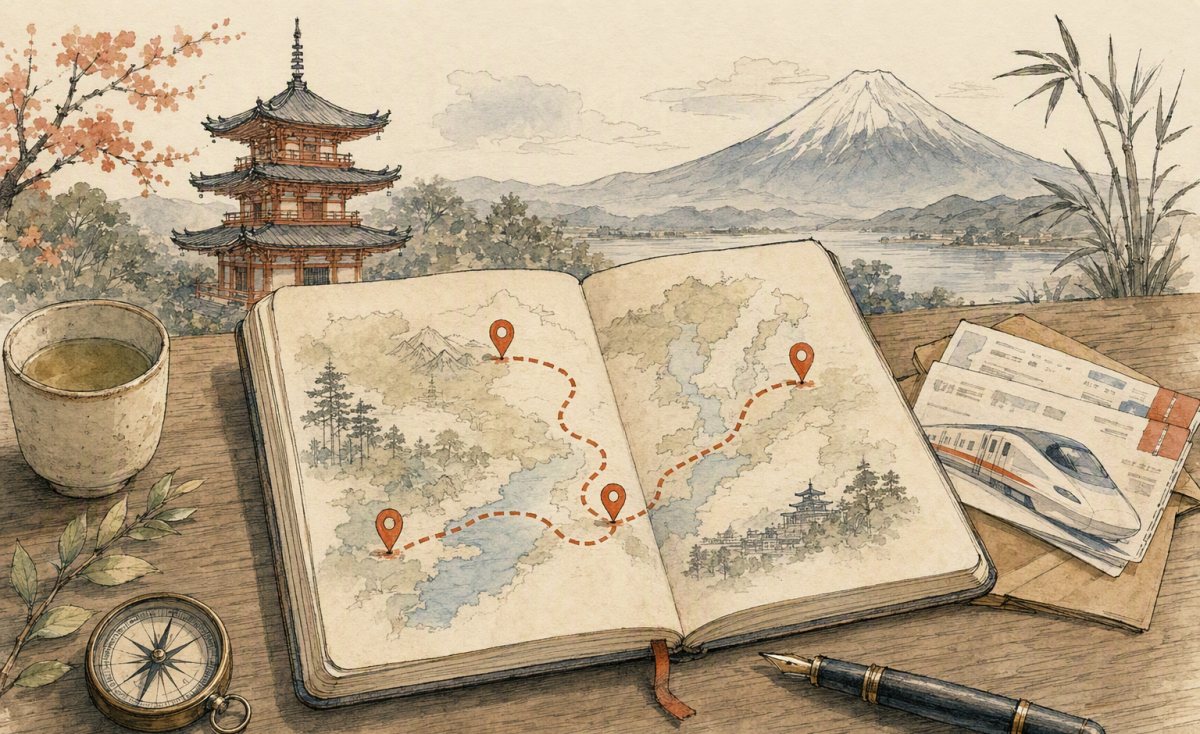
A useful default: two days per city minimum, plus a full day for every inter-city transfer. That is the same rule our map tool uses when it suggests a duration — five stops realistically needs ten days of ground time before you count arrival and departure.

If you have seven to ten days, pick one region. If you have two weeks, one region plus a second anchor city. Three weeks or more is where the classic Beijing–Xi’an–Chengdu–Shanghai arc becomes comfortable.

Step 2: Choose the season, then choose the region that suits it

China’s scale means the calendar question is really a geography question:

  • Spring (Apr–May): the safest all-rounder. Flower country in the southwest, mild in the north, comfortable on the Yangtze.
  • Summer (Jun–Aug): hot and humid across the east and centre. Go high or north — plateau towns, mountain parks, Harbin, Inner Mongolia.
  • Autumn (Sep–Oct): the best season for most of the country, and the peak for Zhangjiajie, Jiuzhaigou and the Silk Road.
  • Winter (Dec–Feb): cold and grey in the north (unless you want ice festivals), mild and quiet in the south, cheapest for sightseeing almost everywhere.

Two calendar traps: avoid the National Day week in early October and the Spring Festival week (Jan/Feb, varies). Domestic travel crowds peak and hotel prices jump.

Step 3: Cluster stops by region, not by fame

The mistake is building a list of famous cities and then discovering the gaps. Instead, work in clusters that share a transport spine:

  • Classic north: Beijing, Pingyao, Datong, Xi’an — history-heavy, rail-connected, good for first-timers.
  • Yangtze & east: Shanghai, Suzhou, Hangzhou, Huangshan, Nanjing — easiest logistics, excellent high-speed rail.
  • Southwest: Chengdu, Dujiangyan, Leshan, Jiuzhaigou, then Kunming–Dali–Lijiang — food, pandas, mountains and minority towns.
  • Silk Road: Xi’an, Lanzhou, Zhangye, Jiayuguan, Dunhuang, Turpan — long drives, enormous payoff, best in autumn.
  • Guangdong & region: Guangzhou, Chaozhou, Shenzhen, Hong Kong, Macau — food and city energy, easy borders.

Within a cluster, distances collapse to two or three hours by rail or car, which is what makes the trip feel calm.

Step 4: Budget travel time honestly

This is the step most self-planned itineraries get wrong, and it is where an interactive map earns its keep. Plot your candidate stops and read the kilometres between each pair: two cities that look adjacent on a country map can be 400 km and four hours apart, and a mountain detour that adds 120 km might add five hours of switchbacks.

Rules of thumb that keep routes humane:

  • Under 200 km between stops: easy half-day transfer.
  • 200–400 km: a proper travel morning; plan something at the other end for the afternoon.
  • Over 400 km: fly or take high-speed rail, or accept that the day is a travel day.
  • Any mountain or plateau road: add 30–50% to the naive drive-time estimate.

Use the interactive China map planner to drop your stops, drag them into order, and read the distance labels on each segment — then let it draft the day-by-day version.

Step 5: Decide how you will actually move

Three options, and the right answer depends on your route:

  • High-speed rail for city-to-city on the main corridors — fast, comfortable, station-to-city-centre.
  • Charter car with driver-guide for mountain regions, photo stops, rural towns and any route with more than two stops in a day. It converts travel time into sightseeing time and removes the language friction of buying tickets.
  • Domestic flights for genuinely long hops (Shanghai to Lhasa, Chengdu to Kashgar) where rail eats a day.

Most strong first itineraries mix them: rail on the east, a car in the mountains, a flight to save a day.

Step 6: Build in slack, then protect it

Add one unscheduled half-day for every three days of sightseeing. It absorbs the late train, the museum closure you did not check, the market you did not want to leave. Slack is also where the best first-trip memories come from.

Step 7: Sort the boring layer early

The things that feel administrative decide how the trip feels: connectivity (install a data plan before you fly — see our travel eSIM page), payments (set up a QR wallet and carry some cash), entry rules for your nationality (check official government sources close to booking), and one or two key reservations that sell out — high-speed train seats on festival weekends, mountain park entry, popular restaurants.

A worked example: ten days, first trip, autumn

Beijing three days (Wall, palace, hutongs) → rail to Xi’an two days (Terracotta Army, city wall, Muslim quarter) → fly to Chengdu two days (pandas, teahouses, hotpot) → car to Leshan and back, or on to the Jiuzhaigou loop if you can spare two more days → Shanghai two days (Bund, old town, food) → fly out of Hong Kong with a night there on the way home. That is five anchors in ten days with realistic transfers — the tightest version of this trip that still breathes.

Frequently asked questions

How many cities is too many for ten days?

Four is comfortable, five is the maximum we would recommend, six means you are checking in rather than visiting.

Do I need a guide for a first trip?

Not for the big cities, where signage and rail are straightforward. A driver-guide earns its cost in rural, mountain and photography-heavy stretches.

Should I book everything in advance?

Book the transfers and the two or three things that sell out; leave the rest flexible so you can stay longer where you like it.

Is it worth hiring someone to plan it?

If the route involves mountains, more than four stops, or travellers with limited patience for logistics — yes. Our designers turn a plotted route into a day-by-day plan with pricing from $200.

Three skeletons you can adapt

Seven days: one region, done properly

Shanghai two days → high-speed rail to Hangzhou two days → Suzhou one day → back to Shanghai for two days of depth (museums, old water lanes, a day trip to Zhujiajiao). Total travel between stops: under 300 km. This is the version that leaves you relaxed rather than relocated.

Ten days: the classic first arc

Beijing three → Xi’an two (rail) → Chengdu three (flight) → day trip to Leshan or Dujiangyan by car → Shanghai two (flight) and fly out of Hong Kong or Seoul. Five anchors, three transfers, one long weekend feel at each stop.

Fourteen days: north plus southwest

Beijing three → Datong one (Yungang Grottoes, by rail) → Pingyao one → Xi’an two → Chengdu two → Jiuzhaigou loop two by car → Hong Kong one. Note that the mountain loop is where a driver earns their fee: three stops in two days by public transport is not a holiday.

Pacing rules that hold up

  • One “big thing” per day. A palace, a wall section, a mountain. Everything else is a walk, a meal or a market.
  • No two long transfers back to back. If Tuesday is a four-hour drive, Wednesday stays put.
  • Cluster by opening days. Several major museums and palaces close one weekday; check before you sequence a city.
  • Book the last afternoon of each stay as empty. It absorbs delays and becomes the best hour of the trip.

Where most itineraries actually fail

Not on sights — on logistics. The three recurring failures are: a mountain park that needs a full extra day, a festival weekend that triples hotel prices, and a “quick” border crossing that eats half a day in queues. Each is invisible in a notes-app list and obvious on a map with distance labels. That is the whole argument for planning visually before you book anything.

How long to spend — at a glance

Trip length What fits
5–7 days One region or the Golden Triangle condensed
10 days Beijing + Xi’an + Shanghai (classic first route)
2 weeks Add Guilin/Yangshuo or a scenic region like Yunnan
3 weeks+ Deep multi-region or Silk Road / Tibet routes

FAQ

How many days do I need for a first China trip?

Seven to ten days is the sweet spot for the classic Beijing–Xi’an–Shanghai route; add days for scenic regions.

What should I book before arriving in China?

Mobility and access first: a China eSIM, mobile payment set-up, and timed tickets for the Forbidden City and Terracotta Army.

Is it easier to plan myself or use a designer?

Self-planning works with a good framework; a custom trip designer saves time on trains, drivers and hard-to-book tickets.

What is the best route for first-timers?

The Golden Triangle — Beijing, Xi’an and Shanghai — linked by high-speed rail. See the 10-day Golden Triangle itinerary.
Posted on — Leave a comment

China eSIM for Tourists: The Complete 2026 Guide to Staying Connected

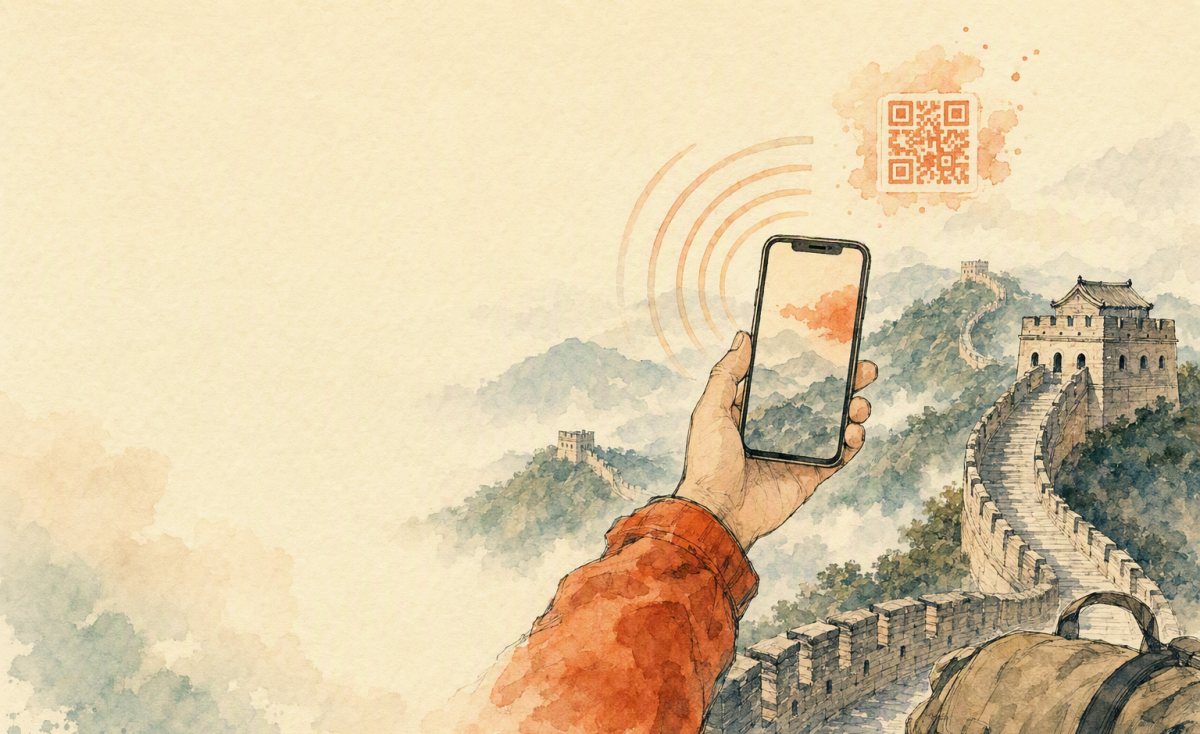
Nothing derails a first China trip faster than a phone that cannot load a map. You step off the plane in Shanghai, try to open your route, and stare at a spinning wheel. A China eSIM fixes that before you leave home: you install a data plan on the plane, scan a QR code, and the moment you land your phone has 4G/5G, working maps, translation and ride-hailing.

This guide covers what an eSIM actually is, whether your phone supports one, how China’s registration rules affect you, how much data a real trip burns, and the setup steps that take about three minutes.

What an eSIM is (and what it is not)

An eSIM is an embedded SIM — a programmable chip already soldered inside your phone. Instead of swapping a plastic card, you scan a QR code and the carrier profile downloads onto the device. For travellers this matters for three reasons:

  • You arrive connected. No queue at an airport kiosk, no passport control detour to a shop, no searching for a store with English signage.
  • Your home number stays active. A data eSIM runs alongside your physical SIM, so you still receive bank OTPs and calls from home.
  • Nothing to lose. There is no tiny card to eject with a paperclip on day three.

The catch worth understanding up front: most travel eSIMs sold for China are data-only. You get internet, and you make calls through WeChat, WhatsApp or FaceTime Audio rather than the cellular voice network. For a holiday that is usually exactly what you want — but if you plan to phone hotels and drivers directly on a local voice number, read the physical-SIM section below.

Does my phone support eSIM?

Generally yes if it is a flagship from the last five years:

  • iPhone: XS, XR and every model after (iPhone 11–17 series). Models sold in the United States from iPhone 14 onward are eSIM-only, which is fine.
  • Samsung: Galaxy S20 and newer flagships, Note 10/20, Z Fold/Flip lines.
  • Google Pixel: Pixel 3 and newer (some US Pixel 6/7 variants are eSIM-only).
  • Others: recent Huawei, Oppo, Vivo, Xiaomi and Motorola flagships.

Two checks before you buy. First, the phone must be carrier-unlocked — a handset still tied to an instalment plan in your home country may reject foreign profiles. Second, confirm eSIM support in Settings: on iPhone it is Settings → Cellular → Add eSIM; on Android, Settings → Network → SIM cards → Add mobile plan. If those options exist, you are good.

Older or budget phones, and any device you do not want to touch, are better served by a physical SIM or a pocket Wi-Fi unit instead.

Real-name registration: the rule that surprises people

China requires real-identity registration for SIM cards issued domestically. Buying a physical SIM as a visitor means presenting your passport, in person, at a carrier store — China Unicom, China Mobile or China Telecom — and completing a registration form. Airports have these counters, but expect 20–40 minutes in line after a long flight, and note that not every branch handles foreign passports smoothly.

Prepaid travel eSIM data plans sold online work differently: the plan is provisioned for tourist data use and delivered as a QR code before you travel, so there is no store visit and no paperwork. That convenience is the single biggest reason travellers now choose eSIM over a local card.

One honest caveat: because these profiles route through partner networks, a small percentage of apps that depend on a domestic phone number (some local sign-up flows, certain food-delivery or bike-share registrations) behave better with a real Chinese number. If those apps are central to your trip, a physical SIM — or a short WeChat-only setup — may complement your eSIM.

Coverage, speed and what “5G” means here

Tourist eSIMs for mainland China typically ride on the China Unicom network, which has the most traveller-friendly roaming agreements and strong 4G/5G presence in cities. Practical expectations:

  • Megacities (Beijing, Shanghai, Shenzhen, Guangzhou, Chengdu, Hangzhou, Xi’an): excellent 5G and 4G; video calls and map streaming are no problem.
  • High-speed rail corridors: good coverage with brief drops in tunnels — download offline maps before long journeys.
  • Mountain and plateau regions (Zhangjiajie peaks, Jiuzhaigou, Yunnan stone forest, Tibet, Gannan): signal thins out; plan for pockets of 3G/4G or nothing. This is where offline maps earn their keep.
  • Inside large malls, museums and the subway: coverage is usually strong; buildings with deep basements can throttle speeds.

Speeds on a 5G plan in a Chinese city are often faster than what most visitors have at home. The variable is not the network but the app: services that are restricted in China will not load regardless of signal strength, so plan your app stack before you fly (see our companion article on what works in China).

How much data you actually need

Rule of thumb for a phone that is your map, translator and camera-roll upload device:

  • Light (0.5 GB/day): maps, WeChat messages, occasional photos. Fine for a city stopover.
  • Standard (1–2 GB/day): navigation all day, translation, some short video, social posting. The comfortable default.
  • Heavy (3 GB/day+): video calls home, uploading travel clips, hotspotting a laptop. Choose a daily-allowance plan so a heavy day does not punish you later.

Fixed-total plans (for example 5 GB over 5 days) are cheaper per gigabyte if you are disciplined; daily-allowance plans (for example 3 GB per day for 12 days) cost more but never leave you offline on day seven. As a sense of scale, published tourist options currently run from under a dollar for a single 500 MB day to roughly $95 for 3 GB a day across a month.

Setup, step by step

  1. Buy before departure. Choose a plan matched to your arrival date and trip length. You should receive a QR code by email within minutes.
  2. Install while on Wi-Fi. Settings → Cellular → Add eSIM → scan the QR. Label the line “China Data” so you can find it later.
  3. Set the right defaults. Keep your home SIM as the line for calls and SMS; set Cellular Data to the China line; turn Data Roaming ON for that line — this is required for a travel eSIM to work.
  4. Do not activate early by accident. Most plans start counting days on first connection to a supported network. Install now, use on landing.
  5. On arrival: switch off “Airline mode”, give it 30 seconds, and check for the carrier name in the status bar.

Troubleshooting the four common failures

  • No signal after landing: toggle Airplane mode for 10 seconds; confirm Data Roaming is on for the eSIM line; restart once.
  • Bars but no internet: the plan may not be active yet, or the APN needs the provider’s value — set it under Cellular Data Options.
  • Hotspot does not work: some travel plans limit tethering; check the plan terms if you need to share to a laptop.
  • Accidentally deleted the profile: QR codes are usually single-use. Keep the email, and contact the seller — re-issue is normally quick.

Is an eSIM worth it for a China trip?

For the overwhelming majority of visitors: yes. The cost is a fraction of one museum ticket, the setup takes three minutes on your sofa, and it removes the single most common arrival-day failure. Buy it at the same time you book your transfer, not after you land.

You can compare current mainland-and-region data plans and check which allowance fits your dates on our travel eSIM page, then plot your route with the interactive China map planner so your itinerary and your connectivity are sorted in one sitting.

Frequently asked questions

Do I need a Chinese phone number for a tourist eSIM?

No. Data-only plans give you internet without a local number; you communicate through apps.

Will my hotel Wi-Fi be enough instead?

Hotel Wi-Fi is widely available but rarely reliable on the move — and you need data for maps, translation and ride-hailing between stops, not just at the desk.

Can I install an eSIM in two countries for one trip?

Yes. Phones typically store several profiles; a Greater China plan covering the mainland, Hong Kong and Macau saves you installing three.

Does an eSIM drain the battery?

Not meaningfully. Battery use comes from screen-on mapping, not from the eSIM itself.

eSIM vs the alternatives

Option Cost Setup Best for
China eSIM Low–mid Install before you fly, activates on landing Most travellers with an unlocked phone
Physical SIM Low Passport line at a store on arrival Long stays, local number needed
Pocket WiFi Mid Collect/return a device Groups sharing one device
Roaming High None Short trips, convenience only

FAQ

Will my phone work with a China eSIM?

If it is unlocked and eSIM-compatible (most iPhones from XS, recent Pixels, Samsung flagships), yes. Check your model before you fly.

Do I need a Chinese phone number?

No for data and maps. A local number helps for some registrations, but you can travel entirely on an eSIM data plan.

When should I install the eSIM?

Before you fly, on stable WiFi, so data works the moment you land.

Is a China eSIM cheaper than roaming?

Usually far cheaper for the same data, especially on multi-day trips.

Posted on — 1 Comment

Shenzhen Day Trips: Hong Kong, Guangzhou & the Bay Area

Shenzhen’s superpower is position: Hong Kong next door, Guangzhou 30 minutes west, Macau and Zhuhai a bridge away, and some of Guangdong’s best coastline east. Here are the day trips that actually work.

Hong Kong (15 minutes)

The West Kowloon HSR link makes HK a lunch trip: morning Peak tram, dim sum in Central, Star Ferry crossing, back for dinner in Shenzhen. Border alternatives: Futian and Luohu checkpoints for late returns.

Guangzhou (30 minutes)

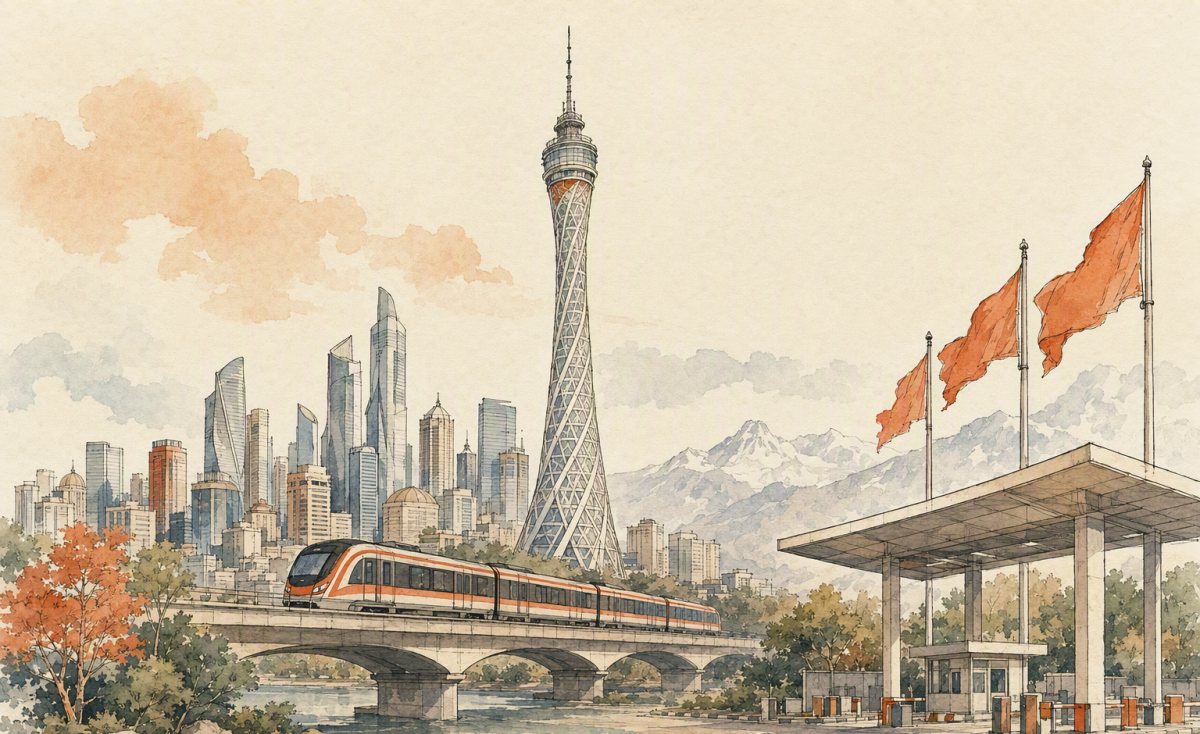
Morning tea at a grand teahouse, Chen Clan Ancestral Hall’s roof sculpture, Shamian Island’s colonial riverfront, Canton Tower after dark. Return on any of the 100+ daily trains.

Zhuhai & Macau (via the HZM Bridge)

A private car across the 55km Hong Kong–Zhuhai–Macau Bridge is the spectacular way; direct coaches also run. Macau’s old town for egg tarts and the Ruins of St Paul’s, Zhuhai’s Lovers Road for the sunset leg home.

Dongguan & Humen (30 minutes)

The Opium War’s forts and museum at Humen — the history behind Hong Kong’s story — plus outlet shopping in China’s manufacturing heartland.

East Coast Beach Day

Judiaosha and Xichong beaches sit inside Dapeng Peninsula’s parkland an hour east; Xichong faces the surf, Judiaosha the calm. Combine with the ancient Dapeng Fortress.

Wutong Mountain

The city’s own 943m peak — a half-day forest hike with a Shenzhen-to-Hong Kong panorama from the top on clear days.

Plan the Loops

These trips combine into the classic 7-day Greater Bay Area route. Cross-border driving is where a private English-speaking driver earns their fee, and the AI trip planner prices any combination instantly.

Keep reading

Posted on — Leave a comment

Suzhou Travel Guide 2026: Gardens, Silk & Water Towns

“Up above there is heaven; down below, Suzhou and Hangzhou.” For 1,000 years China’s aristocrats built retirement gardens here — and nine of them are now UNESCO-listed.

The Gardens: Which Ones?

  • Humble Administrator’s Garden: the biggest and most famous — lakes, bridges, borrowed scenery. Go at 7:30 opening.
  • Lingering Garden: the most architectural — famous for its corridor windows framing perfect views.
  • Master of the Nets: the smallest and most ingenious; the night garden performances (spring–autumn) are magic.
  • Lion Grove: the rockery labyrinth that delights children and puzzled Marco Polo’s successors.

Old Suzhou

Pingjiang Road: the canal lane on everyone’s camera — go early or late. Shantang Street: seven-li canal stretch, lantern-lit night cruises. Tiger Hill: the leaning pagoda where the first Suzhou garden was laid 2,500 years ago.

Silk & Museums

The Suzhou Museum (I.M. Pei’s modern-classical masterpiece) is worth the trip alone; the Silk Museum shows the whole caterpillar-to-kimono pipeline, and the No.1 Silk Factory runs live demonstrations.

Water Towns

Within an hour: Tongli (gardens plus canals), Zhouzhuang (the postcard, crowds included), Luzhi (the quiet one).

Practical

25 minutes by HSR from Shanghai — an easy day trip, better overnight. April’s blossoms and October’s gingko are peak; avoid Golden Week at all costs.

Plan It

Slot Suzhou into Shanghai–Hangzhou–Huangshan Jiangnan loops with the AI trip planner; book private car charter for the gardens-to-water-town day.

Keep reading

Posted on — Leave a comment

Hefei Travel Guide: Lakes, Science City & Anhui Gateway

Hefei is the quiet overachiever of Chinese cities — a “comprehensive national science centre” that also sits on one of China’s five great freshwater lakes, with an 2,000-year-old water town 40 minutes away. It is the perfect hinge between Huangshan’s mountains and Nanjing’s history.

What to Do

  • Chao Lake: China’s fifth-largest freshwater lake — lakeside boardwalks, Mu Shan island’s temple, and lake-fish banquets (the “big four fish” of Chao).
  • Sanhe Ancient Town: 2,500-year-old water town of stone bridges and Ming-Qing guild halls — genuinely ancient and far quieter than Suzhou’s satellites.
  • Science Island (Science & Technology Museum): the “artificial sun” fusion campus’s public face; the city’s quantum-computing fame explains the research-town buzz.
  • Lord Bao Memorial & Xiaoyaojin Park: the incorruptible Song judge’s shrine plus a classical garden on an ancient battlefield.
  • Emerald Lake & university district: tree-lined campuses and café culture.

Eat Anhui (Hui Cuisine)

Stinky mandarin fish (far tastier than it sounds), Li Hongzhang hotchpotch (the great man’s alleged invention), and Sanhe rice-pudding shrimp.

Why Hefei, Strategically

HSR puts Huangshan 1.5h south, Nanjing 1h east, Shanghai 2h east. The city is the rational base or waypoint for an Anhui loop: Huangshan – Hongcun – Hefei – Nanjing.

When

April–May and September–November; the lake is atmospheric in morning mist year-round.

Plan It

Ask the AI trip planner for an Anhui-loop itinerary with real prices; private car charter links lake, water town and mountains comfortably.

Keep reading

Posted on — 1 Comment

Greater Bay Area Itinerary: Shenzhen–Hong Kong–Macau–Zhuhai in 7 Days

Five world-cities, three borders, two currency zones — and the world’s longest sea bridge linking them. The Greater Bay Area loop is China’s most efficient multi-city trip.

Day 1–2: Shenzhen

Ping An tower, OCT-LOFT art district, Dafen painting village, Dameisha beach, Dongmen street food. Base in Futian or Nanshan.

Day 3–4: Hong Kong

15-minute HSR from Shenzhen North/Futian. The Peak, Star Ferry, dim sum, Dragon’s Back hike, Temple Street nights. Octopus card on arrival.

Day 5: Macau

One-hour ferry from Hong Kong (or the HZM Bridge with a private car). UNESCO old town, Ruins of St Paul’s, Taipa food street, one Cotai show. Egg tarts on Coloane.

Day 6: Zhuhai

Walk or drive across the HZM Bridge’s 40 minutes to Zhuhai. Lovers Road coastal ride, Fisher Girl statue, Chimelong Ocean Kingdom if travelling with kids.

Day 7: Guangzhou (or home)

30-minute intercity to Guangzhou for morning tea, Canton Tower and Shamian Island before your flight home from Baiyun or Shenzhen Bao’an.

Border & Money Tips

  • Two visas/mainland entry points needed: HK and Macau are separate immigration from the mainland — plan entries accordingly.
  • Hong Kong dollars in HK/Macau; RMB on the mainland; Alipay/WeChat Pay work across all five cities now.
  • Best weather: October–December. Typhoon season is July–September.

Make It Effortless

Cross-border logistics are the one headache of this loop — solved by private car charter with English-speaking drivers. The AI trip planner prices the full 7-day Bay Area route, hotels and transfers included.

Keep reading

Posted on — Leave a comment

Guilin to Yangshuo: Li River Cruise Complete Guide

The 83-kilometre Li River between Guilin and Yangshuo is the most photographed waterway on earth. Getting the most out of it comes down to choosing the right boat and the right hours.

Option 1: The Full Cruise (4–4.5h)

Depart Zhujiang Wharf around 9–9:30am; arrive Yangshou by early afternoon. You’ll pass all the signature sights — Nine Horses Fresco Hill, Yellow Cloth Shoal (the ¥20-note view at Xingping) — with lunch on board. Best for comfort and coverage. Downside: midday light is flat for photos.

Option 2: The Bamboo Raft (1.5h)

Raft the Yangdi–Xingping core section — the highest-density scenery of the full cruise. Four-seater motorised bamboo rafts leave on demand; combine with time in Xingping old town. This is the photographer’s and time-poor traveller’s choice.

The Real Photo Spots

  • Xianggong Mountain: above Xingping — 20 minutes up, sunrise above the river’s great bend. Go before 7am.
  • Xingping old town: Ming streets minus Yangshuo’s crowds; the river bank here is the ¥20-note view.
  • Yulong River: pole-propelled rafts through the gentle karst countryside south of Yangshuo.

Practical

Book cruises a day ahead in high season; rafts run 8am–5pm weather permitting. December–February is low, quiet, and occasionally misty-beautiful. Bring a wide-angle and a telephoto — mist layers between peaks are made for compression.

Extend It

Pair the river with Longji terraces and a Yangshuo cycling day. The AI trip planner prices the full Guilin module; private drivers handle Xianggong’s dawn run.

Keep reading

Posted on — Leave a comment

Changsha Travel Guide: Food, Nightlife & Orange Isle

Changsha is China’s most underrated food city — the birthplace of stinky tofu, the home of Hunan chilli, and possessor of a river-island skyline show that costs nothing.

Eat Changsha

  • Stinky tofu (chou doufu): black-skinned, crisp, doused in chilli — the original at Huogongdian in the old fire-palace building.
  • Changsha crayfish: the summer obsession; whole streets turn red after dark.
  • Rice-noodle breakfasts: soup or dry-fried, with shredded pork and pickles, at corner shops from 6am.
  • Chayan Yuese & Wenheyou: the milk-tea and retro-street brands that went nationwide — both better at the source.

See Changsha

  • Orange Isle (Juzizhou): the 5km river island with the young-Mao statue and weekend firework shows over the river (check schedules).
  • Yuelu Mountain & Academy: thousand-year-old university in a forest; autumn gingko and maple on the summit paths.
  • Hunan Provincial Museum: the 2,100-year-old Mawangdui mummies and silk — one of China’s great museums, free.
  • Taiping Old Street & IFS: Qing-era lane street food colliding with the Kaws-topped luxury mall.
  • Wuyi Square nights: the neon heart of the city’s famously late nightlife.

Practical

Spring and autumn are mildest; summers are famously fiery (the chilli matches). HSR links Changsha to Zhangjiajie (3h), Guangzhou (2.5h) and Wuhan (1.5h) — the city is the natural hub for a Hunan loop.

Plan It

Combine Changsha with Zhangjiajie and Fenghuang on the classic Hunan route. The AI trip planner prices it; private car charter covers the mountain and museum circuit.

Keep reading

Posted on — Leave a comment

Harbin Travel Guide 2026: Ice Festival & Russian Heritage

Every January, Harbin builds a city of ice the size of a theme park, lights it from inside, and invites the world. The rest of the year, Russia’s easternmost-looking Chinese city still charms with onion domes and bread ovens.

Ice & Snow World (冰雪大世界)

The headline event: hundreds of full-scale buildings carved from ice blocks pulled from the Songhua River, illuminated LED-bright from dusk. Opens around late December, peaks through Chinese New Year, melts by late February. Go at 3:30pm — daylight for the slides, then darkness for the glow. The giant ice slides are the joy of it: queue early, ride repeatedly.

More Winter

  • Sun Island snow-sculpture expo: the elegant counterpart to the neon — football-field-sized carvings in white.
  • Songhua River: walk on it, skate on it, ride the ice-sleds.
  • Siberian Tiger Park: safari-bus through the enclosure of the world’s largest cats.
  • Yabuli ski resort: 2.5h away for proper slopes.

The Russian City

St Sophia Cathedral‘s green domes and pigeon clouds; Central Avenue‘s cobblestones lined with Baroque storefronts — eat Madier ice cream outdoors at -20°C like a local; the Old Market (Laodaowai) Chinese-Baroque blocks; Russian restaurants with borscht, red sausage and kvass.

Cold-Weather Kit

-20°C demands: layered down, thermal base, hat/gloves/scarf, warm boots with grip, phone-battery insulation (powerbanks die fast in the cold), and hand-warmers for the ice slides’ queues.

When

Ice season: late December–February. Summer alternative: 22°C cool-city escape, Euro-flavoured beer gardens.

Plan It

Pair Harbin with a Beijing start on HSR (5h) or fly direct. The AI trip planner builds winter Harbin routes; private heated car charter with an English-speaking driver is gold at -20°C.

Keep reading

Posted on — Leave a comment

Tianjin Weekend Guide: A Colonial Port City Break

Half an hour by bullet train from Beijing, Tianjin is China’s most unexpected weekend: concession-era mansions, a river of bridges, crosstalk comedy in every teahouse, and a food scene with strong opinions about dumplings.

The Five Great Avenues (Wudadao)

Two thousand European-style villas from the 1920s-30s, when nine nations ran concessions here. Rent a bike or take a horse-carriage; the lanes are the museum. Old residences of warlords and writers now hold cafés and small museums.

Riverside & Skyline

The Hai River strings Tianjin together: the Tientsin Eye Ferris wheel built on a bridge, the audaciousAstro-clock of the Binhai Library (the “Eye of Babel” book-terraces — one of the planet’s most photographed interiors), and Italian Style Town’s arcaded piazzas at lantern-hour.

Eat & Laugh

  • Goubuli baozi: the 160-year-old soup-dumpling brand — tourists go to the flagship, locals to the branches.
  • Jianbing guozi: the breakfast crêpe Tianjin invented for the world.
  • Erduoyan fried cake and Mahua (twisted dough sticks) from the Ancient Culture Street.
  • Crosstalk (xiangsheng): book a teahouse night — even without Chinese, the rhythm of the comedy is a show.

The Binhai Add-On

The library, the aircraft-carrier theme park and the seaside wetlands make a modern-counterpoint day trip.

When

April–May and September–October. Winter brings freezing river winds but powder-blue skies.

Plan It

Tianjin slots perfectly into a Beijing trip as a two-day branch. The AI trip planner prices combined routes; private car charter covers the avenues-and-library circuit.

Keep reading