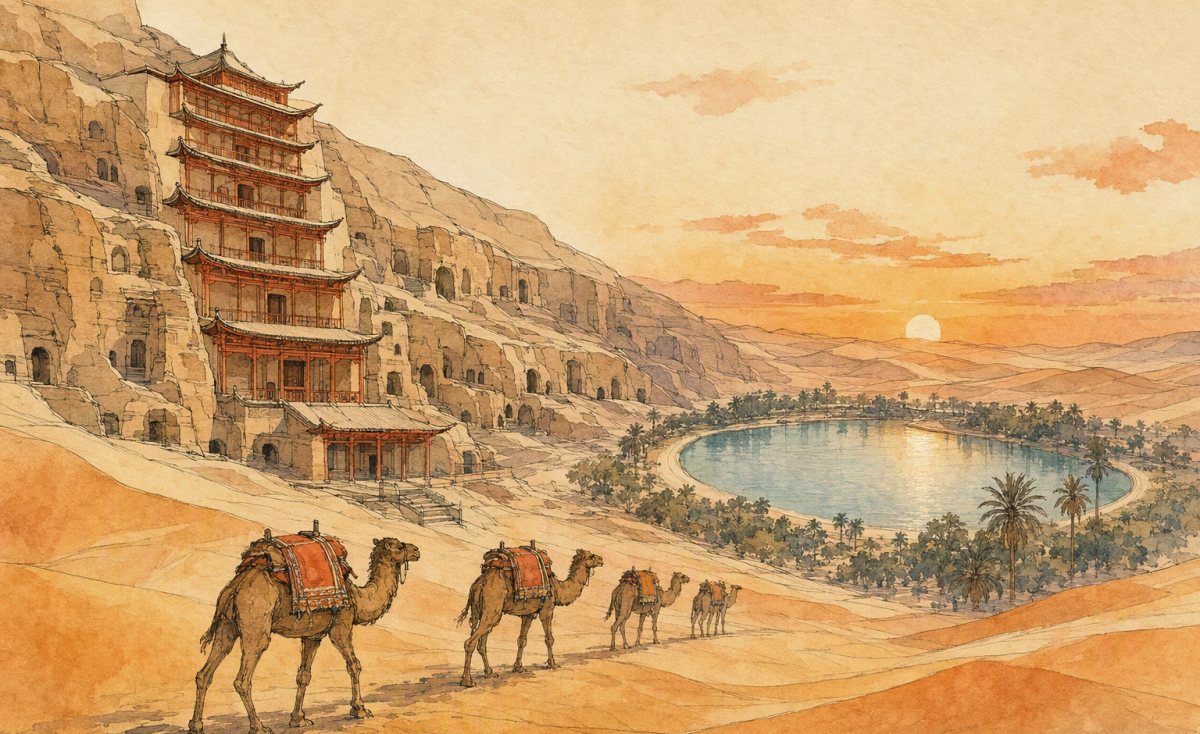
The Silk Road in China runs west from Xi’an through Gansu and Xinjiang to Kashgar, and it is one of the longest overland journeys you can make in the country. The thin version of this page listed the stops; this one explains how the route actually works, when to go, what a private tour changes, and which details you must confirm yourself before paying a deposit. Nothing here replaces an operator’s own confirmation of schedules, prices or permits.
The classic route and how long it takes
The standard westbound line is Xi’an, then Zhangye for the rainbow mountains, Jiayuguan for the western end of the Ming Great Wall, Dunhuang for the Mogao Grottoes and the singing dunes at Crescent Lake, then Turpan, Urumqi and finally Kashgar. Most operators run this as a 13 to 15 day itinerary, though the number of nights in each place varies a lot between packages.
The distances are the reason the trip is long. Cities on this corridor sit hundreds of kilometres apart, and a single transfer day can consume most of a day even with a private vehicle. Kereta cepat now covers part of the corridor, but not all of it, and the westernmost legs are typically flown or driven. Ask any operator to show you, sector by sector, whether you travel by rail, road or air, and how many hours each leg takes.
If you are still assembling the rest of your China trip, our 2-week China itinerary planner shows how a Silk Road block fits alongside the eastern cities.
What you actually see, and how to book the key sites
Mogao Grottoes near Dunhuang is the anchor of the route: a cliff complex of Buddhist cave art built over roughly a thousand years. Access is controlled, group sizes are limited, and the site uses timed entry. Book well ahead through the official Dunhuang Academy channels or your operator, and check the current reservation rules, ticket categories and any cave restrictions directly with them rather than relying on a blog. Photography rules inside the caves are strict and can change.
Other experiences that define the trip: a camel ride or walk out to Crescent Lake at dawn, before the heat and the crowds; the Sunday livestock market in Kashgar, which is a genuine working market rather than a staged attraction; and the food, from Uyghur kebabs and naan in Kashgar to hand-pulled noodles in Xi’an. For the eastern end of the route, our Xi’an city guide covers the Terracotta Army, the city wall and the metro, and the kuliner jalanan Xi’an covers what to eat in the Muslim Quarter.
Kapan waktu terbaik berkunjung?
May to June and September to October are the most comfortable windows along the corridor. July and August bring serious heat, particularly in Turpan, where the basin is one of the hottest places in China, and the desert sections are punishing at midday. Winter is cold, often well below freezing, but Mogao and the other major sites are far quieter and you may get caves and viewing platforms largely to yourself.
Two cautions. First, dust and wind in spring can reduce visibility at the dunes and the rainbow mountains. Second, public holidays and the summer school break affect domestic visitor numbers heavily; check the dates of national holidays for your travel year before fixing your itinerary. Our guide to travelling in China in October explains how the autumn window behaves in practice.
Private tour versus independent travel
A private tour on this route buys you three things: a vehicle and driver for the long inter-site legs where public transport is thin, an English-speaking guide, and administrative help. The administrative help matters most around Kashgar and the wider Xinjiang region, where permit requirements for foreign travellers apply and change from time to time. Confirm with your operator exactly which permits they obtain, for which areas, and how far in advance they need your passport details.
Independent travel is possible, particularly on the Xi’an to Dunhuang stretch, where rail connections are reasonable. It requires more planning: you book your own trains, arrange local drivers for sites outside town, and handle your own permits. If you go that way, our panduan perjalanan kereta api Tiongkok covers booking tickets with a foreign passport and using the rail apps.
Persiapan praktis sebelum memesan
Check your entry status first. Visa rules, including 240 jam arrangements, are set by the Chinese authorities and are updated periodically, so verify your own situation on an official government or embassy page rather than a third-party summary. Our overview of China visa rules explains which categories to look for.
Then sort the basics: a payment method that works in China, mobile data or an eSIM installed before you fly, and a realistic packing list for desert temperature swings, where the same day can be hot at noon and near freezing at night. Keep a printed copy of your passport details, permits and bookings. Mobile signal is good in cities but patchy between them, so do not rely on being able to download documents en route.
Pertanyaan yang Sering Diajukan
How much does a Silk Road tour in China cost?
Prices depend on trip length, hotel standard, whether transport is private or shared, and how many internal flights are included, so any figure quoted in a blog will be out of date. Ask operators for a written breakdown showing accommodation category, included meals, internal transport and site tickets, then compare like for like. Verify current ticket prices for Mogao and other major sites on the official site of the body that manages them.
Do I need a permit for Kashgar or Xinjiang?
Foreign travellers have at times needed additional permits for parts of Xinjiang, and requirements can change. Ask your operator in writing which permits they arrange, for which specific areas, and what happens if a permit is refused. Confirm the current position with the relevant Chinese authorities or your embassy before committing to non-refundable flights.
Can I do the route independently without a tour?
Yes, on much of it. The Xi’an to Dunhuang section is manageable by train plus local drivers, and Turpan and Urumqi are reachable independently. The far west requires more care with permits and transport. Build in buffer days, because a single missed connection on this corridor can cost you a site visit.
How far in advance should I book Mogao Grottoes?
As early as your dates allow, especially in the peak May to June and September to October windows. The site uses timed, limited entry. Check the official reservation channel for release dates, ticket categories and any cave-specific restrictions, and reconfirm shortly before you travel.
Is the food suitable for vegetarians?
It is workable but requires effort. The regional cuisine leans heavily on lamb and beef, and dishes are often cooked with meat stock or fat. Learn a few phrases, use translation apps, and ask at each restaurant. In larger cities you will find more choice than in small towns along the corridor.
Treat this page as a planning framework, not a booking confirmation. Fix your dates, verify permits and entry rules through official channels, get every inclusion in writing from your operator, and leave slack in the schedule for the distances involved. Done that way, the route from Xi’an to Kashgar rewards the effort more than almost any other journey in China.