Posted on — Leave a comment

Shanghai 4-Day Itinerary: Bund, French Quarter & Disneyland

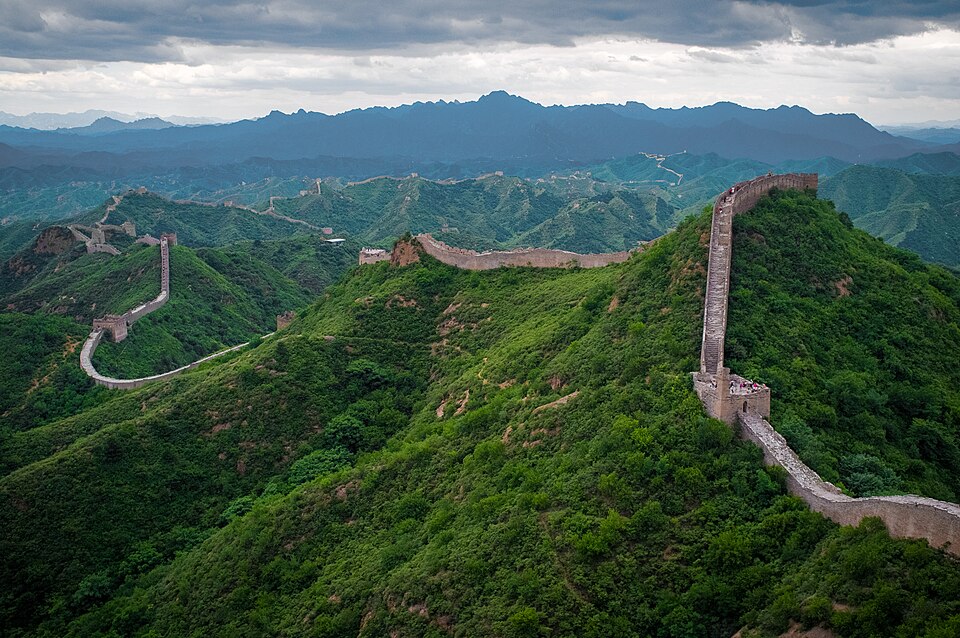
Four days is enough to see Shanghai properly rather than skim it: the colonial riverfront, the leafy former French Concession, the Pudong skyline and, if you want it, Disneyland or a canal town. The itinerary below keeps each day geographically tight so you spend time on foot rather than in transit. Two practical notes before you start: almost everything headline-level in Shanghai now expects an advance reservation, and the metro will handle nearly all of your movement. Both are covered below.

Before you go: reservations and practicalities

Shanghai’s major sights have moved to timed or advance booking, and this applies to foreign visitors as much as anyone. The Shanghai Museum, the Shanghai Tower observation deck, the Power Station of Art and Disneyland all use their own booking channels or mini-programs, and slots on weekends and public holidays go early. Rather than assume a walk-up ticket, check the official page for the site you want and look for the reservation or booking section, then confirm the current rule for foreign passports. Our guide to attraction reservations for foreigners explains which Shanghai venues actually require one.

Payments are the other thing to settle before arrival. Alipay and WeChat Pay both support foreign cards, but you should link and test your card while you still have reliable internet, not at a noodle counter. Cash is accepted in theory and awkward in practice. See the cashless travel guide for setup steps. For connectivity, an eSIM installed before you fly avoids the airport SIM queue entirely.

Day 1: The Bund and the old city

Start in the old city. Yu Garden’s Ming-era rockeries and pavilions are the anchor, and the surrounding bazaar is where you eat: soup dumplings and wontons are the local specialities, and the queues at the best-known stalls are part of the experience. Arrive early; the lanes are genuinely unpleasant by mid-morning on weekends.

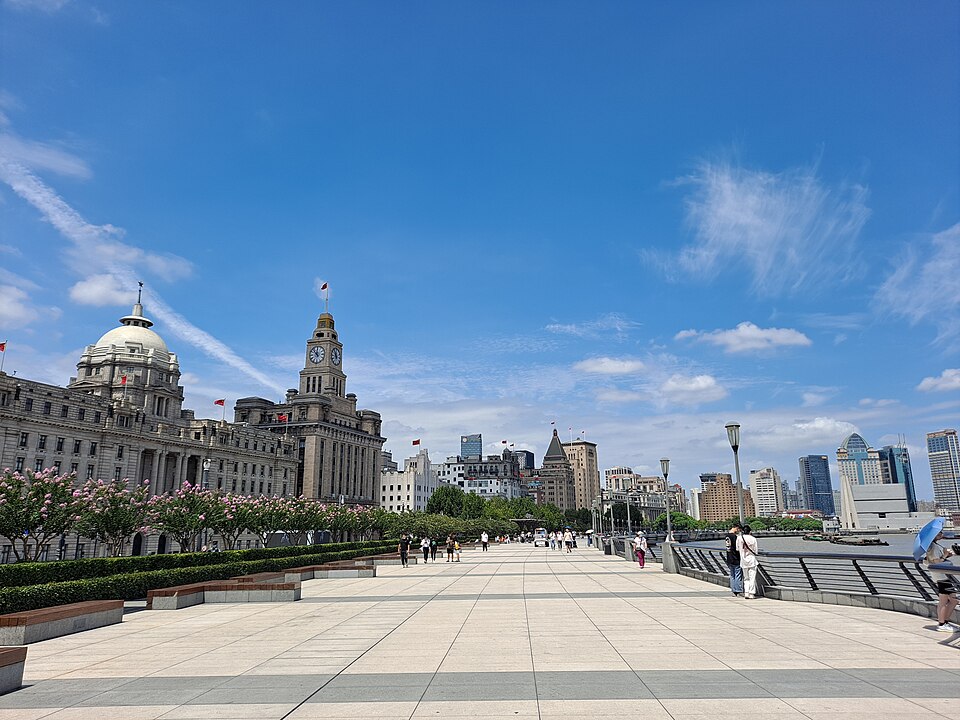
In the afternoon, walk the Bund promenade between the colonial bank buildings, then cross the river to Lujiazui. The Shanghai Tower observation deck gives the classic view back over the Huangpu, but check the official site for current opening hours and whether the day’s visibility justifies the ticket, since haze is common. In the evening, either take a Huangpu river cruise or find a rooftop bar on the Puxi side. Both are weather-dependent.

Day 2: The former French Concession

Give this district a full day and no fixed plan. The plane-tree streets around Wukang Road hold art-deco villas and apartment blocks; Tianzifang is a dense warren of lanes given over to small shops and studios; Fuxing Park fills with tai chi groups and card players in the morning. This is the part of Shanghai that rewards walking without a destination.

For lunch, look for a benbang (local Shanghainese) restaurant and order braised pork, drunken chicken and scallion-oil noodles. If you want a broader list of what to eat and where, our Shanghai street food guide covers the dishes worth seeking out. In the evening, live jazz in the historic hotel bars along the Bund makes a good close to the day; check the venue’s own schedule rather than relying on older listings.

Day 3: Museums and modern Shanghai

The Shanghai Museum holds genuinely first-rate collections of bronzes, ceramics and calligraphy, and admission has historically been free with advance booking. Confirm the current position and booking method on the museum’s official page before you go, as both have changed in recent years. Allow two to three hours.

In the afternoon, choose between the Power Station of Art, housed in a converted power plant on the Huangpu, and the West Bund gallery cluster a short ride south. Both mount rotating contemporary exhibitions, so check what is actually on rather than assuming a permanent collection. In the evening, Xintiandi’s restored shikumen lanes are convenient for dinner, or book an acrobatics show if you want something more theatrical.

Day 4: Disneyland or a water town

This day splits by interest. Families should go to Shanghai Disneyland, which has its own metro stop and its own booking system; buy dated tickets through the official channel and check the park calendar for opening hours, which vary substantially by season and day of week. The Tron coaster and the Pirates of the Caribbean ride are the versions worth prioritising.

Everyone else should take the half-day trip to Zhujiajiao, a canal town of stone bridges and boat rides within reach of central Shanghai. Getting there by metro and local bus is cheap but slow; a car charter or taxi is faster and easier to time. If you would rather go further, Hangzhou and Suzhou are both straightforward rail day trips, and the train travel guide covers booking, seat classes and station procedures.

Getting around and where to stay

The metro covers essentially everything on this itinerary, is signed in English, and is the fastest option at most hours. You can pay per journey with a QR code in Alipay or WeChat, or buy a stored-value card; the metro guide walks through both. Taxis and ride-hailing are inexpensive by European standards, but have your destination written in Chinese, since drivers rarely speak English.

For accommodation, People’s Square and the Bund put you within walking or one-stop metro distance of Days 1 and 2. Book a hotel that explicitly accepts foreign guests and confirm it in writing; this is still not universal, as explained in the foreign guest hotel guide. If Shanghai is one stop on a longer trip, pair it with Hangzhou or Suzhou by high-speed rail, both under an hour, and book those seats in advance through the official 12306 channel.

Frequently asked questions

Is four days enough for Shanghai?

Yes, for the core city. Four days covers the Bund, the old city, the French Concession, the main museums and one outlying day trip to Disneyland or a water town. Add a fifth day if you want both the theme park and a canal town, or if you plan to include Hangzhou or Suzhou.

Do I need to book Shanghai attractions in advance?

For most major sights, yes. The Shanghai Museum, the Shanghai Tower observation deck and Disneyland all use advance or timed booking, and slots fill on weekends and holidays. Check each venue’s official page for its current reservation process and whether a foreign passport creates any extra step, then book before you travel.

Can I pay for everything in Shanghai with a foreign card?

Not directly at most small vendors, but you can link a foreign card to Alipay or WeChat Pay and pay by QR code almost everywhere, including metro gates. Set this up and test it before you arrive. Carry a small amount of cash as a backup for the rare place that does not accept QR payment.

How do I get to Zhujiajiao or Suzhou from central Shanghai?

Zhujiajiao is reachable by metro plus a local bus, or much faster by taxi or car charter. Suzhou and Hangzhou are served by frequent high-speed trains from Shanghai’s main stations. For rail, verify schedules and book through the official 12306 platform rather than a third-party reseller.

What should I sort out before flying to Shanghai?

Three things: entry eligibility for your nationality, a payment app linked to a working card, and mobile data. Check the current visa or visa-free transit rules on an official source for your passport, install your eSIM or roaming plan before departure, and confirm your hotel accepts foreign guests.

Shanghai rewards a loose plan: fix the reservations that genuinely need fixing, then let the streets between them do the rest. Verify opening hours, ticket prices and booking rules on each venue’s official page close to your travel date, since these change more often than any itinerary can track.
Posted on — 1 Comment

Hong Kong Travel Guide 2026: Peak, Harbour & Local Eats

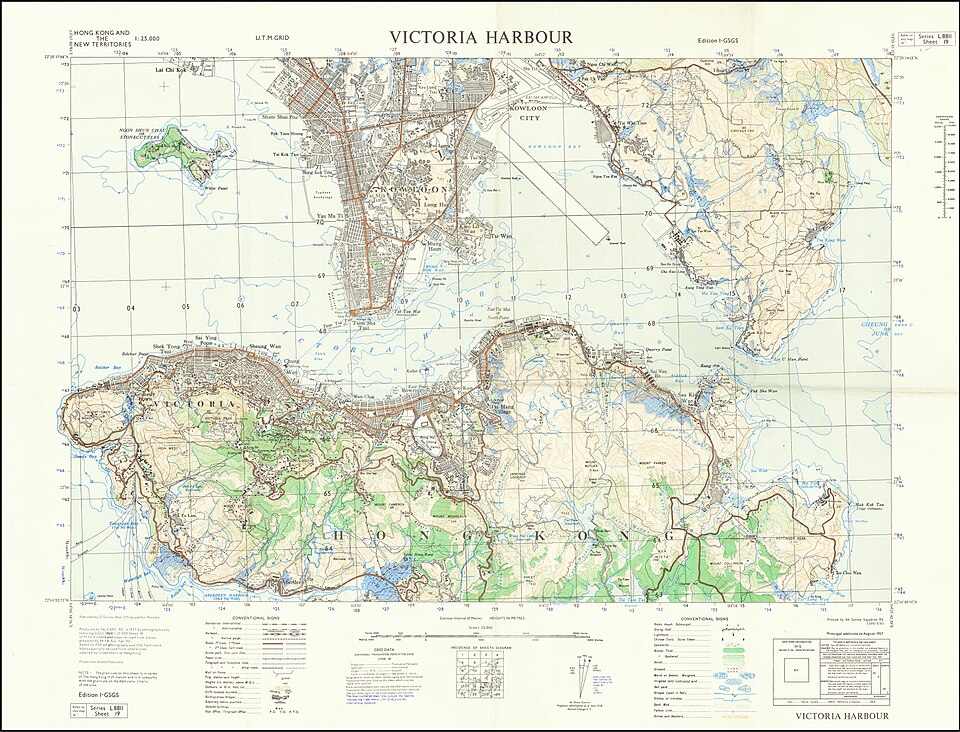
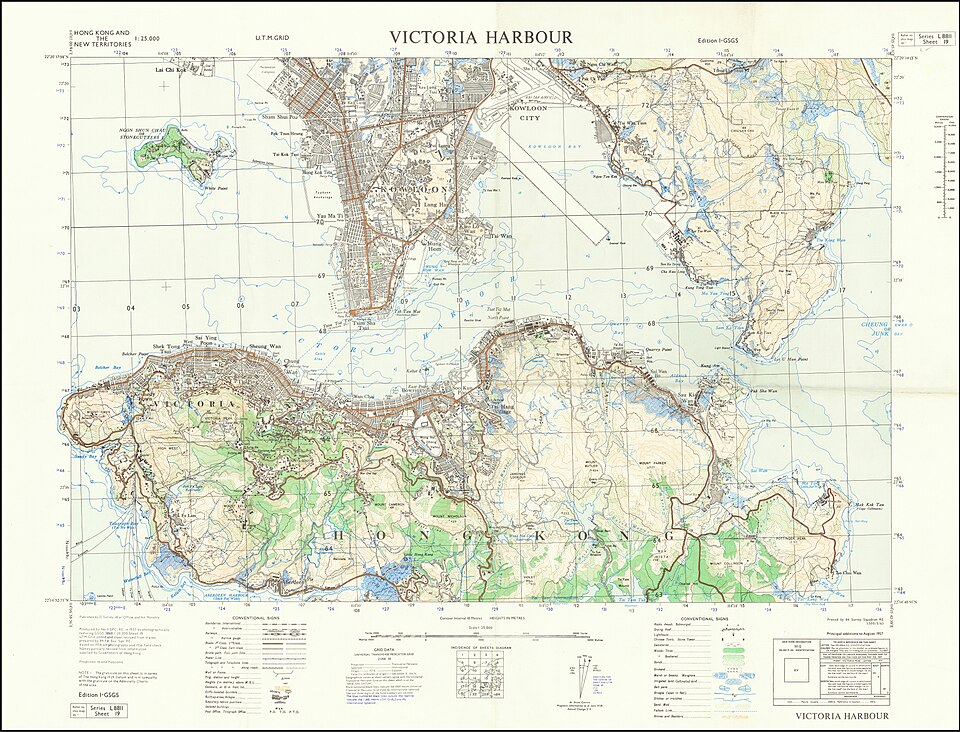
Hong Kong packs a global city, roughly 260 islands and some of Asia’s best hiking into about 1,100 square kilometres. That density is the point: you can ride a 19th-century funicular to a ridge walk in the morning, eat dim sum for lunch, and be on a car-free island by mid-afternoon. This guide covers the sights that genuinely repay the time, how to eat well without spending much, where to escape the towers, and the practical details — transport, money, borders — that determine whether a short trip feels smooth or stressful.

Getting around: Octopus, MTR and ferries

The MTR is the backbone of any visit: clean, frequent and signed in English. Buy an Octopus card shortly after arrival at a customer service centre or machine, then top it up in cash. It is a stored-value card rather than a discount pass, and it is accepted on most buses, trams, ferries and in many convenience stores, which makes it the simplest way to stop worrying about exact change. Check the current deposit, top-up rules and refund conditions on the official Octopus website before you rely on it, and note that you can also add the card to some phone wallets — verify which ones are supported in your region rather than assuming.

Taxis are plentiful and metered, but cross-harbour journeys involve tunnel charges, so the Star Ferry is often the better crossing. For mainland China legs, the high-speed rail network connects from West Kowloon, and if you are continuing onwards it is worth reading up on China High-Speed Rail Seat Classes and Onboard Food (2026) and How to Book Train Tickets in China: 12306 Step by Step so you know what you are buying.

The classic sights, done properly

Victoria Peak. The Peak Tram has run since 1888 and remains the theatrical way up; buses and taxis also reach the top for less. Both the tram and the Sky Terrace charge separately, so check current fares and opening times on the operator’s own page rather than trusting a blog. Once up, skip the crowded terrace for the circular Lugard Road loop — a flat, roughly hour-long walk with harbour views that improves as you go.

Star Ferry. The crossing between Tsim Sha Tsui and Central is one of the cheapest worthwhile things you can do in the city. Pay with Octopus or cash; check the operator’s timetable for first and last sailings, which vary by route and season.

Tsim Sha Tsui promenade and the Avenue of Stars. The free waterfront view is best around the evening light show. Confirm the current start time and whether it is running on the Hong Kong Tourism Board’s site — schedules have changed in the past.

Temple Street Night Market. Fortune tellers, Cantonese opera buskers and claypot rice restaurants. It is a market, so prices are negotiable and opening nights vary; go hungry and expect to eat at plastic stools.

Big Buddha and Po Lin Monastery. On Lantau, reached by the Ngong Ping 360 cable car, by bus, or on foot via the Lantau Trail. Cable car services close for maintenance, so check the operator’s site for the day you plan to travel.

Eating like a local

Start mornings in a cha chaan teng — a Hong Kong-style café — with milk tea and a pineapple bun. Dim sum is a morning-to-lunch affair; arrive early at the older, trolley-service places for the full experience. Roast goose, wonton noodles, beef brisket and egg waffles are all worth seeking out, and Sham Shap Po and Mong Kok reward wandering more than planning. Cheap, excellent meals are normal here rather than exceptional, but note that many small restaurants are cash-only or take only local payment apps, so carry some notes. If you are travelling onwards into the mainland, our China Cashless Travel Guide: WeChat Pay & Alipay 2026 explains how the two systems differ.

Hiking and islands

The Dragon’s Back is the best-known ridge walk: a few hours of undulating path ending above Big Wave Bay, reachable by bus from Shau Kei Wan. It is exposed, so carry water and start early in summer. Cheung Chau is a car-free island with a waterfront seafood strip and a ferry from Central; Lamma and Peng Chau are quieter alternatives. Trail conditions, ferry timetables and typhoon arrangements change, so check the Agriculture, Fisheries and Conservation Department and the ferry operator before setting out. In typhoon season, plans should stay flexible.

Practical planning and crossing to the mainland

October to December generally brings the clearest views and the most comfortable walking weather. English is widely used in hotels and on transport, but less so in neighbourhood restaurants; a translation app helps. Mobile data, SIM and eSIM choices are covered in our Internet Access in China: Wi-Fi, eSIM and Roaming Explained guide, which is relevant if you are combining Hong Kong with the mainland.

Hong Kong connects to Shenzhen by high-speed rail from West Kowloon and by several land crossings, including the Lok Ma Chau and Shenzhen Bay control points. Immigration and visa rules differ between Hong Kong and the mainland, and eligibility for visa-free transit into the mainland depends on your nationality, your route and your onward ticket. Verify your own situation on the official immigration website or at a Chinese embassy before booking, and check current entry requirements rather than relying on older advice. Cross-border coaches and private car transfers exist but add cost and border time; rail is usually faster. For a wider mainland context, see China Visa-Free Transit: 240-Hour Guide 2026.

Frequently asked questions

How many days do I need in Hong Kong?

Three full days covers the Peak, the harbour, one market evening, dim sum and a hike or island. Five days lets you add Lantau properly and slow down. Anything less and you will spend most of it in transit.

Is Hong Kong expensive?

Accommodation is the main cost and it is high by regional standards. Transport, ferries and everyday food are inexpensive, and hiking is free. Set your budget around your hotel rather than your meals.

Do I need cash, or can I use a card?

Cards work in hotels, chains and larger restaurants. Small eateries, markets and taxis often prefer cash or Octopus. Carry a few hundred Hong Kong dollars and top up as needed.

Can I visit Shenzhen as a day trip?

Often yes, but it depends on your nationality and which entry route you use. Check the current rules for your passport and confirm your onward plans before travelling to the border, and allow extra time at peak periods.

When is the best time to visit?

October to December for clear skies and comfortable temperatures. Summer is hot, humid and in typhoon season; spring can be hazy and wet.

Hong Kong rewards a loose plan rather than a packed one: pick two or three anchors, leave room for a ferry you did not intend to take, and check operator pages for times, fares and closures the week you travel. That approach will serve you better than any fixed checklist.

Posted on — Leave a comment

Hong Kong 3-Day Itinerary: Classic Sights & Hidden Islands

Three days in Hong Kong is enough for the classics plus one island escape. This itinerary balances icons, food and green space, and it assumes you are based in one hotel for all three nights rather than moving around. Hong Kong rewards a loose plan: the transport network is dense, distances are short, and the best meals are often the ones you stumble into between two scheduled stops. What follows is a structure, not a timetable — check opening days and last-entry times on each venue’s own page before you set out, because temples, museums and paid attractions in Hong Kong do change their schedules seasonally.

Before you arrive: the practical bits

Sort out three things before you fly. First, internet: a local SIM or eSIM makes maps, ride-hailing and translation work far more smoothly than relying on public Wi-Fi, and it is worth understanding the difference between an eSIM and a physical SIM before you choose. Second, payments: Hong Kong still uses cash widely in markets and small eateries, but Octopus cards and mobile wallets cover most transport and many shops, so carry a mix. Third, your mainland plans, if any. If Hong Kong is one stop on a longer China trip, read up on China Cashless Travel Guide: WeChat Pay & Alipay 2026 and China Visa Rules 2026: Quick Entry Guide before you book onward transport, since entry rules and payment systems on the mainland differ from Hong Kong’s.

Day 1: Hong Kong Island icons

Start with the Star Ferry from Tsim Sha Tsui to Central. It is one of the cheapest and most scenic crossings in the world, and it puts you on the island without touching a tunnel. From Central, walk or ride the Mid-Levels escalator uphill and stop at Tai Kwun, the former police compound turned heritage and arts centre — check its site for current exhibition hours and any ticketed shows. Lunch is dim sum in Sheung Wan, where the older teahouses sit alongside newer rooms; go before 1pm if you want a calmer room.

In the afternoon, visit Man Mo Temple on Hollywood Road, then head to the Peak Tram for sunset over the harbour. The tram queues can be long at peak times, and there is a separate viewing platform ticket at the top, so check the operator’s page for current arrangements and consider the bus or a taxi up if the queue is unreasonable. Finish in SoHo for bars, or find a dai pai dong for a simpler dinner.

Day 2: Kowloon street life

Begin at Wong Tai Sin Temple, then continue to the Chi Lin Nunnery and its Tang-style gardens — the contrast between the two in a single morning is one of the best free experiences in the city. Confirm opening hours on site, as religious venues adjust for festivals.

Lunch in Sham Shui Po, the city’s best cheap-eats district. Tofu pudding and roast goose are the standard orders, but the point is to graze: pick a queue and join it. In the afternoon, work through the Mong Kok markets — ladies’ market, goldfish market, flower market — which are busiest and most atmospheric from late afternoon. In the evening, go to the Tsim Sha Tsui promenade for the Symphony of Lights, then Temple Street night market for a late snack. The light show runs on a fixed nightly schedule; check the tourism board’s page rather than trusting an old listing.

Day 3: island or trail

Option A — Lantau. The Ngong Ping cable car, Big Buddha and Po Lin Monastery make a full day, and Tai O’s stilt-house fishing village is the worthwhile extension if you have the energy. Cable car services can be suspended in high winds, and there are different cabin classes, so check the operator’s page on the morning itself. Buses are the reliable fallback.

Option B — the Dragon’s Back. The hike, Big Wave Bay beach and Shek O village for sunset seafood is the better choice in clear, cool weather. Bring water, sun protection and shoes with grip; the path is not technical but it is exposed. Buses run from Shau Kei Wan to the trailhead and from Shek O back to the city.

Food checklist and how to eat well

Milk tea, pineapple bun with butter, egg tarts, wonton noodles, roast goose, claypot rice and egg waffles. Aim for at least two proper food stops a day and treat snacks as a third. Two practical notes: many small shops are cash-only or prefer exact change, and English menus are common but not universal, so a translation app with camera input saves time. If you keep halal or vegetarian, plan ahead rather than improvising — our Halal and Vegetarian Food in China: A Practical Guide (2026) covers how to check ingredients and find suitable kitchens. Tipping is not expected in the way it is in North America; see Tipping and Etiquette in China: What to Do and What to Avoid (2026) for the norms.

Where to stay and how to move

Hotel bases: Tsim Sha Tsui for harbour views and easy ferry access, Central for walkability, Mong Kok for budget rooms and late-night food. All three sit on the MTR, which is the fastest way to cover the itinerary. Buy or top up an Octopus card on arrival and use it for trains, buses, ferries and convenience stores. For cross-border days into Shenzhen, Macau or Guangzhou, allow extra time at immigration and check the current requirements for your nationality rather than assuming a visa-free entry applies. If you would rather have the logistics assembled for you, an AI Travel Planner for China can draft a Greater Bay Area route, but always verify times, tickets and entry rules against the official operator or government page before you commit.

Frequently asked questions

Is three days enough for Hong Kong?

Yes, for the classics plus one island or trail day. You will not cover everything, so choose between Lantau and the Dragon’s Back rather than attempting both.

Do I need cash in Hong Kong?

Carry some. Octopus and mobile payments cover most transport and many shops, but markets, small eateries and taxis often prefer cash. Withdraw from an ATM rather than using exchange counters at the airport.

Should I book the Peak Tram and Ngong Ping cable car in advance?

Booking ahead can reduce queueing at busy periods, but availability, timing and ticket types change. Check each operator’s own page for the date you plan to travel and for any weather-related suspension notices.

Can I combine Hong Kong with Shenzhen or Macau in three days?

You can add a day trip, but it will cost you one of the three days here. Check the current entry requirements for your passport on the relevant official government page before booking, as these rules are updated periodically.

What should I do if it rains?

Shift the museums, Tai Kwun and the markets earlier and keep the hike as a flexible option. Temple Street and the promenade are far less pleasant in heavy rain, so treat them as swap-in stops rather than fixed appointments.

Build the trip around one base, two food stops a day and a single big excursion, and three days in Hong Kong will feel generous rather than rushed. Verify opening hours, ticket arrangements and entry rules on official pages close to your travel date, and leave room for the unplanned meal that turns out to be the best one.

Posted on — Leave a comment

Zhuhai Travel Guide: The Romantic Coast & Macau Gateway

Zhuhai is what a Chinese resort city looks like when it grows up: a 55-kilometre coastal boulevard, 146 islands, palm-lined streets and the country’s biggest ocean theme park next door to Macau.

What to Do

  • Lovers Road (Qinglü Lu): the signature seafront promenade — walk or cycle between the Fisher Girl statue and the Zhuhai Grand Theatre “Sun Moon Shells”.
  • Chimelong Ocean Kingdom: world-class aquariums, whale sharks and roller coasters; two days are barely enough for the full resort.
  • Wanzai Seafood Street: pick shellfish live from tanks, have it cooked on the spot.
  • Jida & Shijingshan: old-town walks, gardens and hillside cable car views.
  • Island hopping: Dong’ao and Wailingding islands offer white-sand beaches an hour from the pier.

Zhuhai + Macau + Hong Kong

The Hong Kong–Zhuhai–Macau Bridge puts all three in one day trip — 40 minutes across the Pearl River estuary. Zhuhai’s Gongbei border crossing to Macau is walkable from downtown hotels.

Practical Tips

Spring and autumn are ideal; summer brings typhoons and winter a cool sea breeze. The city is flat and bike-friendly — rent shared bikes for the coastal ride.

Plan With Us

Zhuhai is a key stop on our Greater Bay Area routes. Use the AI trip planner for a custom Zhuhai–Macau–Hong Kong itinerary, or book a private car with English-speaking driver for the coastal circuit.

Posted on — Leave a comment

Shenzhen Travel Guide 2026: Tech Capital, Beaches & Day Trips

Shenzhen is often described as China’s Silicon Valley, but that undersells it as a place to visit. Forty years ago it was a fishing town on the Hong Kong border; today it is a subtropical metropolis of roughly 17 million people, with a skyline of supertalls, a working art scene in converted factories, city beaches on its east coast, and a location that makes it the easiest entry point between Hong Kong and the mainland. It is also one of the most convenient cities in China for a first-time visitor: the metro is signed in English, distances are short, and much of what is worth seeing sits within a few stops of a station.

What to see in Shenzhen

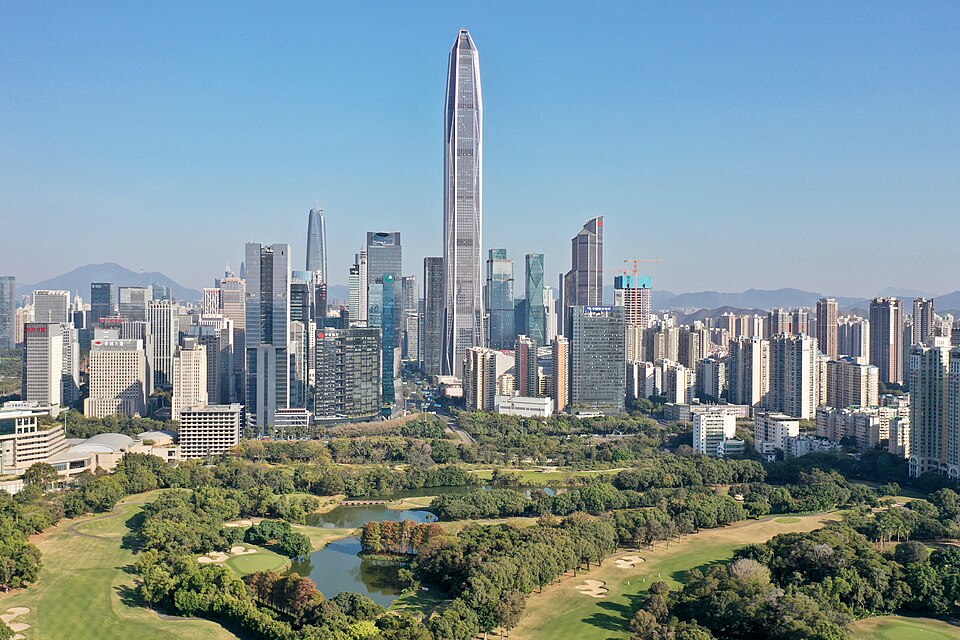
Start with the Ping An Finance Centre observation deck, which gives the widest view in South China; on a clear day the New Territories of Hong Kong are visible across the bay. Deck access is ticketed and sometimes closed for weather or private events, so check the tower’s own booking page for the day you plan to go rather than trusting an old price or timetable.

OCT-LOFT, in Nanshan, is a former factory compound turned gallery, bookstore and coffee district. It is the most walkable part of the city and the best place to spend a slow afternoon. Dafen Oil Painting Village in Longgang is a different kind of art stop: workshops producing everything from replica Van Goghs to commissioned portraits, useful if you want a souvenir that is not a fridge magnet. Bring a photo if you want a portrait done, and agree the price and the delivery date in writing before work starts.

On the east coast, Dameisha and Xiaomeisha are the city’s main beaches, reachable from downtown in around 40 minutes depending on traffic and your starting point. They are public and free to enter, but swimming depends on season, water quality notices and lifeguard cover, so check locally on the day. Closer in, Shenzhen Talent Park and the Shenzhen Bay promenade are the standard evening walk or bike ride, with the skyline lit across the water. Bike rental is app-based and requires a Chinese payment method; see our guide to China Cashless Travel Guide: WeChat Pay & Alipay 2026 for how that works in practice.

Window of the World and Splendid China are miniature-landmark theme parks. They are unashamedly kitsch and genuinely good with children. Opening hours and ticket tiers change with season and holidays, so verify on the park’s official page before you commit a day.

Where to eat

Shenzhen has almost no native cuisine of its own, because almost everyone here came from somewhere else. That is the advantage: Cantonese dim sum in Shekou, Hunan and Sichuan cooking around Huaqiangbei, northeastern dumplings and noodles in the older parts of Luohu, and late-night seafood along the Shenzhen Bay side. Dongmen in Luohu is the classic grazing street, busy and cheap. For regional comparison, our Guangzhou Street Food Guide: 16 Must-Try Bites in 2026 covers the Cantonese cooking an hour up the rail line. If you keep halal or vegetarian, read the Halal and Vegetarian Food in China: A Practical Guide (2026) before you arrive, since labelling is not always obvious.

How many days do you need

Two full days cover the core: one for the city (Ping An, OCT-LOFT, the bay), one for Dafen plus a theme park or the east-coast beaches. Four days lets you add a proper beach day and a side trip without rushing. Shenzhen is also a strong base for day trips by high-speed rail; Guangzhou is close enough for a morning, and longer routes reach Guilin and Changsha. Seat classes, luggage rules and onboard food vary by train type, so read China High-Speed Rail Seat Classes and Onboard Food (2026) before choosing. Book on the official 12306 channel or a licensed agent, and check the timetable for your date rather than relying on any figure quoted elsewhere.

Getting there and getting around

Shenzhen Bao’an International Airport (SZX) handles the flights; the other common arrival is by high-speed rail from Hong Kong West Kowloon, a very short hop once you clear border formalities. Note that entry rules, visa-free transit eligibility and the documents you need depend on your nationality and route, and they change; confirm on the official immigration or embassy page for your passport before booking. Our China Visa-Free Transit: 240-Hour Guide 2026 explains how the transit scheme is structured and what to check.

Within the city, the metro is clean, cheap and signed in English, and most of the sights above are a short walk from a station. Buy a single-journey ticket from the machines or use the metro app; both are covered in the China Metro Guide: How to Ride in 2026. Taxis and ride-hailing are plentiful but slower at peak times.

When to go

October to April is the dry, mild stretch and the most comfortable time to walk the city. Summer is hot, humid and in the typhoon season, which is precisely why hotel rates soften; if you travel then, build slack into your plans for cancelled ferries and delayed flights. Chinese public holidays, especially the Lunar New Year and the first week of October, fill beaches and theme parks — check the calendar before you fix dates.

Frequently asked questions

Is Shenzhen worth visiting if I am mainly going to Hong Kong?

Yes, if you have a spare day or two. The cross-border high-speed rail link is quick, and the city offers a completely different texture from Hong Kong: wider roads, newer buildings, cheaper food and a metro that is easy to navigate without Chinese. Treat it as a two-day add-on rather than a replacement.

Can I visit Shenzhen without speaking Chinese?

Largely yes. Signage on the metro and in malls is bilingual, and translation apps handle the rest. Restaurant menus in migrant neighbourhoods are less predictable, so having a few phrases and a translation app ready helps. See The Language Barrier in China: Translation Apps and Essential Phrases.

Do I need to book attractions in advance?

Some do require it, particularly around holidays, and the process often runs through a Chinese mini-program or official WeChat account. The rules differ by site and change over time, so check the individual attraction’s own page. Our overview of Booking Attractions in China 2026: Reservations Foreigners Actually Need explains the pattern.

How do I pay for things in Shenzhen?

Mobile payment dominates, and foreign cards can often be linked to the major wallets, but support depends on your bank and card type. Carry a small amount of cash as backup and verify the current setup before you fly rather than assuming either cash or card alone will work everywhere.

Is the internet the same as in Hong Kong?

No. Cross-border data behaves differently, and which apps and services work depends on your SIM, roaming arrangement or eSIM. Test your setup before departure and read Internet Access in China: Wi-Fi, eSIM and Roaming Explained so you are not troubleshooting at the airport.

Shenzhen rewards a loose plan: pick two or three anchors, leave room for a long lunch and an evening on the bay, and confirm every time-sensitive detail — tickets, opening days, train times, entry rules — on the operator’s own page close to your travel date. That habit matters more here than in almost any other Chinese city, because things change fast.

Posted on — Leave a comment

China Food Guide for First-Timers: What to Order Region by Region

“Chinese food” abroad is a pale shadow of the real thing. China is a continent of eight recognised regional cuisines, thousands of local dishes, and a street-food culture with no real equivalent elsewhere. This is a first-timer’s field guide to eating well, ordering confidently and knowing what to prioritise when you only have one trip.

The regional big eight, and what to order

Beijing: Peking duck carved tableside and wrapped with hoisin and scallion, zhajiang noodles, jianbing egg crepes for breakfast, and lamb skewers in the hutongs.

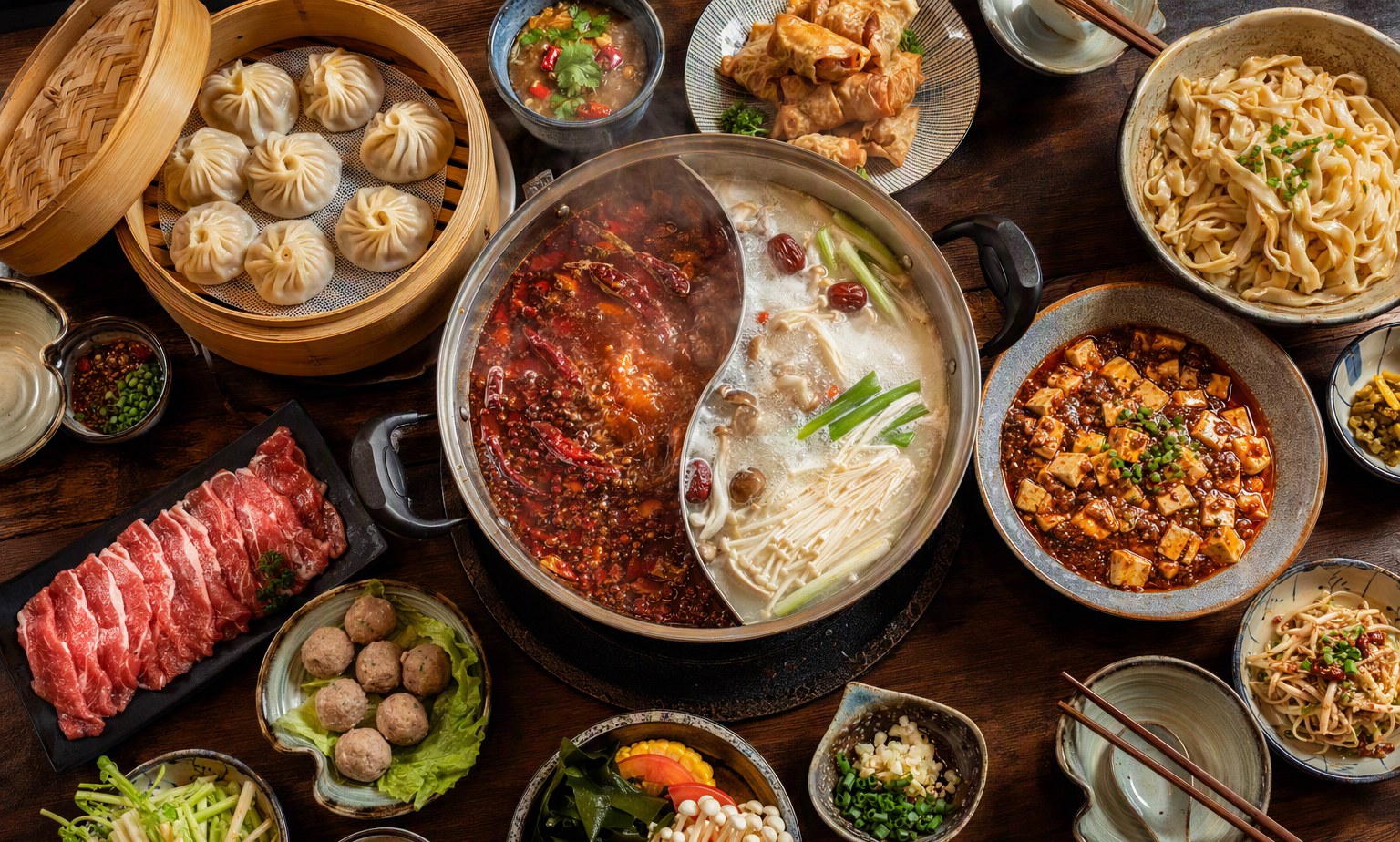
Sichuan and Chongqing: hotpot with numbing peppercorn and chilli oil — ask for the split yuanyang pot if you want a mild side — plus mapo tofu, dan dan noodles and wontons in chilli oil.

Cantonese (Guangzhou and Hong Kong): dim sum mornings with har gow, char siu bao and rice-noodle rolls; roast goose; congee.

Shanghai and the Jiangnan region: xiaolongbao soup dumplings (nibble the skin, slurp the broth), red-braised pork, hairy crab in autumn, scallion oil noodles.

Xi’an: the Muslim Quarter’s roujiamo, hand-pulled biangbiang noodles, lamb paomo soup and cold liangpi.

Yunnan: crossing-the-bridge rice noodles, grilled goat cheese, mushroom hotpot in summer, flower cakes.

Hunan: the hotter, prouder cousin of Sichuan — steamed fish with chopped chilli, and stinky tofu that tastes far better than it smells.

Fujian: Buddha Jumps Over the Wall, a luxury slow-cooked soup; oyster omelettes; a deep soup culture.

For city-by-city specifics, our Xi’an street food guide and Chongqing street food guide go deeper on two of the most rewarding food cities.

Spice survival

“Mild” in Sichuan often means what a Western visitor would call hot. Two phrases carry you a long way: bú là (不辣, “not spicy”) and wēi là (微辣, “mildly spicy”). Save them in your translation app and show the screen rather than attempting the tones. Sichuan peppercorns do not add heat; they add a citrusy numbness called má, which is a different sensation entirely and worth trying deliberately.

Milk or yoghurt beats water for a chilli emergency. Every region has non-spicy classics, so spice is optional rather than mandatory — you can eat superbly for two weeks without ever ordering a numbing dish. If you have dietary restrictions, see our guide to halal and vegetarian food in China.

How ordering actually works

Many restaurants hand you a paper menu to tick, often with pictures. Pointing at what a neighbouring table is eating works remarkably well. Dishes arrive as they are ready and are shared, so order roughly one dish per person plus one extra, with rice as the anchor. Lazy Susans are standard at round tables. Tea is usually free; napkins sometimes carry a small charge.

For menus without pictures, a translation camera is your friend. Our guide to translation apps and essential phrases covers which tools work and what to have offline.

Street food rules

A busy stall means high turnover, which usually means fresh oil. The queue is the review score. Breakfast streets and night markets are the two great arenas: jianbing, baozi, chuanr skewers, stinky tofu, tanghulu. Carry small notes, or set up a payment app before you fly — our cashless travel guide explains the options. If a stall looks sleepy at lunchtime, walk on.

Hygiene standards vary, and most travellers eat street food without incident. Use judgement: cooked-to-order food from a hot wok or grill is a safer bet than anything sitting out pre-made.

Drinks, tea and digestifs

Beer is cheap and everywhere at meals, with local craft breweries now common in larger cities. Baijiu is the nuclear option — toast with it and sip politely. Tea is the real soul of the table: Longjing greens in Hangzhou, pu-erh in Yunnan, jasmine with Cantonese meals. Buy from a proper tea shop rather than an airport gift counter.

If you are moving between cities by rail, onboard catering is limited, so buy food at the station before boarding. Our high-speed rail seat classes and onboard food guide explains what to expect.

The five dishes to prioritise

With two weeks: Peking duck in Beijing, soup dumplings in Shanghai, dim sum in Guangzhou or Hong Kong, hotpot in Chengdu, and the Muslim Quarter in Xi’an at night. That is the pilgrimage. Everything else is a bonus.

Build the itinerary around meals rather than squeezing food in between sights, and check opening days and reservation requirements for popular restaurants on the venue’s own page before you travel — these change, and third-party listings lag behind.

Frequently asked questions

Is it safe to eat street food in China?

Generally yes, with common sense. Choose stalls with a visible queue and food cooked to order in front of you. Avoid anything pre-cooked and sitting at ambient temperature, and be cautious with raw or unpeeled produce if your stomach is sensitive.

Do I need cash for restaurants and stalls?

Mobile payment dominates, and many stalls are cashless in practice. Set up a payment app before departure and keep a small amount of cash as backup. Check current setup requirements on the provider’s own page, since eligibility rules for foreign cards change.

How do I say “not spicy” in Chinese?

Use bú là (不辣) for not spicy and wēi là (微辣) for mildly spicy. Show the characters on your phone screen rather than relying on pronunciation, and confirm before ordering rather than after the dish arrives.

Can vegetarians and halal travellers eat well in China?

Yes, with planning. Buddhist vegetarian restaurants, dedicated halal (qingzhen) kitchens and Xi’an’s Muslim Quarter all serve meat-free or halal food. Learn the relevant characters and carry them written down; see our dedicated guide for detail.

What should I book before arriving?

Popular restaurants in major cities increasingly take reservations, and some attractions require timed-entry booking. Check each venue’s official page or booking channel directly, and confirm opening days, since many museums and restaurants close one day a week.

Treat the eight cuisines as a rough map rather than a rulebook, order one dish more than you think you need, and let the queue decide where you eat. Verify anything time-sensitive — opening hours, reservation systems, payment setup — on the operator’s or venue’s own page before you rely on it.

Posted on — Leave a comment

Best Time to Visit China: Month-by-Month Guide 2026

China spans latitudes from Siberian winters to tropical beaches, so the “best time” depends entirely on where you are going and what you want to do there. This guide gives an honest month-by-month picture, flags the domestic holiday periods that reshape the entire country’s transport and hotel supply, and suggests windows for the destinations most visitors put on a first itinerary. Treat the seasonal patterns as reliable and the specific dates as things to confirm yourself before booking.

The short answer

For most of the country, the two comfortable windows are spring (roughly April to May) and autumn (roughly September to October). Temperatures are mild, skies are clearer, and domestic travel demand sits between its peaks. The two periods to avoid unless you actively want the spectacle are the National Day holiday week in early October and Chinese New Year, when hundreds of millions of people travel at once. During those weeks, long-distance transport sells out early and hotel rates rise sharply in popular cities.

Outside those windows, China is still very workable. Winter is cold in the north and mild in the south, and it is the cheapest season almost everywhere. Summer is hot and crowded in the cities but excellent in highland Yunnan and on the Tibetan plateau.

Spring: March to May

March is a shoulder-season month in much of the country. Crowds thin, and accommodation and flights are generally easier to secure than in the months either side. The Jiangnan region around Shanghai, Hangzhou and Suzhou starts its blossom season, with plum and early cherry trees. Northern China can still be dusty and windy, so layers matter.

April is often the most balanced month nationwide, with mild temperatures across the north and central regions. Luoyang’s peonies and the cherry blossoms of Wuhan draw domestic crowds. If you plan to visit the Forbidden City or a popular Great Wall section, note that many major attractions now run timed-entry reservation systems for foreign visitors, and slots can fill days ahead. Our guide to booking attractions in China explains what actually needs a reservation.

May is warm and green almost everywhere before the summer humidity sets in. Be aware that the first few days of May form a short national holiday, which behaves like a mini version of Golden Week: trains and popular sites get busy, then calm down quickly.

Summer: June to August

June is a transition month. The south enters its rainy season, which makes landscapes such as the Li River near Guilin dramatic in mist but also means you should pack for wet weather and build slack into outdoor plans. Northern China stays largely dry and increasingly hot.

July and August are peak domestic holiday season. Families travel, cities are hot, and major sights are busiest in the morning. The standard tactics work: start early, shift to museums and indoor sites in the afternoon, and keep evenings for food and walking. Two escapes stand out. Yunnan, including Kunming, Dali and Lijiang, sits at high altitude and stays comfortable through the summer. Tibet has some of its clearest conditions in this period, though permits and logistics require advance planning — see our Tibet and Lhasa planning guide for how that process works.

Autumn: September to November

September is when humidity breaks and skies clear across the north and east. From mid-September into mid-October is arguably the single strongest window for Beijing, Xi’an, Shanghai and the Great Wall.

October is beautiful and carries one landmine. The first week is the National Day holiday, the busiest travel period of the year: trains and hotels sell out and prices surge. From the second week onward, conditions are excellent and much calmer. If you want October without the crush, aim for the second half of the month. Our October travel guide covers the trade-offs in more detail.

November is crisp, sunny, quiet and comparatively cheap. Autumn colour peaks in northern hills, and the Great Wall at Mutianyu is far less crowded than in October. Bring a warm layer for mornings and evenings. There is a dedicated guide to China in November if this window appeals.

Winter: December to February

Winter splits the country sharply. North China is cold but often bright and photogenic, and snow on Beijing’s palace roofs is a genuine draw for photographers. Harbin’s ice and snow festival season runs through this period and is the main reason northern travel demand stays high in January and February. Confirm exact festival dates and ticketing on the organiser’s official channels, as they vary year to year.

South China stays mild. Guangzhou, Shenzhen and Hainan are comfortable, and Sanya is beach-warm. This is low season for most of the country, so accommodation is easier to find, but Harbin and ski resorts are the exception.

Chinese New Year falls in this window and moves each year according to the lunar calendar. The pattern is consistent even when the date is not: cities empty as residents return home, some small restaurants close for a week or more, and all transport is heavily booked. Book accommodation and trains well ahead, or travel after the main holiday week. The Lantern Festival, about two weeks later, is worth planning around if you are in the country.

Best time by destination

Beijing and the Great Wall: April to May, September to mid-October, and November. Shanghai, Hangzhou and Suzhou: March to May and September to November. Xi’an: March to May and September to November. Chengdu works year-round, with spring and autumn the most comfortable. Guilin and Yangshuo: April to October, with misty rain adding atmosphere. Zhangjiajie: April to June and September to October. Yunnan: March to June is ideal, and it is pleasant most of the year. Tibet: April to June and September to October, with permits and planning time needed. Hainan and Sanya: November to March. Harbin: December to February.

Whatever month you choose, two practical points apply across the year. First, transport is the constraint during holiday periods, not sightseeing — read our guide to booking train tickets on 12306 before you fix dates. Second, hotels differ in whether they accept foreign guests, which matters most in smaller cities and during peak weeks; our guide to hotels that accept foreign guests explains how to check.

Frequently asked questions

What is the single best month to visit China?

There is no universal answer, because the country covers several climate zones. If you are visiting the classic northern and eastern route — Beijing, Xi’an, Shanghai — the second half of September through October is the most reliable window, and April is a close second. For Yunnan, spring and early summer are better. For Hainan, winter is the point.

How far ahead should I book around Chinese New Year and Golden Week?

As early as your plans allow. During these periods, long-distance rail seats and popular hotels are the first things to go, and prices rise. Rather than relying on a fixed number of weeks, check the official railway booking window and your hotel’s cancellation terms, then book the moment your dates are firm. If your dates are flexible, shifting by a few days either side of the holiday makes a large difference.

Is winter a bad time to visit?

No, it is simply a different trip. Northern cities are cold but often clear, and indoor sights, museums and food culture work well. Southern China is mild and comfortable. The main drawbacks are short daylight hours and, in the far north, genuinely severe cold that limits time outdoors.

Does the rainy season ruin a summer trip?

It rarely ruins it, but it does change how you plan. Rain in southern China often arrives in intense bursts rather than all-day drizzle, and mist can make karst scenery more striking. Pack quick-drying layers, waterproof footwear and a compact umbrella, and keep one indoor option per day.

How do I check holiday dates and attraction opening times?

Confirm the official public holiday schedule for the year you are travelling, since dates shift with the lunar calendar, and check each attraction’s own reservation page for current opening days and entry slots. Do not rely on third-party summaries for opening hours. If you use an AI tool to draft an itinerary, verify every time and date against the official source — our notes on using AI for a China itinerary explain where these tools tend to go wrong.

Season choice shapes everything else about a China trip: how much you pay, how far ahead you book, and how much of your day is spent in queues. Pick a window that suits your destinations rather than the country as a whole, then verify the specific dates, opening hours and booking requirements on official pages before you commit.

Posted on — Leave a comment

China Golden Triangle Itinerary: Beijing, Xi’an & Shanghai in 10 Days

The China Golden Triangle is the classic first-time route linking Beijing, Xi’an and Shanghai — three cities that show three different faces of the country: imperial power, ancient civilisation and modern ambition. Ten days is the usual recommendation, because it gives each city room to breathe without long transit days. The three are connected by high-speed rail, so most of your time goes on sightseeing rather than travelling. What follows is a day-by-day plan with realistic transfer notes, plus the practical detail that decides whether the trip runs smoothly: tickets that need booking ahead, apps that need setting up before you fly, and the weeks worth avoiding.

Why the Golden Triangle suits a first trip

Each leg is a single high-speed rail hop, so you are never far from a station or a hotel. In one loop you cover the Great Wall and the Forbidden City, the Terracotta Army, and the Bund — the images most people picture before they arrive. It is also the route most group tours are built around, which means infrastructure is well developed: English signage on the metro, hotels used to foreign guests, and drivers who know the main sites.

It is easy to customise. You can add a day in each city, swap Shanghai’s day trip for a longer excursion, or extend south afterwards. If you are still deciding whether the country is worth the effort at all, this honest assessment is a reasonable starting point.

The 10-day route at a glance

Days 1–3: Beijing — Forbidden City, Great Wall at Mutianyu, Temple of Heaven, hutongs. Then rail to Xi’an (roughly six hours by high-speed train, or about two hours by air).

Days 4–6: Xi’an — Terracotta Army, City Wall, Muslim Quarter, Big Wild Goose Pagoda. Then rail to Shanghai (roughly six hours, or about two and a half hours by air).

Days 7–10: Shanghai — the Bund, Yu Garden, the former French Concession, and a day trip to Suzhou or a water town. Depart from Shanghai.

Treat the rail times as planning estimates only. Schedules change with each annual timetable, so check exact departure times and journey lengths when you book rather than relying on any figure quoted in a guide.

Days 1–3: Beijing

Land, settle near Wangfujing or inside the Second Ring, and keep the first afternoon light — jet lag is real and the city is large. Day two is the Great Wall. Mutianyu is the common choice for a first visit: a cable car up, a toboggan down, and a restored section that is walkable without mountaineering. A private car and driver for the round trip lets you leave early and reach the wall before the coach groups. Day three covers the Forbidden City and Jingshan Park for the view back over the roofs, then the Temple of Heaven in the afternoon.

Forbidden City tickets are passport-linked and released on a set advance window. They sell out in peak season, so check the official palace booking site for the current release time and buy as soon as your date opens. Metro travel around the city is straightforward once you have a payment method set up — see this metro guide for how entry gates and QR codes work in practice.

Days 4–6: Xi’an

Take a morning train or a short flight. The Terracotta Army is the anchor: give it half a day and arrive early, since the site is outside the city and the pits fill up by mid-morning. In the afternoon, cycle the top of the ancient City Wall — the full loop is long, so an hour’s rental on one section is plenty. In the evening, eat through the Muslim Quarter; this Xi’an food guide covers what to look for and what to skip.

With a third day, add the Big Wild Goose Pagoda and the Shaanxi History Museum. Museum entry is typically free but requires an advance reservation through the official channel, and slots go quickly — verify the current booking process before you travel.

Days 7–10: Shanghai

Shanghai is the modern finale. Walk the Bund at dusk when both banks light up, wander Yu Garden’s old bazaar, and spend an unhurried morning in the former French Concession. Use one day for a water town such as Zhujiajiao or for Suzhou’s classical gardens; both are reachable in under an hour by rail from central Shanghai, which makes them easy half- or full-day trips.

If you would rather head into the hills, Huangshan is a feasible add-on from Shanghai if you allow two nights — see this Huangshan guide for how the logistics work.

Getting around and practical preparation

High-speed rail is the spine of the route. Book through the official 12306 channel or a reputable agent, and remember that foreign passports need to be registered against the ticket — the process is explained in this guide to buying train tickets with a foreign passport. Second class is fine for value; first class is worth considering on the longer legs.

Before you fly, sort out connectivity and payments. A China eSIM means mapping, translation and payment apps work from the moment you land, and it avoids a queue at the airport. Compare plans carefully — coverage and whether the plan routes data in a way that reaches services you rely on both matter, and no single option is right for everyone.

Avoid the major domestic holiday weeks. Golden Week and Spring Festival produce the year’s heaviest domestic travel, with higher hotel rates and sold-out trains. The dates shift annually, so confirm the official public holiday calendar for your travel year rather than assuming last year’s pattern.

Frequently asked questions

How many days do I need for the China Golden Triangle?

Ten days is the standard answer: three in Beijing, three in Xi’an, and four in Shanghai including a day trip. Seven days is workable if you trim each city to its headline sights and accept a faster pace.

Should I take the train or fly between the cities?

Flying is quicker in the air but adds airport transfer and check-in time at both ends. High-speed rail runs city centre to city centre, which usually makes the total door-to-door difference smaller than the flight time suggests. Compare current fares and schedules for your dates and decide on that basis.

Do I need a guide for this route?

No. It is one of the more independent-traveller-friendly routes in China. The most useful paid upgrade is a driver for the Great Wall and Terracotta Army days, where sites sit outside the city and public transport eats into your time.

What does a 10-day Golden Triangle trip cost?

Costs depend on season, hotel standard and how much you travel privately, so any figure quoted in advance will be wrong for someone. Build a budget from current hotel and rail prices for your own dates, and check whether your nationality qualifies for any visa-free entry scheme on the official immigration channels before you book flights.

When is the worst time to go?

The major domestic holiday periods, when transport and hotels are busiest and most expensive. Shoulder seasons generally give better weather and calmer sites, though exact conditions vary by city and year.

Plan the route around confirmed train times and booked tickets rather than the other way round, set up your eSIM and payment apps before departure, and keep one flexible day in Shanghai for weather or a spontaneous detour. Do that and the Golden Triangle delivers exactly what it promises: three distinct versions of China in a single, manageable loop.

Posted on — Leave a comment

Great Wall of China Guide: Mutianyu vs Badaling vs Jinshanling

“The Great Wall” is not one place. Around Beijing it is dozens of separate sections, some rebuilt into smooth promenades, others left as crumbling ridges with grass pushing through the brick. Choosing between them shapes your entire day: two hours of crowds and coach horns, or a quiet ridgeline walk with the wall running empty to the horizon. This guide compares the sections most visitors actually consider, explains how to reach them, and flags what you need to verify before you commit.

Badaling: the famous, accessible option

Badaling is the section most people picture, and the one most people visit. It is fully restored, has cable car and pulley options, and offers step-free access along parts of the route, which makes it the practical choice for travellers with mobility needs or very tight schedules.

It is also the busiest. Expect tour groups, hawkers and a heavily polished surface rather than weathered stone. If you go, aim for opening time on a weekday and leave by mid-morning. Verify current opening hours, last entry and whether your chosen day needs a reservation on the official Badaling booking channel before you travel — these details change by season.

Mutianyu: the default recommendation

Mutianyu sits roughly 90 minutes from central Beijing and suits most visitors. It is restored but retains genuine Ming character: watchtowers at regular intervals, granite flanks, forested ridges in every direction. Crowds are a fraction of Badaling’s, and the toboggan run down is a genuine highlight for children and adults alike.

You can ride a cable car or chairlift up and walk, or take the toboggan down. Entry and lift tickets are usually sold as bundles; on peak days they can sell out, so check the official Mutianyu channels or a reputable operator in advance. The walk between the higher towers rewards the effort with the classic wall-snaking-over-ridges view and far fewer people in your photographs.

Jinshanling: for photographers and hikers

Jinshanling is partly unrestored and roughly 2.5 hours from Beijing, marching across wild ridgelines. It is the wall you have seen in magazines. Even in summer, crowds are thin.

The trade-offs are real. Public transport is impractical, so a private car is effectively essential. Sections are steep and uneven underfoot. Plan a full day, ideally with a dawn or dusk slot for the light. The classic route continues toward Simatai West, a hike of several hours that is moderately strenuous. Check locally whether any portion is closed for restoration, as access changes.

Other sections worth knowing

Jiankou is wild and crumbling, and some stretches are officially off-limits to hikers; go with a licensed guide or not at all. Huanghuacheng combines wall and reservoir views and stays quiet. Simatai runs night-time illuminations and has historically operated a permit system for its wilder stretches — confirm the current arrangement before planning around it. Gubeikou suits strong walkers chasing solitude.

Getting there and booking

Public transport to Mutianyu involves bus changes and some negotiation; to Jinshanling it barely exists. Many visitors end up hiring a private driver for the day, which removes the transport problem and lets you arrive before the coaches. Ask your hotel or operator for a written quote covering waiting time and tolls rather than a verbal estimate.

Reservations matter more than they used to. Several major Beijing attractions now require real-name advance booking with a passport, and the Great Wall sections are no exception on busy dates. The mechanics are explained in this guide to booking attractions in China as a foreigner. If you are paying on site, it helps to know how mobile payments work; see this cashless travel guide for WeChat Pay and Alipay.

Trains from Beijing to the surrounding region are covered in this China train travel guide, though for the wall itself a car is usually simpler.

Seasons and what to wear

Spring brings green hills and mild air. Summer is hot and often hazy; start early and finish before midday. Autumn offers the best light and crisp temperatures, which also means the popular sections book out further ahead. Winter is snow-dusted and nearly empty, with brutal wind on exposed ridges — dress accordingly.

Whichever section you choose, expect steps, slopes and uneven stone. Wear proper shoes, carry more water than feels necessary, and check the day’s weather rather than the forecast for central Beijing, which tells you little about conditions on the ridge.

Frequently asked questions

Which Great Wall section is best for a first visit?

Mutianyu suits most first-time visitors: restored enough to be comfortable, wild enough to feel historic, and far less crowded than Badaling. If you have limited time or mobility requirements, Badaling is the more practical choice.

Do I need to book Great Wall tickets in advance?

Increasingly, yes, at least on weekends, holidays and in autumn. Requirements vary by section and season, so check the official booking channel for your chosen section a few days ahead and look specifically for whether real-name passport registration is required.

Can I visit the Great Wall without a tour?

Yes. Mutianyu and Badaling are both reachable independently, though Mutianyu involves bus changes. Jinshanling and the wilder sections are much harder without a private car or organised transport.

Is the toboggan at Mutianyu suitable for children?

It is popular with families, but there are age, height and supervision rules, and it closes in wet weather. Check the conditions on the day at the ticket office rather than assuming it will run.

How much time should I allow?

A half day is enough for Badaling or Mutianyu including travel from Beijing. Jinshanling and the wild sections deserve a full day, particularly if you want sunrise or sunset light.

Whichever section you pick, the difference between a good day and a frustrating one usually comes down to timing: arrive early, confirm your booking and transport the day before, and check the operator’s own page for current hours and access rather than relying on any guide, including this one.

Posted on — Leave a comment

China With Kids: Family Travel Guide (Ages, Routes & Tips)

China with children is easier, and more enjoyable, than many parents expect. Trains are clean and fast, food is crowd-pleasing, and the headline sights map surprisingly well onto what children actually find interesting. This guide covers the ages that work best, a realistic ten-day route, the practical realities of strollers and bathrooms, and the pacing rules that keep a family trip from falling apart by day four.

Best ages and when to go

Roughly ages five to twelve is the sweet spot. Children in that range are old enough to walk a section of the Great Wall and young enough to be genuinely awed by it. Toddlers are doable but slow everything down: stairs, crowds and the near-certainty of squat toilets outside hotels all add friction. If you are travelling with a child under three, plan fewer sights and more downtime rather than trying to keep pace.

On trip length, eight to twelve days works better than a marathon haul. Build in one quiet morning, a pool or courtyard session, roughly every five days. On timing, shoulder seasons tend to be kinder for small legs and pushchairs; our China in October guide and the China in November guide both set out what that means month by month.

A ten-day route that works with children

Beijing, four days. The Mutianyu section of the Great Wall is the usual family choice, partly because of the toboggan descent. The Forbidden City rewards a scavenger-hunt approach rather than a full historical tour. Add a rickshaw ride through the hutongs, a kung fu show, and the pandas at Beijing Zoo. Note that major sights increasingly require advance reservation, and the Forbidden City is the classic example; check the current rules before you build your dates around it. Our guide to attraction reservations for foreigners explains what to look for.

Chengdu, two days. The Giant Panda Base is the highlight for most families. Arrive for the early morning feeding window, which is when the animals are most active; confirm current opening times and ticketing on the base’s own channels rather than trusting a third-party summary. Add a teahouse afternoon and a face-changing Sichuan opera. For a realistic schedule, see our Chengdu and Giant Panda Base guide.

Shanghai, three days. Shanghai Disneyland tends to feel less crowded than its counterparts elsewhere. Beyond that: the Shanghai Ocean Aquarium, the Bund skyline after dark, and the maglev train, which is fast enough to impress any child. Verify the maglev’s current operating hours and top speed on the operator’s own page before promising a specific number.

Connect the three cities by high-speed rail, generally short hops of a few hours, or by domestic flight. Both handle families reasonably well. Seat classes and onboard facilities vary, so read our high-speed rail seat classes guide before booking.

Documents, tickets and children

Children need their own passports and their own Chinese visas. Visa categories, validity and eligibility rules change, so check the official Chinese embassy or consulate page for your nationality and read the current requirements rather than relying on any summary, including ours. Bring birth certificates if a child’s surname differs from the travelling parent’s.

On trains, child fares are generally banded by height, with the youngest travelling free without a seat and a middle band at a reduced fare. Because the thresholds and booking rules are revised from time to time, confirm the current bands on the official 12306 site or app, and note that every traveller, including infants, needs passport details for real-name booking. Our 12306 step-by-step guide walks through the process.

Practical realities on the ground

Pushchairs. Bring a light folding one. Metro systems have lifts, but locating them can be a hunt, and in old towns and hutongs a carrier is often the better option.

Nappies and formula. Widely available in convenience stores. Bring familiar snacks for picky eaters.

Food. Dumplings, fried rice, noodles and sweet baozi cover most fussy eaters. International fast-food chains are common as a backup, and their toilets are usually clean. If your family has specific dietary needs, our halal and vegetarian food guide covers how to explain requirements clearly.

Bathrooms. Assume squat toilets outside hotels. Carry tissues and hand sanitiser; they are not always provided.

Safety. Street safety is generally good. The main risk is separation in crowds. Put a card in each child’s pocket with your hotel name and a contact number, and agree a meeting point at every large sight.

Health. Pharmacies are common but staff may not speak English. Carry any regular medication in original packaging with a copy of the prescription. Our healthcare guide for travellers explains how clinics and insurance typically work.

Pacing rules that save trips

One major sight per day, in the morning. After lunch, retreat to the pool or courtyard while heat and crowds peak. Treat the evening as a food adventure rather than another temple. Build in what we call bribe stops: the maglev, the panda plush shop, the Bund light show. Two child-focused highlights every three days is plenty. If you want help shaping a route around these constraints, an AI planner can draft the skeleton, though it is worth knowing its limits; see our notes on what an AI travel planner does well and where it breaks.

Getting around with car seats and strollers

For families, a private vehicle with an English-speaking driver changes the day-to-day experience: car seats can be arranged in advance, a pushchair can stay in the boot, and a schedule that shifts because of a nap or a tantrum does not require rebooking anything. If you prefer to self-drive the logistics, our metro guide and airport transfers guide cover the public options in detail.

Frequently asked questions

Do children need their own visa for China?

Yes. Each traveller, including infants, needs a passport and the appropriate visa or entry permission for their nationality. Rules and eligibility change, so verify current requirements on the official Chinese embassy or consulate website for your country before booking flights.

Are high-speed trains suitable for young children?

Generally yes. Journeys between the main family cities are short, carriages are clean, and there is room to move. Child fare bands are based on height and are revised periodically, so check the current thresholds on 12306, and remember that every passenger needs passport details for real-name booking.

Can we find nappies, formula and children’s food?

Nappies and formula are widely stocked in convenience stores and supermarkets. Familiar snack brands are less predictable, so pack a supply for fussy eaters. Restaurant food is usually easy for children, with dumplings, noodles and rice dishes almost everywhere.

Is China safe for families?

Street safety is generally good and violent crime against tourists is uncommon. The realistic hazard is losing each other in dense crowds at major sights. Write your hotel name and a contact number on a card in each child’s pocket and set a meeting point on arrival.

How many sights should we attempt per day?

One major sight, in the morning. Add a low-key afternoon and an evening meal rather than a second monument. Families who follow this pattern tend to finish a ten-day trip still speaking to each other.

Plan the documents and the train tickets first, then build the days around your children’s energy rather than the map. Verify every time-sensitive detail, opening hours, ticket rules, fare bands and visa eligibility, on the operator’s or official page close to departure, and leave room in the itinerary for the unplanned afternoon that turns out to be the one everyone remembers.