Most visitors see the Terracotta Warriors as a half-day stop on the way to somewhere else. That works, but it undersells the site: the museum is spread across three pits and a bronze chariot hall, and the surrounding Lintong district holds a second excavation museum most tours skip. This guide covers what a Terracotta Warriors tour from Xi’an actually involves, how to time your visit around the crowds, how to get there, and how to build a two-day Xi’an plan around it. It is written for independent travellers who may or may not book a guided service.
Dónde está el sitio y qué vas a visitar
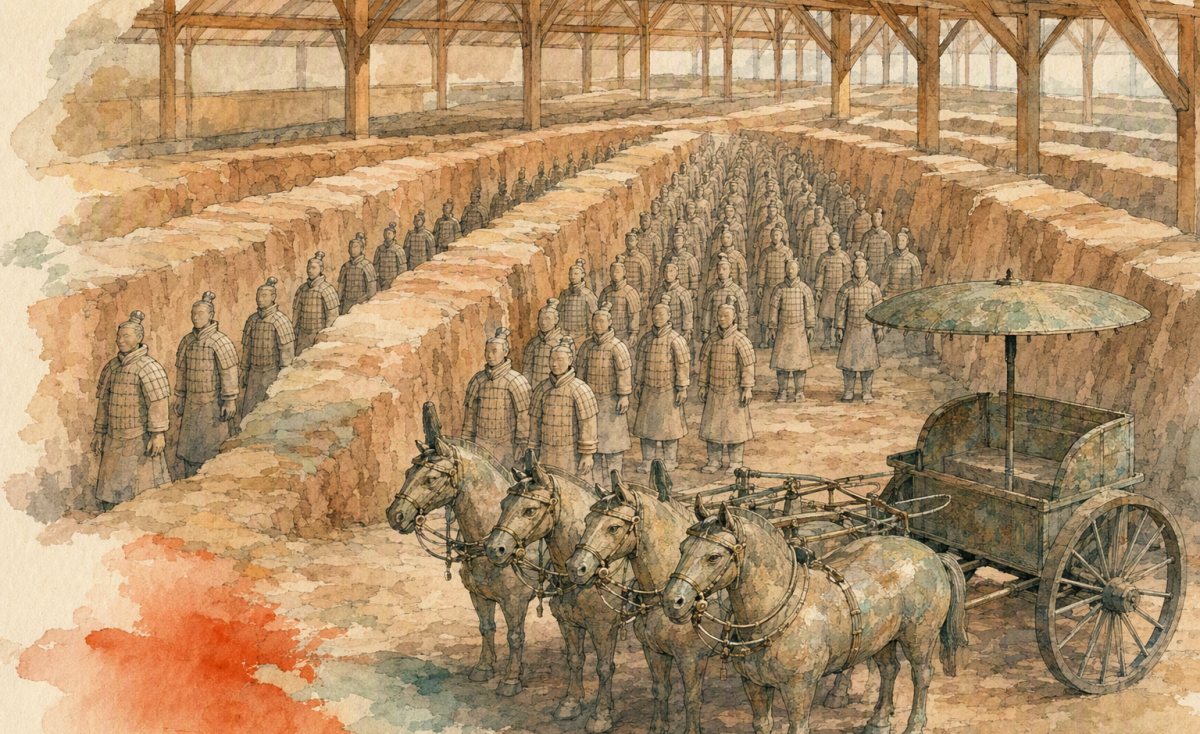
The museum sits roughly 35–40 km east of central Xi’an in Lintong district, close to the mausoleum of Qin Shi Huang. The three pits are covered by hangar-like halls. Pit 1 is the largest and the one in most photographs; Pit 2 contains largely unexcavated ground with cavalry and archer figures; Pit 3 is small and appears to be a command post. A separate hall displays two bronze chariots and horses. Signage is in Chinese and English, and the on-site exhibition labels explain the excavation sequence reasonably well, but the site rewards context — either a guide, an audio guide, or reading up beforehand.
Opening hours, last admission and any seasonal closures change through the year and around public holidays. Check the museum’s own page or the official ticketing channel before you travel, and look specifically for the current entry window, the last-admission time, and whether same-day tickets are released. Do not rely on a number quoted in a blog post, including this one.
Cómo planificar tu visita evitando aglomeraciones
El sitio atrae numerosos grupos turísticos nacionales, y su patrón es bastante predecible: los autocares llegan a media mañana, y el mediodía es la franja más concurrida. Llegar a la apertura te garantiza una Fosa 1 más tranquila y mejores fotografías. La segunda mejor opción es la tarde avanzada, aunque primero debes confirmar la hora límite de admisión.
Reserva alrededor de tres horas dentro del recinto si quieres leer las placas explicativas, ver las tres fosas y la sala de carros de bronce, y caminar entre los edificios. Añade tiempo para el autobús lanzadera entre la taquilla y las entradas a las fosas, y para salir del recinto. Una visita exprés de 90 minutos es posible, pero pasarás la mayor parte del tiempo en la Fosa 1.
Los fines de semana, los festivos nacionales chinos y el período de vacaciones escolares de verano son significativamente más concurridos. Si tus fechas son flexibles, elegir un día entre semana fuera de los períodos festivos marca una diferencia notable.
Entradas, guías y qué verificar
Tickets for the museum are generally sold through official channels, and booking ahead is sensible in peak season. Because ticketing systems, ID requirements and release timings change, verify on the official site or the museum’s own booking page: look for the booking window (how many days ahead tickets open), whether a passport number is required per visitor, and whether entry is timed.
Guided tours vary widely. A good guide explains the excavation history, the differences between the pits, and the conservation problems — pigment loss, humidity, and why large areas remain unexcavated. A poor one recites dates. Ask any operator directly: how long is the guided portion, is the guide licensed, does the price include the museum ticket, and is the transfer private or shared. If a tour advertises “skip the line”, ask what that means in practice, since all visitors pass through the same security and ticket check.
Si armas tu propio itinerario en lugar de comprar un paquete, un planificador de IA puede bosquejar la estructura del viaje, pero suele inventar horarios de apertura y tiempos de traslado. Nuestras notas sobre usar IA para diseñar un itinerario por China sin inventar horarios de apertura explican dónde falla esa herramienta.
Getting there from Xi’an
Options are a private car or taxi, a public bus from Xi’an railway station, or the metro plus a local connection. A private car is the simplest if you are combining the Warriors with Hanyangling or Mount Hua in one day, because those sites are not adjacent and public transport between them is slow. Public buses are cheaper but you are tied to their schedule.
If you are arriving by rail, Xi’an is well connected: high-speed services run from Beijing and Shanghai, among other cities. Booking, passport rules and app options for Chinese trains are covered in our guía de viaje en tren por China. Note that Xi’an has more than one station, and they are not close to each other — check which one your train uses before arranging a pickup.
Dentro de la ciudad, el metro es rápido y económico. Consulta la guía de metro de China para conocer cómo funcionan los pagos y las puertas de acceso.
A two-day Xi’an plan built around the Warriors
Día 1: Guerreros de Terracota por la mañana, llegando a la apertura. Por la tarde, Hanyangling (el sitio del mausoleo Han Yang Ling), si deseas una segunda parada arqueológica más tranquila, y luego regresa a la ciudad para disfrutar de la noche en el Barrio Musulmán. Nuestra Xi’an street food guide explica qué comer allí sin desperdiciar comidas.
Día 2: Muralla de Xi’an por la mañana, idealmente temprano; después, el área de la Pagoda Grande del Ganso Salvaje; y finalmente, el Museo de Historia de Shaanxi, si consigues una plaza — es gratuito, pero requiere reserva anticipada y se agota rápidamente. Recorrer toda la muralla en bicicleta lleva tiempo; consulta en el lugar las tarifas actuales de alquiler y las reglas sobre depósitos, no confíes en cifras antiguas.
Más allá de los Guerreros
Mount Hua is a long day trip west of the city and needs an early start and a weather check. A Tang-dynasty dinner show with a dumpling banquet is an easy evening option in the city. For a wider look at what Xi’an offers, including transport and neighbourhoods, see the Xi’an city guide.
Preguntas frecuentes
¿Cuánto tiempo necesitas en los Guerreros de Terracota?
Plan around three hours inside the site to see Pits 1, 2 and 3 plus the bronze chariot hall at a reasonable pace, and add travel time from Xi’an — roughly an hour each way depending on traffic and your mode of transport.
¿Debes reservar un tour o ir de forma independiente?
Ir de forma independiente es totalmente viable: el sitio está bien señalizado y es accesible en transporte público. Un guía aporta mayor valor si deseas entender la historia de las excavaciones y el contexto de conservación. Si lo contratas, confirma si la entrada al museo y el traslado están incluidos.
¿Cuál es el momento más tranquilo para visitar?
Arriving at opening is the most reliable way to avoid the mid-morning tour-group peak. Weekdays outside Chinese public holidays and school breaks are noticeably calmer. Confirm current opening and last-admission times on the museum’s official channel before you go.
¿Puedes combinar los Guerreros con otros lugares en un solo día?
Sí, pero limita la combinación a un solo lugar adicional. Hanyangling combina bien porque está en la misma dirección. El Monte Hua no se combina cómodamente con el museo: tratalo como un día independiente.
¿Necesitas mostrar un documento de identidad para entrar?
Chinese museums commonly require passport or ID registration, and ticketing rules change. Check the museum’s official booking page for what identification is required and whether entry is timed.
Treat every figure in this guide as something to confirm rather than assume: opening hours, ticket release windows, train times and transport prices all move. Verify on the operator’s or museum’s own page, then build your day around the confirmed details.