Most visitors see the Terracotta Warriors as a half-day stop on the way to somewhere else. That works, but it undersells the site: the museum is spread across three pits and a bronze chariot hall, and the surrounding Lintong district holds a second excavation museum most tours skip. This guide covers what a Terracotta Warriors tour from Xi’an actually involves, how to time your visit around the crowds, how to get there, and how to build a two-day Xi’an plan around it. It is written for independent travellers who may or may not book a guided service.
Vị trí địa lý và những gì bạn sẽ tham quan
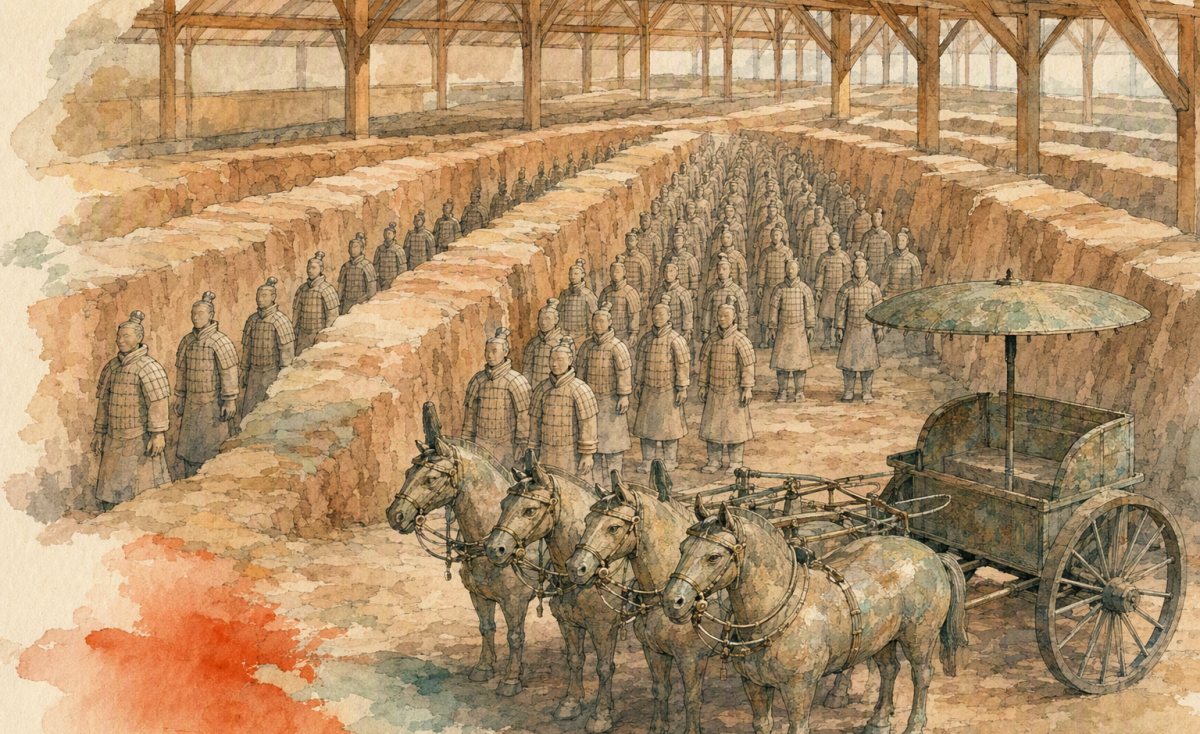
The museum sits roughly 35–40 km east of central Xi’an in Lintong district, close to the mausoleum of Qin Shi Huang. The three pits are covered by hangar-like halls. Pit 1 is the largest and the one in most photographs; Pit 2 contains largely unexcavated ground with cavalry and archer figures; Pit 3 is small and appears to be a command post. A separate hall displays two bronze chariots and horses. Signage is in Chinese and English, and the on-site exhibition labels explain the excavation sequence reasonably well, but the site rewards context — either a guide, an audio guide, or reading up beforehand.
Opening hours, last admission and any seasonal closures change through the year and around public holidays. Check the museum’s own page or the official ticketing channel before you travel, and look specifically for the current entry window, the last-admission time, and whether same-day tickets are released. Do not rely on a number quoted in a blog post, including this one.
Chọn thời điểm tham quan để tránh đông người
Điểm tham quan thu hút rất nhiều đoàn du lịch nội địa, và xu hướng khá dễ đoán: xe buýt du lịch thường đến vào giữa buổi sáng, khiến buổi trưa là khung giờ đông đúc nhất. Đến ngay khi bảo tàng mở cửa giúp bạn tận hưởng hố 1 yên tĩnh hơn và chụp được ảnh đẹp hơn. Khung giờ chiều muộn là lựa chọn tốt thứ hai — nhưng bạn cần xác nhận kỹ giờ ngừng đón khách trước khi đi.
Dự kiến khoảng ba giờ bên trong cổng nếu bạn muốn đọc bảng thông tin, tham quan cả ba hố khai quật và sảnh xe ngựa đồng, đồng thời đi bộ giữa các tòa nhà. Hãy cộng thêm thời gian đi xe buýt đưa đón từ cổng vé đến lối vào các hố, và thời gian đi bộ ra ngoài. Bạn có thể tham quan vội trong 90 phút, nhưng phần lớn thời gian sẽ chỉ dành cho hố 1.
Cuối tuần, các ngày lễ quốc gia Trung Quốc và kỳ nghỉ hè (nghỉ học) thường đông hơn hẳn. Nếu lịch trình của bạn linh hoạt, hãy ưu tiên chọn ngày thường ngoài các kỳ lễ để cảm nhận rõ sự khác biệt.
Vé, hướng dẫn viên và những điều cần xác minh
Tickets for the museum are generally sold through official channels, and booking ahead is sensible in peak season. Because ticketing systems, ID requirements and release timings change, verify on the official site or the museum’s own booking page: look for the booking window (how many days ahead tickets open), whether a passport number is required per visitor, and whether entry is timed.
Guided tours vary widely. A good guide explains the excavation history, the differences between the pits, and the conservation problems — pigment loss, humidity, and why large areas remain unexcavated. A poor one recites dates. Ask any operator directly: how long is the guided portion, is the guide licensed, does the price include the museum ticket, and is the transfer private or shared. If a tour advertises “skip the line”, ask what that means in practice, since all visitors pass through the same security and ticket check.
Nếu bạn tự lên kế hoạch thay vì mua tour trọn gói, công cụ lập kế hoạch AI có thể phác thảo sơ bộ hành trình, nhưng thường bịa đặt giờ mở cửa và thời gian di chuyển. Ghi chú của chúng tôi về Sử dụng AI để lập hành trình Trung Quốc mà không đưa ra giờ mở cửa giả định giải thích những trường hợp công cụ này không còn chính xác.
Getting there from Xi’an
Options are a private car or taxi, a public bus from Xi’an railway station, or the metro plus a local connection. A private car is the simplest if you are combining the Warriors with Hanyangling or Mount Hua in one day, because those sites are not adjacent and public transport between them is slow. Public buses are cheaper but you are tied to their schedule.
If you are arriving by rail, Xi’an is well connected: high-speed services run from Beijing and Shanghai, among other cities. Booking, passport rules and app options for Chinese trains are covered in our hướng dẫn du lịch bằng tàu hỏa tại Trung Quốc. Note that Xi’an has more than one station, and they are not close to each other — check which one your train uses before arranging a pickup.
Trong thành phố, tàu điện ngầm nhanh và rẻ. Hướng dẫn đi tàu điện ngầm Trung Quốc để biết cách thanh toán và sử dụng cổng vào.
A two-day Xi’an plan built around the Warriors
Ngày 1: Thăm Các Chiến binh Đất nung vào buổi sáng, đến ngay khi bảo tàng mở cửa. Buổi chiều, ghé Hanyangling (di tích lăng mộ Hán Dương Lăng) nếu bạn muốn thêm một điểm khảo cổ yên tĩnh nữa, sau đó trở về thành phố thưởng thức tối tại Khu Phố Hồi giáo. Hướng dẫn của chúng tôi Xi’an street food guide giới thiệu những món ăn ngon ở đây mà không lãng phí bữa ăn.
Ngày 2: Tham quan thành quách vào buổi sáng — càng sớm càng tốt, sau đó đến khu Tháp Đại Nhạn và Bảo tàng Lịch sử Thiểm Tây nếu bạn đặt được vé (miễn phí nhưng phải đặt trước và thường kín chỗ rất nhanh). Đi vòng quanh thành quách bằng xe đạp sẽ tốn trọn thời gian; hãy kiểm tra mức giá thuê và quy định đặt cọc hiện hành tại chỗ thay vì tin vào con số cũ.
Những điểm tham quan khác ngoài Các Chiến binh Đất nung
Mount Hua is a long day trip west of the city and needs an early start and a weather check. A Tang-dynasty dinner show with a dumpling banquet is an easy evening option in the city. For a wider look at what Xi’an offers, including transport and neighbourhoods, see the Xi’an city guide.
Câu hỏi thường gặp
Bạn cần bao nhiêu thời gian tại Các Chiến binh Đất nung?
Plan around three hours inside the site to see Pits 1, 2 and 3 plus the bronze chariot hall at a reasonable pace, and add travel time from Xi’an — roughly an hour each way depending on traffic and your mode of transport.
Có nên đặt tour hay tự đi?
Tự đi hoàn toàn khả thi — vì khu di tích có biển chỉ dẫn rõ ràng và dễ tiếp cận bằng phương tiện công cộng. Hướng dẫn viên mang lại giá trị cao nhất nếu bạn muốn hiểu sâu về lịch sử khai quật và bối cảnh bảo tồn. Nếu đặt tour, hãy xác nhận rõ vé vào bảo tàng và phương tiện đưa đón đã được bao gồm chưa.
Thời điểm ít người nhất để tham quan là khi nào?
Arriving at opening is the most reliable way to avoid the mid-morning tour-group peak. Weekdays outside Chinese public holidays and school breaks are noticeably calmer. Confirm current opening and last-admission times on the museum’s official channel before you go.
Có thể kết hợp Các Chiến binh Đất nung với điểm tham quan khác trong cùng một ngày không?
Có thể, nhưng chỉ nên kết hợp thêm một điểm duy nhất. Hanyangling là lựa chọn phù hợp vì nằm cùng hướng. Còn Núi Hoa thì không nên kết hợp chung với bảo tàng — hãy dành riêng một ngày trọn vẹn cho nó.
Có cần xuất trình giấy tờ tùy thân để vào không?
Chinese museums commonly require passport or ID registration, and ticketing rules change. Check the museum’s official booking page for what identification is required and whether entry is timed.
Treat every figure in this guide as something to confirm rather than assume: opening hours, ticket release windows, train times and transport prices all move. Verify on the operator’s or museum’s own page, then build your day around the confirmed details.