Most visitors see the Terracotta Warriors as a half-day stop on the way to somewhere else. That works, but it undersells the site: the museum is spread across three pits and a bronze chariot hall, and the surrounding Lintong district holds a second excavation museum most tours skip. This guide covers what a Terracotta Warriors tour from Xi’an actually involves, how to time your visit around the crowds, how to get there, and how to build a two-day Xi’an plan around it. It is written for independent travellers who may or may not book a guided service.
Где находится объект и что вы посетите
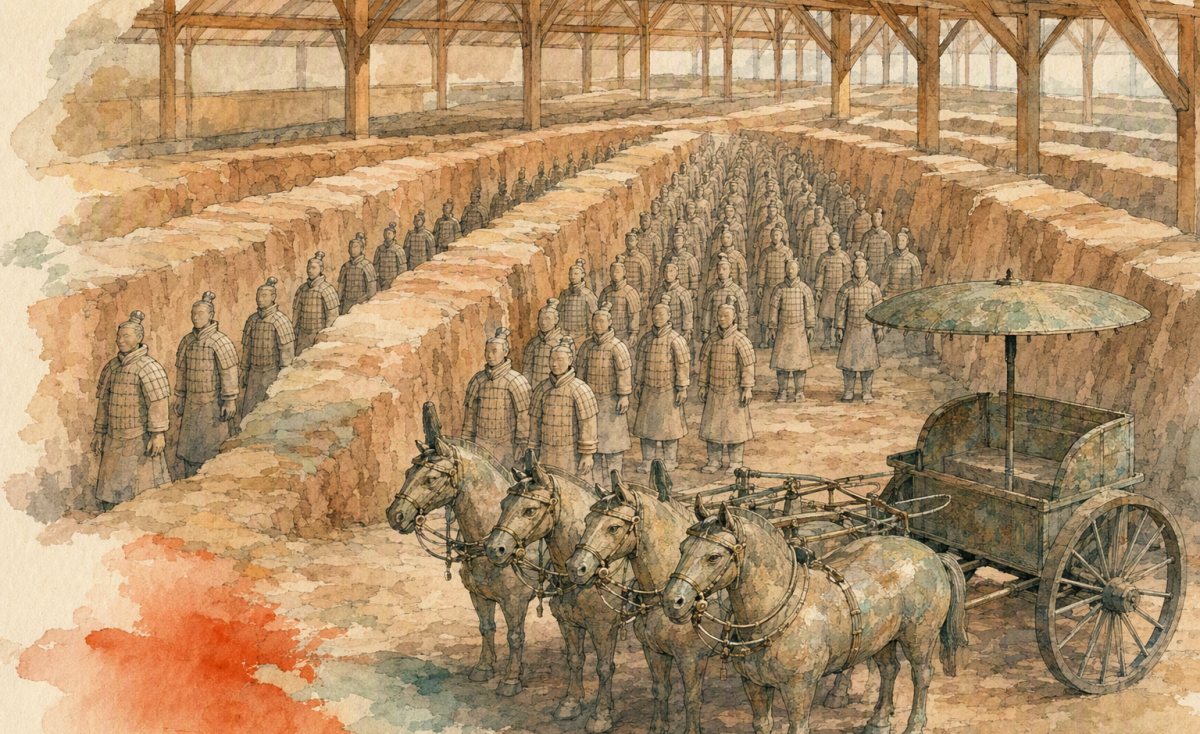
The museum sits roughly 35–40 km east of central Xi’an in Lintong district, close to the mausoleum of Qin Shi Huang. The three pits are covered by hangar-like halls. Pit 1 is the largest and the one in most photographs; Pit 2 contains largely unexcavated ground with cavalry and archer figures; Pit 3 is small and appears to be a command post. A separate hall displays two bronze chariots and horses. Signage is in Chinese and English, and the on-site exhibition labels explain the excavation sequence reasonably well, but the site rewards context — either a guide, an audio guide, or reading up beforehand.
Opening hours, last admission and any seasonal closures change through the year and around public holidays. Check the museum’s own page or the official ticketing channel before you travel, and look specifically for the current entry window, the last-admission time, and whether same-day tickets are released. Do not rely on a number quoted in a blog post, including this one.
Как выбрать время посещения с учётом потоков туристов
Объект привлекает многочисленные внутренние групповые туры, и их график довольно предсказуем: автобусы прибывают в середине утра, а пик загруженности приходится на полдень. Приход в момент открытия даёт возможность спокойно осмотреть котлован №1 и сделать лучшие фотографии. Второй оптимальный период — поздний вечер, но перед этим обязательно уточните крайнее время допуска.
Запланируйте около трёх часов внутри территории музея, если хотите прочитать информационные панели, осмотреть все три котлована и зал бронзовых колесниц, а также пройтись между зданиями. Добавьте время на проезд на шаттле от кассы до входов в котлованы и на обратную дорогу к выходу. Ускоренное посещение за 90 минут возможно, но тогда вы проведёте подавляющую часть времени только в котловане №1.
Выходные дни, государственные праздники Китая и летний школьный перерыв значительно увеличивают поток посетителей. Если ваши даты гибкие, посещение в будний день вне праздничных периодов заметно улучшит комфорт.
Билеты, гиды и что обязательно проверить
Tickets for the museum are generally sold through official channels, and booking ahead is sensible in peak season. Because ticketing systems, ID requirements and release timings change, verify on the official site or the museum’s own booking page: look for the booking window (how many days ahead tickets open), whether a passport number is required per visitor, and whether entry is timed.
Guided tours vary widely. A good guide explains the excavation history, the differences between the pits, and the conservation problems — pigment loss, humidity, and why large areas remain unexcavated. A poor one recites dates. Ask any operator directly: how long is the guided portion, is the guide licensed, does the price include the museum ticket, and is the transfer private or shared. If a tour advertises “skip the line”, ask what that means in practice, since all visitors pass through the same security and ticket check.
Если вы составляете маршрут самостоятельно, а не покупаете готовый пакет, ИИ-планировщик может наметить общие контуры поездки, но часто ошибается в режиме работы и времени в пути. Наши заметки о использовании ИИ для составления маршрута по Китаю без вымышленных часов работы поясняют, где такие инструменты могут подвести.
Getting there from Xi’an
Options are a private car or taxi, a public bus from Xi’an railway station, or the metro plus a local connection. A private car is the simplest if you are combining the Warriors with Hanyangling or Mount Hua in one day, because those sites are not adjacent and public transport between them is slow. Public buses are cheaper but you are tied to their schedule.
If you are arriving by rail, Xi’an is well connected: high-speed services run from Beijing and Shanghai, among other cities. Booking, passport rules and app options for Chinese trains are covered in our руководстве по поездкам на поездах по Китаю. Note that Xi’an has more than one station, and they are not close to each other — check which one your train uses before arranging a pickup.
Внутри города метро быстрое и недорогое. Руководство по метро Китая о том, как работает оплата и проход через турникеты.
A two-day Xi’an plan built around the Warriors
День первый: утро — терракотовая армия, прибытие в момент открытия. Днём — Ханьянлин (мавзолей эпохи Хань), если вы хотите вторую, менее многолюдную археологическую точку, затем возвращение в город и вечер в Мусульманском квартале. Наш Xi’an street food guide рассказывает, что там стоит попробовать, не тратя зря время на еду.
День второй: утро — городская стена (желательно пораньше), затем район Большой пагоды диких гусей, после — Шэньси-музей истории, если удастся забронировать место (вход бесплатный, но требует предварительной брони и быстро заполняется). Полный круг по стене возможен при аренде велосипеда; актуальные тарифы и правила залога уточняйте на месте, а не полагайтесь на устаревшие данные.
Помимо терракотовой армии
Mount Hua is a long day trip west of the city and needs an early start and a weather check. A Tang-dynasty dinner show with a dumpling banquet is an easy evening option in the city. For a wider look at what Xi’an offers, including transport and neighbourhoods, see the Xi’an city guide.
Часто задаваемые вопросы
Сколько времени нужно провести у терракотовой армии?
Plan around three hours inside the site to see Pits 1, 2 and 3 plus the bronze chariot hall at a reasonable pace, and add travel time from Xi’an — roughly an hour each way depending on traffic and your mode of transport.
Стоит ли бронировать тур или лучше отправиться самостоятельно?
Самостоятельное посещение вполне осуществимо: объект хорошо обозначен, а до него легко добраться общественным транспортом. Гид особенно полезен, если вам важна история раскопок и контекст вопросов сохранения. При бронировании тура уточните, включён ли в стоимость билет в музей и трансфер.
Когда самое тихое время для посещения?
Arriving at opening is the most reliable way to avoid the mid-morning tour-group peak. Weekdays outside Chinese public holidays and school breaks are noticeably calmer. Confirm current opening and last-admission times on the museum’s official channel before you go.
Можно ли совместить терракотовую армию с другими достопримечательностями в один день?
Да, но ограничьтесь одной дополнительной точкой. Ханьянлин отлично сочетается, поскольку находится в том же направлении. Гору Хуа с музеем совмещать неудобно — выделите под неё отдельный день.
Нужно ли предъявлять удостоверение личности при входе?
Chinese museums commonly require passport or ID registration, and ticketing rules change. Check the museum’s official booking page for what identification is required and whether entry is timed.
Treat every figure in this guide as something to confirm rather than assume: opening hours, ticket release windows, train times and transport prices all move. Verify on the operator’s or museum’s own page, then build your day around the confirmed details.